- March 10, 2026

-
-
Loading
Loading
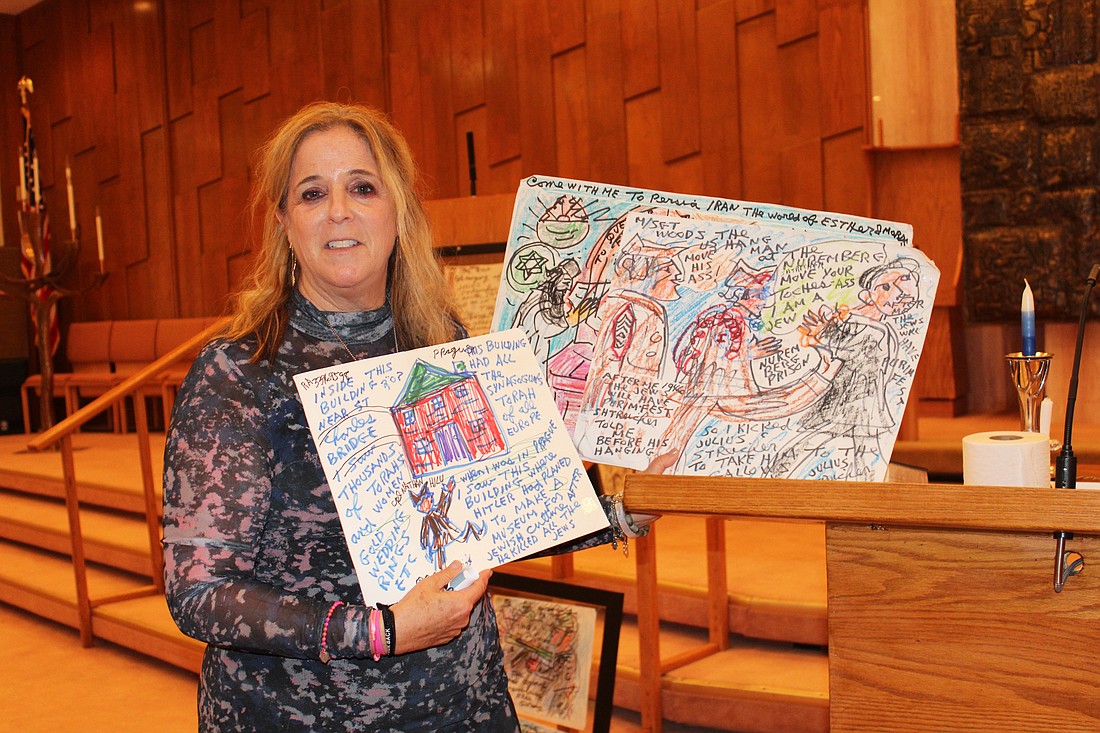
After World War II, those who served faced the challenge of processing what they had witnessed and survived. Nathan Hilu was one such U.S. serviceman, and the way he sought to preserve and share the stories of what happened was through art.
Longboat Key residents got a view into Hilu's world through a free screening of a documentary depicting his works titled "Nathan-ism."
As Hilu describes, there are many different art movements in history, from Impressionism to Modernism. But "Nathan-ism" creates a category of its own.
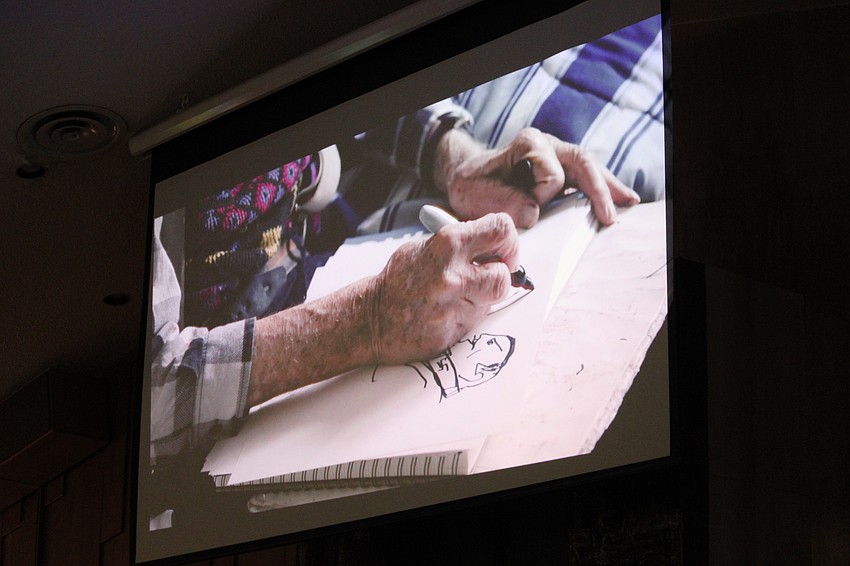
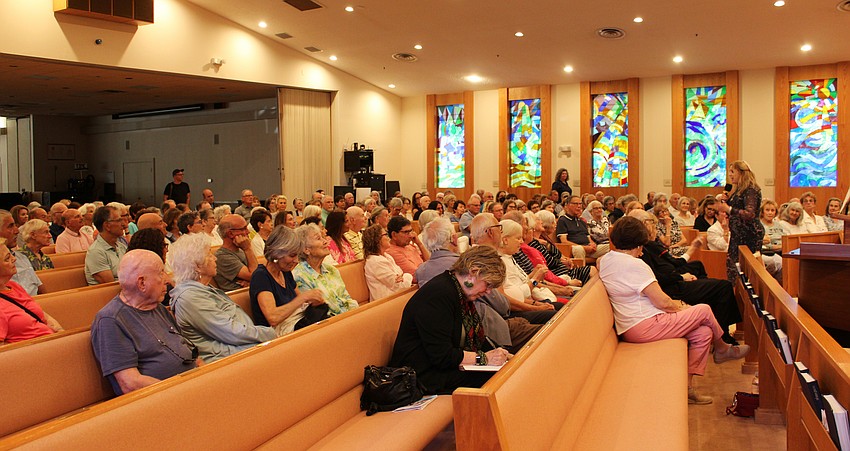
At the March 6 showing, the scratching of Hilu's signature thick black Sharpie against paper carried through Temple Beth Israel while a full house of viewers followed along.
Elan Golod directed the film, which celebrates the life of the "outsider artist" and how he came to depict scenes from the post-WWII Nuremberg trials of accused war criminals.
Hilu compulsively and prolifically crafted his artwork in the form of two-sided paper and booklets, most often with his sharpie, crayons, glue, tape and whatever other materials strike him. His style features rapidly drawn, bold caricature outlines with bright splashes of color.
Art experts featured in the film laud his work for deftly contrasting an almost child-like style with a grave subject matter.
The Nuremberg trials took place starting in mid-1945, bringing together an international court to try leaders from Nazi Germany for atrocities committed during the war.
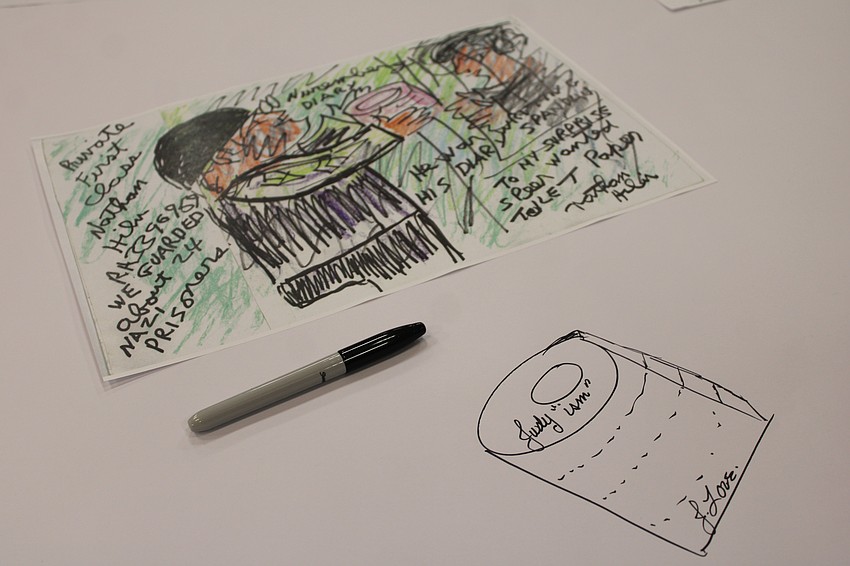
Hilu's works depict defendants, including Albert Speer and Hermann Goring, as they awaited trial behind bars.
Golod interviewed Hilu about his art and service, delving into what compelled him to share these scenes and learning more about the artist's service record.
The public screening is an event TBI Rabbi Jessica Spitalnic Mates has been anticipating since she assumed leadership at the temple last summer. She consulted on the film and followed his career.
"People of all ages love this film," she said. "What's so compelling about it is that it's a reminder that everyone has a story, and it doesn't matter their age."
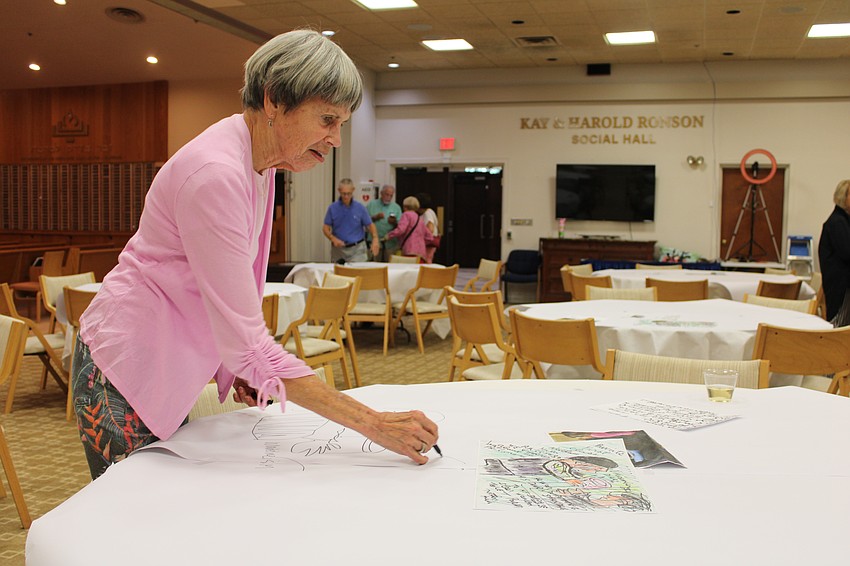
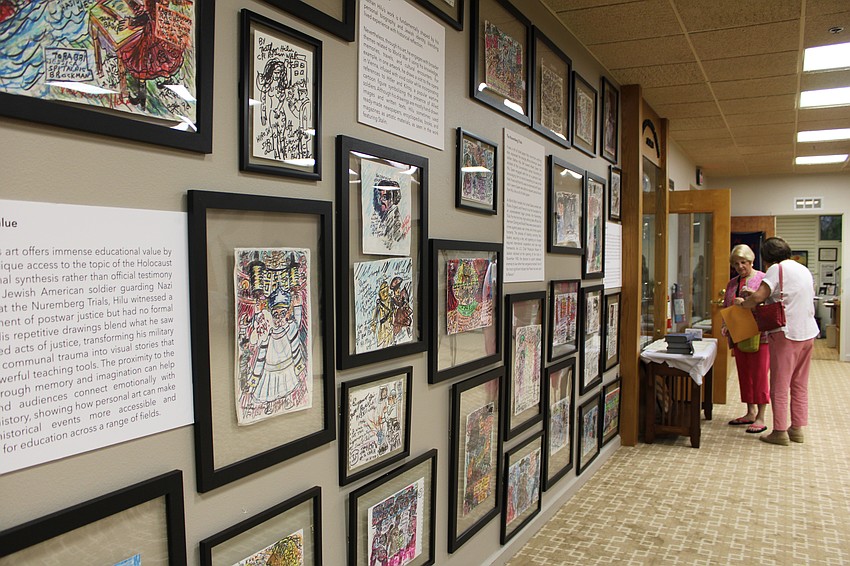
Following the screening, Mates and fellow temple leaders invited attendees to see a gallery of Hilu's work, which is displayed in the temple's gallery and includes pieces he created while speaking with Mates.
Attendees participated in an interactive element as well, taking on the challenge of emulating Hilu's signature style with a simple drawing of a toilet paper roll — they quickly found his simple style isn't so simple to copy.
"When you first look at it, it looks like subway graffiti," Madeline Wikler said. "But especially when you get the backstory, you see that his art is evocative and came from his heart."
Mates said she thought the entire event came together well.
"I knew that this community would be right for an event like this, because it involves World War II, history, art and the perpetuation of memory," she said. "We have a couple of congregants who were born in displaced persons camps. So this is really personal to them."
The film spoke personally to Mates as well, who found out about five years ago that she had lost family members to the Holocaust.
Attendees said many of the film's themes resonated with them on a deep level.
Hilu died at the age of 94, before the film debuted. But the art experts and Library of Congress historians consulted for the film agreed that what Hilu accomplished with his work is preserving his account of what those post-war days entailed.
The gallery will be up for public viewing through mid-March.