- March 4, 2026

-
-
Loading
Loading
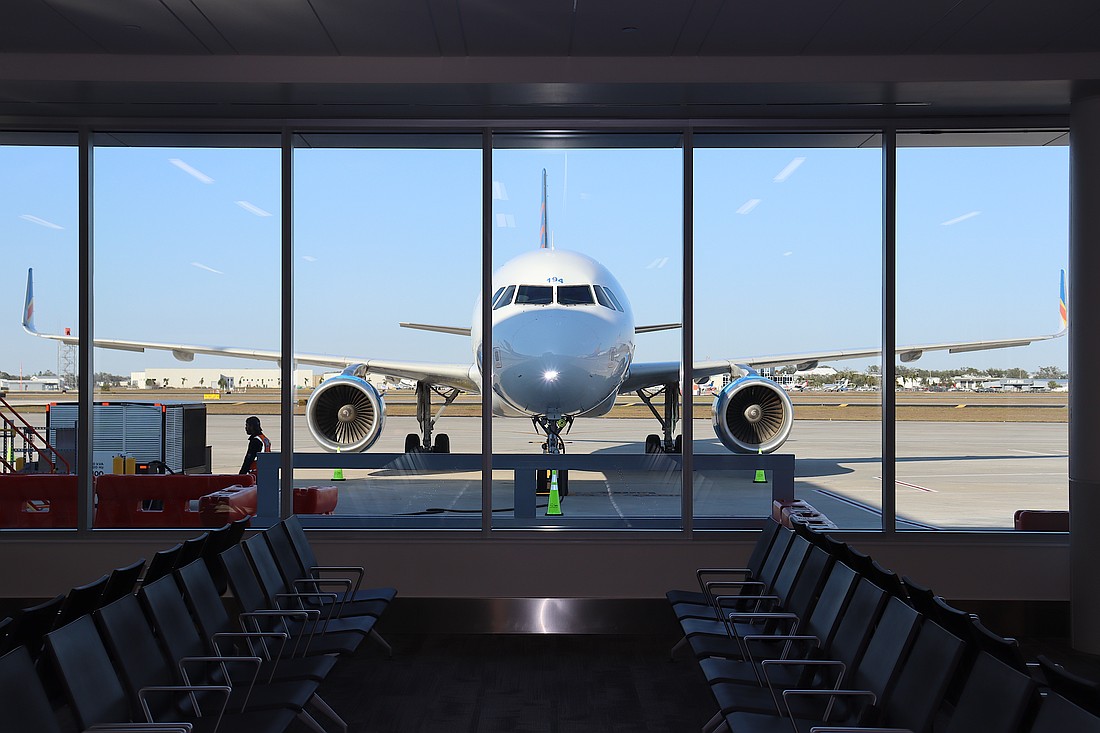
The town of Longboat Key continues to investigate potential impacts of an altered flight path from Sarasota Bradenton International Airport nearly two years ago.
Bill Emling, a maintenance worker at a condo complex on Longboat Key, said he has noticed a black powdery material gathering on various exposed-to-the-elements surfaces over time. Emling, who used to work at Wilmington Air Park in Ohio for Airborne Express, said he believes the fine black dusty substance comes from aircrafts passing overhead.
“In my job, what I’ve seen is black soot. It’s on patio furniture, it’s on roofs. It’s everywhere,” Emling said. “It takes a little while for it to accumulate, but it happens.”
It’s not visible to the naked eye, Emling said, but it darkens his hands when bringing in patio furniture after months of sitting outside and can be seen in the water when he washes off the roof.
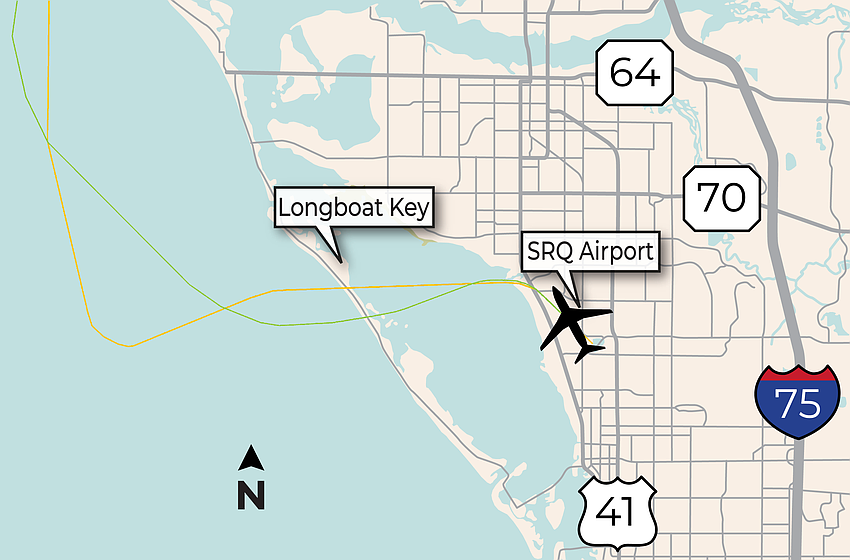
In May 2024, there was a change in flight paths for departures at Sarasota Bradenton International Airport, resulting in flights crossing over Longboat Key about a mile north of the previous path.
After hearing concerns from residents, the town decided to investigate the matter. On Jan. 12, environmental consulting firm AirQuest Environmental tested the air quality under the flight path and found that lead levels “were not detected at levels of concern” and were “substantially below applicable health-based ambient air criteria,” according to AirQuest’s report from the testing. “The findings indicate that, under the conditions evaluated, piston-engine aircraft activity along the SRQ flight path does not appear to be contributing measurable airborne lead to the subject property.”
The cost of that test was $2,744, according to Town Engineer Jennifer Fehrs.
Emling was there on the day of the testing and said there weren’t any planes flying overhead the entire day due to high winds. The results could serve as a good baseline test, he said, but he thinks it is not a good indication of whether overhead flights are having negative impacts on residents.
More tests are coming, though, and they will be more thorough.
Vertex will begin both air and particulate testing at a cost of $28,800. One part of the testing protocol is to “define the signals,” determining whether particulates are from non-combustion related sources like tires or brake pads or from aircraft or vehicle emissions.
“The actual sampling/testing work will begin in April, as the winds in March are not favorable for this sort of testing program,” Fehrs said. “It should take around four weeks for the testing and data collection to be performed, and then the data will be analyzed and a report will be prepared that includes recommendations.”