- August 13, 2026

-
-
Loading
Loading
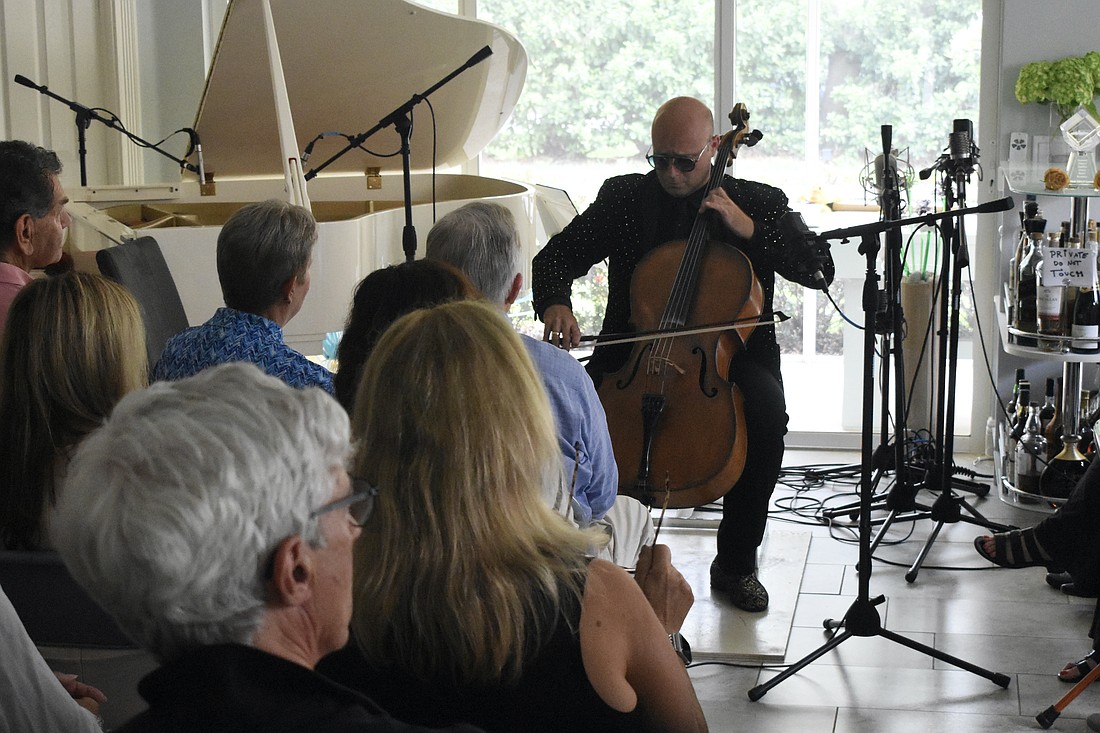
Pablo Arencibia and Aaron West have long performed together. They teach piano and saxophone, respectively, at the University of South Florida's Tampa campus.
However, May 3 was their first time playing as a duo, although it was the third time Arencibia had stepped into the South Sarasota home of cellist Steve Kramer.
Although there was an audience gathered in the living area, it wasn't a concert, nor was it a recital, Kramer said.
"I want to stay on my two feet to call it a music salon, because really it's almost like an improvisatory situation," he said. "I call musicians only because they love music."
Kramer launched Music Salon of Sarasota in 2024, with two of his children, and since then, his son, Victor Kramer, and his daughter, Emilia Gazman, have played a large role in the performances.
The salon is a tradition that goes back to the 19th century when composers, musicians and aristocracy would gather together in salons domestically and socially.
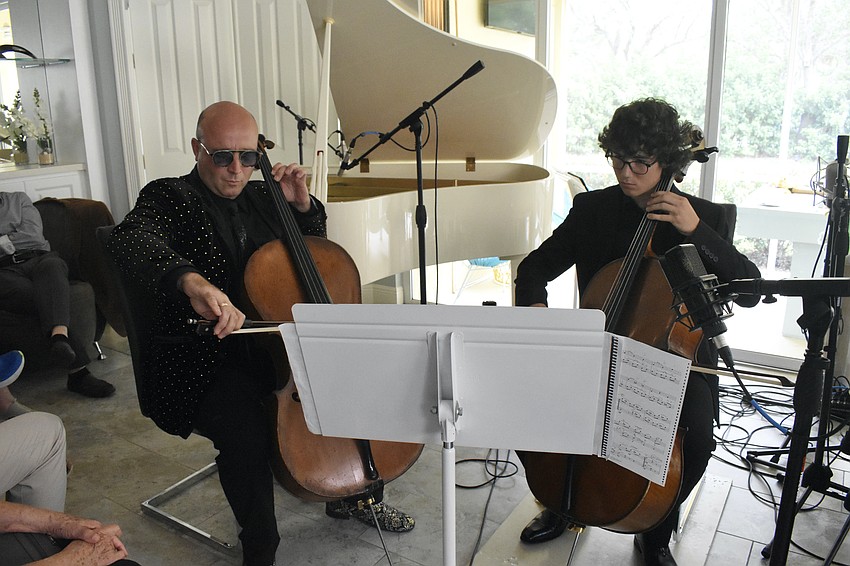
Kramer says his salon is unique in welcoming people from all walks of life. People can attend with an RSVP and a required donation.
As guests arrive, they bring along food to enjoy, and bottles of wine are poured, while Kramer speaks conversationally to the attendees, sprinkling in doses of humor as he leads them into the performances.
"One of the things is that it's this intimate, quiet room where people are really listening," Arencibia said. "So really, music takes a center stage, in opposition to other places where there are always distractions and things like that, and it being so small, you really feel the energy of the people really close to you, so you can almost feel how they breathe and the feedback that you get from the people. And, of course, it's a beautiful venue, and it's a nice piano to play."
Kramer says if there's one word to describe Music Salon, it would be "tradition."
Music was performed for generations in his family of Eastern European Jews, who fled the Soviet Union during the tenure of leader Leonid Ilyich Brezhnev in the 1970s.
Growing up in Copenhagen, he was exposed to American-educated musicians as well as recordings of American music.
"If you think about a musician in Soviet times, to listen to American-made music, it was dangerous," he said. "You could be imprisoned, executed. Everything that was American was illegal."
Music was integral to his life from an early age, and he studied with his grandfather Vladimir Issaivich Novak, a former violinist in the Kiev Philharmonic, beginning at age 3.
Kramer came to America in 2010, and says that by traveling extensively across the country, he learned repeatedly that music is being taken off its streets.
"There are so many rules and regulations for actually picking up an instrument ..." he said. "Unless you buy a group ticket, an individual ticket to an orchestra, institutionalized cultural events, it's actually hard to just to go out and be spontaneous."
Yet he says sharing music is also more important than ever.
Looking back at the lives of his ancestors in Eastern Europe, he sees that they came together amid the tyranny they endured under the ideologies of fascism, Nazism and communism.
"Very often what happened was the culture actually brought people together in the most desperate of times, and seeing all the privileges we have in America, it's a good time to maybe reflect upon being more together than divided," he said.
In addition to his grandfather, Kramer studied under Scandinavian cellist Erling Bløndal Bengtsson, and studied chamber music with Yehudi Menuhin and Peter Norris at the Yehudi Menuhin School in England.
Some of his work includes making recordings of Bach’s Unaccompanied Suites, as well as of contemporary styles in jazz with the Philadelphia-based Wizard of Jazz and pianist Tom Lawton.
Among Kramer's favorite music of all time is the contemporary styles of 1920s to 1950s America, what he calls the "golden period of melodies," but above all, he loves classical music, saying it's important to educate others in the genre.
The salons have no set agenda, but he says it's healthy to begin with classical music. Those selections are usually followed by jazz. There can also be poetry, or artists, painters and sculptors bringing mobile exhibitions.
Kramer said classically trained musicians are increasingly less common, but a goal of Music Salon is to host many classical and jazz musicians. He notes its calendar is currently booked through 2027.
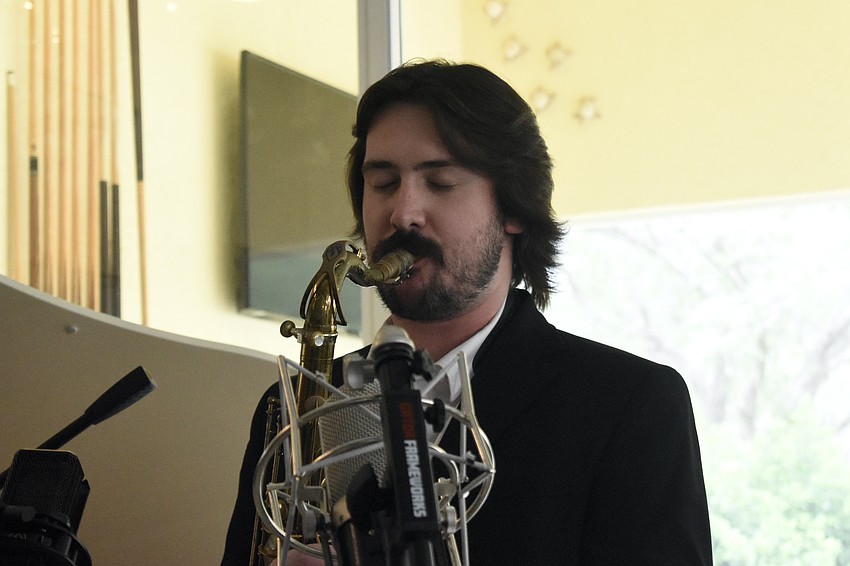
As Arencibia and West prepared to perform that day, they were set to honor the 99th birthday of jazz pianist Dick Hyman, although Hyman was ultimately not able to attend.
However, they still expressed excitement for the opportunity to perform together in the venue.
Arencibia said he admired West's musicianship, but also how he deals with different situations in terms of instrumentation, which he said allowed lots of opportunities for improvisation.
"To praise Pablo's playing, he's a very communicative musician, which I very much appreciate, both as an individual, but as a greater jazz musician," West said.
"We're really looking forward to seeing how this feels," Arencibia said.