- July 15, 2026

-
-
Loading
Loading
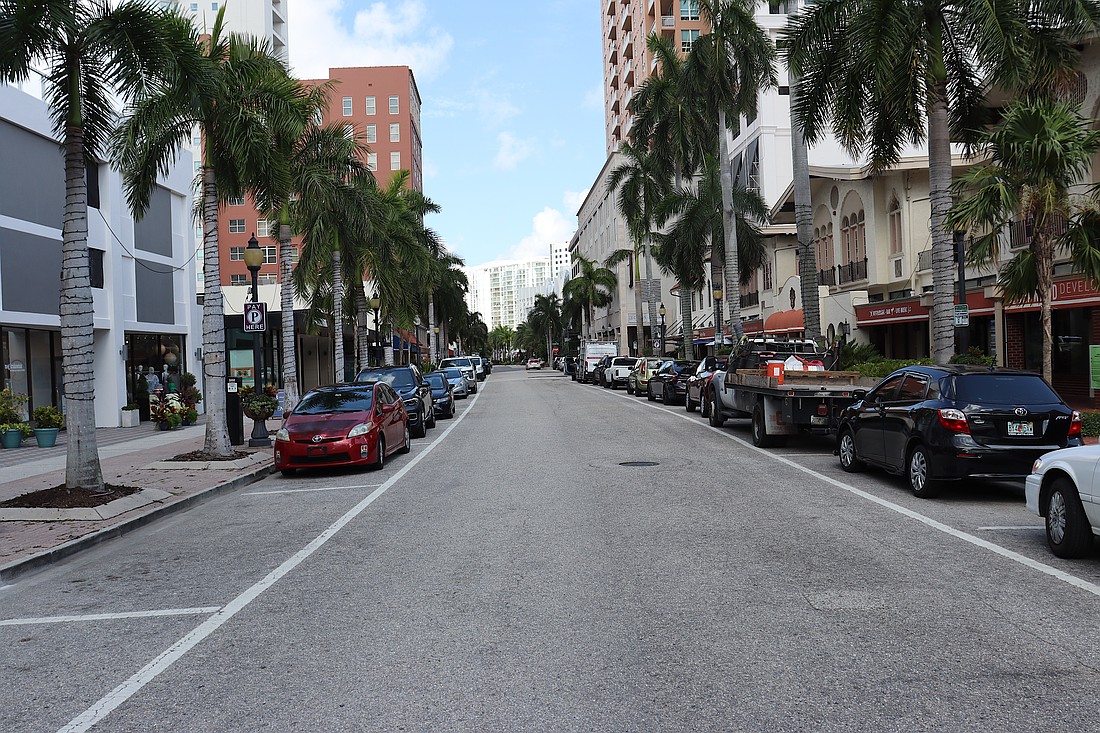
It took only a holiday weekend for downtown Sarasota business leaders to react, and not positively, to the recently implemented overhaul of the city’s paid parking program.
As an enterprise fund, the goal was to make the city’s Parking Division pay its own way rather than being subsidized by the general fund and the entire city’s tax base. But, at the onset of the July 6 meeting of the Sarasota City Commission, it was restaurateurs and commercial property owners Chris Voelker and Ron Shugar who commented businesses are already paying the price.
On July 1, the commission-approved change in the parking program took affect, which extended hours of enforcement and modestly increased fines rather than hiking the fees to park along Main Street and South Palm Avenue, and in the city’s two downtown parking garages. The changes also applied to paid street parking and the parking garage at St. Armands Circle.
In addition to owning property and businesses in downtown, Voelker and Shugar are members of the Downtown Improvement District Board of Directors.
“I'm not here today to discuss the abstract parking theory. I sit here today to impart concerns from my numerous tenants, my customers and fellow business leaders that paid parking is having a real, long-lasting and negative impact on downtown commerce,” Shugar said. “People are choosing to go elsewhere and they are cutting their visits short.”
Shugar, who owns Sugar Champagne Bar and controls 20,000 square feet of commercial property, added CNN recently named Sarasota the best place to visit in the U.S. He cited downtown and Main Street as key drivers in that assessment.
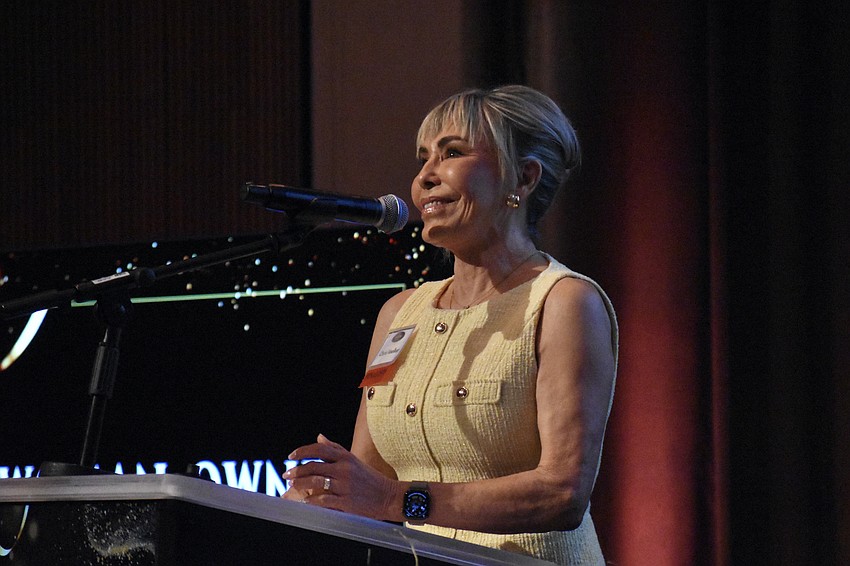
“We heard your message,” Mayor Debbie Trice told Shugar.
Voelker, owner of State Street Eating House + Cocktails, added “We should be upholding the economic driver of the city, not getting in its way.”
With the change, paid and timed free parking are now enforced from 8 a.m. to midnight for marked, on-street parking spaces and 24 hours a day Monday through Saturday in city-owned parking garages. On Sundays, enforcement for both on-street and garage parking begins at 1 p.m. Also, all parking citation fines were increased by $5.
The two business owners said customers are already eschewing downtown for “the beast in the east” — University Town Center — and other centers and towns where parking is free, costing downtown businesses revenue, customer curation and retention.
“Just to let everyone know how severe this is, I'm at the YMCA in the steam room and I got accosted by somebody about this,” Commissioner Kyle Battie said.
The comments at the beginning of the meeting prompted commission discussion at the end, with the overarching sentiment being that the parking program be revisited, perhaps in a future workshop amid budget season.
“It looks like to me there's an awful lot of people who were not aware that we were charging for parking downtown already, and are not aware that it's only on two streets downtown,” Commissioner Liz Alpert said. “That being all said, it seems to be the extra hours that really are bothering people, so maybe we should revisit that and take a look at going back to the regular hours, but then raising the rate.”
Her point: Parking in downtown cannot be free because parking bonds were issued to pay for parking garages, which are seldom filled to capacity. And as Trice pointed out, one block in either direction of Main Street offers free parking, some of it limited to two hours, some three. There are also unlimited free parking spaces scattered around the downtown area for the more enterprising parker.
Future discussions, Commissioner Jen Ahearn-Koch said, should include an examination of the Parking Division for possible efficiencies.
“There are a lot of suggestions about residents getting parking permits, all kinds of great ideas, and I think we should be open to to looking at those as a way of solving it and making this enterprise fund an actual enterprise fund,” she said.

Shugar told commissioners he is advocating a petition to be signed by all downtown commercial property owners and retail businesses to end paid parking downtown, maintain reasonable time limits and protect premium spaces for all-day employee parking.
Given the bond debt and ongoing maintenance costs — such as repairing and replacing elevators in the garages — that doesn’t appear a viable scenario.
Either way, Voelker assured commissioners they haven’t heard the end of the issue.
“You’re going to hear from us, because this is not going to go away," she said.