- March 2, 2026

-
-
Loading
Loading
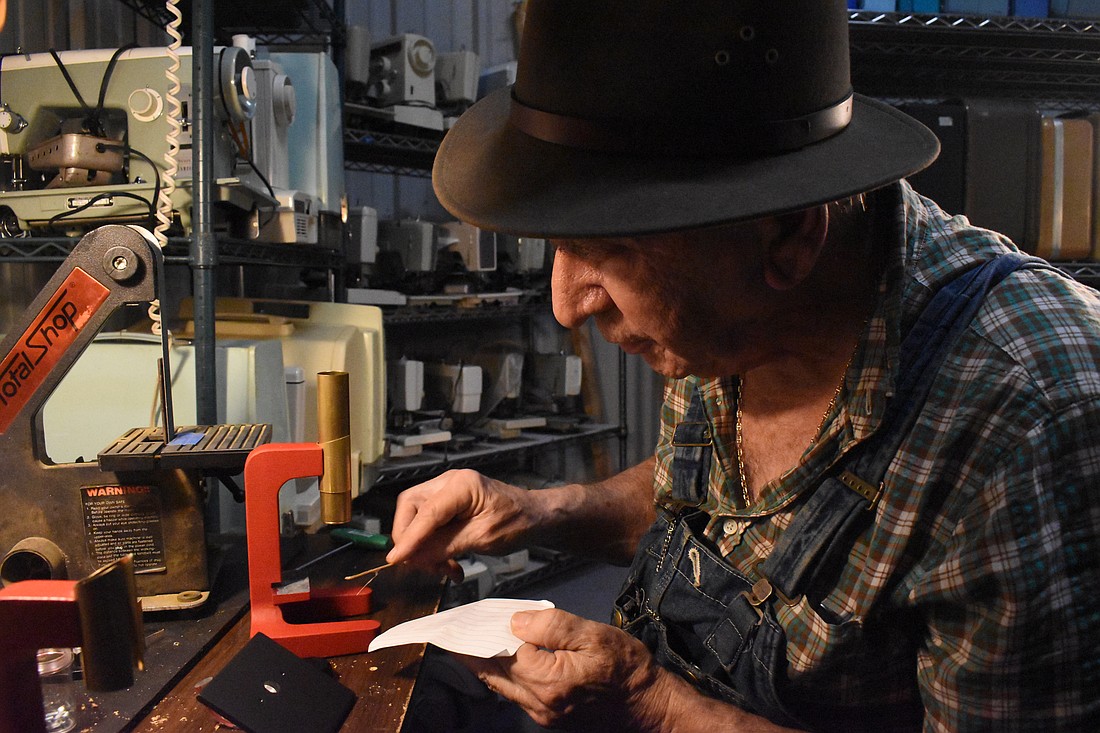
Before he created the Brock Magiscope in 1987, Dennis Brock attended a microscope school where he was tasked with replacing the fine and coarse adjustment knobs that control the tool's focus.
However, that wasn't a satisfying task for him.
“I said, ‘Well, I want to fix it because I want to be better than anyone else," he recalls.
When he built the Brock Magiscope in 1987, one of his goals was to create something that would last.
The microscopes, which are handmade partly in his workshop in Sarasota, have no electrical components, don't require batteries and have few breakable parts, with minimal screws and no mirrors.
“The entire genre of microscopy had become something for the elite. It had become an elitist tool, something you avoid in school, something that teachers avoided because the scopes don't work,” he said.
He says there are now over 250,000 Brock Magiscopes, which he says are the only microscope made in the United States, in circulation.
Brock grew up in row houses in a Jewish neighborhood in Philadelphia, at a time he says others were moving to the suburbs.
“I was left behind because I was from a broken family,” he said.
He ran away at 16 years old but was ultimately forced to keep attending high school until he was 17.
However, Brock says you could have dropped him "in the middle of the ocean" and he would have succeeded.
“I knew I was smart, I knew I was creative, but I didn't think I'd live to be an adult, because I knew that I had been handed some really bad cards,” he said.
After working to repair and finish furniture, he saw an ad in the Philadelphia Inquirer for a microscope repair person. Although the role didn't offer a salary, it would provide training in the craft.
Soon, he was working on microscopes costing thousands of dollars, with 30-40 parts.
“Either I would sink or I would swim… I suffered a thousand deaths doing that, but I succeeded, and after a while, I was the top repairman in Philadelphia," he said.
Later, while repairing and selling microscopes in Orlando, he decided to create his own microscope, even though it would involve the risk of being self-employed.
The goal was simplicity and durability, and creating a product that wouldn't involve electricity or any complex mechanics.
As Brock's office shows, he's a fan of objects that last.
He has collections that includes Kenmore sewing machines from Japan; typewriters, mostly the Olympia-Werke variety, from Germany; Zeiss microscopes, binoculars and guitars.
He says he's also learned how to fix everything he's collected.
“We have to stop throwing things out," he says. "Everything I collect are items that do not have a half-life. They are always going to be useful."
That's just one way in which his views aren't aligned with the conventional.
Brock says he believes people live more than once, inheriting their skills from past lives, and he is a member of Mutual UFO Network (MUFON).
“When I was 14 years old, I saw a UFO in the Mount Airy section of Philadelphia,” he said.
He also states that science and religion can be reconciled, criticizing attempts to stop kids from learning about evolution.
“They're not thinking enough. They want simple answers,” he said.
When Brock first gave the Magiscope to the director of the Orlando Science Center, the director yanked the viewing tube out of its clamp.
He told Brock, “Come back when you can’t do that.”
After Brock created a version that worked, the product was born at the center in 1987, where Brock says it received positive feedback.
In addition to its durability, Brock says the Magiscope is also unique in the way its lenses are arranged.
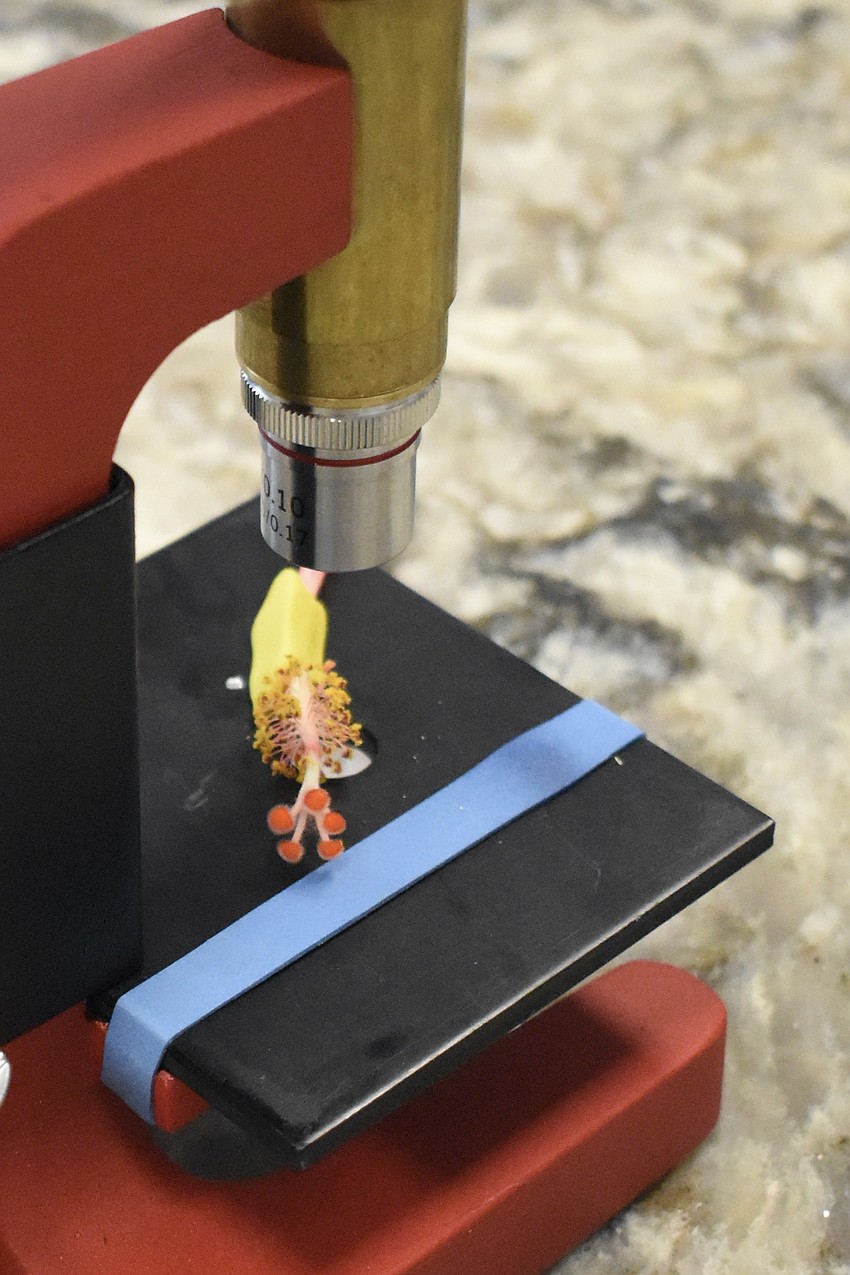
Its basic model has a magnification of 20x with a 5x eyepiece and 4x objective, a lower magnification than microscopes usually do, although the lenses are interchangeable.
“What happens when you do that? Your depth of field? Your light, your color, your contrast, gets quadrupled,” he said.
The microscope also relies on its patented Lumarod illumination system, a curved plexiglass-style rod that directs light underneath the stage.
Brock's wife, Jennifer Brock, says that the higher the magnification, the flatter the specimen must be, although they want kids to enjoy looking at objects that aren't prepared slides.
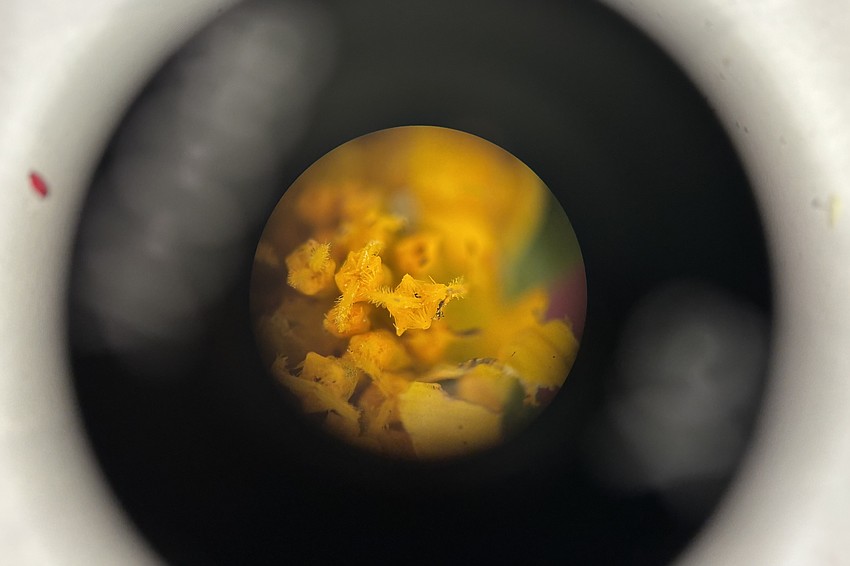
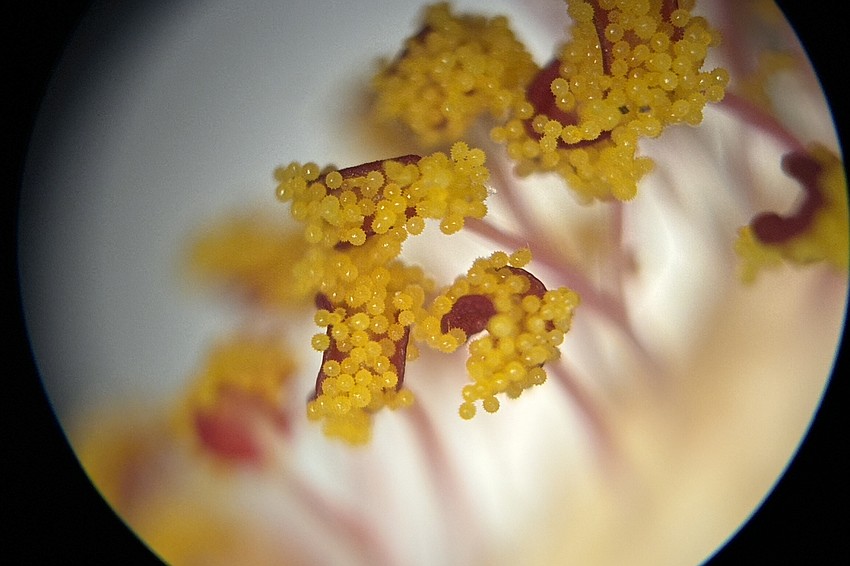
Dennis Brock has also created an attachable platform for cell phones, so users can take pictures of the view inside the microscope, and has hosted photo microscopy classes at Marie Selby Botanical Gardens.
Dennis Brock says when he started his business, Brock Optical, he sold thousands of microscopes every year and had a half dozen employees, at times selling 100 microscopes in a week.
For the past 10 years, he has been making the microscopes on his own, which he says is good in the sense that it provides quality control he did not have previously.
“I have been David. I refuse to play with Amazon... I have been barely existing for a couple of years now,” he said.
Brock creates the brass components while also sourcing others including the lenses. Jennifer Brock said the materials cost about $80, and the basic package sells for $329.
She also said last Christmas was the most difficult one in terms of sales.
She said one reason is that the couple have not traveled with the microscope as much as in the past, and also that they hope to pursue more community involvement.
She said in the past, they participated in events including three regional events and one national one by the National Science Teachers Association, while also presenting with parties including the Council for Exceptional Children, and at homeschool conventions.
She said those experiences brought lots of connections with others who came to use the microscopes.
Those includes an organic farmer in North Florida who uses them for his soil samples, an Israeli professor who brought one to the Burning Man festival, Master Gardener programs across Minnesota, a pair of art museums in Arizona, stamp collectors, students and researchers.
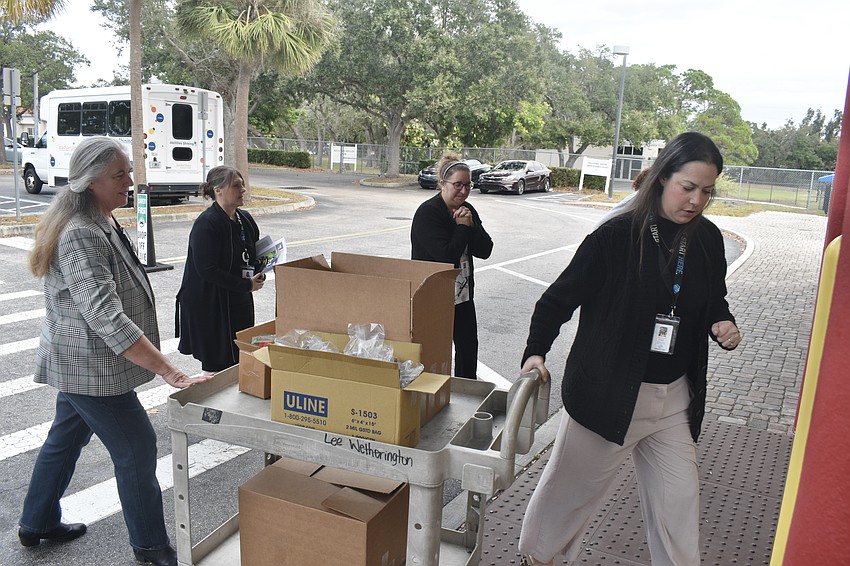
Recently, the couple dropped off 12 microscopes at Boys & Girls Clubs of Sarasota and DeSoto Counties, along with accessories.

Meanwhile, the business started an initiative called “Project Magiscope” that encourages people to make tax-deductible donations to help offer the products to classrooms.
They say they are also building a curriculum for users of the product, which could include fun activities that allow kids to "work in a group and get their hands dirty."
“It is entirely in my nature to learn everything I can and to teach everything I can ,and the microscope shows people that there's a whole world they're not aware of,” Dennis Brock said. “That's a very important lesson.”