- March 3, 2026

-
-
Loading
Loading
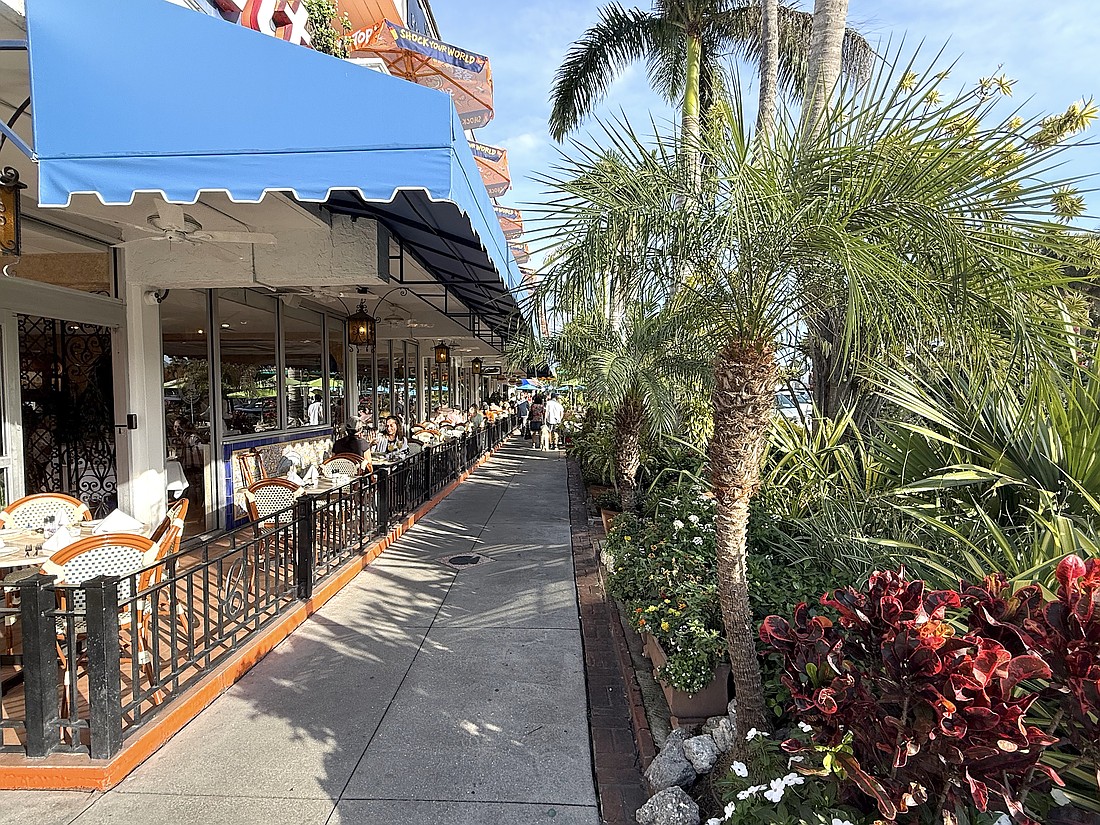
At a cursory glance, all appears to have returned to normal at St. Armands Circle. Street parking spaces are filled, restaurants are brimming with patrons, shops are welcoming customers and freshly replaced landscaping paints a lush, colorful backdrop.
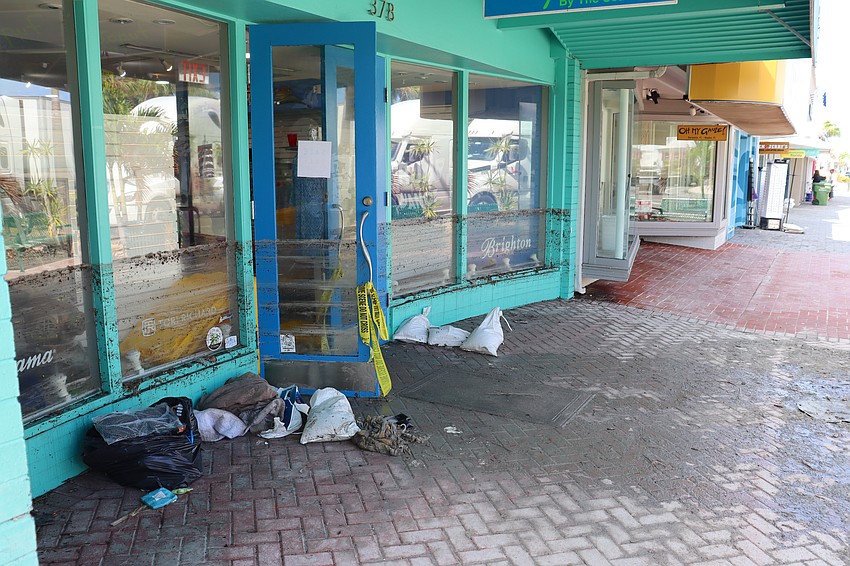
A deeper look, though, reveals persistent reminders of the 2024 hurricane season and the devastation wrought by hurricanes Helene and Milton as storm surge and heavy rains combined to overwhelm the already problematic drainage system that, in recent years, has proven inadequate even for abnormal rain events.
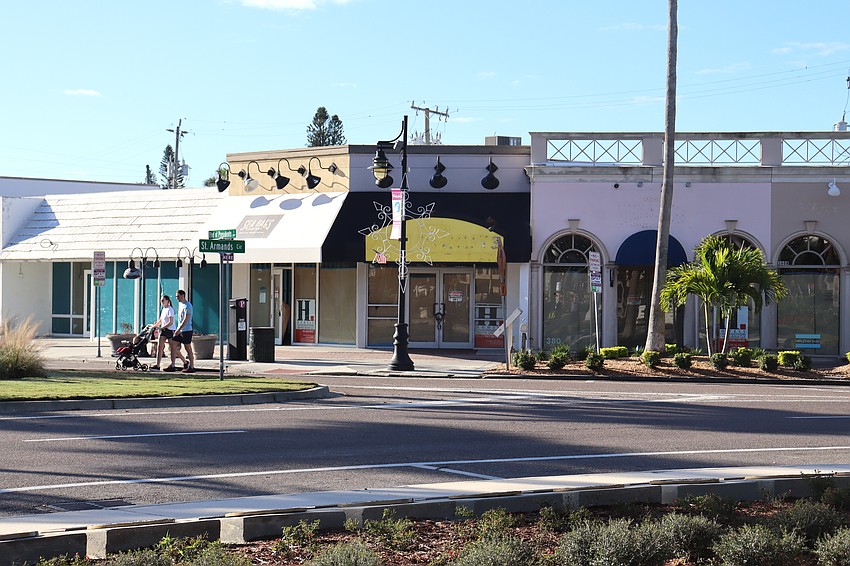
Of the 130 street-level business spaces along St. Armands Circle, approximately 90 are now occupied as some storefronts remain boarded 15 months after Hurricane Milton — a direct hit — finished off what Helene — a glancing yet disastrous blow — started. In the residential areas primarily on the northern half of the key, many erstwhile single-story homes built at ground level remain vacant or their lots cleared as construction of new, code-required resilient homes signal hope for the future.
Residents, commercial property owners and merchants for years have lodged complaints and concerns with the city and county about St. Armands’ aging stormwater infrastructure and its increasing inability to prevent flooding even from storms that fall far short of tropical weather events.
Albeit tragically, the 2024 hurricane season proved their case, which thanks to a $210 million federal grant for countywide resilience projects has now captured the attention of Sarasota County government.
As in the rest of the Sarasota city limits, stormwater mitigation on St. Armands is managed by the county via interlocal agreement among the two governmental entities. On Dec. 16, the Sarasota County Commission allocated $13.5 million in federal disaster recovery grants — known colloquially as Resilient SRQ — to pair with nearly $500,000 in city funding to devise a system to drain St. Armands more efficiently.
The city had requested $24.5 million, but was in competition with infrastructure project requests by the county, other county municipalities, nonprofit organizations and others, all vying for more than $174 million in applications for an available $57 million tranche.
“I'd like to give as much as we can to St. Armands because I think it's critical,” said Commissioner Teresa Mast during the allocation discussion. “I wish we had enough for all of that. We don’t.”
St. Armands advocates worked to martial their forces prior to that Dec. 16 meeting. Chris Goglia, the president of St. Armands Residents Association, urged his membership to make the trip to Venice to speak before the commission. Many did, and were joined by several city of Sarasota and even Longboat Key officials.
“In the six years I've been doing this and covering a lot of issues, that was probably the best turnout ever,” Goglia said of the show of force.
Lobbying ranged from describing St. Armands as a major tourist attraction and key economic driver for the county to being the lone point of access to and from the southern end of Longboat Key. It is crucial, then, for its streets to not remain impassible, as they have in the past, for days or even weeks at a time.
Among the speakers was interim Sarasota City Manager Dave Bullock, who was perhaps the most pointed in his message.
“This is a county project. This is county infrastructure, and it serves a region of the county that you've heard is very important,” Bullock, who is also a former Longboat Key town manager, told commissioners at the meeting. “Designed in 2004, it was designed to handle rain events and to clear the streets. It's not going to stop storm surge. Most of the people here understand that, but what it stopped doing was clearing the streets. …
“You own it. You operate it. You maintain it, and you charge for that. But more important, this is a keystone element in a region of the county that is probably unparalleled in its contribution to the county's economy.”
Visit Sarasota County does not possess data to quantify the economic impact of St. Armands’ commercial district, but its research shows it attracted 53% of all visitors to the county in fiscal year 2025, which ended on Sept. 30.
This despite businesses and restaurants being shut down for months, if not for the entire season, in the aftermath of the storms. St. Armands Circle Association Executive Director Rachel Burns said that reality check caught the attention of county officials she says have long “kicked the can down the road” when it came to the key’s failing drainage infrastructure.
“I do believe there was some fear that the thought was this was a 100-year storm and we can just put this off again,” said Burns, whose organization represents the merchants of St. Armands Circle. “We are getting $13.5 million, we're going to be able to address some issues and I think it's the start of a plan.”
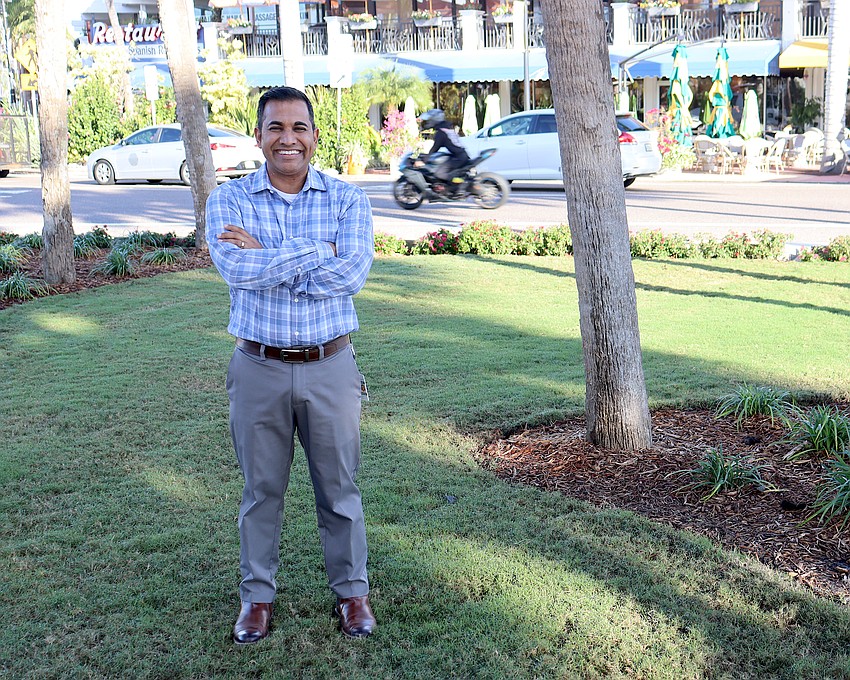
That plan is already under development. Shortly after the Dec. 16 meeting, city of Sarasota Public Works Director Nikesh Patel met with Ben Quartermaine, who directs the county’s new stormwater division spun off from the county’s Public Works department, and came away feeling confident the total $14 million investment will address the urgent needs.
“We feel that this is a win. It’s a significant, targeted investment for one of the most vulnerable and economic important areas of the county,” Patel said. “It reflects that the county is committed to making this happen to increase the resiliency and address the flooding.”
Yet to begin is preliminary design work, which will be led by Quartermaine to save costs. But Patel said early focus is on pump station upgrades for additional storage capacity, possibly supplementing them with additional pumps; generator upgrades for greater reliability during power outages; and improving the system of tidal check valves and outfalls to better manage the perfect storm of tidal surge pushing seawater into the pipes already filled with existing rainwater.
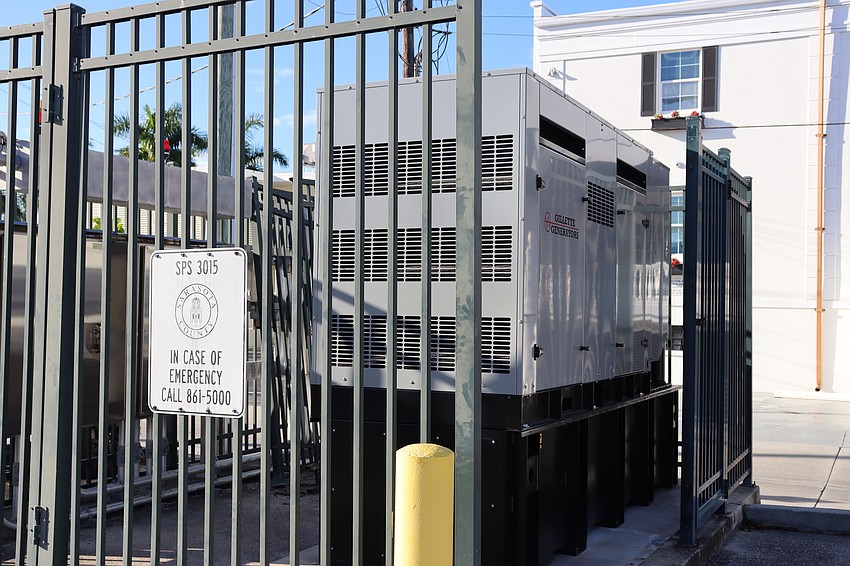
Although Quartermaine was unavailable to comment, Patel said of the discussion, “I don't want to say that it’s going to be a full revamp, but there may be additional pumps out there, but I don't speak on behalf of them. They will have to go through design and permitting to determine what's going to meet the resiliency and the flood mitigation. It’s going to be close to a $14 million project to address what we can with the funding that we got.”
Design for flood mitigation on St. Armands most likely will not mirror the city’s project request. Instead, the County Commission instructed Quartermaine to work with the city to determine how to most efficiently spend the $13.5 million plus the city’s contribution to achieve the most effective result.
Goglia said in advance of Dec. 16 he wasn’t certain if any amount would be applied to St. Armands and is pleased with the county’s allocation.
“There’s a sense of accomplishment. I think residents and business owners really worked hard over two to three months to ask for this funding,” he said. “This investment is going to be made over the next three years, so it’s nothing that's going to immediately fix everything, but I just think everyone, after surviving two hurricanes last year, has a longer term view now.
“We're very positive that, over time, things are going to get better.”

![Brian Taylor, who works as executive vice president for Perform[cb], has been working from CoworkLWR since 2021 in order to have a separation between work and home life. He enjoys the opportunities to network with fellow remote workers at the new location.](https://media.yourobserver.com/img/photos/2026/02/27/IMG_1642_r452x360.jpeg?0dd7e9171d3bd5845bc057d4569a0a31ba6981d7)