- August 12, 2026

-
-
Loading
Loading
You often hear the refrain: Politics is a blood sport.
Indeed it is. Especially campaigning to win elections. It’s a nasty, ugly gauntlet. Egos, the thirst for power or the fear of losing power get out of control.
It has always been this way.
Here in the United States, one of the most vicious campaigns occurred during the infamous presidential election of 1828 between President John Quincy Adams and challenger Andrew Jackson.
Adams and newspaper editors who supported him played up that Jackson was a killer, having killed a man in a duel and ordering the executions of six of his militiamen while serving as a military general in the Creek War. They accused him of cannibalism. They called Jackson’s mother a common prostitute and called Jackson an adulterer. On the latter, his wife Rachel’s divorce 40 years earlier, unbeknown to Jackson and her, had not been finalized; thus she was still legally married when they married.
Meanwhile, Jackson and his newspaper supporters spread their own smears of Adams. They accused him of being a pimp for the Russian czar while Adams was ambassador to Russia and of being a gambler who bought gambling equipment for the White House at taxpayer expenses. (It was a billiard table he paid for himself.)
Here, in these parts, it’s tamer, thank goodness.
But horrors of horrors: The nerve of county commission candidates who accept contributions from developers. They are castigated as shills for dark money. Also in this election round, there is fast and loose talk to undermine candidates for being investors far back in previous lives in what may be seen as sketchy businesses.
We won’t go into who was involved at this late stage, but two candidates were investors in a gag gift business whose chief product was a tasteful looking box that, when opened, had a douche bag with the words, “You’re a douche.”
It was a funny gag, but is that disqualifying for public office?
Not if that’s all it was. Not unless there is a back story of stealing, lying or hurting people. But these days, even those discretions don’t seem to be political disqualifiers (e.g. Donald Trump, Bill Clinton).
Nonetheless, there are two instances in our local elections worthy of noting, even at this late stage before the election. One involves incumbent Sarasota County Commissioner Joe Neunder; the other, Sarasota County School Board candidate Megan Tennimon.
Ultimately, these cases can be considered matters of trust: Can voters trust these candidates in office?
In the Neunder case, the following came to light in the online publication, FloridaPolitics.com. Peter Schorsch, founder, publisher and editor, reported and documented the report entitled: “How Joe Neunder misled voters about the complaint against Jim DeNiro.”
The alleged complaint was that DeNiro, Neunder’s opponent for the Sarasota County Commission District 4 seat, may have been violating Florida’s residency and homestead exemption laws.
Schorsch reported the chronology as follows:
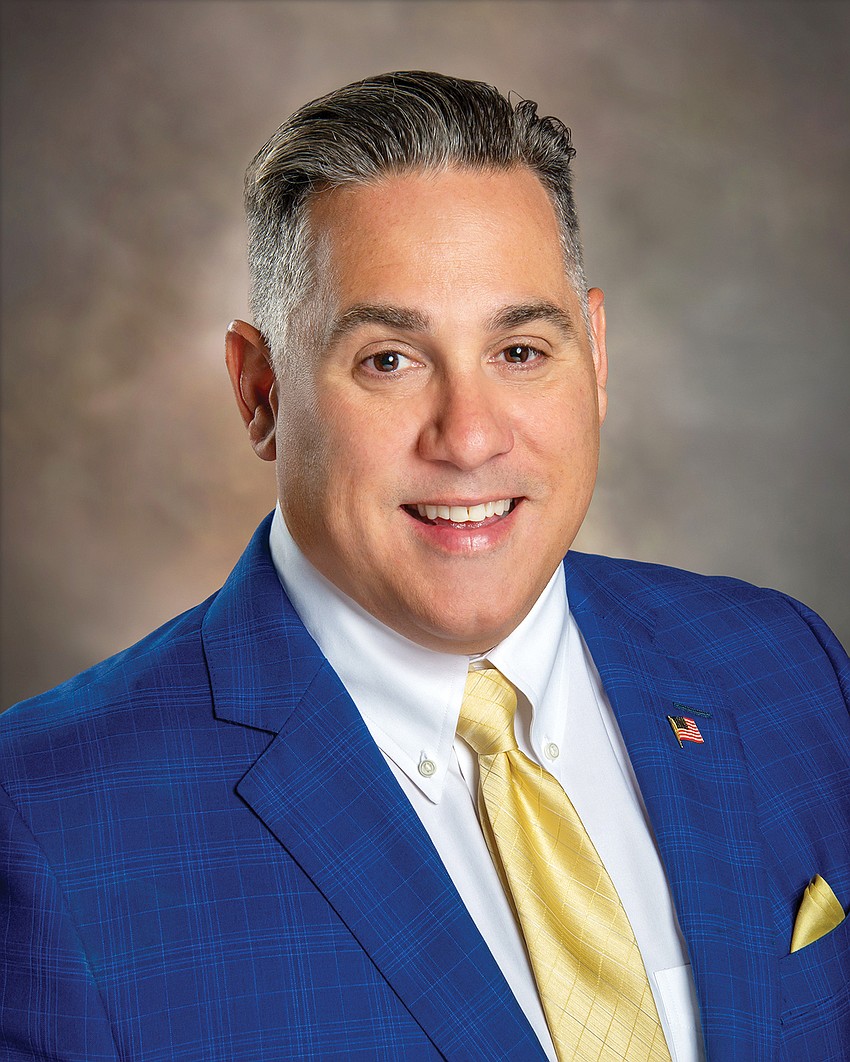
Furst forwarded Neunder’s information to his associate, Katherine Reardon, to investigate. Within 30 minutes, Furst called Neunder back and told him DeNiro has done everything by the book, by the law, and there is no problem.
Schorsch reported that email address was listed as the email address for Cindy Nichole Neunder, Neunder’s wife, in her Florida voter registration records. Furst’s office did not respond.

Asked by the Observer if Neunder asked her to file the complaint or influenced the complaint, Brunni said no; she said did her own independent research.
Neunder made this post knowing that Furst already had confirmed that DeNiro’s residency and homestead exemption were lawful and acceptable.
In neither instance — days after Brunni’s complaint was filed, nor during the interview — did Neunder offer that Property Appraiser Furst told him and assured him DeNiro’s residency and homestead were lawful. He kept the lie going.
The case of School Board candidate Megan Tennimon is not one of dishonesty or misleading voters. It illustrates the difficulty of voters knowing the deeper values of candidates that can and will influence their decision making; and, just as important, how we in the media — this writer included — do not vet candidates to the extent they could or should.
If you read Tennimon’s website (ElectMeganTennimon.com), you could quickly conclude she is a slam dunk as a school board candidate. A few samplers …
Standard, apple-pie stuff.
And then there is her personal resume. Another dunk.

Tennimon is a lifelong Sarasota resident; a 1997 graduate of Sarasota High; married for 18 years; three children in Sarasota public schools. She earned her bachelor’s degree in Early Childhood Education from the University of South Florida Sarasota-Manatee. In 2001, she began her career as a second grade teacher at Gocio Elementary School.
After becoming a stay-at-home mom, Tennimon started and later became president of the Moms Club of Sarasota, which offers resources and activities for stay-at-home moms and their children. She also has continued to volunteer at Sarasota public schools.
When you look at Tennimon’s campaign donors, many are prominent Sarasotans and reputable business groups (Greater Sarasota Chamber of Commerce, Argus Foundation, North Port Area Chamber of Commerce).
You also can see Tennimon has strong support from the county’s Democratic Party and many of its party members, who also are contributors.
Tennimon, however, is registered NPA (nonparty affiliate).
And then the call came: “Did you know that Equality Florida has endorsed Megan Tennimon?” It was akin to the Neunder call to Furst — the question that raises doubts without a direct smear.
Equality Florida describes itself as the “statewide civil rights organization dedicated to securing full equality for Florida’s lesbian, gay, bisexual, transgender and queer (LGBTQ) community.” It’s at the forefront of advocating for all things LGBTQ — non-discrimination in schools and the workplace and access to what is called gender affirming care, among others.
“Our work focuses on social justice issues critical to the transgender and nonbinary community, such as incarceration, violence, engagement with law enforcement, quality healthcare and homelessness issues,” says Equality Florida.
We called Tennimon, noting how there are always attempts to tear a candidate down. So the question was posed: What’s your story with Equality Florida?
Tennimon: “I believe in what it’s doing for more mental health services in the schools.”
What about, say, sports — boys playing in girls sports and using girls’ bathrooms. What’s your position?
There was a pause; a thinking pause for a careful response.
Tennimon: “I believe everyone should be safe in school.”
Pressed on boys who say they’re girls playing, say, on a girl’s middle school basketball team, Tennimon allowed that some of these instances can be made “on a case-by-case basis.”
But then she offered this: “State law prohibits that. I will follow the law.”
Based on her background, voters can expect that.
But the recounting of this questioning of Tennimon serves the points raised before:
Campaigning for election can be rewarding, but in just as many ways, it is ugly and nasty. As a result of the latter, it’s a powerful disincentive that discourages the best and brightest from seeking office.
What’s more, these campaigns illustrate how much trust is involved. With first-time candidates, voters don’t really know what the candidates will do if elected. Look at what happened with Sarasota’s new tax collector. What will the Sarasota school board do when its Democrat members are in the majority?
We elect candidates on faith — that they will do what is right and not just what is self-expedient. For this republic to survive, John Adams and Thomas Jefferson said, it will require us (and our candidates) to be virtuous and informed.
Hopefully, the Observer has helped on the latter. The former is up to each of us.
Editor’s note: Equality Florida also has endorsed the two Democratic Party candidates for the school board, Jimmy Glover and Beth Mayberry.