- August 11, 2026

-
-
Loading
Loading
Student-athletes should’ve spent the summer resting up. That’s what their minds and bodies needed after what surely was a rigorous 2025-26 academic year.
The line between high school and college athletics has only become more blurred. Much undue pressure is on the shoulders of student-athletes before they even set foot on a college campus.
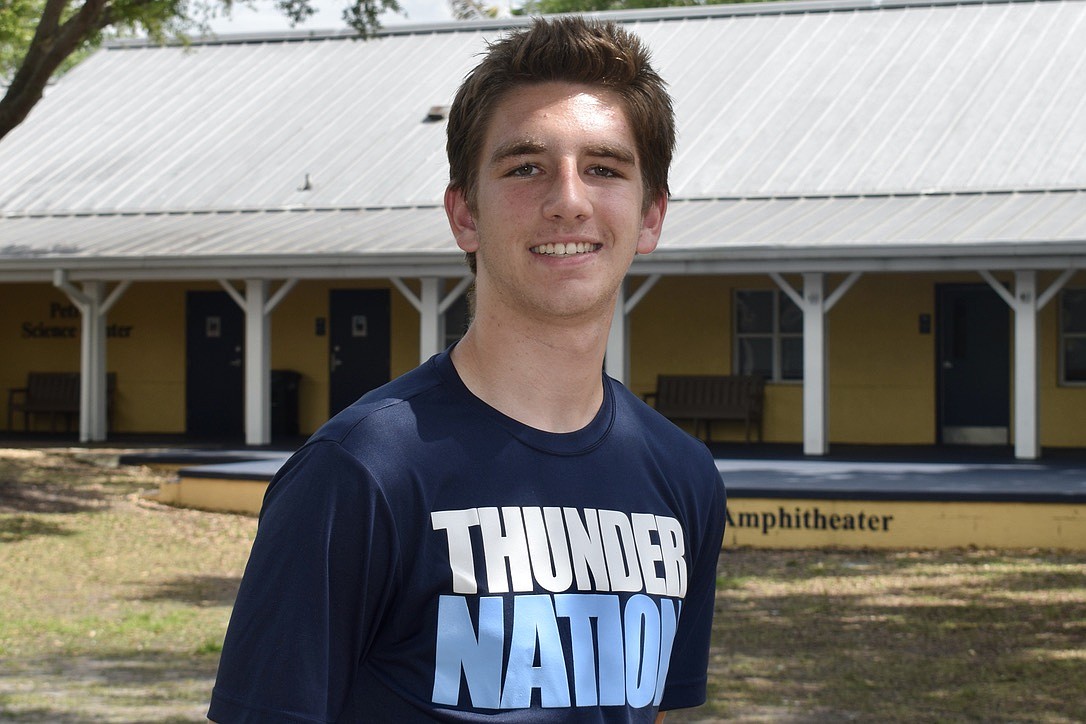
Stressors, indeed, have been numerous. Paxon Hermann keeps pushing himself anyway.
Before beginning his junior year at The Out-of-Door Academy, he became a decathlon warrior of sorts — participating in three from June through August. He dedicated this summer to the routine of training and competing as a young decathlete.
Like his classmates, he took a break from books after wrapping up 10th grade in May. Unlike many of them, he put his body to the test instead of laying out on the beach to rest.
Now, diving back into those books doesn’t sound so bad.
“(Decathlons) teach you discipline,” Hermann said. “It was a lot of hard work (and there were) a lot of fun times. I can look at some schoolwork and be like, ‘I can hammer that out, right?’”
The AAU Junior Olympic Games in Des Moines, Iowa, from Aug. 1-8 was his final meet of the summer. There, he placed 16th out of 33 in the boys’ 17-18 year-old division for the decathlon.
He scored 5,462 points while the three competitors ultimately on the podium each scored at least 6,500. But Hermann’s score did indicate serious progress.
To earn his way into that national meet, he placed first with 5,139 points at an AAU regional qualifier held from June 25-28 at Cypress Creek High School in Orlando.
That followed his first decathlon of the summer. At Adidas Track Nationals from June 18-21 in Greensboro, North Carolina, he finished 15th with 4,782 points.
“I was one of, maybe the, youngest person (at the AAU Junior Olympic Games), so I can't really compare myself to the competition so much,” Hermann said. “It was also, in my opinion, the hardest decathlon I had to do — just (based on) how hard I pushed myself.”
By no means is he the only student-athlete who worked on their craft this summer. A decathlon, though, is a uniquely demanding challenge for a high schooler to put their body through.
It consists of 10 events held across two consecutive days. The first day entails the 100-meter dash, long jump, shot put, high jump and 400-meter dash, in that order. Day two entails the 110-meter hurdles, discus, pole vault, javelin and 1,500-meter run — again, in that order.
Each event uses a points system to reflect how well an athlete performs. The sum of points awarded across all events determines who makes the podium.
Hermann only had one decathlon’s worth of experience under his belt entering this summer. He became obsessed with them simply through his desire to improve.
“It’s (about) continuing to try to do better. It’s hard training, but it's always felt like rewarding training to me,” Hermann said. “I've been able to keep going just because, when it comes to that meet, I want to do better than the last time.”
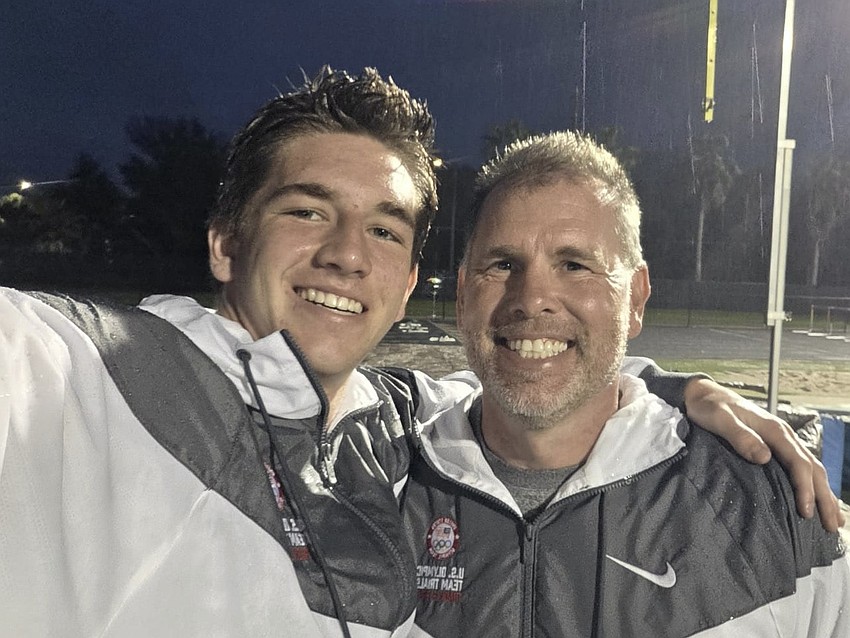
His father, Scott Hermann, is well-versed in the decathlon. He holds the program record at NCAA Division III’s Buena Vista University in Storm Lake, Iowa, with 6,477 points set in 1997.
Together, the two of them trained 18 hours a week on average this summer so that Paxon Hermann would be best prepared for whatever challenges decathlons threw at him.
It’s because of his father that the idea of becoming a decathlete first entered his mind.
“He introduced me to the whole thing, and he's been helping me with training this whole time,” Hermann said. “I'd say he's the only reason I'm able to do it.”
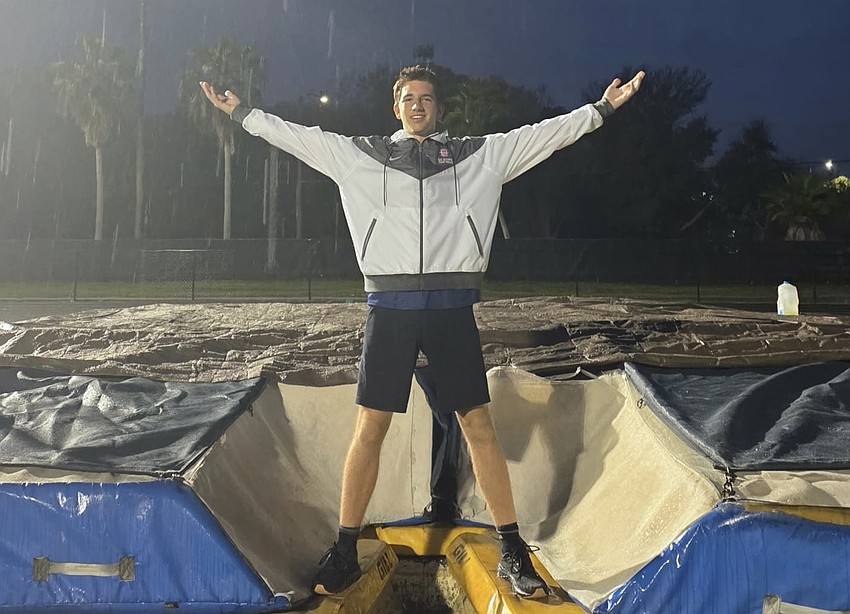
Pole vault is the junior’s favorite event. He’s done it since seventh grade, and as a sophomore, posted his best results in that discipline during the 2026 high school track and field season.
At the FHSAA Class 1A state championship, he finished sixth in the pole vault with a mark of 4.05 meters, 10th in the high jump (1.82) and 15th in the triple jump (12.63).
Succeeding as a decathlete, though, doesn’t depend on success in any particular discipline. It’s the most well-rounded competitors who win medals.
“Long jump has been one that I've enjoyed for a long time, but it’s also been challenging for a long time,” Hermann said. “There’s so many variables to it. It's not as simple as running fast and trying to jump as far as you can — at least, for me. I can never seem to get my foot to land in the right place.”
Hermann has an ambitious outlook for the year ahead. He wants to break ODA’s school records in both the pole vault and the long jump.
Even if he falls short of those goals, he’ll have senior year to pursue them once again. And he’ll have next summer to jump right back into decathlons.
He’ll choose to sweat it out — not under the sun at the beach, but while he trains and competes.