- July 13, 2026

-
-
Loading
Loading
A staple of living in Lakewood Ranch is the look of green, manicured lawns, but Manatee County is encouraging residents to tolerate browning grass due to “extreme” drought conditions.
“We’ve got water for drinking,” Commissioner George Kruse said. “But what we don’t want is people watering their lawns every day to keep them super green and washing their cars every day.”
In a press release dated March 24, the Southwest Florida Water Management District reported that the district has a 13.7-inch regional rainfall deficit compared to the average 12-month total. In addition, water levels in aquifers, rivers and lakes are declining and public water supplies are extremely low for this time of year.
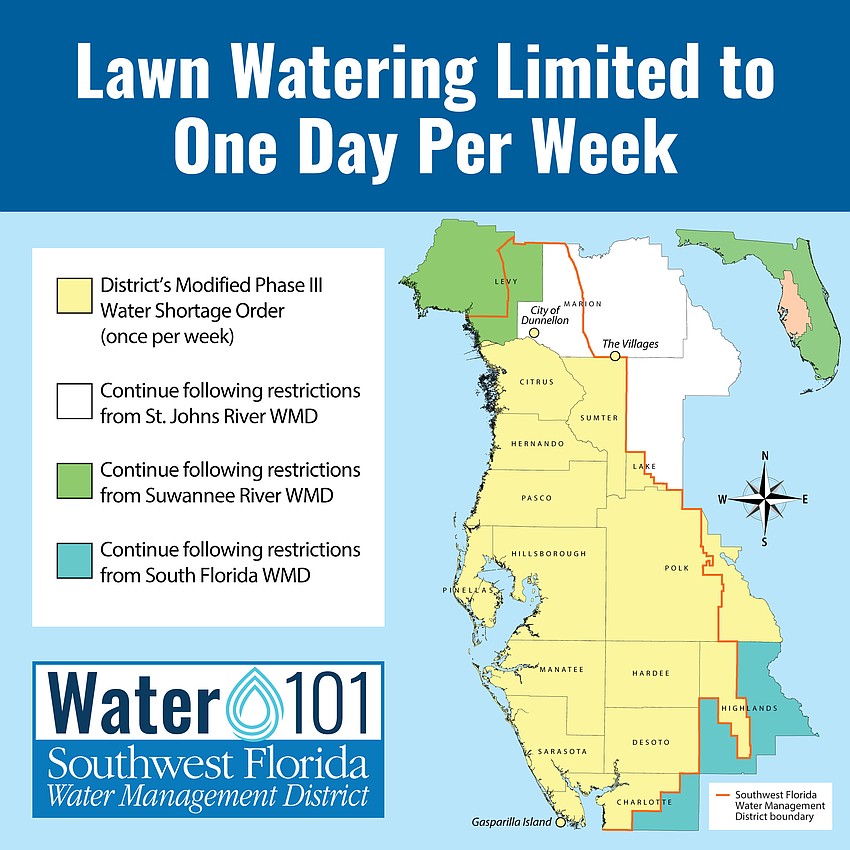
In response, SWFWMD’s governing board declared a Modified Phase III Extreme Water Shortage.
Kruse noted that there are no restrictions on tap water, showers or toilet flushing. The order only requires cutting back on “nicety-type” water usage, such as landscape irrigation and pressure washing.
Manatee is just one of 14 counties within the water management district that is subject to the order, which went into effect April 3 and will expire July 1.
During that time, residents must limit outdoor water use to once a week with a few exceptions, such as hand-watering plant beds.
Starting April 17, Manatee County Utilities, in coordination with Code Enforcement, will begin issuing citations to anyone out of compliance with the order. Warnings will not be issued. The first violation will result in a $100 fine, the second in a $250 fine and the third in a $500 fine.
According to the Southwest Florida Water Management District, outdoor water use accounts for more than 50% of household water consumption.
Lakewood Ranch uses reclaimed water for landscape irrigation. However, much of that water is mixed with stormwater and groundwater, so most areas of Lakewood Ranch are still subject to the restrictions, said Anne Ross, executive director of the Lakewood Ranch Stewardship District.
Reclaimed water was once wastewater that’s been treated and disinfected. While it’s not meant for drinking, it’s safe to use on lawns and it also conserves water.
According to its website, Manatee County ranks among the top third of Florida counties in reclaimed water system operational efficiency.
Even reclaimed water is a finite resource, Kruse said.
Although Manatee County has six pumping stations, over 200 miles of piping and 1.3 billion gallons of storage, most of the county does not have access to reclaimed water.
To put it in perspective, the county’s reclaimed water system is about 10% of the size of its potable water system.
During a drought, the demand can exceed the supply, so the county does not guarantee reclaimed water the way it guarantees potable water.
Purely reclaimed water is not subject to the water shortage order, but when blended with another water source, such as a well or a lake, it is.
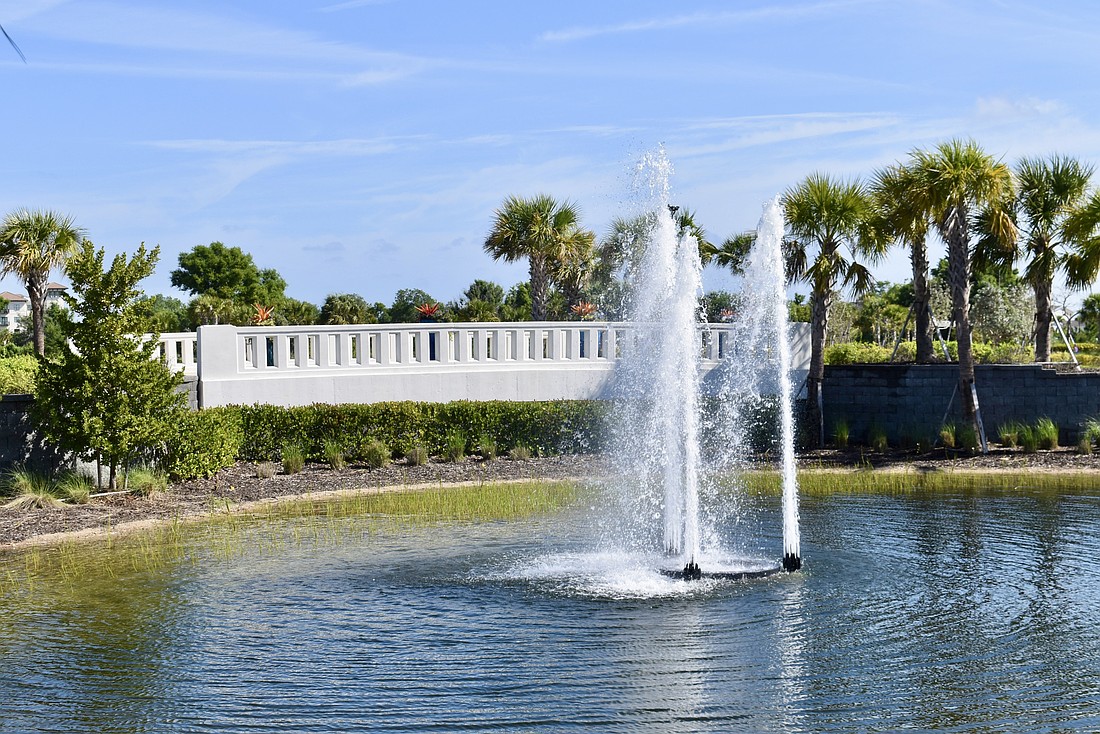
For example, unless they have a use outside of aesthetics, fountains in ponds and lakes are only allowed to run for four hours per day.
Otherwise, SWFWMD and Manatee County are encouraging reclaimed water to be voluntarily conserved by not irrigating between the hours of 4 a.m. and 8 p.m.
"It's not an unlimited supply," Kruse said. "You'll still want to restrict it because that supply will inevitable go down as water goes down because of a lack of water, but it'll start raining. It's cyclical."