

• Alternate Text
  • Loading

  • Sand Bucket List
  • Health Observed
  • Crossword
  • Contests
  • Newsletters
  • e-Newspaper App
  • Longboat
    • News
    • Cops Corner
    • Real Estate
    • Business
    • Neighbors
    • Opinion
  • East County
    • News
    • Real Estate
    • Business
    • Neighbors
    • Schools
    • Sports
    • Opinion
  • Sarasota
    • News
    • Cops Corner
    • Real Estate
    • Business
    • Neighbors
    • Schools
    • Sports
    • Opinion
    • Siesta Key
  • Arts + Entertainment
    • Eat + Drink
    • Arts + Culture
    • Reviews
    • Things To Do
    • Black Tie
    • Spotlight Partners
  • Things to Do
  • Galleries
  • More
    • Hurricane Season
    • Elections
    • Health Observed
    • Sand Bucket List
    • Calendar
    • Celebrations
    • Contests
    • Tributes
    • Submit a Celebration
    • Submit a Tribute
    • Public Notices
    • Classifieds
  • Longboat
    • Longboat
    • News
    • Cops Corner
    • Real Estate
    • Business
    • Neighbors
    • Opinion
  • East County
    • East County
    • News
    • Real Estate
    • Business
    • Neighbors
    • Schools
    • Sports
    • Opinion
  • Sarasota
    • Sarasota
    • News
    • Cops Corner
    • Real Estate
    • Business
    • Neighbors
    • Schools
    • Sports
    • Opinion
    • Siesta Key
  • Arts + Entertainment
    • Arts + Entertainment
    • Eat + Drink
    • Arts + Culture
    • Reviews
    • Things To Do
    • Black Tie
    • Spotlight Partners
  • Things to Do
  • Galleries
  • More
    • More
    • Hurricane Season
    • Elections
    • Health Observed
    • Sand Bucket List
    • Calendar
    • Celebrations
    • Contests
    • Tributes
    • Submit a Celebration
    • Submit a Tribute
    • Public Notices
    • Classifieds
  • Sand Bucket List
  • Health Observed
  • Crossword
  • Contests
  • Newsletters
  • e-Newspaper App

Exploring the skies

The Local Group of Deep Sky Observers brings together astronomy-lovers and amateurs to explore the wonders found through the lens of a telescope.


  • By Brynn Mechem
  • | 9:00 a.m. August 19, 2021
  • LWR Life
  • Share

Imagine you are in a dark room, and you turn on a flashlight. Instantly, a dim glow will fill the room.

That is because the photons from the flashlight are moving from the lightbulb at the speed of light to your retina. When the photons hit your retina, your brain perceives it as light.

If you were to stand across a football field at night and again turn the flashlight on, the same process would happen, but because the light has to travel farther, it would take the light about one second to reach you.

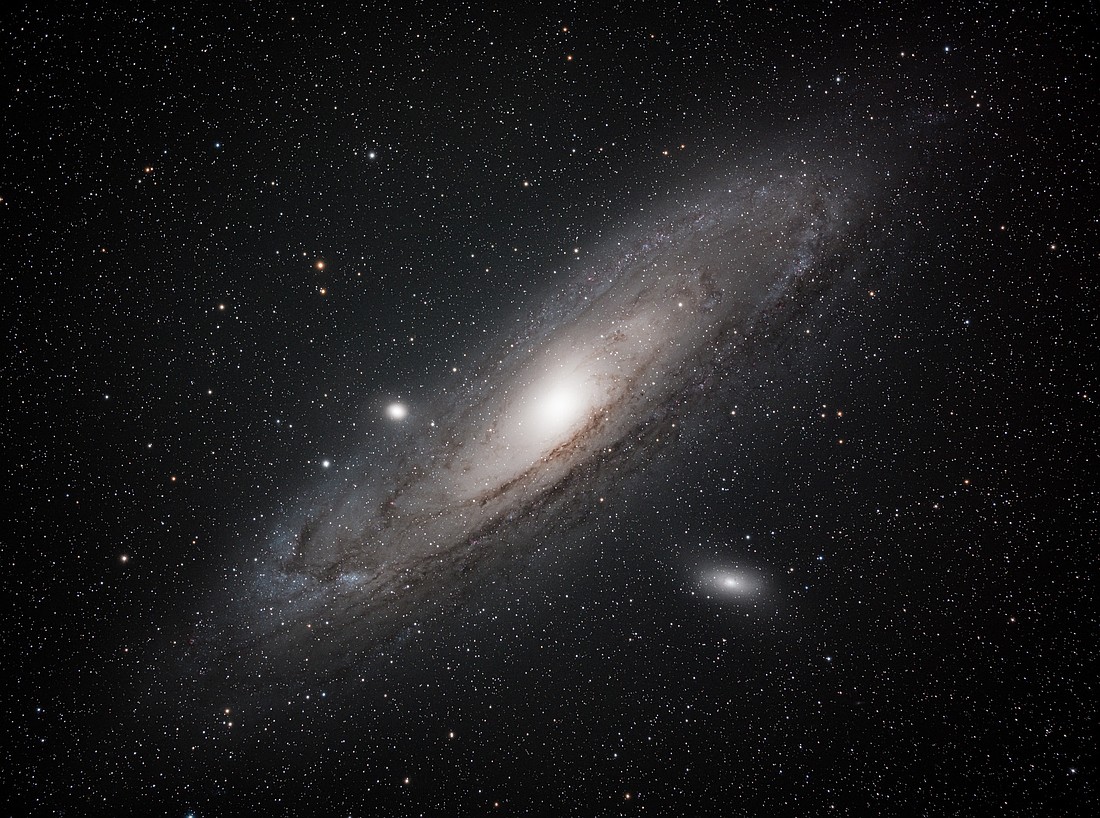
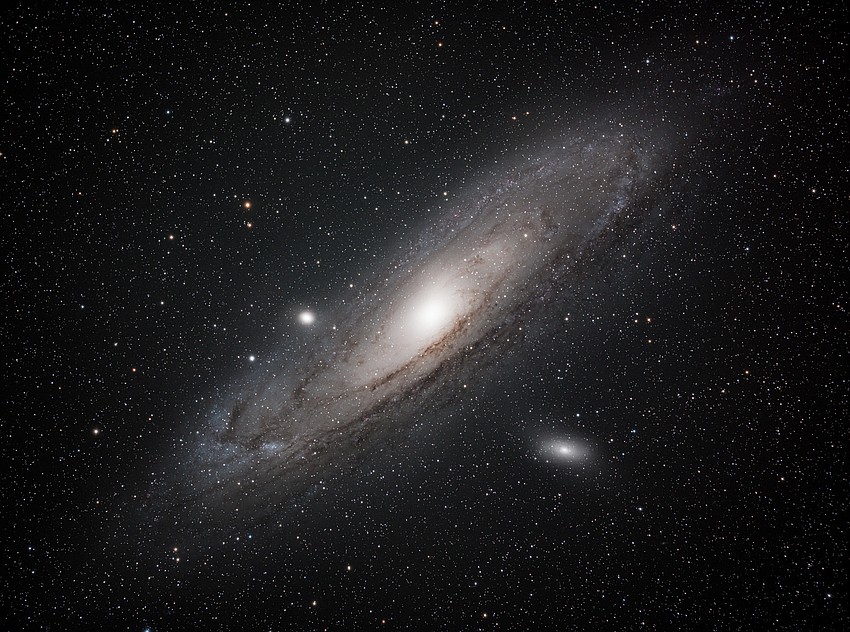
So what happens when you look through a telescope at a galaxy that is 3 million light-years away? To view the Andromeda galaxy, which is 2.5 million light-years away, photons have been traveling for 2.5 million years until they are filtered through the telescope and into your eye.

That means the photons from that galaxy have been traveling since before the Ice Age to reach you.

“That’s the freak-out point for a lot of people,” says Jonathan Sabin, an avid astronomer and the president of the Local Group of Deep Sky Observers.

But Sabin, who regularly exposes residents to the wonders of the galaxy, is used to the freak out. In fact, he welcomes it.

Sabin and his fellow club members regularly haul their 100-pound telescope gear to local deep-sky viewing sites hoping to share their passion for the skies.


Are constellations real?

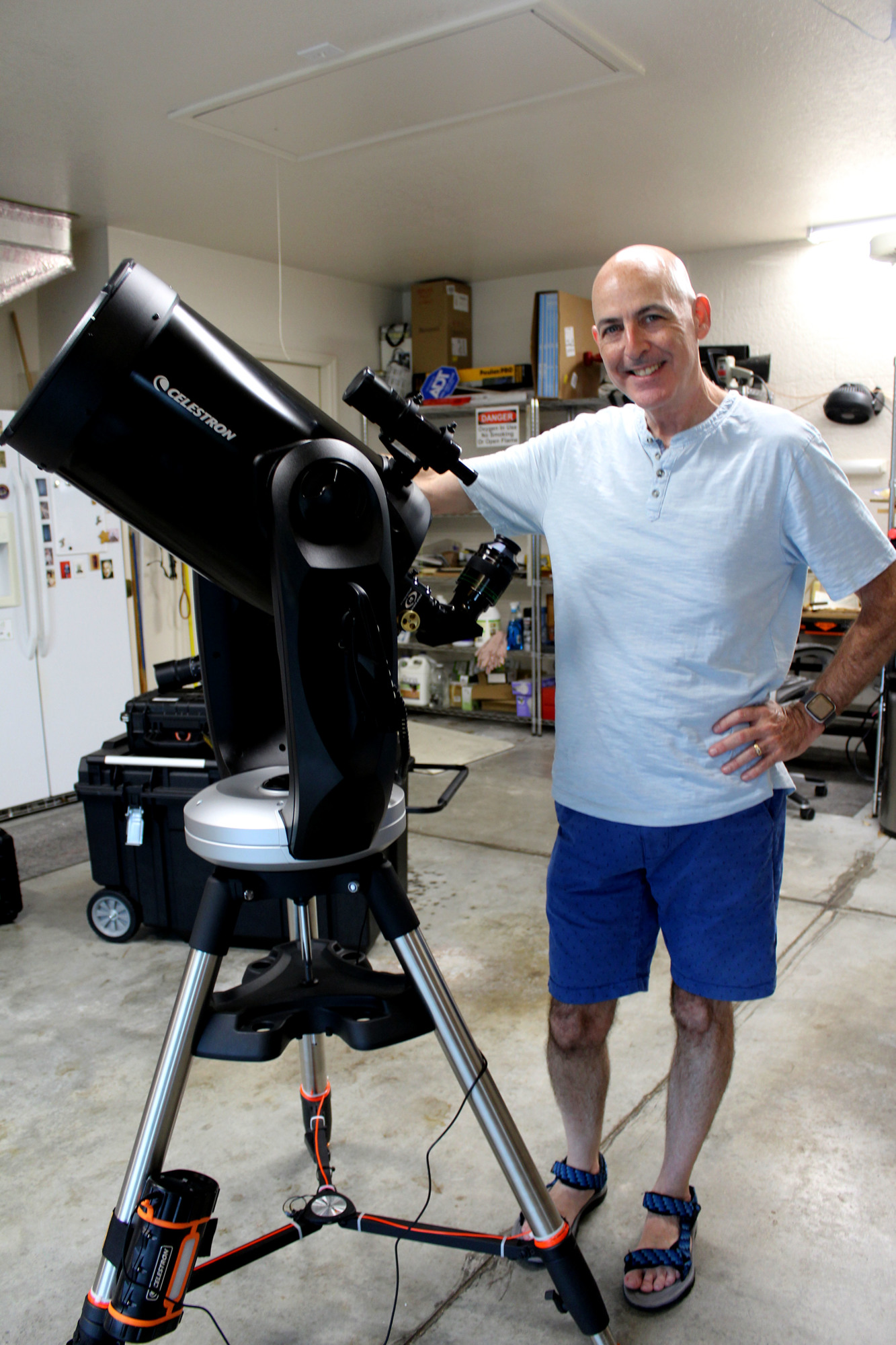
Jonathan Sabin, the president of the Local Group of Deep Sky Observers, regularly takes his telescope to public events to encourage others to look at the skies. Brynn Mechem

Growing up in New York City, Sabin used to wonder if constellations really existed. He remembers seeing a few scattered stars, but the city lights were too bright to see any formations.

However, his fixation with astronomy grew at 5 years old when his parents took him to The Hayden Planetarium in New York City. He was transfixed by everything, and now at age 60, he still owns the children’s book his parents bought for him that day.

“I remember I would read that book from cover to cover for ages,” he says. “The surface of the moon, the surface of Mercury, it was all artwork to me.”

As Sabin got older, he began to get frustrated by the fact that he couldn’t see the stars he was studying. However, when he was 15, his family moved to Florida, and he finally got his chance.

While driving to their new home in Manatee County, Sabin noticed The Bishop Museum of Science and Nature had a planetarium. He began volunteering on the weekends and eventually joined the staff, where he was able to use the telescope and grow his passion.

Common Questions

How far can you see?

From a clear dark sky site, the human eye can see about 2.5 million light-years, which is about as far as the Andromeda galaxy. Granted, the collection of stars might look like pinpoints or a blob of light.


Can you see the moon landing with a telescope?

Although telescopes allow people to see craters in the moon that are 2-3 miles across, they do not have a large enough magnification to see the lunar landing site. In fact, the Hubble Space Telescope’s maximum magnification will afford a 25-mile away view, which is still too far to see any footprints or flags left behind.


What is a black hole?

Every object with mass creates its own gravitational field. A black hole is a portion of space where the force of gravity is so strong that nothing can escape its pull, not even the speed of light.


How far is the closest star?

The closest star is one that we see every day: the sun, which is about 93 million miles from Earth. Aside from the sun, the nearest star is Alpha Centauri, three stars bound together by gravity, about 4.37 light-years away.


Should I wear my glasses to look through a telescope?

If you are near- or far-sighted with no other eye problems, shed your glasses. After tweaking the focus of the lens, you’ll see objects as clearly as if you had 20:20 vision. Taking off the glasses also helps avoid tunnel vision, which occurs when your eye is too far from the eyepiece. If you have astigmatism, it’s best to keep them on.

In 1983, he got a call to join the Local Group of Deep Sky Observers, of which he has been the president for the past six years.


Exploring galaxies near and far

LGDSO, which meets several times a month, is a haven for astronomy lovers. The club meets at a site located at the Crowley Museum & Nature center, where members can view the sky without light pollution.

The three major types of deep sky objects are star clusters, galaxies and nebulae, or a cloud of gas and dust in space. However, club members also view moons and planets when conditions allow.

Club members try to meet on the Saturday around the last quarter moon and the Saturday prior to the new moon because that’s when the skies are darkest, allowing ideal viewing conditions. The optimal observing season is typically autumn through spring.

“The club is great because we get people who have different passions within astronomy who can teach others about their findings,” Sabin says.

The club draws members who have a variety of interests including charting the spectrography of stars, cosmology and astrophotography.

One such member is Andy Harrell, who joined LGDSO in 2019 but began astrophotography about 10 years ago after seeing images people had taken of Saturn and Jupiter with webcams. After learning how to align the telescope with the North Pole and keeping dew from accumulating on the lens, he says he became obsessed with the hobby.

“I have such fun taking images of the deep-sky objects — nebulas in particular,” Harrell says. “There are these enormous structures out there that look so small at the distance we sit from them, but with astrophotography, we can determine they are light-years across.”

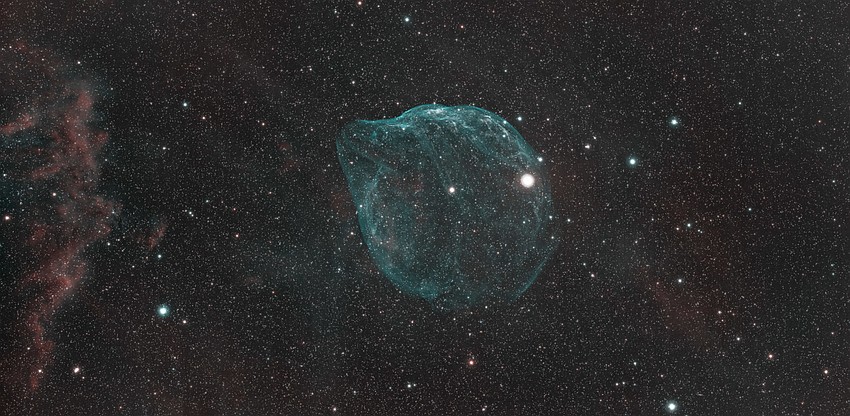
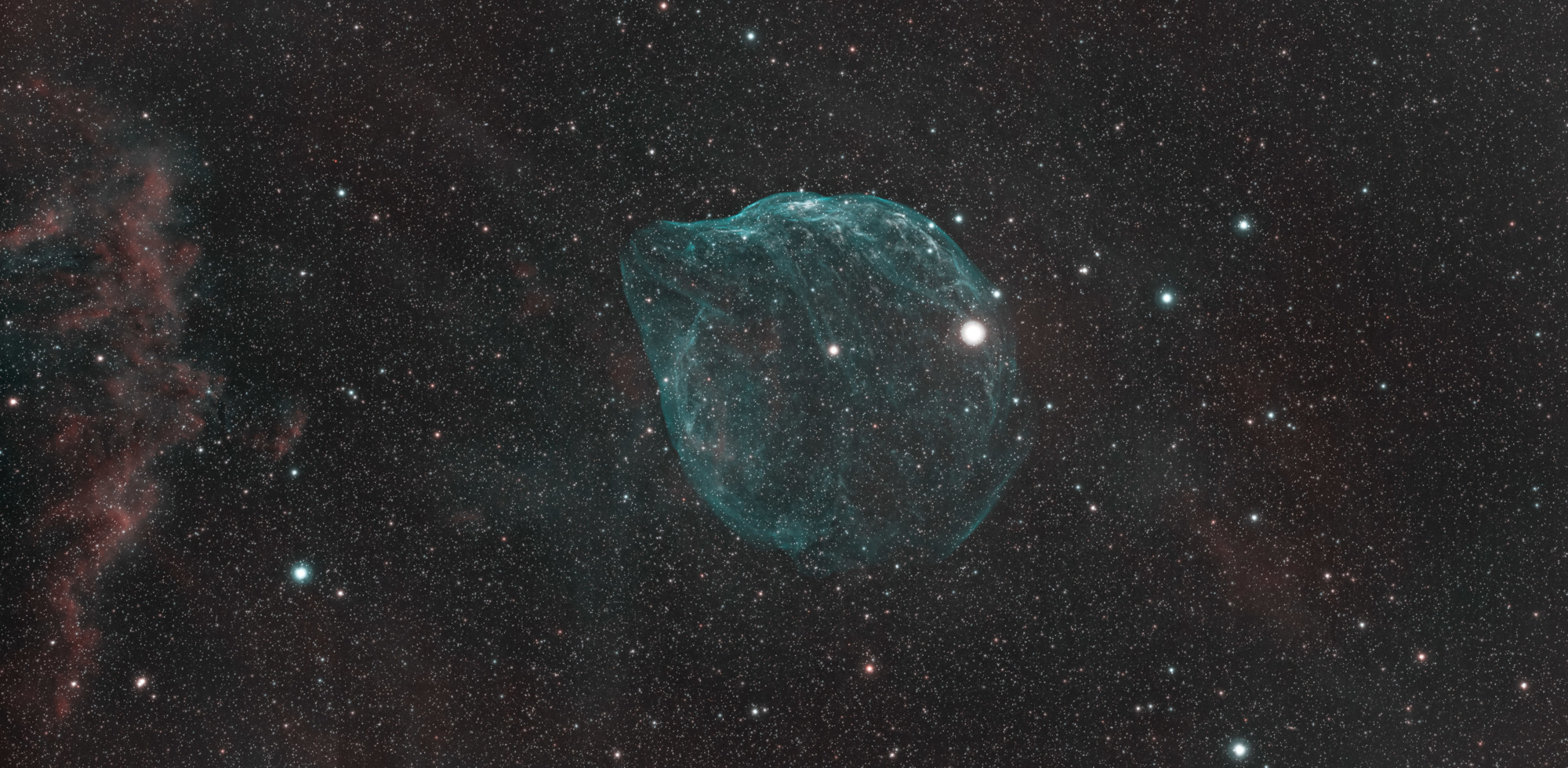
Sh2-308 is an interstellar atomic hydrogen region located near the center of the constellation Canis Major. Photo courtesy Andy Harrell

Sean McDonald has shared Harrell’s passion for astrophotography since family gifted him a telescope for Christmas seven years ago. Although his family was “mildly amused,” McDonald was so excited when he first saw the Orion nebula that the hairs on his arms stood up.

His introductory telescope was swiftly replaced with a 16-inch Newtonian, but McDonald still wasn’t impressed with the fuzzy resolution of the deep space objects he was looking at.

“One night, I put my DSLR camera into the eyepiece holder, and bam, the fuzzy gray globs I’d studied in my eyepieces became color-rich spiral arms of galaxies or pinpoint starts in a globular cluster,” McDonald says. “All the nearly invisible nebulae I had hoped to see but couldn’t were vibrant and amazing.”

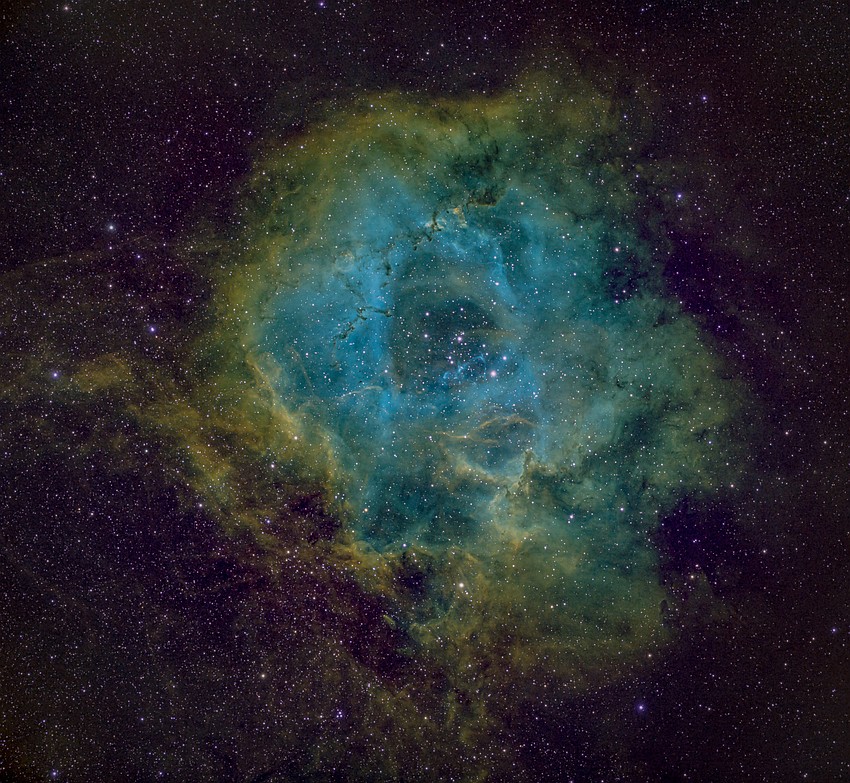
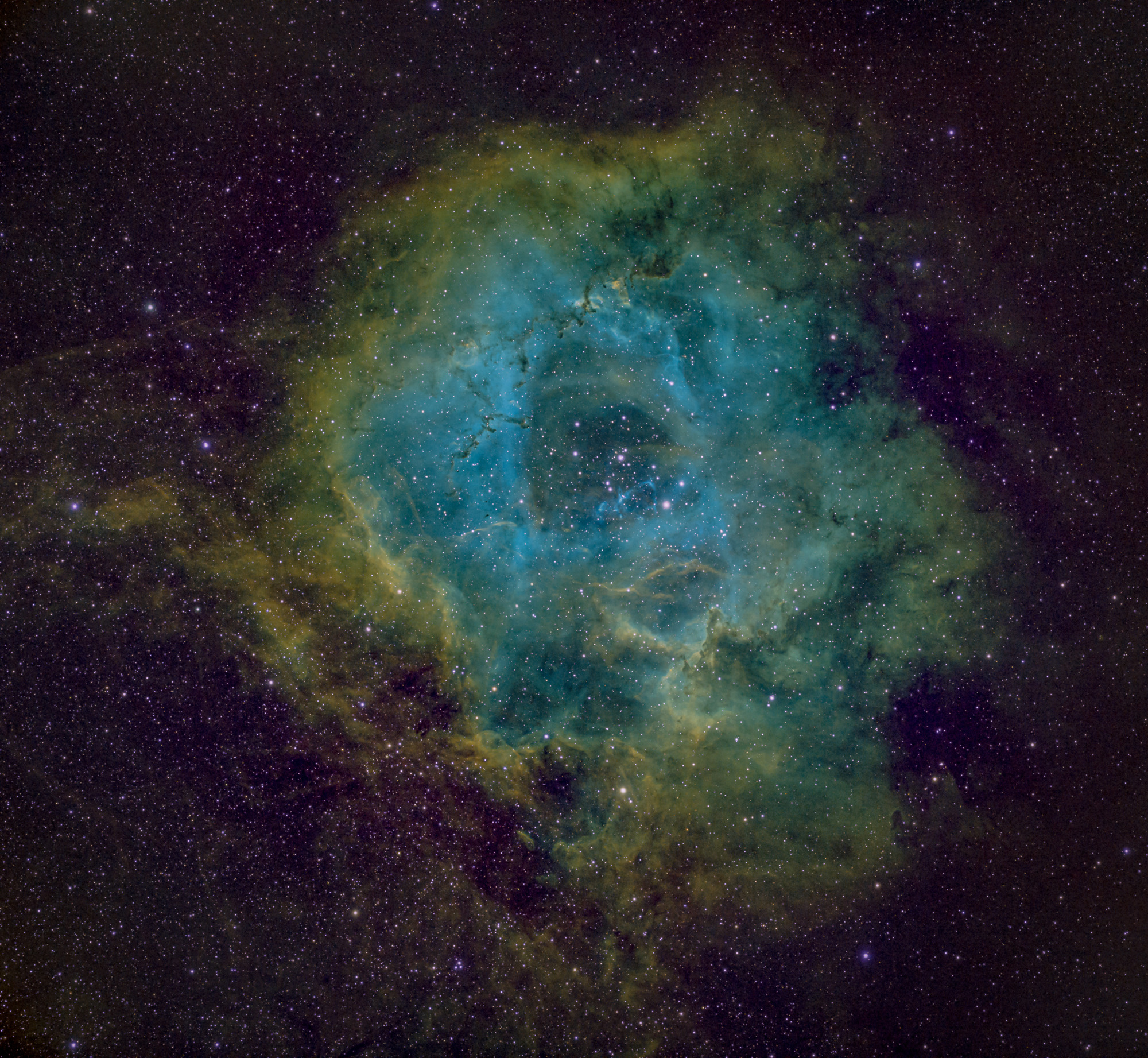
A nebula is an interstellar cloud of dust, hydrogen, helium and other ionized gases. Photo courtesy Andy Harrell

He’s spent a lot of money and time — neither of which come easy for him, he says — to invest in quality astrophotography equipment. Although it’s easy for him to get lost in the quest for equipment, he never loses site of why he got into the hobby in the first place.

“The real reason to take on all the challenges that come with astrophotography is to explore the amazing things in the immense space around our tiny little world,” McDonald says.


Ready for exploration?

Although it’s easy for club members to get lost in their own galaxies, LGDSO members want everyone to know that astronomy isn’t just for the self-proclaimed science geeks. The club, for the past 20 years, has put on Sidewalk Astronomy sessions once a month where club members set up telescopes for the general public when weather permits. Those sessions typically rotate between the Celery Fields, Robinson Preserve in West Bradenton and Riverview High School.

Typically, the events draw about 24 telescope-wielding club members and anywhere from 100 to 200 members of the public. Sabin says the sidewalk sessions allow astronomy, which can be an expensive hobby, to become accessible to everyone.

“Of all of the sciences, astronomy is probably one of the most approachable sciences for people,” Sabin says. “You know, there’s not too many microscopy groups out there doing cheek swabs and showing you what’s living in your mouth. So most people that come try it are often blown away at how accessible it is.”

Sidewalk astronomy sessions have been canceled since 2020 due to COVID-19, but Sabin hopes to restart them in the fall. Until then, Sabin hopes everyone will take a moment to appreciate the skies, whether it’s with a high-powered telescope or a pair of old binoculars lying about.

“It’s awe-inspiring,” he says. “Here we are on this little planet in the Milky Way galaxy, which is just one of the 100 billion known galaxies in the universe. It kind of makes you feel insignificant, but also it’s amazing to know that we are a part of that.”
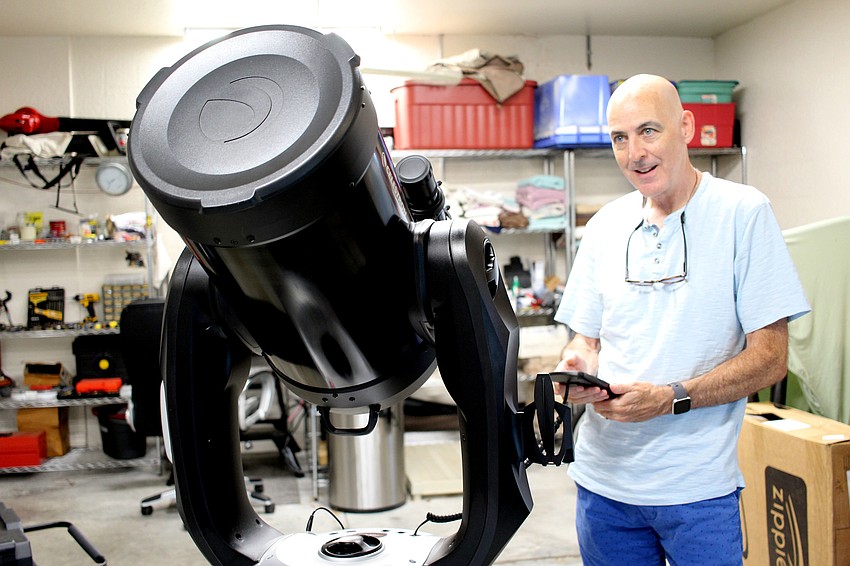
Jonathan Sabin, the president of the Local Group of Deep Sky Observers, regularly takes his telescope to public events to encourage others to look at the skies. Brynn Mechem
Andy Harrell says he enjoys taking photos of deep sky objects because it shows a person how big the galaxy is. Photo courtesy Andy Harrell
A nebula is an interstellar cloud of dust, hydrogen, helium and other ionized gases. Photo courtesy Andy Harrell
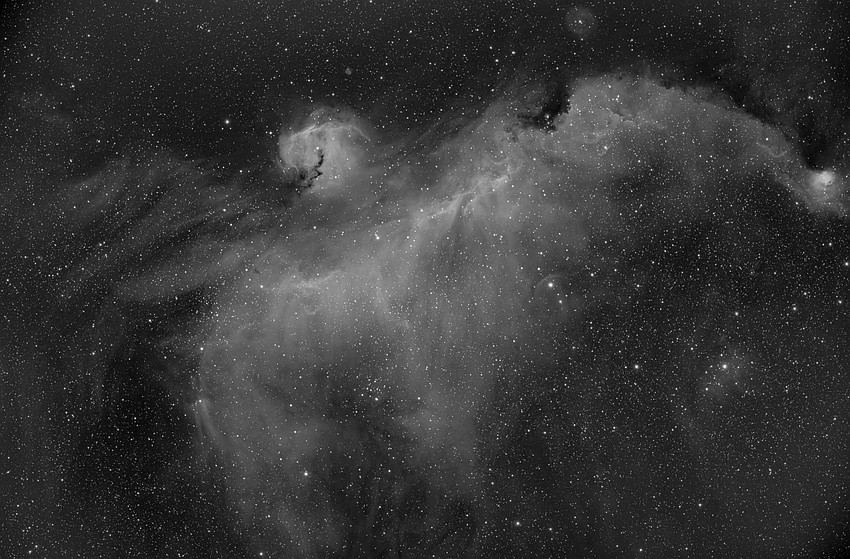
IC 2177, or the Seagull Nebula, lies between the constellations Monoceros and Canis Major. Photo courtesy Andy Harrell
Sh2-308 is an interstellar atomic hydrogen region located near the center of the constellation Canis Major. Photo courtesy Andy Harrell
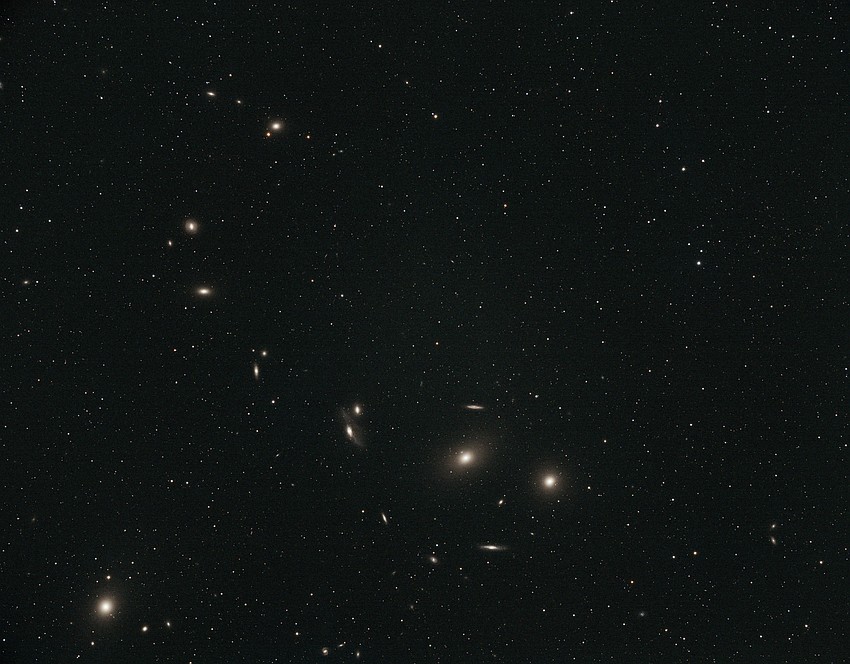
The Andromeda Galaxy is the furthest thing the human eye can see without any magnification. Photo courtesy Andy Harrell
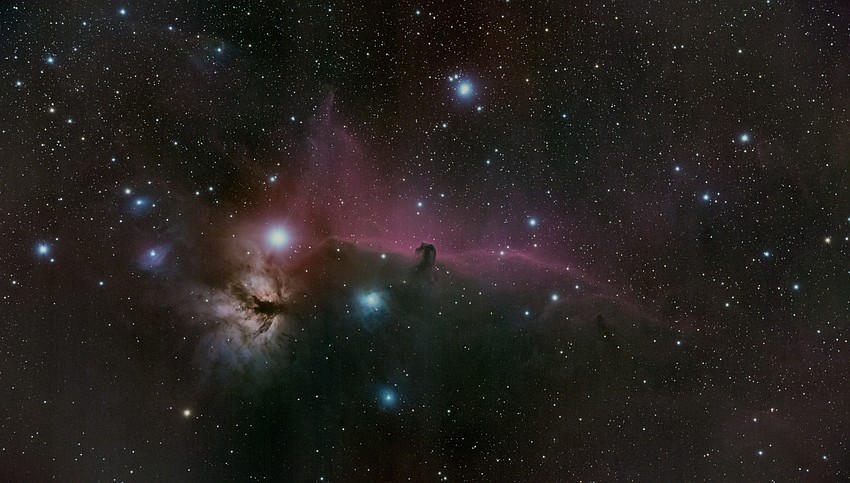
Herbig-Haro objects such as this one are small-scale regions that signify an area where stars are forming. Photo courtesy Andy Harrell
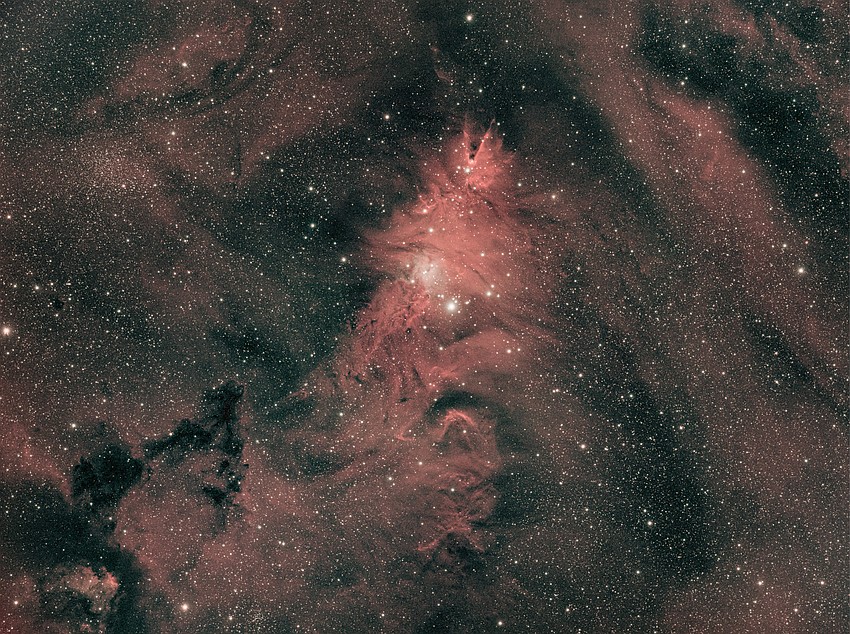
The NGC 2264 nebula identifies two astronomical objects as a single object: the Cone Nebula and the Christmas Tree Cluster. Photo courtesy Andy Harrell
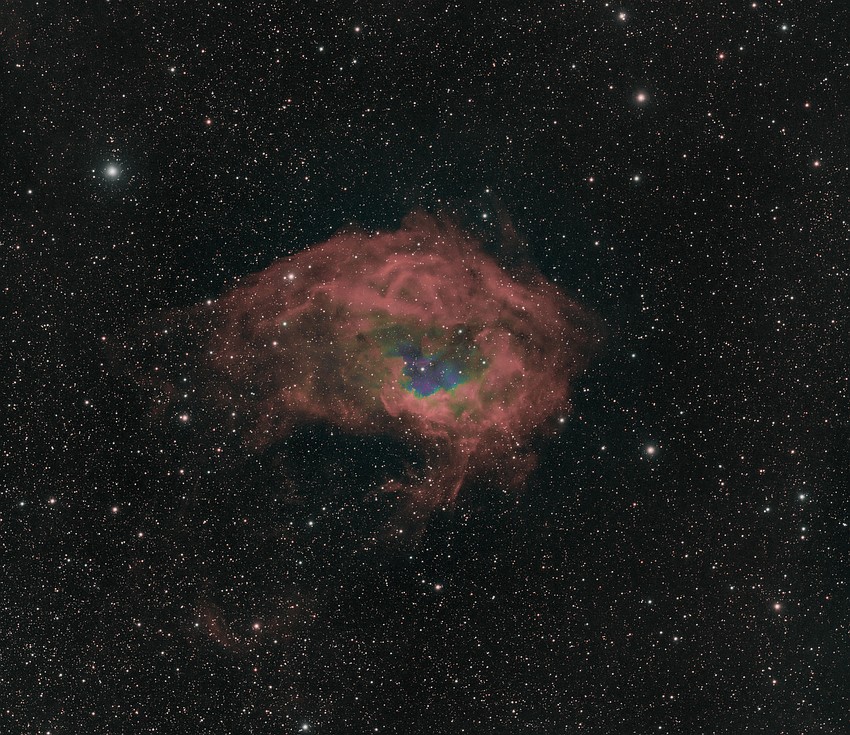
Sh2-261, or the Lower's Nebula, appears to the human eye to be twice the size of the moon, but in reality is several lightyears across. Photo courtesy Andy Harrell
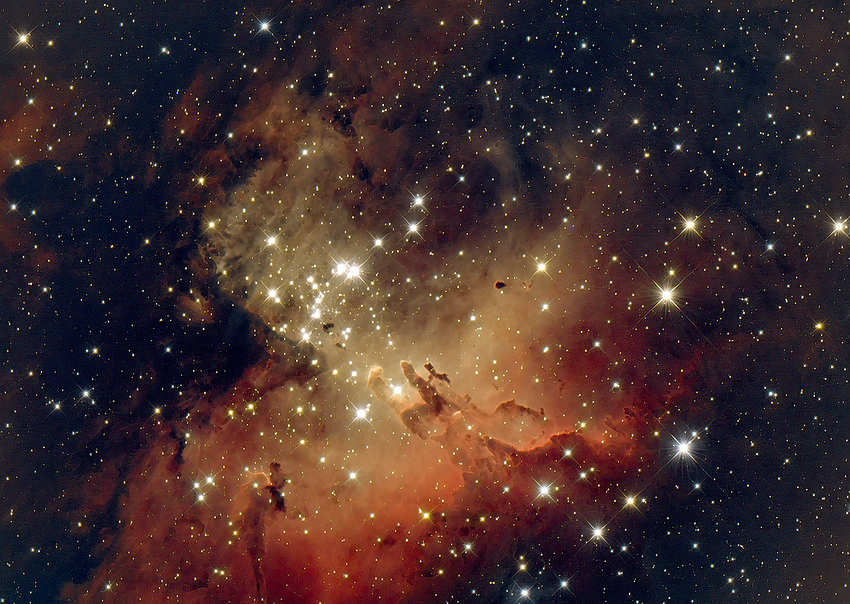
M 16, or the Eagle Nebula, spans more than 70 lightyears across and 55 lightyears tall. Photo courtesy Sean McDonald
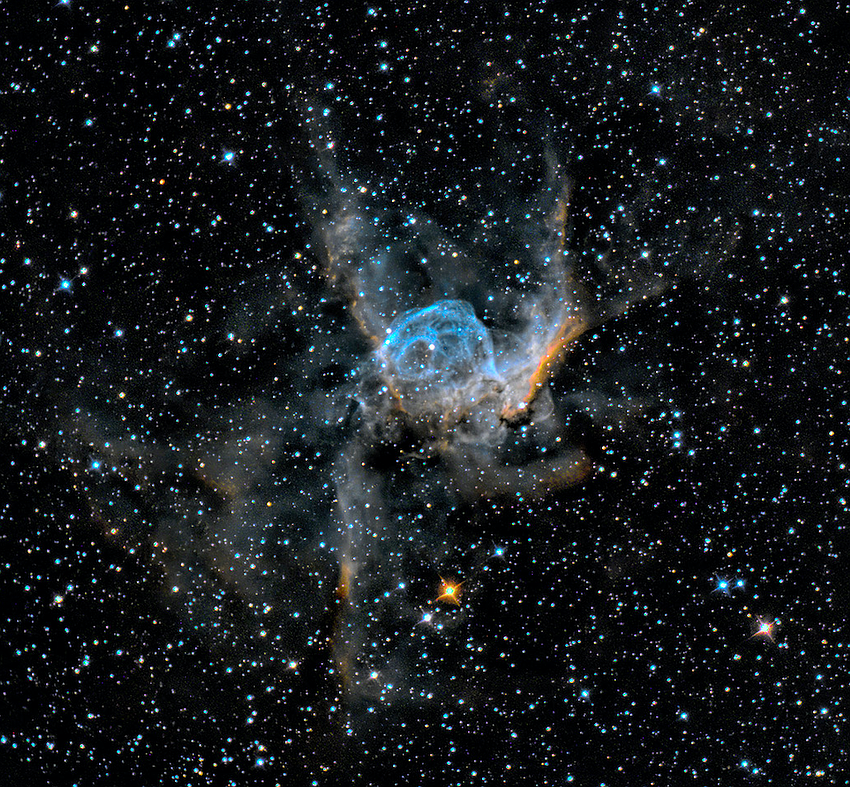
NGC 2359, more commonly known as Thor's Helmet, is an emission nebula 11,970 light years from Earth. Photo courtesy Sean McDonald
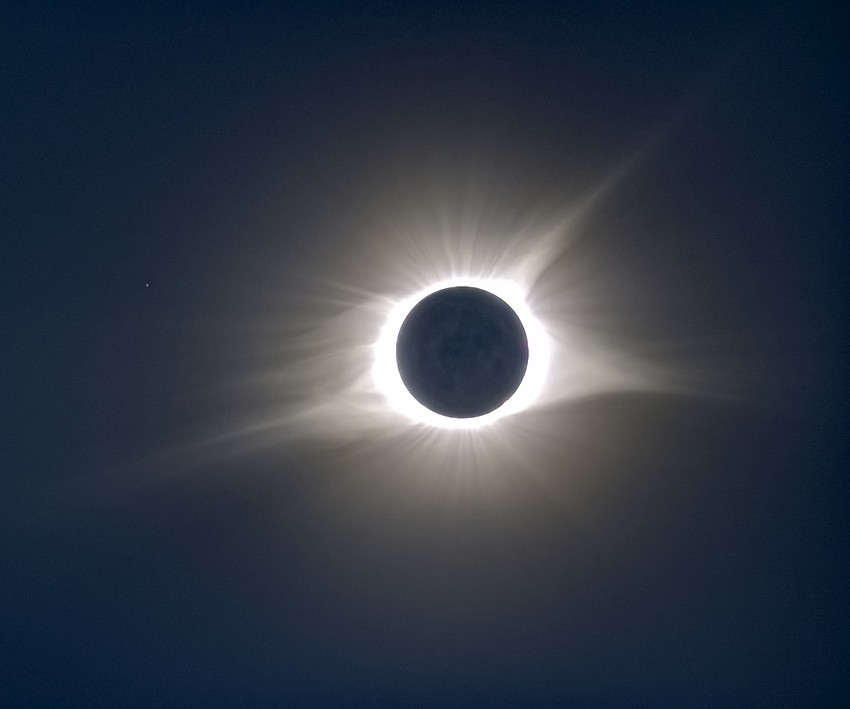
A total solar eclipse is not noticeable until about 90% of the sun is covered by the moon. Photo courtesy Jonathan Sabin
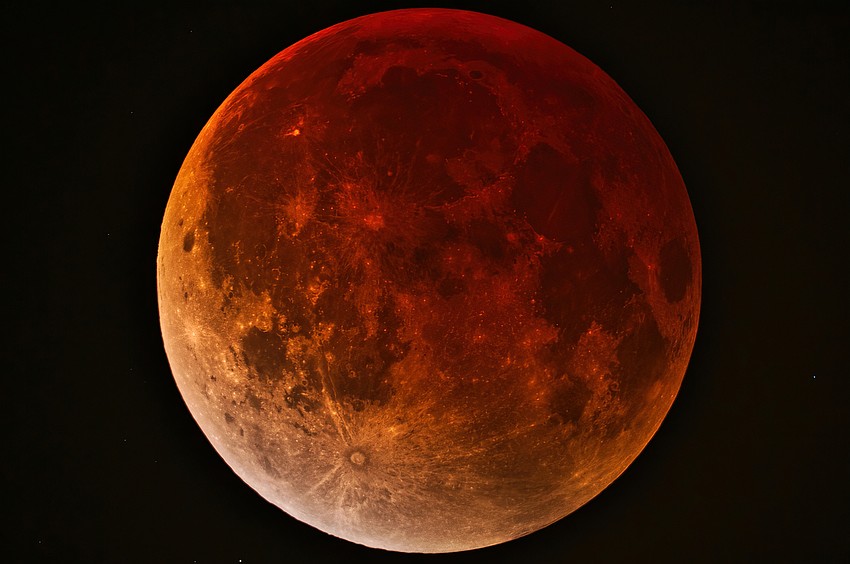
A blood moon occurs when the moon is fully in Earth's shadow. At the same time, a little bit of light from Earth's sunrises and sunsets falls on the surface of the moon. Photo courtesy Jonathan Sabin


Latest News

A May 2024 rendering of the Sarasota County library on Longboat Key.
  • June 22, 2026
Property tax overhaul may put Longboat Key library in jeopardy
Manatee County staff and key stakeholders toss ceremonial dirt to kick off construction on a half-mile trail segment that will span from the Lake Manatee Water Treatment Plant to Rye Preserver.
  • June 22, 2026
Trail system breaks ground near Lake Manatee
St. Lucie County Administrator George Landry has been recommended by Howard Tipton to replace him as town manager as Tipton prepares to retire.
  • June 19, 2026
New town manager recommended for Longboat Key
Woman charged in three high-profile Sarasota burglaries
  • June 18, 2026
Woman charged in three high-profile Sarasota burglaries

Sponsored Health Content

Sponsored Content

The best of Your Observer, delivered directly to your inbox

Get the latest in news, sports, schools, arts and things to do in Sarasota, Siesta Key, Longboat Key and East County.

Sign Up

Latest in LWR Life

Zach Zeller co-owns three restaurants in Lakewood Ranch.
  • May 22, 2026
A high-flying spirit has led Lakewood Rancher to adventure, in business and life
From left: Katelyn Diaz serves up smiles at Sip n Brew, the coffee trailer she launched with her parents shortly after graduating from Lakewood Ranch High. Partners Scott Wacha, left, and Brandon Whitman hold their Moo-Jitsu spice blends, a backyard-idea-turned-growing-business rooted in family, flavor and a bit of humor. Jason Huh, founder of STEEL Supplements, showcases Sodi Pop and Omni — two of the company’s expanding beverage lines aimed at a broader audience.
  • May 22, 2026
These entrepreneurial families launched their new ventures right here at home
The home’s exterior is a carefully balanced geometric composition.
  • May 22, 2026
The Florida lifestyle is glorified in a lavish new home in Waterside
A visitor points in wonder inside Mote SEA’s expansive habitat, where sharks, rays and reef life glide through a luminous underwater world.
  • May 22, 2026
Summer's hot. Here's a list of activities that don't require SPF.
A colorful spread of kebabs, house-made sauces and sides showcases the restaurant’s bold, cross-cultural approach to Mediterranean cuisine.
  • May 20, 2026
Middle Eastern-inspired restaurant gets its passion from surprising its customers
A camper explores hands-on marine science during Mote Marine Laboratory & Aquarium’s Mote SEA STEM Camp.
  • May 19, 2026
Let the kids blossom creatively this summer at one of these art camps

App

Download the Your Observer app

Stay in the know with the latest local news. Any device, anytime, anywhere.

DOWNLOAD NOW

Contact

  • 1970 Main St.
  • Third Floor
  • Sarasota, FL 34236
  • Phone: 941-366-3468
  • FPN Verified

Extra, Extra!

  • Newsletters
  • App
  • Crossword
  • Contests

more

  • About Us
  • Contact Us
  • Classifieds
  • Advertise
  • Rack Locations
  • Jobs
  • Privacy Policy
  • Accessibility Options

sister sites

  • Business Observer
  • Jax Daily Record
  • Orange Observer
  • Accessibility Options
  • Copyright © 2026 Observer Media Group Inc., All Rights Reserved
Sign Up for Daily Headlines

A daily dose of news from Longboat Key, East County, Sarasota and Siesta Key.

Sign Up for In Case You Missed It

A Saturday dose of the week's top stories from Sarasota, Longboat Key and East County.


Anytime. Anywhere. Observer.

From in-depth local reporting to real-time breaking news, stay connected to the stories shaping our community with the Your Observer app.

Download Now for Free