- April 1, 2026

-
-
Loading
Loading
Ask thousands of high school coaches why they do what they do.
There will be an overwhelming consensus among them.
During their upbringing, every coach finds inspiration to mentor young athletes. Very few — if any — will point to money as their reason.
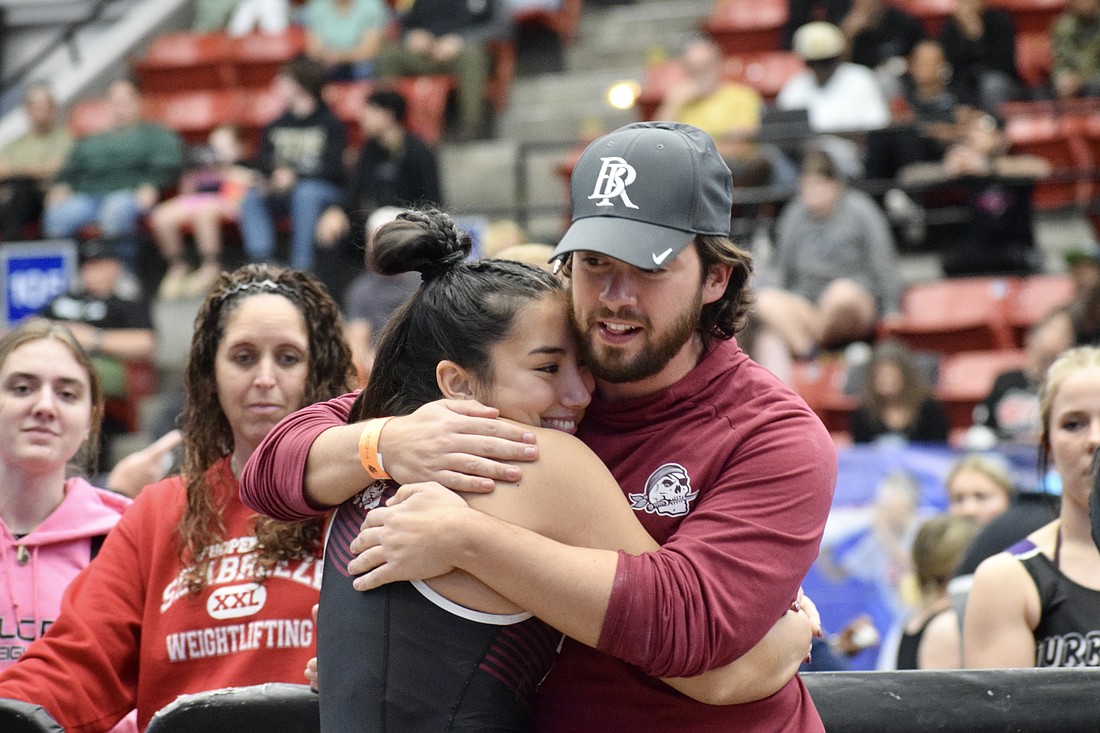
“You coach because you want to help kids,” said Jordan Borges, the Braden River High girls weightlifting coach. “That's the start and the end to it.”
Not that there’s much money to be had, anyway. High school coaching has long been perceived as volunteer work, and accordingly, compensation is next to nothing.
The value of coaches at this level is immense. They deserve more — much more.
Senate Bill 538 seeks to address that by allowing funds generated by booster clubs to be used for extra pay of coaches, except for severance. It also allows coaches who classify as administrative personnel to negotiate with their superintendents for higher pay, up to the highest-paid administrator in their respective districts.
On March 11, the Florida Senate passed the bill by a 37-0 vote, two days after the House did the same by a 104-6 vote. It was filed Nov. 17, 2025, by Sen. Corey Simon, R-Tallahassee.
The bill is now on Gov. Ron DeSantis’ desk, still awaiting his signature, as of March 27. If signed, SB 538 will take effect July 1 ahead of the 2026-27 academic year.
“I feel that a lot of coaches do not have the tools to stand up and fight for (pay increases),” said Jessica Leupold, the Lakewood Ranch High girls volleyball coach. “And some coaches don't have the support from the community, their teams — anyone. But I do feel like there is opportunity.”
High school coaches currently receive supplements which vary in amount by sport and by district. Those supplements are negotiated in collective bargaining agreements with teachers’ unions.
For the 2025-26 academic year, supplements for head coaches in Manatee County were set at $5,775 in football, $4,914 in basketball and $4,491 in baseball.
Whatever the sport, whatever the dollar amount, it’s nowhere near enough.
Operating a successful program entails work before and after the season that is dictated by the Florida High School Athletic Association. Many coaches work hundreds of hours yearly on their own dime.
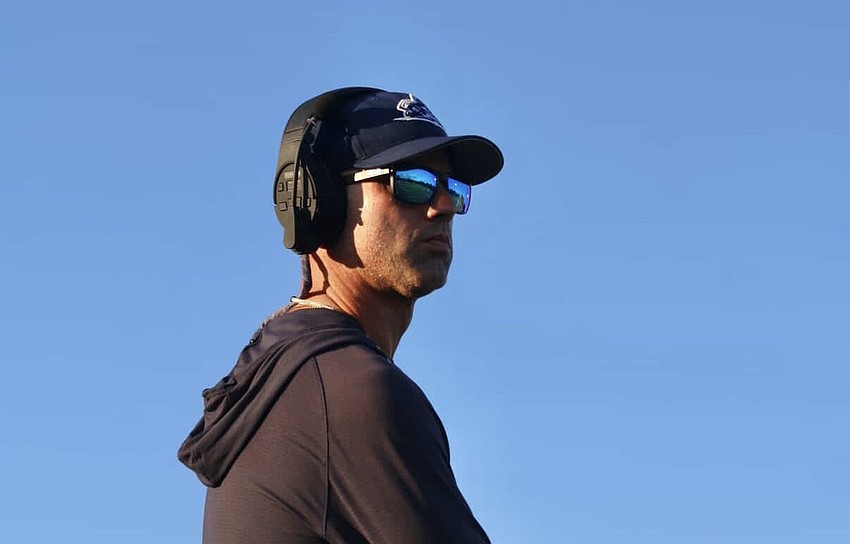
“In no other profession are you so inadequately compensated for the work you put in, and not really have any legal ground to stand on,” said Rob Hollway, The Out-of-Door Academy football coach. “It’s been a challenge.”
Compensation of high school coaches is poor nationwide, but in Florida, it’s particularly pitiful. Look no further than the state’s average teacher salary, which was $54,875 in 2025, per the National Education Association. That’s nearly 25% lower than the national average of $72,030.
SB 538 is sorely needed. It was overdue.
Union-negotiated supplements have rarely increased, and when they do, still fall well short of equitable pay. Manatee County is one such example.
Bill Zarrella is in his seventh year at Lakewood Ranch High, and now coaches boys cross country/track and field. His supplement has increased on just two occasions, including this academic year, when it was upped by 4%.
“When I started coaching track in the 1990s in Massachusetts, I made more then than I’m making now,” Zarrella said. “Which is hard to believe.”
The bill is a step in the right direction, no doubt, but will have an inequitable impact.
It was far more ambitious in the beginning. SB 538 initially proposed decoupling supplement schedules from teachers’ unions while authorizing district school boards to set salaries for coaches.
Coach compensation would have been tied to an hourly salary in accordance with the state’s new $15 minimum wage, which will take effect in September. Every head coach was assigned a number of hours relative to the length of their sport's season.
Football coaches, for instance, had 1,500 hours and thus would have been paid $22,500 — more than triple what the district currently pays.
“When I first saw the way it was being promoted, I was ecstatic,” said Cezar Sharbono, the Braden River High wrestling coach. “I was thinking, ‘Hey, we're finally going to see a significant raise,’ and at one point in time, wrestling coaches were getting 1,100 hours.”
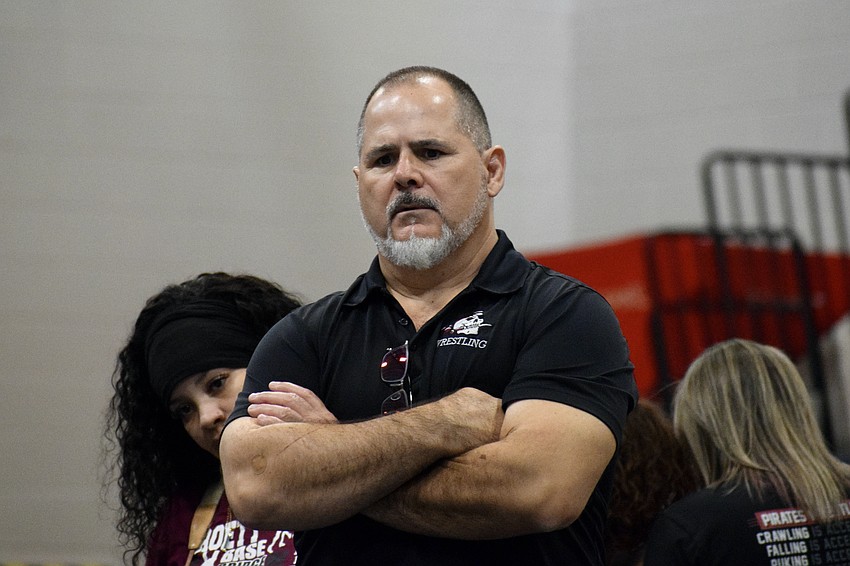
That won’t happen. It didn’t make the final version of the bill.
Instead, booster clubs will be the primary avenue through which coaches can earn extra pay. That puts power in the hands of parents and community members who oversee club finances.
Boosters generally don’t see all sports as equals. More often than not, they fundraise for major programs like football and basketball, leaving everyone else behind.
Coaches of programs which already enjoy strong booster support are poised to prosper. That will have a trickle-down effect on athletic success as the rich get richer and poor get poorer.
At Lakewood Ranch High, only football benefits from the booster club. Even at Braden River High, where multiple sports benefit, some have historically been ignored.
“Even though (wrestling is) pretty much the top program there, we haven't been top priority,” Sharbono said. “I don't see the booster club coming out of pocket and paying wrestling coaches from the bill.”
Two pennies are still more valuable than one penny. This marks positive movement in the long-fought battle for higher coaching pay.
Some coaches will receive compensation more comparable to what they deserve. For many others, though, pay will remain poor until more aggressive legislation is pushed through.
“It would be a whole new world,” said Cole Richardson, the Lakewood Ranch High girls soccer coach. “If I could be paid a proper salary somewhere.”