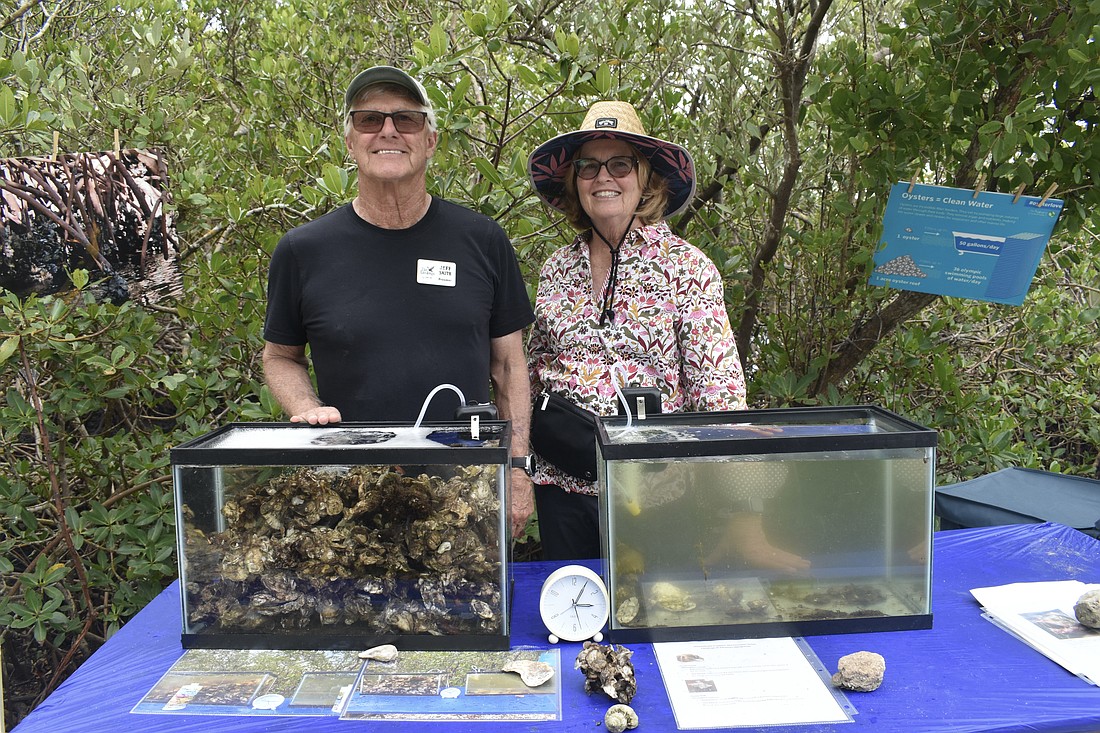
Jeff Smith, president of the Landings Management Association, and Judi Smith, display two tanks into which they dumped phytoplankton, one with oysters and one without, to show the work the oysters do in keeping the water clean.
Photo by Ian Swaby
Sarasota
Neighbors
Share
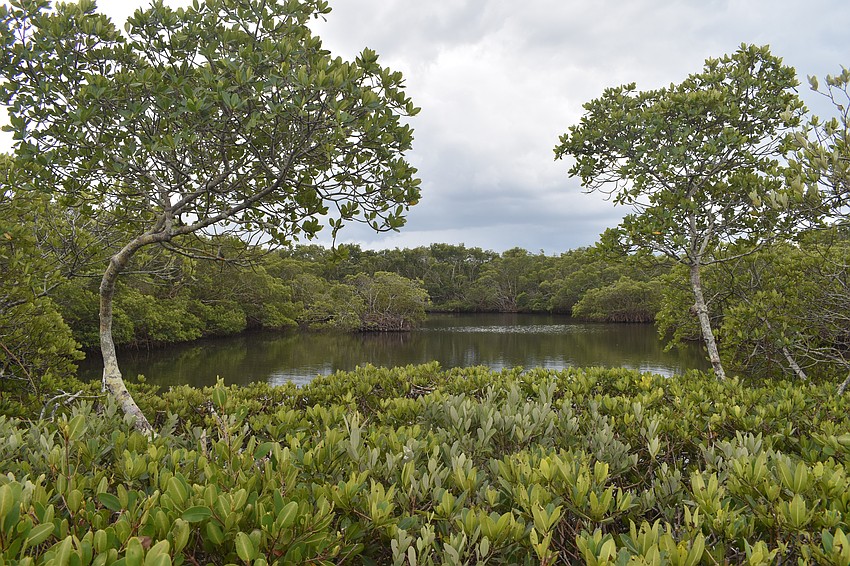
Many drivers along North Tamiami trail may not know that The Landings neighborhood contains the largest amount of privately owned mangroves in the United States, according to its management association.
However, the public had the chance to see it for themselves during the neighborhood's third year of Nature Day by the Bay on March 29.
Members of the public turned out to walk on trails and visit 16 exhibitors along the path, while local residents assisted with activities like fishing, kayak rides and staffing the booths.
"Every year it just gets larger because there's more to celebrate, there's more involved, and all the people who live here know it," said volunteer Darka Hawrysz. "We love living here. That's the key. What people don't understand is that this is not just a place to live. It's really just like Nirvana."
Looking around at the mangroves in both directions, she added, "I mean, seriously, look at this!"
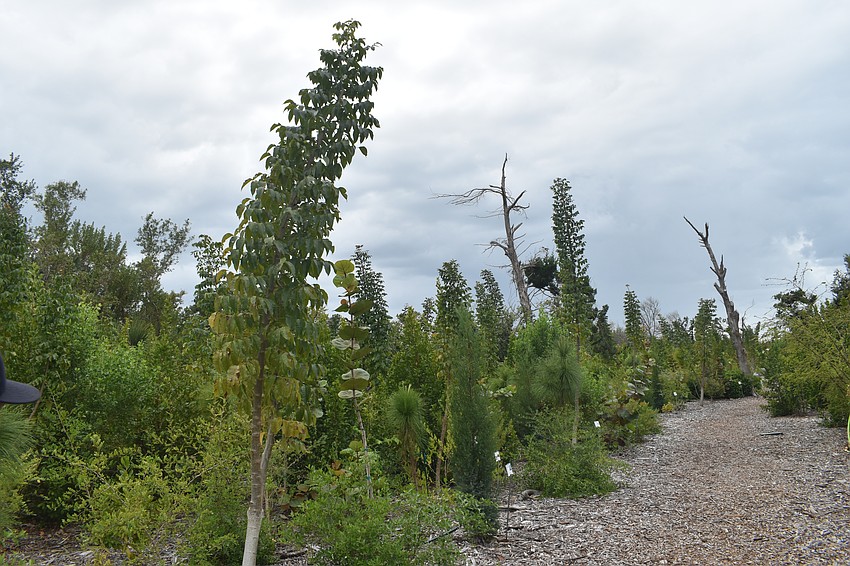
The trails also included the neighborhood's microforest, which was planted in late 2024 and early 2025. It features 1,800 plants representing 60 native species according to Hans Hawrysz, Darka Hawrysz's husband, who is treasurer of the Landings Management Association.
With an upcoming addition, the forest will total close to an acre, says Pamela Callender, a specialist in the design of Florida native gardens.
She says these environments are essential for restoring habitats that the state of Florida has not preserved, and says complaints about an overabundance of animals like rabbits stem from a lack of habitat for their predators, like foxes, owls or bobcats.
Hawrysz says the forest has grown significantly in a short time.
"People are kind of astonished at the level of growth," he said. "These things were 3 feet tall, and now they're 15 feet tall."
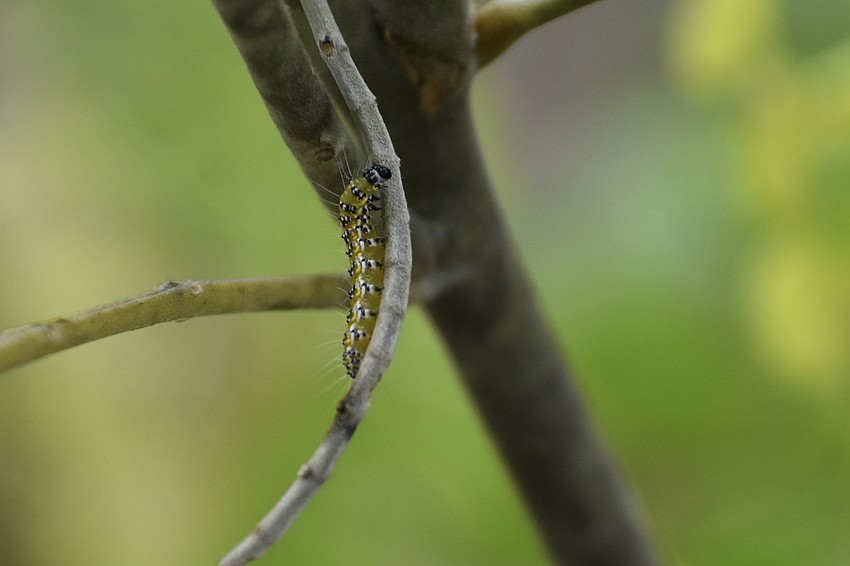
A genista caterpillar climbs in a tree in the microforest.
Photo by Ian Swaby
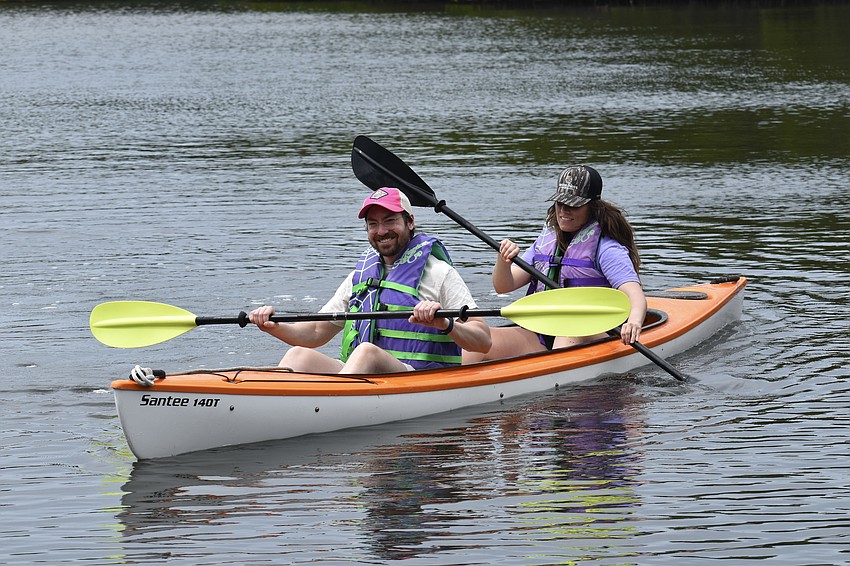
William Wenrick and Audria Dennen take a trip in a kayak.
Photo by Ian Swaby
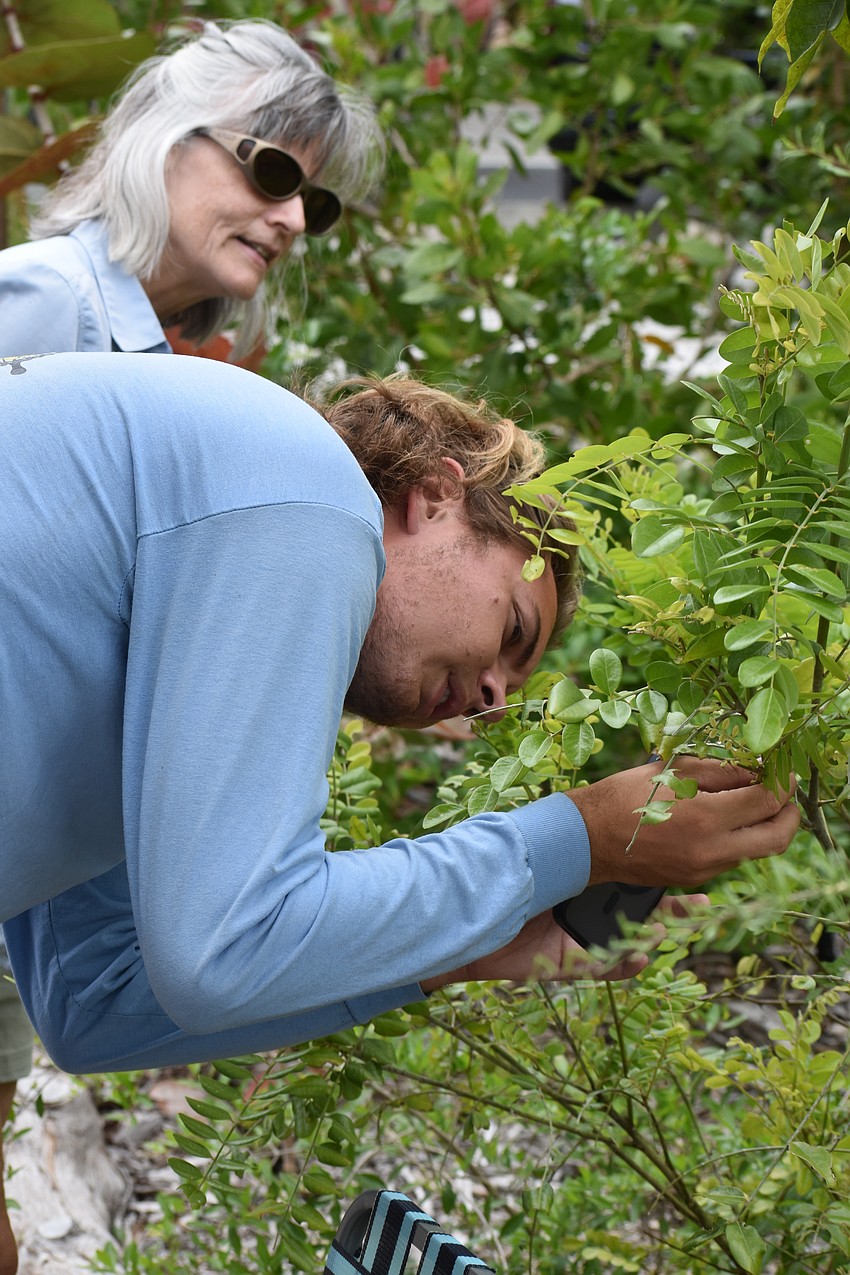
Pamela Callender and Chris Gottleib look at a genista caterpillar climbing in the microforest.
Photo by Ian Swaby
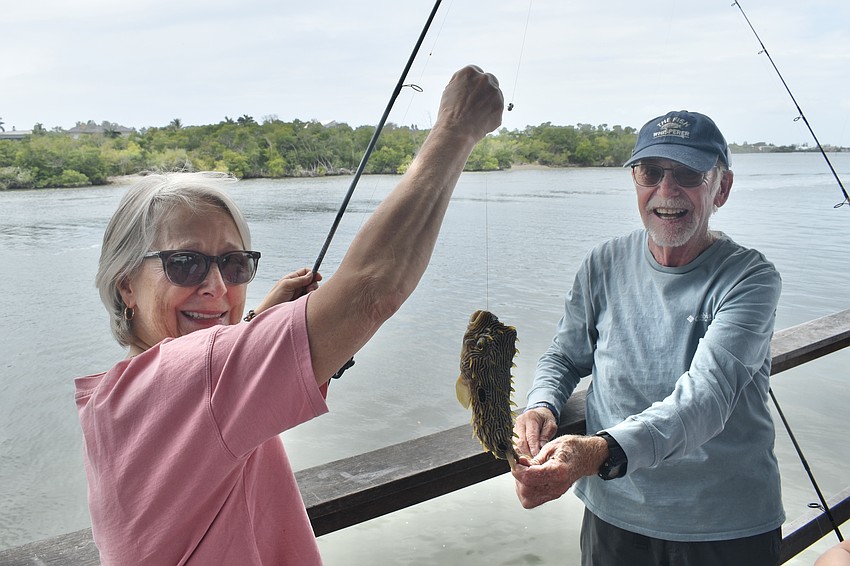
Jaki Becker displays a porcupinefish she caught while fishing with Norman Olshansky, who was among those helping to manage the fishing station.
Photo by Ian Swaby
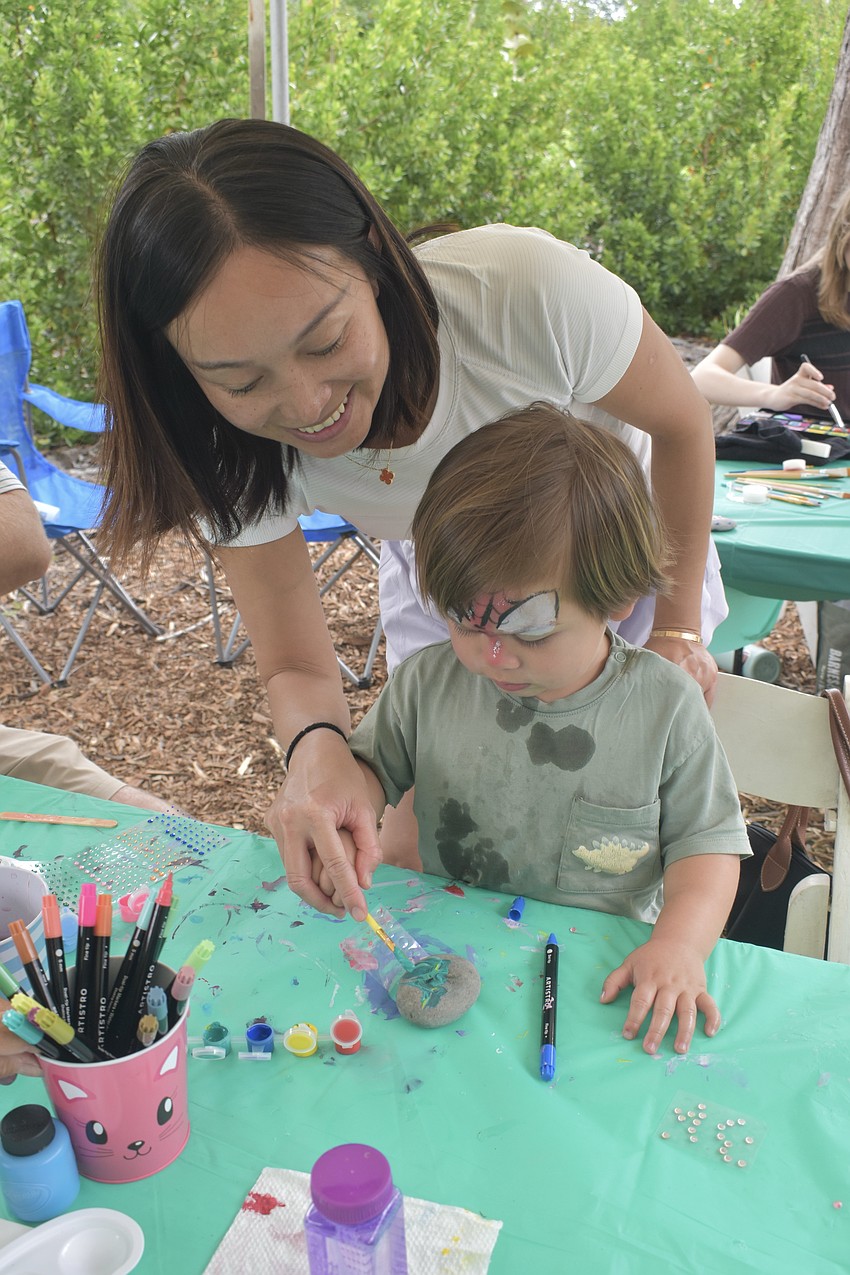
Zoey Salander guides her son Anders Salander, 2, in painting a rock.
Photo by Ian Swaby
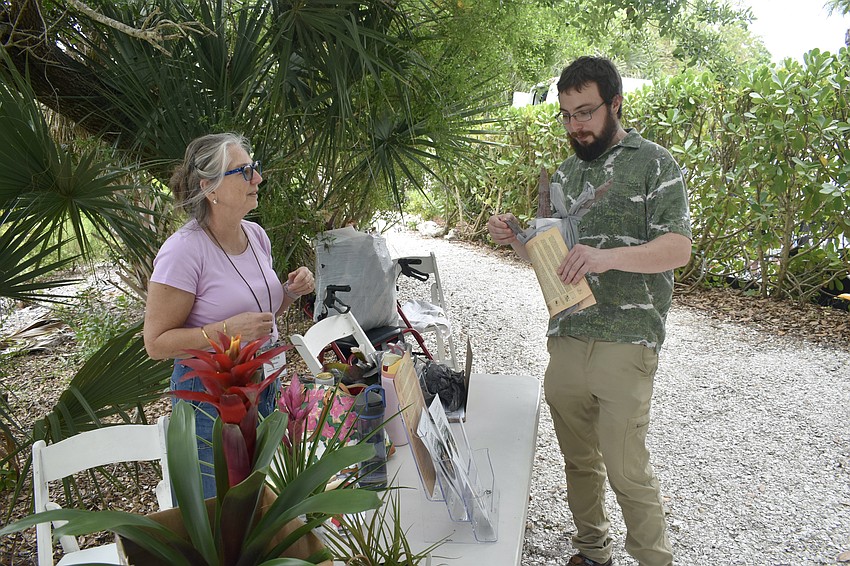
Johanna Rehmani, secretary of Sarasota Bromeliad Society, gives a plant to Sean Patton.
Photo by Ian Swaby
The Landings has 78 acres of privately owned mangroves.
Photo by Ian Swaby
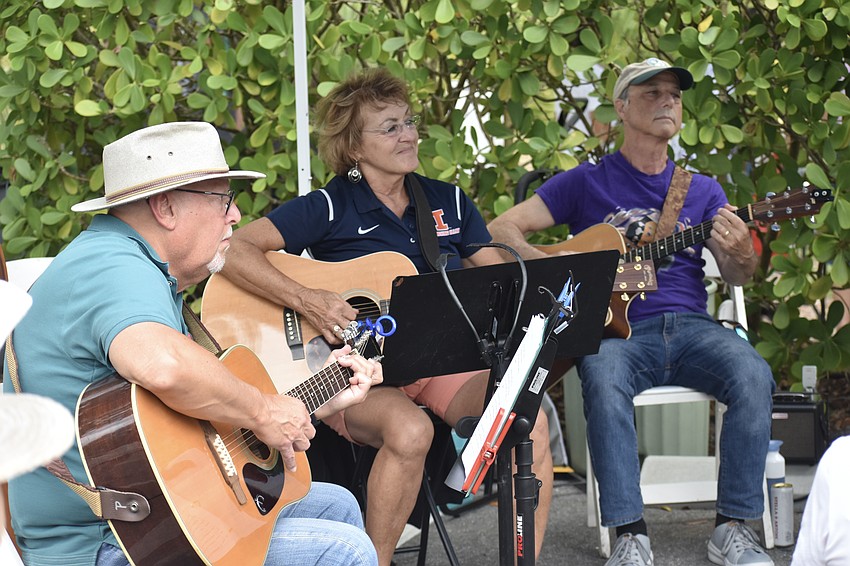
Mike Lawless, Elizabeth Muss and Michael Cohen perform with a driveway band that residents formed in The Landings.
Photo by Ian Swaby
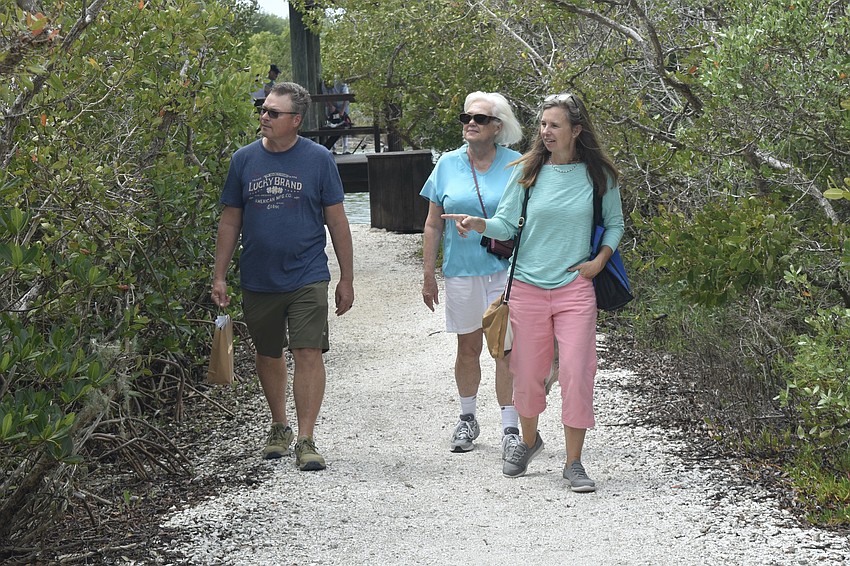
Keith Anderson, Janie Pratt and Lora Lyn Frederick take a walk down the trail. They came to view the area due to the Hammock Biome Restoration Project being pursued at Siesta Key Chapel.
Photo by Ian Swaby
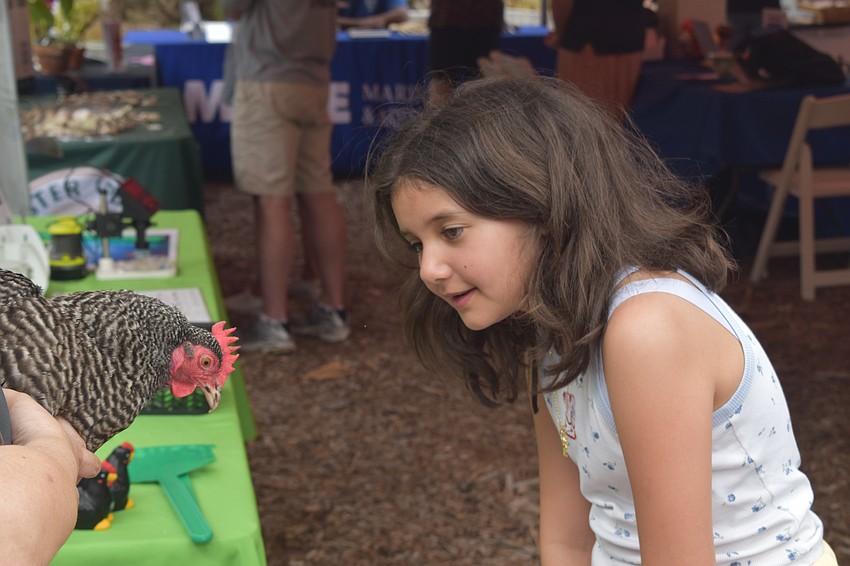
Bluey the chicken of Sarasota County Mosquito Management meets Eloise Adelfang, 10.
Photo by Ian Swaby
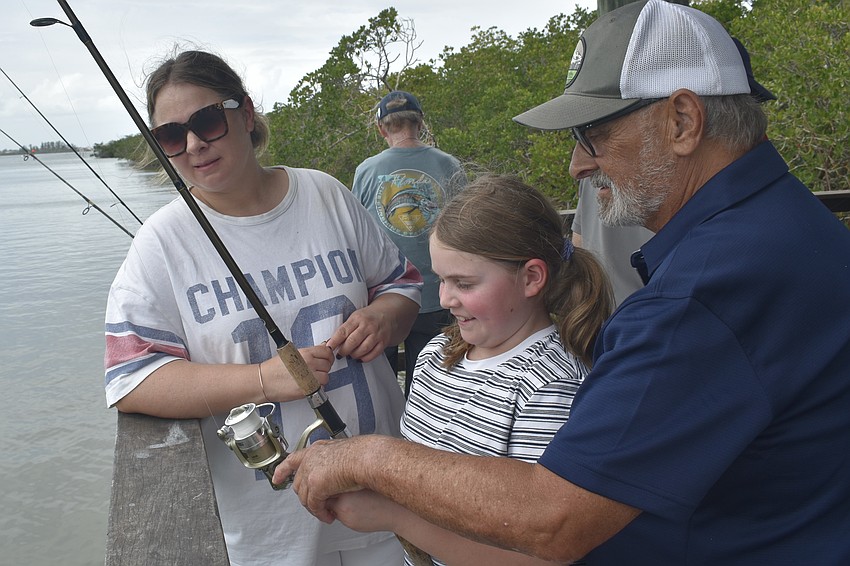
Nadine Haubold, her daughter Jette Haubold, 10, and her father Michael Haubold visit the fishing station. Nadine's parents have an apartment in The Landings, which she says has been a frequent destination from her family's home in Germany for over 20 years. "If you live in Florida, it's normal, but to us, it's like the jungle," she said, stating that during this trip, they saw animals including otters and turtles, from the apartment balcony.
Photo by Ian Swaby
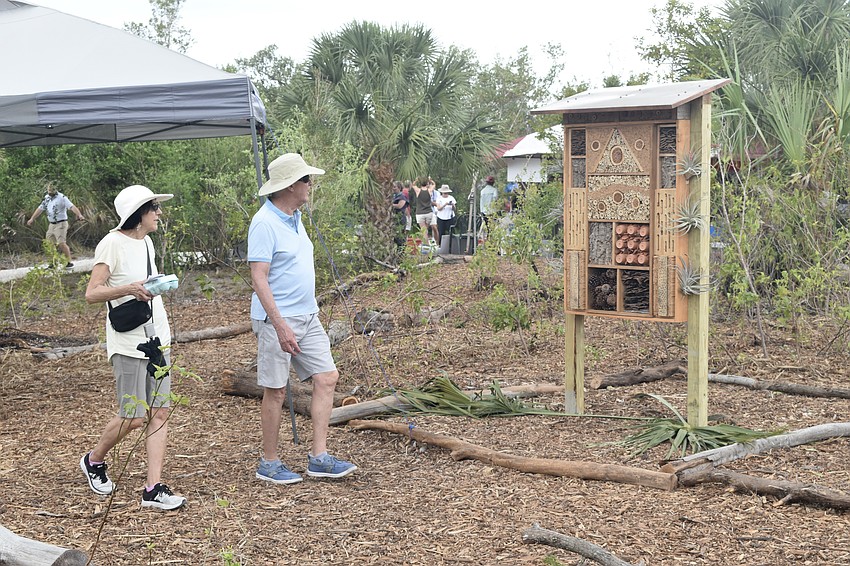
Tobi Schneider and Steve Newmeister look at the pollinator.
Photo by Ian Swaby
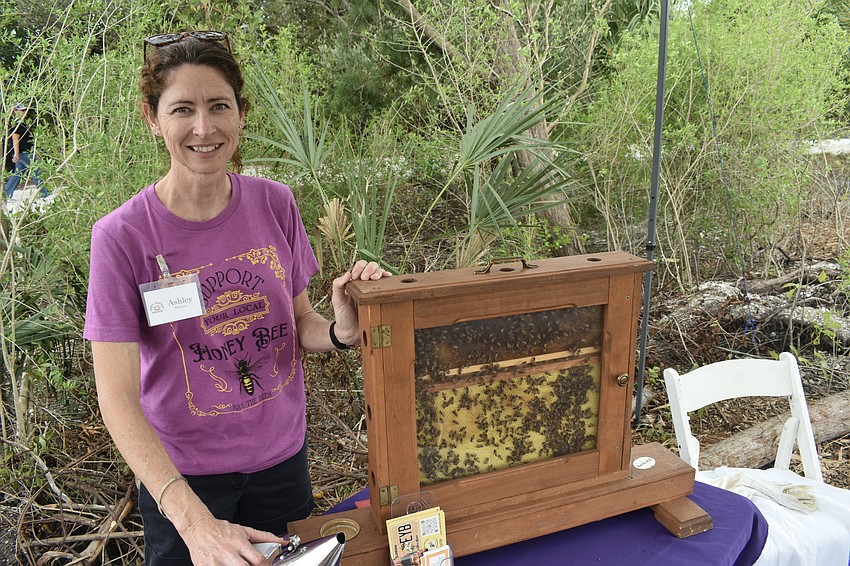
Ashley Williams, UF/IFAS mater beekeeper, showcased some bees at work.
Photo by Ian Swaby
Attendees had a chance to walk through the neighborhood's microforest. The forest was created using the Miyawaki method, which includes the use of lots of native plants, close density of planting, and pre-planted layers of vegetation. The forest contains a layer of cardboard intended to promote fungal growth, and invasive plants were mulched on site for use on the pathway.
Ian Swaby is the Sarasota neighbors writer for the Observer. Ian is a Florida State University graduate of Editing, Writing, and Media and previously worked in the publishing industry in the Cayman Islands.