- March 12, 2026

-
-
Loading
Loading
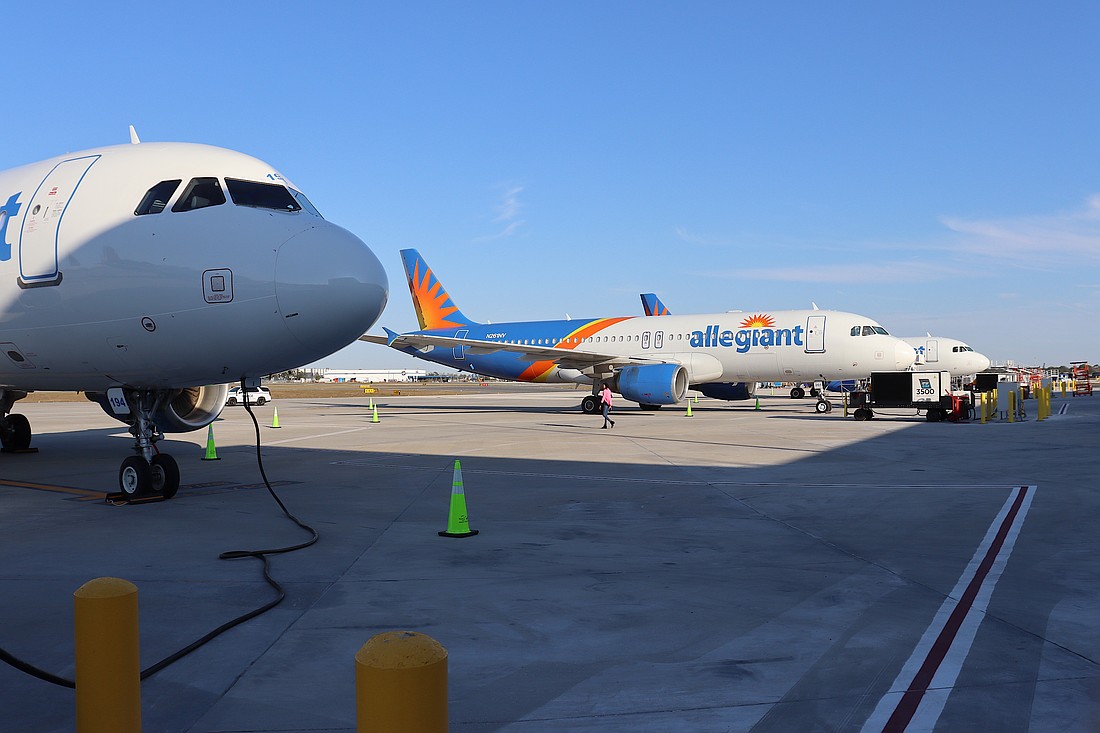
Multiple factors may be credited for the success of Sarasota-Bradenton International Airport, which since 2020 has been among the fastest-growing airports in the world.
First there was the pandemic as the shutdown-weary fled to Florida for respite from state and local government mandates, creating for many awareness of the Sarasota area as a desirable destination.
Then there is location, with SRQ being a convenient alternative to highway congestion brought by the pandemic-fueled population surge adding significant travel time to larger airports in Tampa and Fort Myers.
Still, an airport that served 1.9 million passengers in 2019 cannot more than double that figure in six years unless airlines can operate flights there at a profit. Therein may lie the most important formula for SRQ’s rapid growth — the cost per passenger borne by the carriers themselves.
According to a February report to the Sarasota-Manatee Airport Authority Board of Directors, in fiscal year 2026, carriers from legacy American Airlines to discount Allegiant will pay an average cost per enplaned passenger (CPE) of $8.76. This compares to a CPE of $14.03 at Southwest Florida International Airport in Fort Myers and $13.64 at Tampa International Airport.
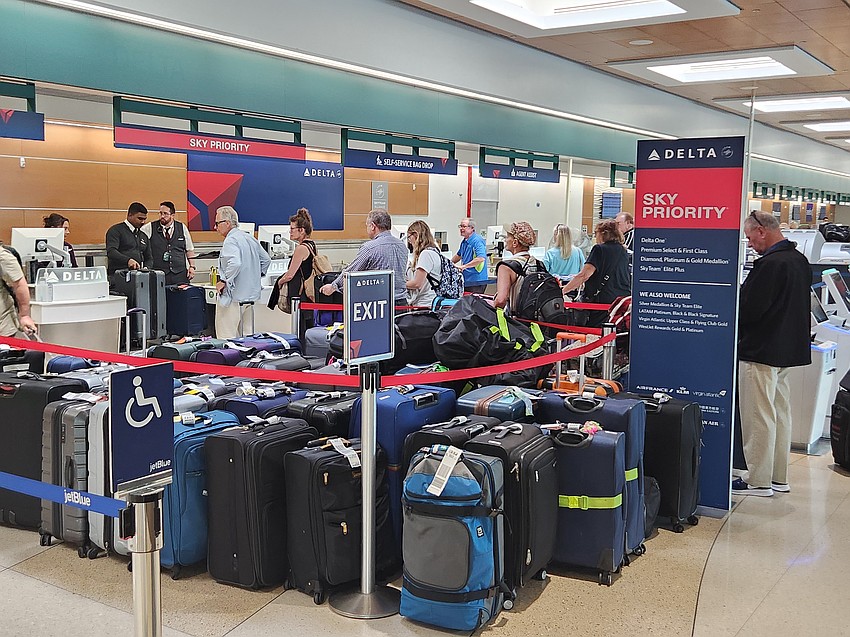
In calendar year 2025, SRQ surpassed 4.5 million passengers, a new airport record. Among the 11 airlines that offer service to 69 destinations, Allegiant led the way, surpassing the 1 million threshold for the first time.
“Sarasota-Bradenton International Airport has been a critical part of Allegiant’s network,” an Allegiant spokesperson told the Observer. “When we launched service in 2018, we offered eight routes. The region has quickly grown in popularity, and so, too, has our service. The addition of the airport's thoughtfully designed concourse allows us to further enhance the travel experience.”
Allegiant now flies 36 routes connecting small- to medium-size markets to SRQ.
Cost per enplaned passenger measures the average price airlines pay per boarding traveler, with U.S. averages ranging from roughly $7.55 at non-hubs to $14.45 at large-hub airports, averaging around $9.84 overall. The CPE includes landing fees, terminal rental fees and non-preferential gate use costs. It is a key metric for airport financial efficiency and airline operating costs.
According to the Transportation Research Board of the National Academies of Sciences, Engineering and Medicine, the average airport CPE is $9.84 with more infrastructure-intensive airports, such as JFK in New York City, at $36.01.
A bargain for airlines | |||
| Airport | Avg. Rent/sq. ft. | Avg. Landing Fee• | CPE** |
| Sarasota-Bradenton International | $84.69 | $1.62 | $8.76 |
| Southwest Florida International | $218.76 | $4.18 | $14.03 |
| Tampa International | $323.10 | $2.75 | $13.64 |
| •Average per 1,000 pounds maximum gross landing weight, rate variable by aircraft ••Average cost per enplaned passenger | |||
Long before 2020 — before the new $100 million Concourse A, the addition of hundreds of remote parking spaces, new escalators, a $45 million in-line baggage system for outgoing flights, a new $8 million ground transportation center and, most recently, enhancements to Concourse B — SRQ was positioned for success by the SMAA board and former President and CEO Rick Piccolo.
Even with the recent completion of the more than $150 million in capital projects, when he retired in October 2025 after leading the airport for 30 years, Piccolo left SRQ with $27.5 million in reserves and zero debt.
“I think a big part of (low CPE) is being a debt-free airport, one of the few airports in the U.S. that currently has no debt,” said SRQ Executive Vice President and Chief Product Officer Mark Stuckey, who has worked at the airport even longer than Piccolo. “Right off the bat, that gives us an advantage over some of the competing airports in the in the area.”'
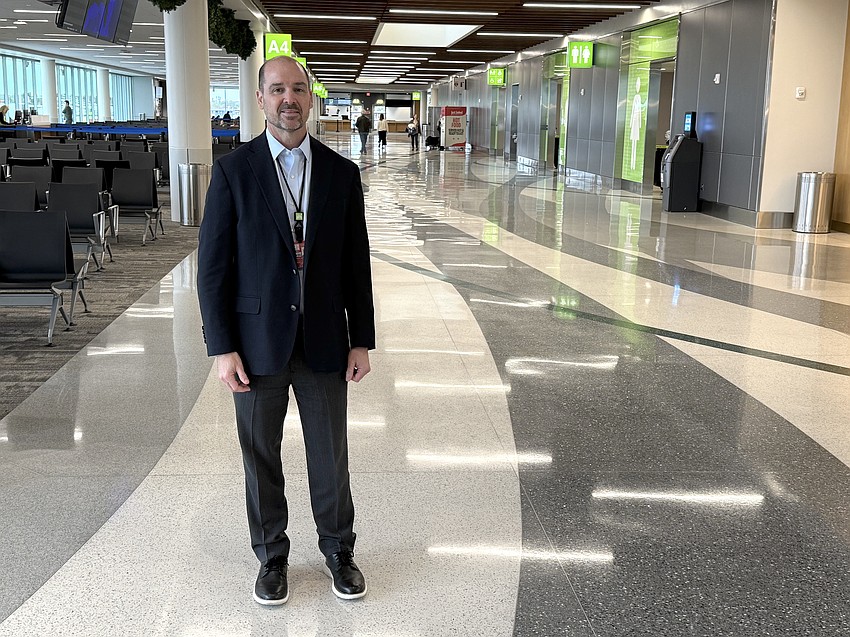
That debt-free status has allowed SRQ to adopt a pay-as-you-go approach to all its capital projects, including Concourse A, the ground boarding facility opened in January 2025. That was funded with grant money and the airport’s own reserves.
“Being in a spot where we can do that has allowed us to keep our cost-per-passenger low," Stuckey said.
Lower CPE means higher profits for the airlines and ticket prices competitive with larger airports.
“It definitely is a big attractant for the low-cost and ultra low-cost carriers,” Stuckey said. “Airlines like Allegiant, Breeze, Avelo and Sun Country tend to gravitate to airports with low costs. Their model is to have low fares and to stimulate a market, so having a lower CPE helps with that, especially in a market like ours.”
That fiscal benefit is not lost on the legacy carriers, either. In addition to point-to-point routes, American and Delta offer multiple flights per day to hubs in Miami, Charlotte, Atlanta, Dallas, Chicago, New York City and others, opening global markets to SRQ.
Airline profit margins are characteristically thin. According to the International Air Transport Association (IATA), in 2025 the average margin was 3.9%. The trade group reports despite record total revenue exceeding $1 trillion last year, high costs for fuel, labor and maintenance keep net profitability low.
The decision to open a new route, then, requires more than a wing and a prayer.
Stuckey said SRQ’s financial position allows it to take advantage of Federal Aviation Administration guidelines to offer incentives for new routes for the first two years of the route.
“We provide waivers for landing fees and terminal use fees and gate use fees for two years, and then we provide marketing money from the airport,” he said. The latter involves partnerships with Visit Sarasota County and Bradenton Area Convention and Visitors Bureau to promote new routes.
Visit Sarasota County President and CEO Erin Duggan said SRQ is vital to local tourism because accessibility is a crucial influential factor in choosing travel destinations. To help ensure the success of a new route, the agency targets that market’s sports teams, meeting planners and leisure travelers to promote the region.
“When airlines consider adding new routes to SRQ, our organizations work together to demonstrate the collective marketing and sales support we can provide to help ensure the success of that service,” Duggan said. “We coordinate promotional efforts designed to build awareness, drive bookings and ultimately help airlines maintain strong load factors.”