
-
-
Loading
Loading
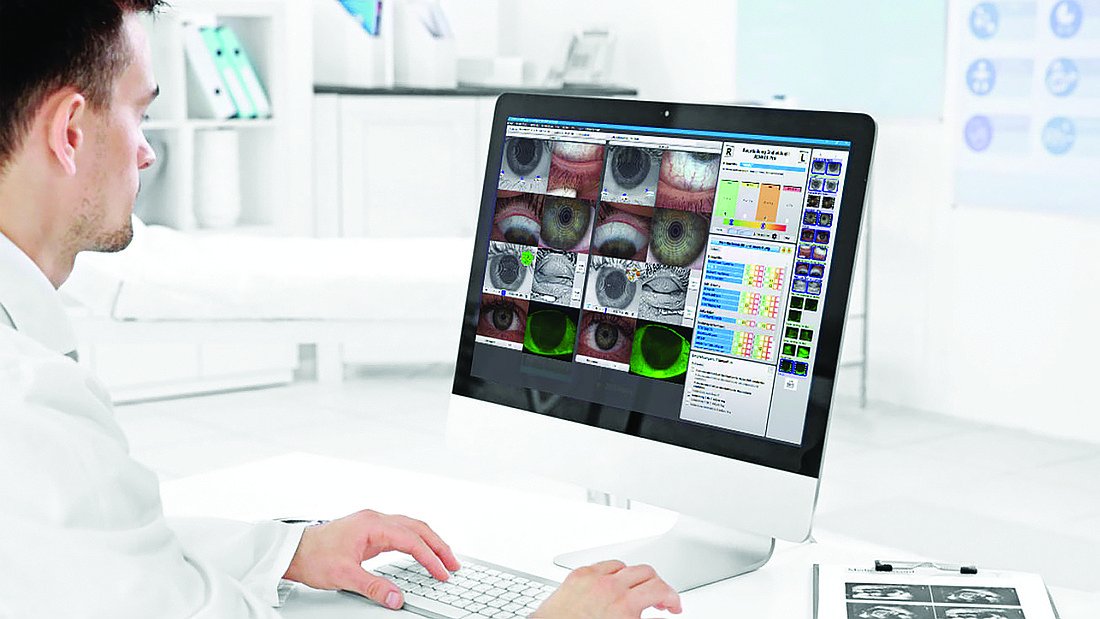
Ocular surface disease might sound like a science fiction term, but it’s actually a more accurate name for what’s commonly called dry eye disease. It affects more people than ever before, especially children and post-menopausal women.
The reasons aren’t completely clear, but some potential causes include increased screen time, hormonal changes and medications, according to Dr. Troy Bedinghaus, O.D. His practice, Vision Source with locations in both Lakewood Ranch and Parrish, specializes in diagnosing and treating ocular surface disease.
How might you know if you have it? Often, patients don’t come into the office with a self-diagnosis. They just know the symptoms interfering with their quality of life.
“They might come in saying, ‘I feel like I have a piece of sand in my eye all the time’,” Bedinghaus said. “There's really not. It's just a feeling of dry eyes.”

You also could experience burning or stinging, fluctuating vision or suddenly uncomfortable contact lenses.
“One common symptom that's kind of strange is excessive tearing. It's kind of a backwards response,” he said. “The eyes become irritated, and they respond by producing reflex tears, and those don't really adequately lubricate the eyes.”
If you suspect you have ocular surface disease, the first step is to go to an optometrist. At Vision Source, you would have a comprehensive eye exam to rule out similar causes of your symptoms. If you do seem to have the condition, you’ll undergo a dry eye or ocular surface evaluation, which could include the use of an Oculus Keratograph, an instrument that takes measurements of the surface of the eye and the thickness of the tears. Another test involves medical stains to see how your tears change over time.
After your ocular surface disease diagnosis, you’ll be prescribed a treatment plan. Bedinghaus said 30 years ago when he started practicing, the only solution was artificial tears. While those still could be an option, the treatments have expanded significantly. You might use an ointment, nasal spray or even steroids to reduce the eye surface inflammation.
“One of the most popular procedures right now is intense pulsed light (IPL),” he said. “It uses a careful pulse or a powerful beam of light to treat the skin on the face and skin around the eyes. The IPL reduces inflammation on the eyelids. It reduces small telangiectatic blood vessels that are present in conditions such rosacea. It also improves what they call meibomian gland dysfunction.”
Other procedures are Lipiflow (vector thermal pulsation,) radio frequency and punctal occlusion.
“There's a whole host of ways to treat dry eye – more than we ever had before,” Bedinghaus said.
Vision Source’s patients appreciate the variety of treatment options available. Bedinghaus recalled one patient who had done some treatments with other doctors, but she was still having symptoms.
Using the only FDA-approved IPL device, Vision Source treated her with IPL plus radio frequency. “After four sessions, she said, ‘I've been to several doctors and it feels like it cured my condition,’” he said. “She could function and work on a computer for many more hours after that.”
If you suspect you could have ocular surface disease, make an appointment for a dry eye evaluation today. “Long-term, untreated dry eyes can create scarring of the cornea and permanent changes in the surface of the eye,” Bedinghaus said.