- July 14, 2026

-
-
Loading
Loading
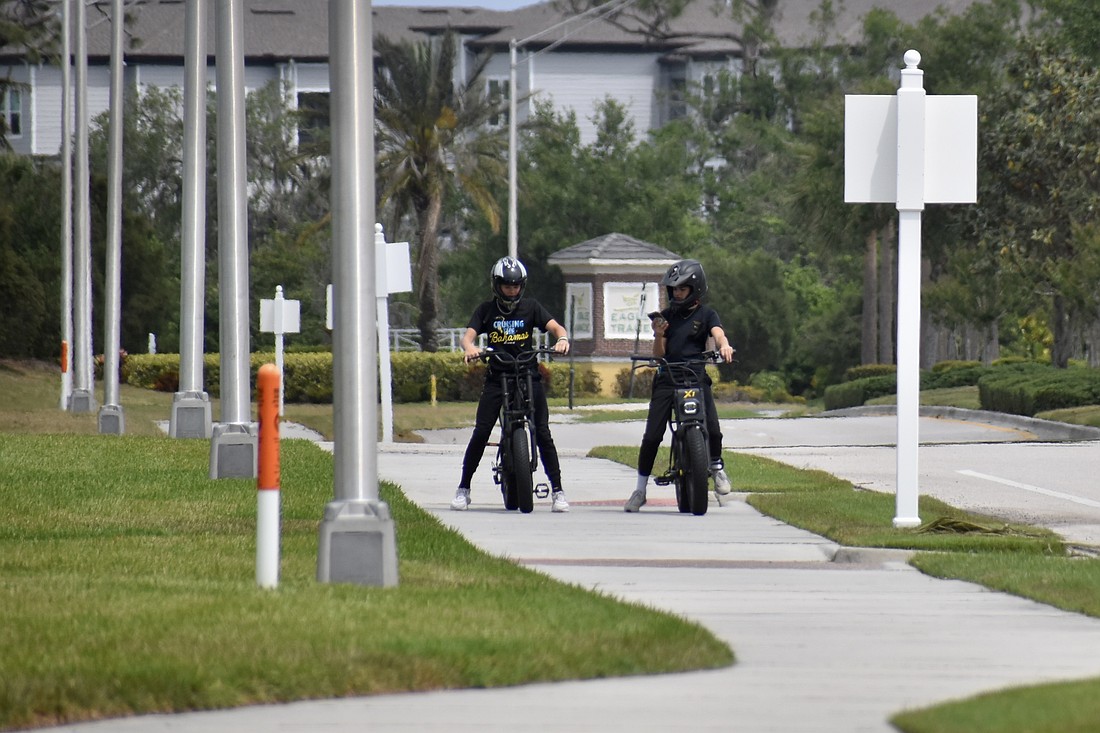
Although Gov. Ron DeSantis vetoed a bill in June that would’ve regulated electric bicycles statewide, Manatee County commissioners and staff members are continuing their quest to stiffen regulations and requirements for riding micromobility devices.
Commissioner Bob McCann proposed an ordinance regulating micromobility devices, which was passed unanimously in August 2025. The ordinance sets parameters for speed, wattage and age.
Now, McCann wants the ordinance updated to include helmet mandates, strict enforcement mechanisms and “potential outright bans on Class 3 e-bikes or throttle-only bikes on specific congested sidewalks.”
His motion was intended to be heard at the June 16 meeting but was instead pushed to the July 28 meeting.
In the meantime, Manatee County hosted an “e-bike safety awareness and community discussion” at the Public Safety Center in Bradenton July 10.
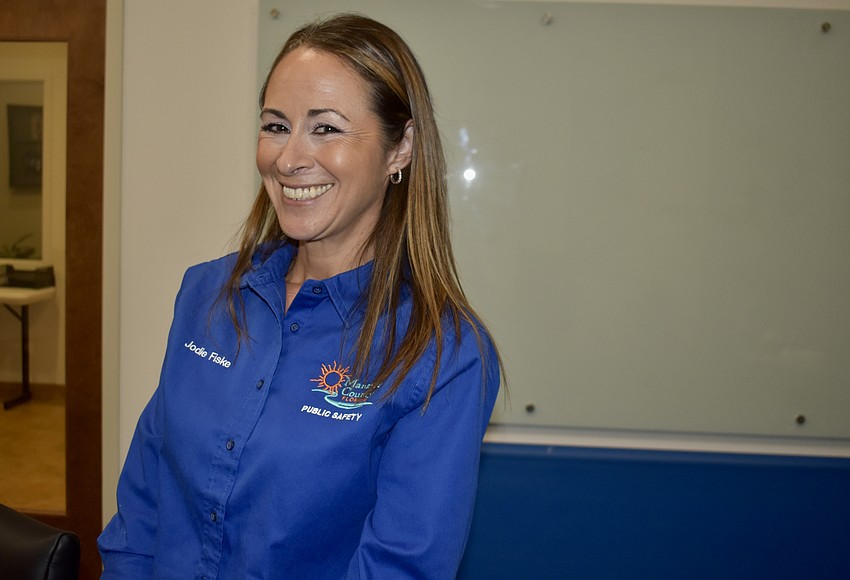
However, there were no residents in attendance, so the community discussion turned into a workshop between Public Safety Director Jodie Fiske and two employees of Johns Hopkins All Children’s Hospital — Health Educator Sheila Rainey and Transportation Planner Toby Vongkoth.
Fiske discussed an initiative she hopes will be rolled out by the first day of school. Students riding micromobility devices will need to register them, but not in the traditional sense that requires a visit to the Department of Motor Vehicles.
Students will be given a registration form on the first day of school to bring home to their parents. After the registration information is collected, the student will be issued a sticker with a QR code to place on their device.
Because of the increasing number of accidents, the QR code will tie the make, model and serial number of the device to the student and include emergency contact information. Only first responders will be able to access the information.
“We just want to make sure that your kids are safe, and if an accident happens, our first responders can reach you immediately (from the scene of the accident),” Fiske said. “Especially if children have allergies or pre-existing conditions, it makes it harder on medical providers because then they’re just guessing.”
Manatee County Sheriff's Office deputies will have the right to inspect micromobility devices for compliance. Without a QR code, a student can be restricted from riding the device to and from school.
Other counties are looking at more extreme measures to handle growing concerns over micromobility devices. The Orange County School Board is considering a ban on all e-bikes and e-scooters at its K-8 schools.
The United States Consumer Product Safety Commission reported in April that there were an estimated 698,500 emergency room visits due to micromobility devices between 2017 and 2024.
The commission stated it was aware of 533 fatalities from the use of micromobility products in that same time frame. There were just five deaths in 2017 but 135 in 2024.
The report notes that reporting from 2023-2024 is ongoing and the number of fatalities could change in future reports.
Of those fatalities, 206 were associated with e-scooters, and 15 of the 206 were associated with lithium-ion batteries catching fire.
Fiske said first responders responded to a call during Hurricane Helene because an e-bike battery caught fire inside a Manatee County motel room. The owner was messing around with the battery and punctured it accidentally.
To put a lithium-ion battery fire out, it needs to be submerged under water for 30 days. Fiske noted that the batteries can still reignite while submerged.
She stressed to always unplug micromobility devices when they’re fully charged, don’t park them next to walls or surround them with stuff, and plug the charger into an exterior wall versus an interior wall.
Beyond fires, Fiske said another issue is emerging as micromobility devices become more popular. There aren’t enough pediatric neurologists to treat the rising amount of brain injuries. After the initial emergency, children can wait up to 18 weeks to be seen by a specialist.
Additionally, the United States doesn’t have an established standard for helmets that protect against the high speeds of micromobility devices.
“Technology has outpaced the rest of the industry,” Fiske said.