- March 3, 2026

-
-
Loading
Loading

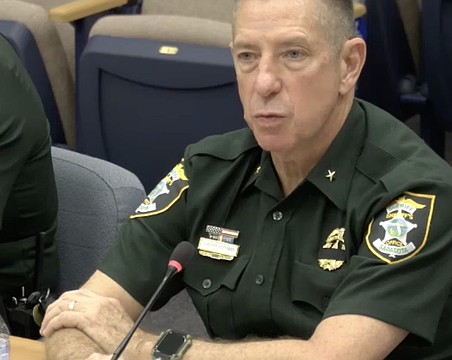
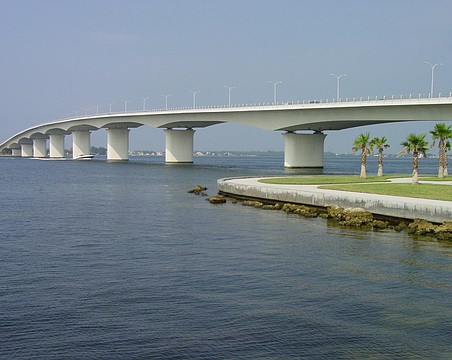
Chris Goglia has been president of the St. Armands Residents Association, or SARA, since 2020, being an outspoken advocate for the residents who live around St. Armands Circle, the shopping and dining district built by John Ringling 100 years ago. Goglia has fought against developments he believes residents wouldn’t want to see on the Circle and shared concerns about infrastructure and the need for investment to prevent damage from storms, which was evident after the dual hurricanes of 2024 hit the Sarasota area, causing flooding to businesses and homes on St. Armands circle and the other barrier islands. Goglia spoke with the Longboat Observer to discuss his role, what he hears from residents and how the Circle could change in the coming years. The following is an edited excerpt of that conversation.
The reason this survey is important to me is that was my career, marketing research. I’m a data driven guy, and the majority of my career has been writing surveys, fielding surveys, analyzing the results of surveys and making business recommendations based on those results. So when I took over this association, this is not Chris’ views, this is the residents of St. Armands Circle’s views, and the survey each year is how we learn that and quantify that. When issues have come up over the past several years, developers wanting to build things they’re not currently allowed to do, for example, I feel that they’ve tried to single me out and make it sound like this is all Chris, Chris, Chris. When, in fact, if I’m performing my role the correct way, that’s intrinsically untrue. This is what we’ve determined that the residents and residential property owners of St. Armands Key want, and I’m just simply the mouthpiece.
My sense, and this is not based on survey data, but my sense doing this for over five years now, is that people are nostalgic for the more upscale shopping district that St. Armands used to be, and they value the charming nature of St. Armands Circle. The fact that there aren’t big buildings and that the hustle and bustle is under control is something I feel people value.
I think it will impact people’s willingness to invest and the speed at which we see new investment. After the hurricanes, sale prices went down, in some cases significantly. Properties were distressed, people wanted to get out of here, and properties sold for less than they were worth just a year before. How willing would you be to purchase an expensive home on St. Armands if you felt this could happen again? You’d be cautious. So I think that seeing that millions of dollars is about to be invested here, I think that will give you more confidence in making that investment. I think that applies to businesses as well as residential property.
Going back decades, the city government at the time said we think St. Armands should be a tourist destination, but not hotels, and we need to control building heights all over the barrier islands. It’s an environmentally sensitive area, it’s an evacuation route and it impacts marine wildlife. All the reasons you don’t want to overdevelop barrier islands. You saw the reason a year ago when massive hurricanes came through and put the islands underwater.
Now, what we’ve seen in the last couple of years, is a very small number of developers saying hey, I’d like to try a hotel on St. Armands. Well, you can’t do it currently, and you can’t build high. So what we’re now seeing is developers saying it won’t be a hotel, it’ll be "residential units." We know a short-term rental, a weekly rental, can make as much money in one week as a year-round rental can make in a month. So we believe that this will be driven by economics and not by altruism.
If residential units are added to one of the larger properties on the Circle, they will be hotels in all but name and they will be rented out as AirBnB’s or essentially a hotel house, just on top of an existing building instead of on a residential property. The city has a vacation rental ordinance put into place to regulate these rental properties, but it only applies to single-family and multifamily residential zones. It does not apply to the CT zone which St. Armands is in, so the city will have no enforcement mechanism to make sure that these things aren’t rented out to really large groups or that they honor that one-week minimum rental period.
I love my neighborhood. I love this city, and I love all the people I meet down here. I count the waiters, bartenders and shopkeepers as my friends. I value the idea of a residents' association because I think that residents need the same voice that developers have.

![Brian Taylor, who works as executive vice president for Perform[cb], has been working from CoworkLWR since 2021 in order to have a separation between work and home life. He enjoys the opportunities to network with fellow remote workers at the new location.](https://media.yourobserver.com/img/photos/2026/02/27/IMG_1642_r452x360.jpeg?0dd7e9171d3bd5845bc057d4569a0a31ba6981d7)