- February 11, 2026

-
-
Loading
Loading
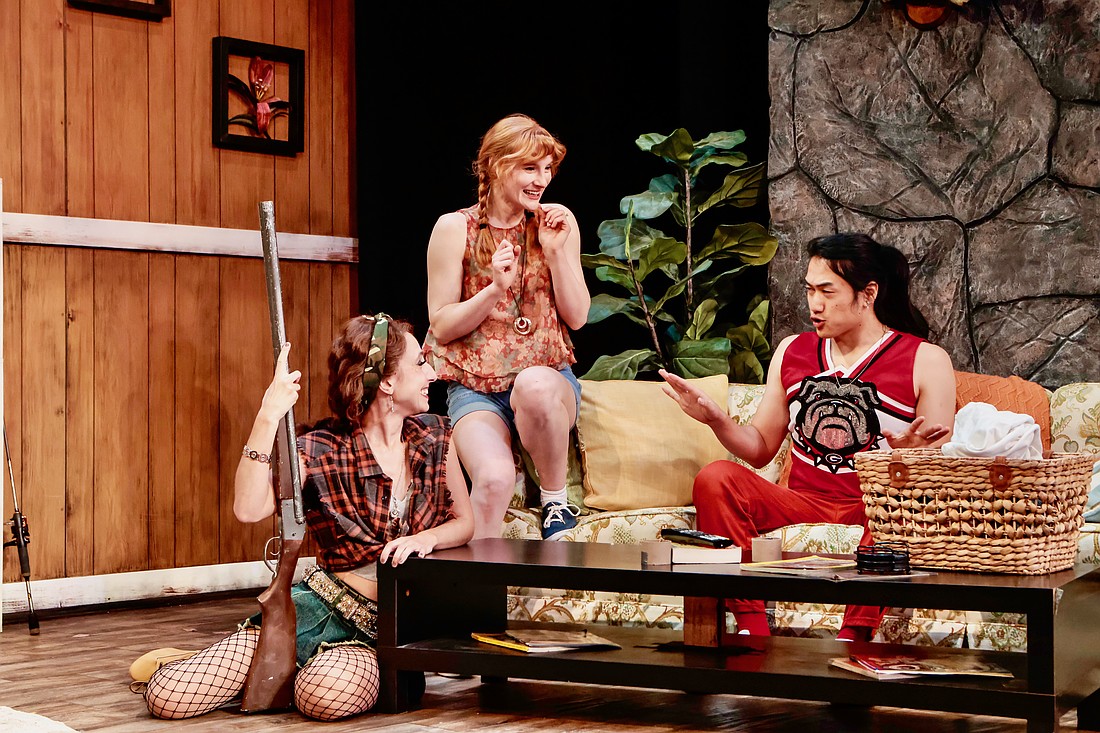
Abuse is a tough topic. The two plays that FSU/Asolo Conservatory is currently presenting in tandem at the Jane B. Cook Theatre don’t avoid it. Instead, Marisela Treviño Orta’s “Wolf at the Door” and Lauren Gunderson’s “Exit, Pursued by a Bear” tackle a taboo topic head on.
While their tones are wildly different, their battles are the same. Both explore women’s fight to reclaim their true selves. And fight back against home-grown bullies who try to keep them down.
Marcus Denard Johnson is the director of FSU/Asolo Conservatory, where the actors on stage and behind the scenes are earning their MFA degrees.
While “Wolf” and “Bear” both confront domestic abuse, their shared subject matter was totally unplanned, as was the coincidence that both contain animals in their titles.
But abuse isn’t the point of these plays. Escaping abuse is. They’re microcosmic equivalents of “The Great Escape.”
As Johnson sees it, “These plays are prison breaks for the female characters. Abusers made their homes a prison. Their struggle to break free is the heart of each story.”
The women’s fight for liberation takes many forms. Depending on the play or scene, it can be terrifying, liberating, surreal, nightmarish or hilarious. Let’s dive in ...
Orta’s “Wolf at the Door” flows from the legends of the Nahua, Mexico’s largest group of indigenous people. In Orta’s grim fairy tale of repression and resistance, beastly predators lurk inside and outside the home.
As the play begins, the pregnant Isadora (Katriana Veléz) is terrorized by her volatile husband, Séptimo (Edgardo Solorio). A faithful family servant, Rocio (Jacquelyn Morales), tries to protect Isadora as best she can, but she is no match for Séptimo’s rage, which explodes after their son is stillborn.

When a poor, pregnant woman named Yolot (Amy Vargas Rivera) enters the picture, Séptimo takes her prisoner. He wants to keep her child for himself and save face when his wife’s family comes to stay at their ranch in Mexico. But Yolot’s wild but powerful sense of self-possession gives Isadora the strength to stand up to her husband’s brutality.
What’s objectively real — and what’s a magical-realist dream? Orta doesn’t spell it out in her play, which gives new meaning to the expression, “raised by wolves.” But it’s clear that Isadora and Yolot need to get real and fight the monsters — both within and without.
Colleen Rua directs this strange interlude. During rehearsals, her second-year acting students found the humanity in their characters — including the twisted Séptimo. Her main character note? Understand this man — and don’t play him as a villain.
“Without excusing bad actions, we portray each character with specificity and empathy,” she says. “We confront audiences with the uncomfortable reality that harmful behavior can grow from human impulses like fear, love and the survival instinct.”
According to Rua, villains who are portrayed as pure evil let theatergoers off the hook. You can tell yourself you’re not like that. And you’d never do that.
But in “Wolf at the Door,” there aren’t good people and bad people. There are only good choices and bad choices. We could all end up like Séptimo — if we make the same choices.
“Exit, Pursued by a Bear” borrows its title from a famously bizarre line of stage direction in Shakespeare’s “The Winter’s Tale.” In Gunderson’s surreal “revenge comedy,” there’s no ravenous bear.
Nan (Carrie Owens) is viciously attacked by her husband — Kyle (Austin Ridley). She survives, but Kyle dismisses her memory and downplays his outburst of violence. He didn’t mean to hurt her; he was drunk; it’s not who he really is — and Nan should know it.
But Nan knows what Kyle did — and she knows he’s gaslighting her. She fights back nonviolently — with the power of theater. Aided by her loyal friend Sweetheart (Jamie Saunders), Nan stages a mini-play for her husband. Her meticulously planned reenactment of his ugly assault has an audience of one — namely, Kyle.
Thanks to duct tape, he’s a captive audience. Like it or not, Kyle’s forced to face himself. He sees the ugly truth of what he did — and who he is. For Nan, her husband’s shattering self-revelation is the best revenge. Will it make him a better person? Who cares? Nan reclaims control of her body and her life story. It’s not Kyle’s story anymore.
Michelle M. Aguillon directs this darkly comic play-within-a-play. She agrees with Rua that two-dimensional villains fall short. They’re boring to savvy audiences — and lousy training for theater students.

During rehearsals, her students explored their characters’ identities. No good guys, no bad guys — just complex, three-dimensional human beings. Including abusers and bullies.
“I’ve loved the collaborative process with this cast,” Aguillon says. “Together we created a safe space that clearly delineated actors and the characters,” she says.
She adds that, “Without judgment, we explored each character’s flaws, humanity and goodness. We discovered what drives them. And how their survival instincts kick in based on each individual’s experience, wants and trauma.”
Seeing the humanity in inhuman characters pays off.
Those who set the bar low when they hear that “Wolf” and “Bear” are “student” productions will be pleasantly surprised at the caliber of theater they’re seeing.
The nuanced performances by FSU/Asolo Conservatory students prevent both plays from treading into stereotypical territory, allowing the audience to feel compassion for the abusers while recognizing the cycle of violence needs to be stopped.
Spoiler alert …
“Wolf at the Door” and “Exit, Pursued by a Bear” are both successful prison breaks. In these FSU/Asolo Conservatory productions, their characters —good and bad — all feel real. In the end, the bullies aren’t in charge anymore.
Are the women in these plays redeemed?
According to Johnson, that’s the wrong question. “The women in these plays have nothing to redeem,” he says. “‘Wolf’ and ‘Bear’ aren’t redemption stories. But they both tell stories of reclamation. They’re both about not letting the past define the decisions you make moving forward. The women in these plays achieve that liberation. They reclaim who they are and what they’re going to be.”