- March 14, 2026

-
-
Loading
Loading
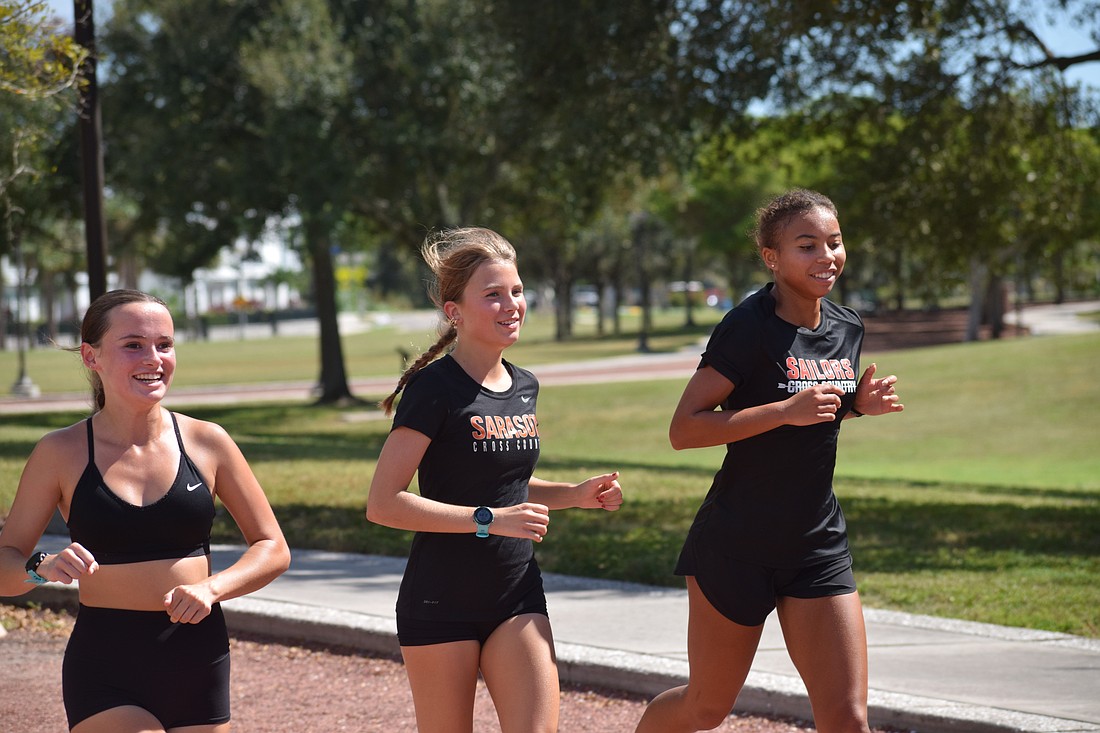
Battling heat on the trails is a beautifully brutal sort of struggle for cross country runners in Florida.
Some welcome it. Others hate it.
The sun blazes above, scorching your body with each passing second. You try to push onward and test your limits — yearning for that elusive runner’s high.
Every part of your body says otherwise. Drenched in sweat, your legs beg for a break, while your feet ache from the unforgiving ground below.
Florida’s furnace exacerbates the ordeal.
High school cross country athletes know it — they brave hot and humid conditions on a regular basis, whether in practice or competition. Since they can’t escape it, they have to beat it.
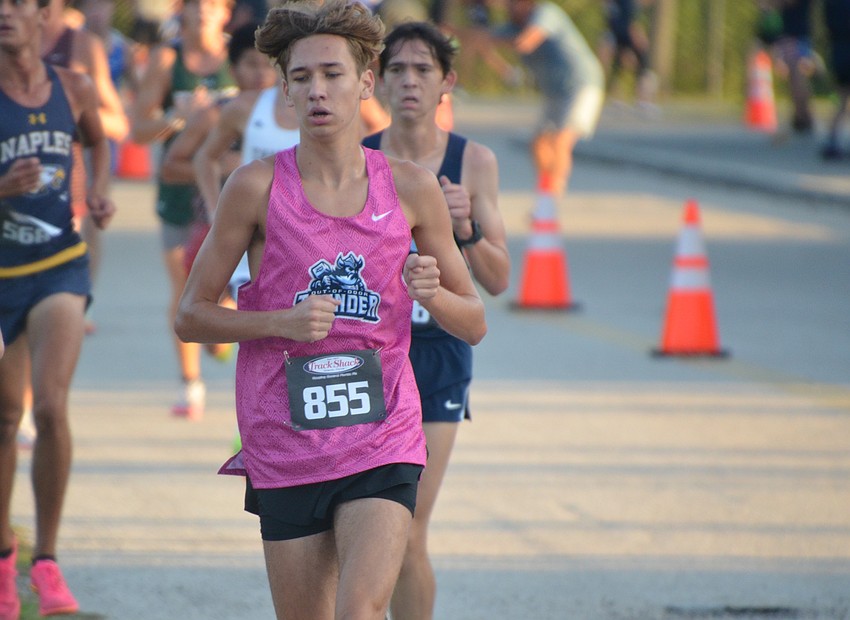
“It obviously gets to you mentally, too. You’re sweating so much,” said Out-of-Door Academy senior Kevin Gyurka. “You don’t want to run half the time because it’s so unbearable.”
Cross country teams across the state were able to hold practices as early as July 28, and can compete as late as the Nov. 22 state meet. It's one of three FHSAA fall sports to feature competition exclusively outdoors, alongside football and golf.
The hottest months of the year — July and August — are behind them, but in Florida, that doesn’t mean things get much better. Differences between summer and fall feel marginal in early October.
“It’s still difficult, because it’s very hot and you’re sweating a lot, so you can get dehydrated easily,” said Lakewood Ranch junior Addison Shear. “You don’t want to do that, because that can affect your times, and every little second counts.”
It’s unlikely to get any easier as student-athletes continue their careers. Current conditions are projected to intensify under our warming climate.
A study by the University of Florida published in April 2025 found that over the past 60 years, Florida has experienced roughly 2.5 more days of 91°F or more with each passing decade.
“From my personal experience, it has changed dramatically temperature-wise. I grew up in Florida, and I would play 18 holes walking (and) carrying clubs on my back when I was little, and had no issue with it,” said Sarasota coach John Stevenson. “Training-wise, I was pretty good in the heat, but now with climate change, it has intensified.”
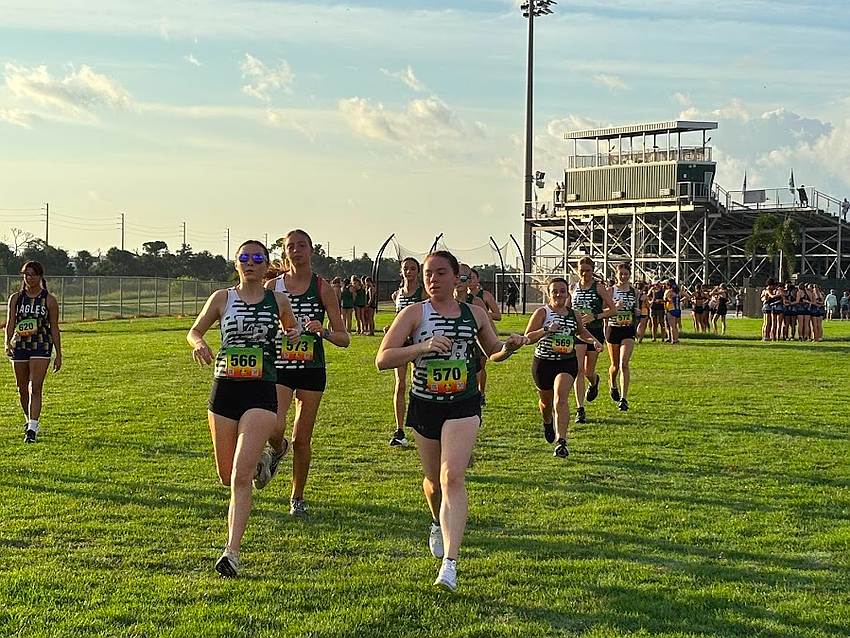
The FHSAA uses the wet bulb globe temperature to draw a line between safe and unsafe conditions. WBGT measures heat stress in direct sunlight by accounting for temperature, humidity, wind speed, sun angle and cloud cover. If it exceeds 92.1, coaches are mandated to stop any outdoor athletic activity.
Alternatives are available when those situations do arise. Costs, though, come with being overly reliant on indoor facilities in preparation for outdoor competition.
“Sometimes kids will, over the summer — if they’re not training with us — they’ll use a treadmill, because it definitely feels better,” said Out-of-Door Academy first-year coach Erin Mulvihill. “But then you can see that afterward. Their bodies aren’t ready to run in the heat.”
Florida’s uniquely-awful humidity worsens already-high air temperatures, turning dry heat into a blanket that can feel suffocating when you need to catch your breath. Proper breathing makes a world of difference in the exhausting arena of cross country.
Some athletes put cooling towels around their shoulders during practice to combat the sun while reducing upper-body tension. Sunglasses play an underrated role, preventing runners from using up energy by squinting their eyes, and instead conserve an extra ounce for when they really need it.
How you fuel your body is everything. That goes beyond hydration, and as athletic trainers and coaches alike have hammered into runners' minds, a proactive approach is essential.
In the format of cross country, athletes also need to consider what works in their favor versus what doesn't.
“I used to be a sprinter, and I can tell you, you get a lot more breaks in-between reps than you do in long-distance,” said Sarasota junior Jasmine France. “So it’s actually just sitting outside in the heat more, and I think that makes you (even more tired), honestly.”
It’s tough enough for Florida natives to endure the heat whenever they seek exercise on the trails or the track.
For those moving into the state, handling it is a beast of a task.
Failing to prepare the body allows heat exhaustion and heat stroke to enter the realm of possibility.
“It was a completely different experience, moving here and starting cross country,” said Lakewood Ranch junior Caroline Bartlomiejczuk, a former Chicago resident. “It was like re-training yourself all over again because of the heat. You had to just adjust, and it was a big change."
Floridians accustomed to the shining sun don’t exactly have it easy when they knot up their running shoes. Training in relentless heat can’t possibly prepare them for how their bodies will respond differently as they age.
For senior Caitlin Abrams of Out-of-Door Academy, half a decade has passed since she began running in sixth grade, and still, she sees no smooth sailing in the sport.
“The older I get, it does get a little bit harder, mainly because I realize how much more pain I’m in, and I realize what measures I need to be taking against the heat,” Abrams said. “Realizing that, yes, it’s a hot day out today, (but) I’m still going to have to push through and get this workout done. (There’s a) mental balance of that as well.”
Temperature and humidity concoct a potent mixture, making it that much harder to compete at the highest level. Cross country coaches in Florida thus face an elevated dilemma relative to that which their counterparts in other states confront.
They must push athletes to their limits while mitigating risks of overworking them.
Towing that line is an ever-evolving challenge. It’s not going away anytime soon.