- March 14, 2026

-
-
Loading
Loading
Too much chill, not enough thrill. That’s where golf falters in its every attempt to capture the admiration of sports enthusiasts far and wide.
Little can change that flawed, innate nature. If golf is to be played in its traditional, 18-hole format, it will always be plagued by the tranquility it offers.
Walking the greens beneath unclouded sunshine, hearing the echoes of chirping birds and feeling the light breeze at your back is a peaceful escape from a busy world. Such relaxation translates to the demeanor of golfers, who by most accounts, are a joyful bunch.
But it’s also the antithesis of what makes sports so engaging for millions.
The serenity of golf demands a uniquely unappealing sacrifice. Competitors and spectators alike must endure multi-day, multi-hour commitments to reach a finish they can only hope will be cathartic.
Every now and then, the wait is worth it. Tiger Woods’ absurd chip on the 16th hole en route to winning the 2005 Masters was one such instance. History also looks kindly upon Jack Nicklaus, who at 46 years old, carded a back-nine 30 to secure his record-breaking sixth green jacket.
Moments, though, come and go. Much about the sport is unchanged relative to decades ago. Golf’s entertainment value and global reach both suffer because of the painfully-long time commitment it requires.
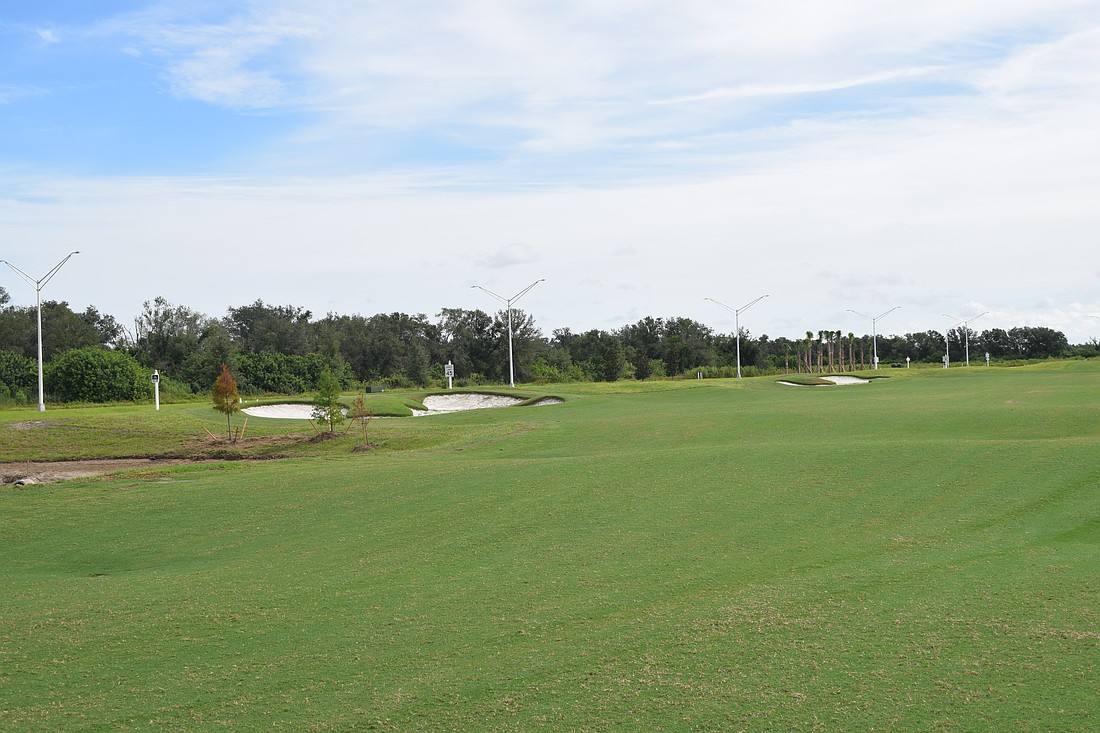
Calusa Country Club is one of many forward-thinking destinations that believes it can sway skeptics to see otherwise. Director of golf/club manager Dylan Wright and golf course superintendent Tyler Bennett have overseen the creation of a 12-hole course which is designed to attract a broader demographic than its longer predecessor.
“Once people see the value it holds, it’s going to be a no-brainer. I think you’re going to see a lot more of it happening,” Wright said. “It limits the space you need for golf courses, limits your chemical budget, limits your labor – everything. A lot goes into it, but I think at the end of the day, everybody’s looking for convenience nowadays.”

There’s a considerable contingent out there who can’t play an 18-hole round. Whether because of ability or availability, it’s simply not in the cards, and that deters prospective players.
Reducing the number of holes commodifies the power of choice. Golf seems a more realistic option for those wanting to get involved when it doesn’t cost five hours of the day.
There’s also the matter of affordability, which several clubs tend to overlook. Memberships are not cheap – gatekeeping some of the best experiences for the highest bidders. Shorter courses require less resources, and in turn, playing costs would come down. Summer public-play rates range from $49 to $69, and additional players in a cart pay $30.
But “accessibility” is the buzzword thrown around clubhouse conversations. For once, they’re thinking critically about people who aren’t retirees or weekend warriors.
Young kids, women and families as a whole seem to be new targets.
“At Lakewood (National Golf Club), we had ladies leagues, and some of them only wanted to play nine holes because they know there’s not an offer to play 12,” Bennett said. “To have those extra three holes, you may get some of the ladies who were on that fence of, ‘Hey, do I want to keep playing or not?’”
Less time spent walking or carting from hole to hole is also a plus. Courses in the state tend to be sprawled out with their vast acreage, forcing players to make an exhausting trek as part of an already-exhausting day.
Additionally, the consumption of resources necessary to build and maintain a 12-hole course isn’t quite as daunting. There’s still a heap of work required, no doubt, but a smaller environmental footprint is always a better one.
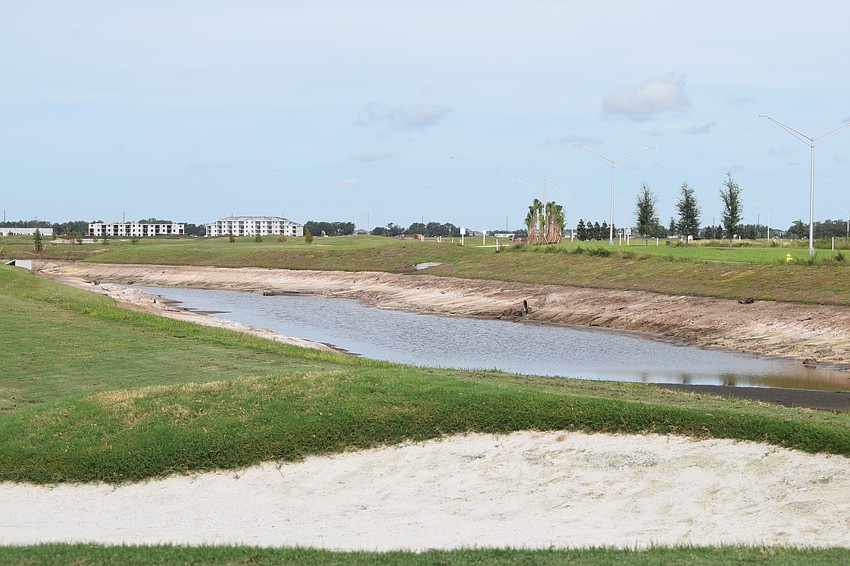
Gordon Lewis, a golf course designer responsible for Calusa Country Club’s 12-hole offering, had never before accepted the challenge of organizing two six-hole loops.
The club gave him the idea and just let him run with it.
“We made the tees really, really big to give (players) a lot of options. One of the things (Calusa) said was, ‘Maybe some days this could be played as an executive or maybe some days it’ll be played as a championship,’ ” Lewis said. “There’s a possibility you could maybe make some of the par fours, par threes, and some of the par fours – if you played way back – par fives.”
In addition to the shorter course, Wright and Bennett offer an aqua driving range, nearly-one-acre putting area and a golf simulator at their Lakewood Ranch-based club.
Those modern elements constitute a more well-rounded experience than the 18-hole round provides. And that distinguishes Calusa Country Club from thousands of dated golfing locations.
Golf’s perpetual problems are becoming acknowledged at even the highest levels of competition.
Rory McIlroy and Woods founded the Tomorrow’s Golf League in August of 2022. Held entirely indoors at the SoFi Center in Palm Beach Gardens, TGL is a 3-on-3, tech-heavy format featuring the top golfers from the PGA Tour playing two-hour matches.
What the game’s best think of 12-hole golf remains to be seen, but still, there are signs they know the sport is overdue for an evolution. Sacrilegious or not, shorter courses are a solution.
Golf remains fundamentally flawed, but for the first time in a long time, there’s positive movement.
No more six-hour days. No more crazy commitments.
It’s past time for tired traditions to fade.