- March 13, 2026

-
-
Loading
Loading
When Miami's Surfside condo tower collapsed in 2021, the ripple effects extended across the whole state.
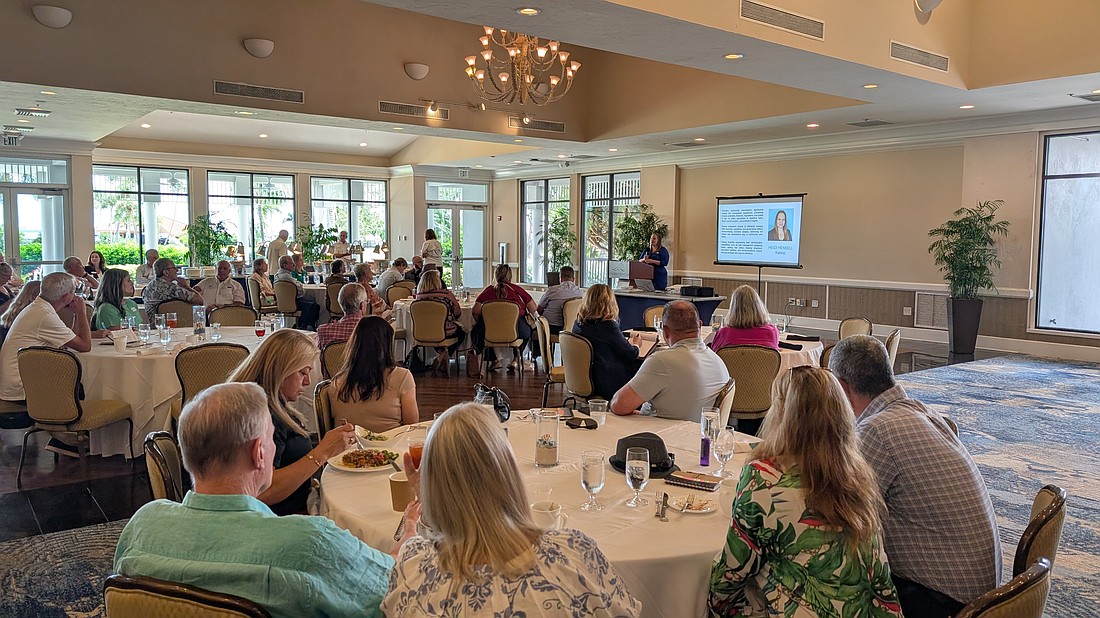
The collapse claimed the lives of 98, and with any tragedy of that magnitude, changes followed. On Thursday, Sept. 18, at the Longboat Key Club, there was a symposium for condominium owners, managers and homeowner association leaders to navigate changing regulations.
David Novak, who manages 908 residential units with Longboat Private Services, was one of several speakers and an organizer of the event, which was hosted by Community Association Network Group. The collapse of the Surfside Champlain Towers condo building, which was constructed in 1981, had a chilling effect on condo owners and state lawmakers across Florida.
“That basically generated the legislation because that was bad for the entirety of Florida because you can point to all these buildings and say that looks just like Surfside, or that looks worse and older than Surfside,” Novak said. “So the state got caught with its pants down, basically, and so they had to react.”
According to Novak, there are a few aging high-rise buildings that are 45 years old, but most are considered mid-rises.
“None are of same design of Champlain Towers or the Dolphin Towers, a Sarasota building whose tower was also supported by a parking lot structure,” Novak wrote. “Today, all three-story or greater buildings on Longboat Key have had structural studies and, if deficient, all have taken steps to remedy the problems.”
Novak broke down the changing regulations behind condo management into five categories: milestone studies, structural integrity reserve studies, information transparency, administration and technology, and oversight and control.
The increased requirements are meant to identify deficiencies in structures, ensure that managers have funds put aside to fix any structural issues and increase transparency among homeowner and condo owner associations. It has also made condo management on the key more demanding.
“What has happened in the Legislature since 2021 is an annual series of requirements placed on condo owners that, along with storms, insurance, and inflation, have significantly raised the cost of ownership, forcing many to ask whether the benefits of living here are outweighed by the costs,” Novak wrote. “The demands have turned what was an attractive profession into one where, when combined with the difficulties of island traffic jams, Longboat continues to lose talented people to downtown and the mainland.”
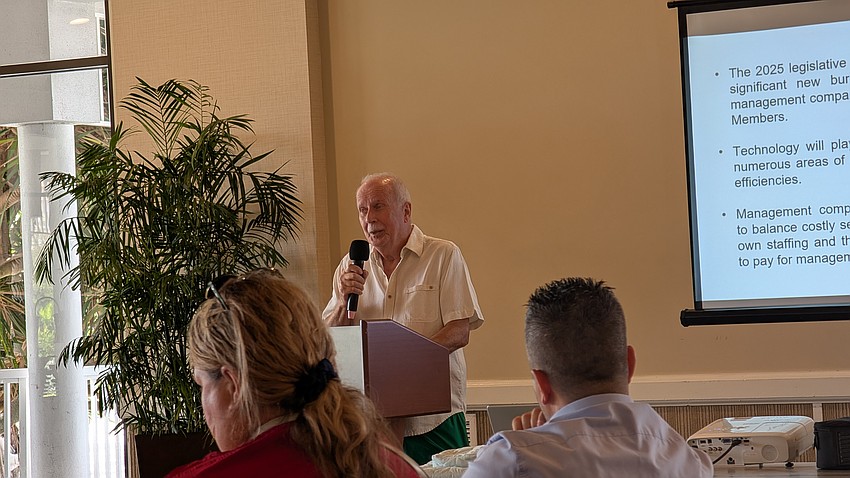
Novak explained the state of Florida has invested big to increase the amount of people inspecting condo towers to ensure their structural integrity. Novak explained after the event that the time of passive residential management are no more.
“The easy days of the past, the comfortable days of the past are no more,” he said. “You’re in a retirement community, a leisure community, and yet in order to operate your domiciles, you’ve got serious business in front of you. That falls upon the board of directors and whomever you choose to manage that. Every year the legislature puts new demands on us, and you could say we’re close to the breaking point, meaning that no one’s going to be able to comply with some of this stuff, especially the smaller associations. The state is going to have to put their foot on the brake pedal or put some other tweaks in there.”
The symposium featured presentations from a variety of companies who provide products and services to ease the burden of condominium and HOA management including technology systems that can perform electronic voting, construction management and legal representation against insurance companies.