- March 13, 2026

-
-
Loading
Loading
The town of Longboat Key is hoping to utilize a two birds, one stone approach with its canal dredging and underwater sewer pipeline projects.
The stone in the above analogy is sediment that sits at the bottom of Sarasota Bay. Longboat Key public works director Charlie Mopps told the town commission the town is looking at ways to use sediment removed during future canal dredging to bury the planned subaqueous wastewater pipeline. First Line Coastal, a Sarasota-based engineering firm specializing in coastal work, is consulting with the town on the project. Mark Stroik, a founding member and project manager of First Line Coastal, said reusing the sediment will save the town time and money and be beneficial to the health of seagrass on the floor of Sarasota Bay.
“It is less expensive to dispose of the material by using it beneficially by placing it in the hole that is going to be dug out through the subaqueous program, and it’s also less expensive to receive that fill rather than purchasing it from a mine and importing it in to place it. So it’s a dual benefit, which we’re really excited about,” Stroik said.
It's too soon to tell just how much will be saved by reusing sand from dredging canals and burying the pipeline.
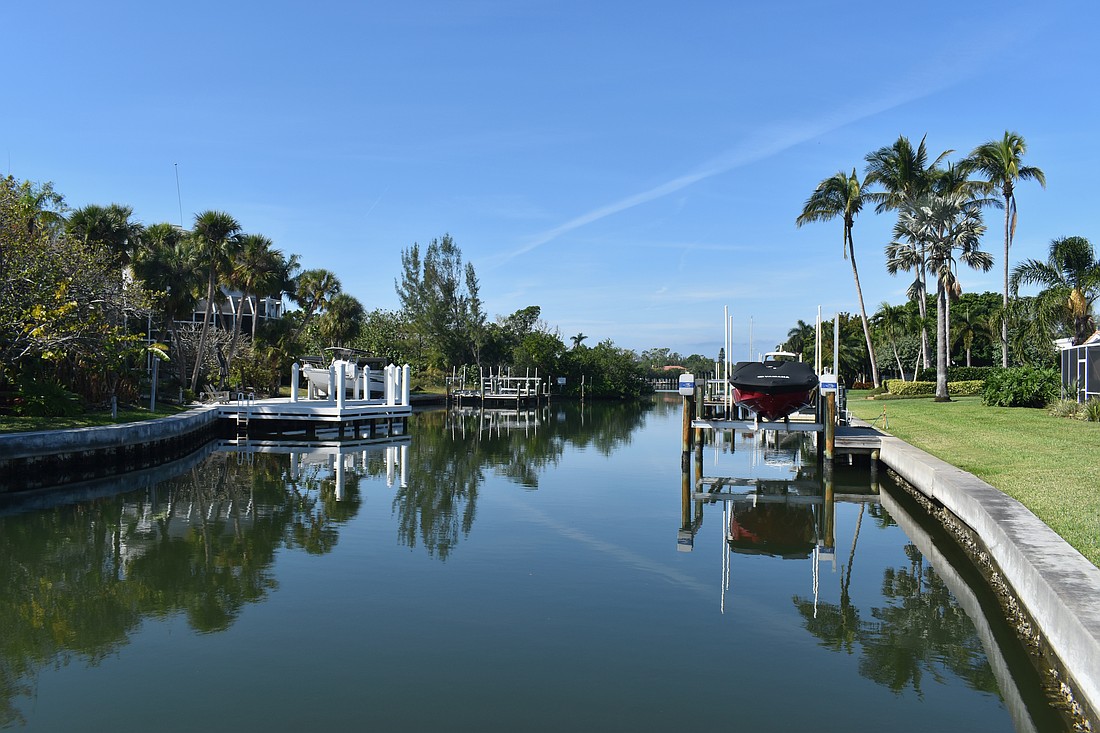
Mopps said the last time canals were dredged was in 2003. At that time, the town went through mitigation efforts for some of the canals it dredged to restore impacted seagrass. Mopps said canal dredging would be the start of a maintenance program for the canals, which is important for boat navigation, water quality and stormwater drainage.
“All of the drainage from Longboat Key ends up in a canal at some point in time,” Mopps said. “It restores and maintains access, improves and maintains stormwater, reinforces the appeal to real estate and tourism.”
When the next round of dredging happens, there would need to be additional seagrass mitigation.
“Through an effort that the town started in 2016 up to about 2020, they identified some canals that need to be dredged, but they have seagrass impacts and they weren’t mitigated for in 2003. Those required about 2 acres of seagrass mitigation area be created. We’ve already permitted the site. We have four acres that we can use, so we just need a certain amount of fill to bring those up,” Mopps said.
The project won’t happen for years as the project will not be funded by loans but with a direct assessment (flat fee) on properties bordering a canal, and a dedicated property tax based on assessed value for all Longboat Key residents. What that rate will be is not set, with public outreach scheduled in the coming months and the first public hearing for an intent resolution expected to happen not until December.
“We’re not setting an assessment (in December), we’re just setting the ability to create this,” Mopps said.
Mayor Ken Schneier said the public outreach will be important to demonstrate to residents why the dredging is needed and what it could cost them.
“I think that people in the island will recognize we have canals and there’s been nothing done to maintain them in a number of years, so this program is necessary. I don’t think that will be questioned,” Schneier said. “But people when they are getting their first presentation, the main question is going to be what is this going to cost me and is it fair.”
Mopps said construction would not begin until the nearly $9.2 million needed for the project is collected. How long that would take depends on what assessment rate town commission chooses and when.
There are still hoops to jump through to make an operation like this happen. The projects would have to coincide if the sediment pulled from dredging is to be used to cover the subaqueous pipeline, and with years required to raise funds for the canal dredging, time is of the essence to pass an assessment to raise funds for it.
“Nothing is ever a done deal, but we’re planning for it,” said Mopps.
In the meantime, the town has been collecting soil samples from the bottom of various canals to inspect them. Some soil is better suited for seagrass growth, with a softer texture ideal. If and when the town moves forward with the sediment repurposing, soil would be sent for a more scientific method of testing.