- March 19, 2026

-
-
Loading
Loading
If a tree falls in a botanical garden, does it adversely impact a resident who lives several blocks away to a degree greater than the general public?
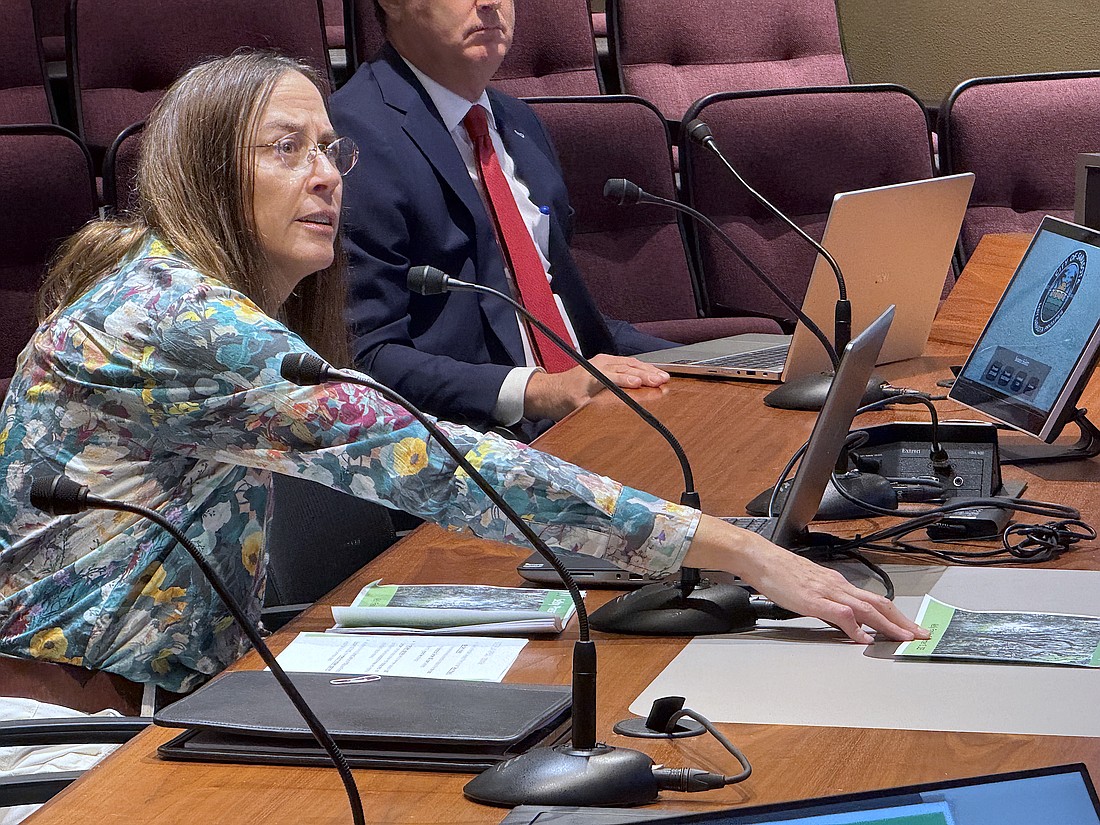
Laurel Park resident and neighborhood activist Kelly Franklin attempted to make that argument before the Sarasota City Commission on Sept. 15, and in the end found only one commissioner, Jen Ahearn-Koch, to agree she should be granted aggrieved party status.
A decision to the contrary would have permitted an appeal by Franklin to the commission of the Planning Board’s Aug. 7 unanimous approval of the Marie Selby Botanical Gardens Master Plan Phase 2 development.
At issue was the removal of seven grand trees, including a live oak that will make way for construction of a centerpiece conservatory where Selby Gardens will house and display to the public its collection of 20,000 plants from its living research collections and its world-best scientifically documented collections of orchids and bromeliads.
Prior to the start of the hearing, Sarasota City Attorney Joe Polzak advised commissioners that Franklin does not meet the city’s legal definition of aggrieved party status.
Those standards include proximity to an approved development that would cause physical, financial or quality of life harm to an individual or entity to a greater degree than the general public.
“Miss Franklin did not apply for such standing at the Planning Board level and thus was not a party, and thus did not have traditional standing, the kind of standing that our Florida appellate rules would contemplate,” Polzak said. “However, having said that, it has been the practice of the city to bring these matters before the City Commission out of an abundance of caution and fairness.”
As a typical example, a resident of a nearby or adjacent condominium complex may qualify as an aggrieved party to challenge a new development's site plan because the new building would significantly impact views, traffic and density in their immediate vicinity. Franklin’s Laurel Park address is not in direct proximity to Selby Gardens, nor does the project pose a direct threat to her property. She argued, though, that tree removal does impact her quality of life as she regularly kayaks the waters adjacent to the property as she takes in the nature and photographs birds and other wildlife.
The removal of trees on the Selby Gardens property, she said, will disrupt the migratory path of birds, displace wildlife that resides there and ultimately have an adverse effect on property values surrounding the property. She also cited turnover in staff that resulted in a prior arborist’s report that was not included in the Planning Board’s packet — a report that was still discussed at that Aug. 7 meeting — as an irregularity.
Franklin told commissioners that not only is she an aggrieved party, but the entire city is as well.
“The reason I'm here is I am affected more than most, but this decision was an error,” Franklin said. “We're all aggrieved. The city is aggrieved. My basic rationale for the appeal is that, on its face, the site plan violates the city's grand tree ordinance.”
Polzak reminded all parties that the matter before the commission wasn’t whether the Selby Gardens plan violates the city’s tree ordinance nor the irregularity regarding retired City Arborist Donald Ullom’s report. Rather, it was whether Franklin met the definition of an aggrieved person.
Dan Bailey, attorney for Selby Gardens, argued she did not.
“We regret to tell you some inconvenient truths, and that is that Miss Franklin does not meet to test for an aggrieved person,” Bailey said. “She indicated that the real aggrieved person here is the city. The city did not appeal it, and I don't think the city would have been inclined to appeal it since your own planning board did approve it.”
Ahearn-Koch made a motion to grant the aggrieved status, which died for lack of a second, based on the Comprehensive Plan’s legally recognized protection of quality of life.