- March 13, 2026

-
-
Loading
Loading
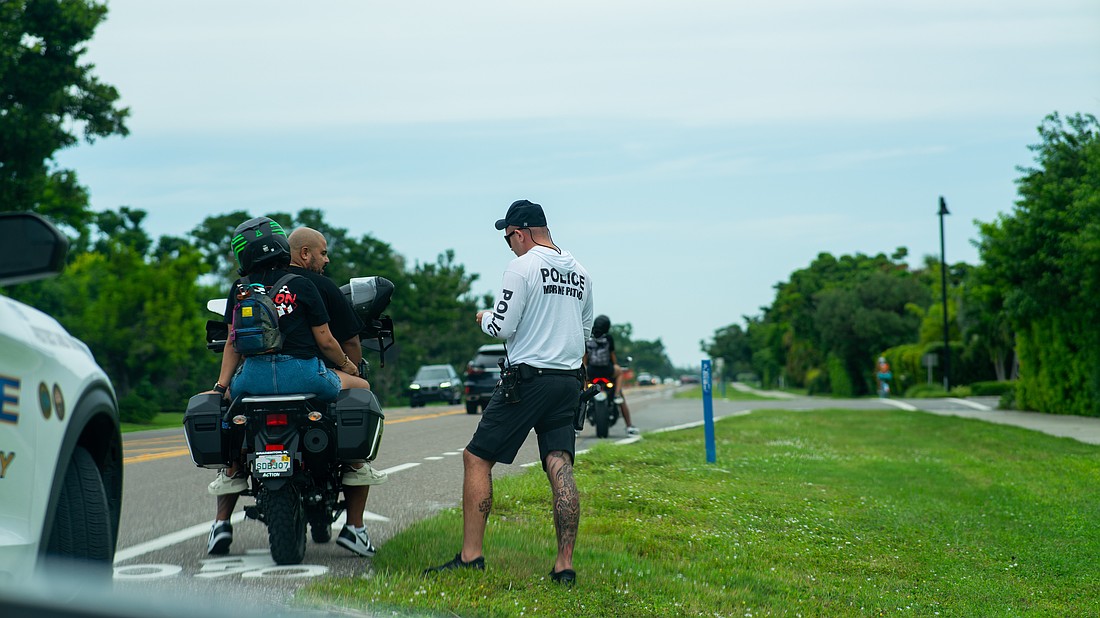
Drivers on the south side of Gulf of Mexico Drive may have noticed an increased police presence Friday, Sept. 12 on Longboat Key as the department uses grant funds to pay officers overtime to patrol the south side of the island.
Officers perform traffic stops during the “high visibility enforcement” initiative, which allows three to four more officers than usual to be on patrol.
Sgt. Sean Butler said officers prefer to use traffic stops as a means of education, handing out informational flyers and issuing warnings more often than giving out tickets. During Friday afternoon's HVE, Longboat police initiated seven traffic stops and issued two citations.
“We use our discretion to make a teaching point,” Butler said. “The last thing you want to do is make (HVE) activity driven by just issuing citations because if we’re not there next time, they’ll just speed. We want to change driving habits through education.”
Warnings rather than citations are also the trend when it comes to pedestrians and cyclists. According to LKPD, five warnings have been issued to pedestrians and cyclists so far this year and no citations have been issued.
LKPD also sets up tents during HVE shifts, providing information, pamphlets to and answering questions from pedestrians and cyclists who stop to speak with officers.
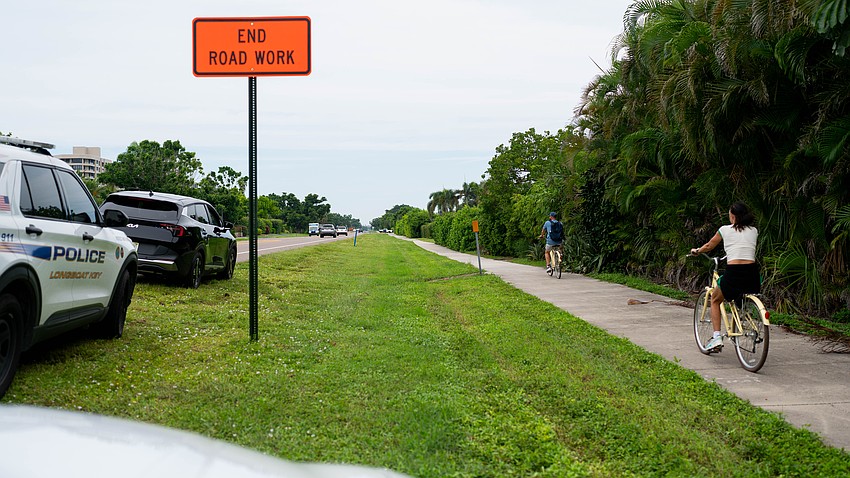
Cyclists ride past a vehicle pulled over by police on Gulf of Mexico Drive Friday, Sept. 12. Longboat Key police patrolled the south side of the island on Gulf of Mexico Drive from the St. Regis Resort to Yawl Lane, about a mile in length, with an increased presence. Sgt. Sean Butler said cyclists are allowed to ride in the bike lane, on the road or on sidewalks, though riding in the street can lead to traffic congestion and become a hazard during busy times of the day. When a cyclist is traveling in the bike lane, drivers are legally required to leave 3 feet of space between their vehicle and the bicycle they are passing.
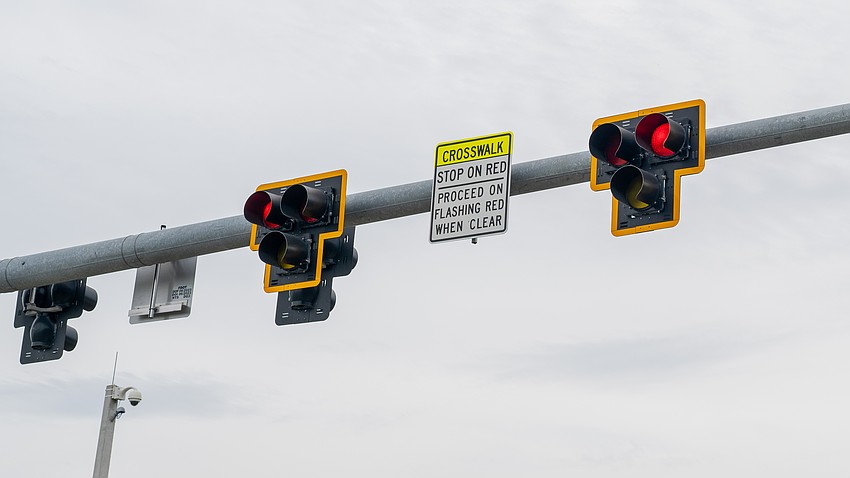
On Gulf of Mexico Drive, there are multiple examples of pedestrian crosswalks. Florida Department of Transportation’s updated pedestrian signals (pictured) have flashing red and yellow lights. The red lights begin to flash when a pedestrian presses a button to signify their intent to cross the road. The light will go from flashing red to solid red to allow pedestrians to stop traffic and back to flashing red. A flashing red light means drivers may proceed if the pedestrians have finished crossing the road and the coast is clear. Other pedestrian crosswalks on the Key display only a flashing yellow light, which alerts drivers to yield to crossing pedestrians.
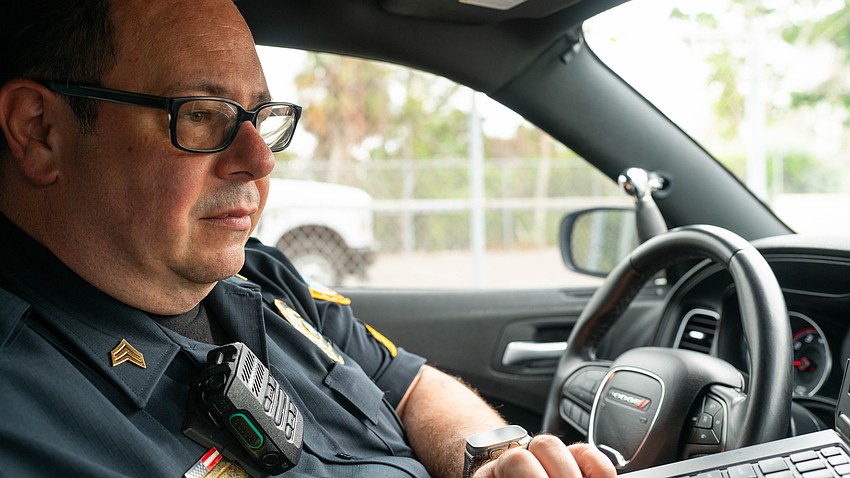
Sgt. Sean Butler checks his in-vehicle laptop, known as a mobile data terminal, outside of the LKPD precinct. Police cruisers have internet service and officers use their terminals to run vehicle license plates, check active calls for service, log traffic stops and connect with automatic license plate readers. Butler said an LKPD officer typically drives about 110 to 140 miles in their squad car per eight-hour shift.
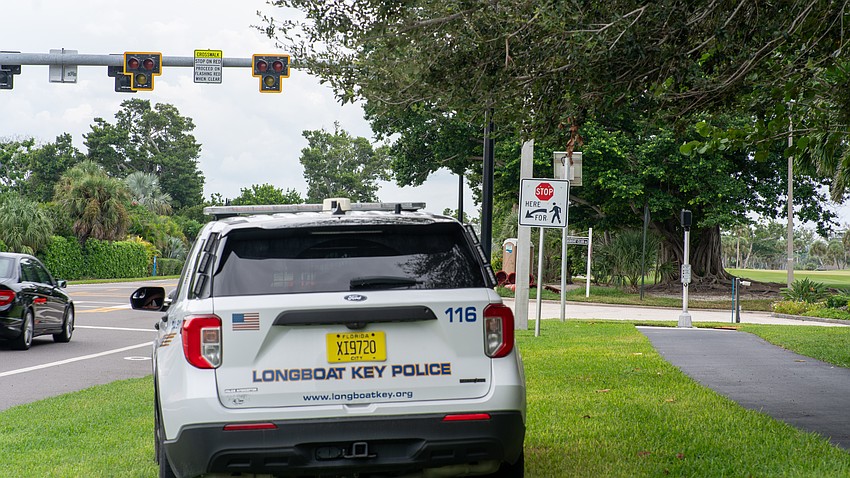
A Longboat Key Police Department cruiser is stationed at a pedestrian crosswalk on Gulf of Mexico Drive. Using Florida Department of Transportation grant money for the state‘s “high visibility enforcement” initiative, LKPD will have three to four additional patrol cars on the south end of the key. During the last eight-hour shift LKPD held with high visibility enforcement, officers conducted 37 traffic stops and issued eight citations.
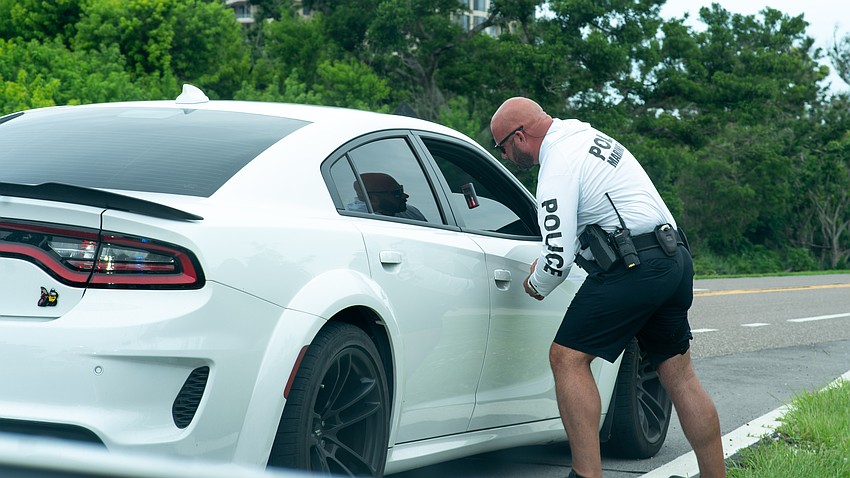
Longboat Key police officer Michael Mathis measured the window tint on a vehicle on Gulf of Mexico Drive, using a tint meter. Florida law states that the front windows of a vehicle can have a 28% visible light transmission. Lower VLT percentages mean a darker tint. LKPD officers pulled over multiple vehicles Friday as part of the department’s “high visibility enforcement” initiative which has a goal of enhancing pedestrian safety. Sgt. Butler said tint that's too dark negatively impacts visibility for drivers, a potential safety hazard for pedestrians or cyclists crossing the road.
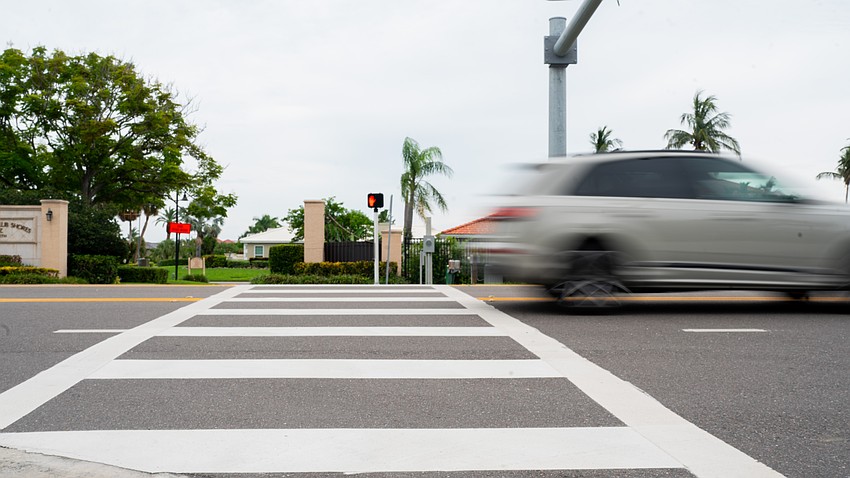
An SUV drives past a pedestrian crosswalk on Gulf of Mexico Drive. Longboat Key has several signaled crosswalks on Gulf of Mexico Drive for pedestrians and cyclists to cross. Sgt. Butler said the department monitors crosswalks to ensure drivers are obeying the law because “accidents with pedestrians and cyclists don’t typically end too well.” According to LKPD Sgt. Sean Butler, a one-time, $5,000 grant from FDOT funds 12 separate eight-hour overtime shifts for officers and that a typical high visibility enforcement shift adds about three to four police on the streets.
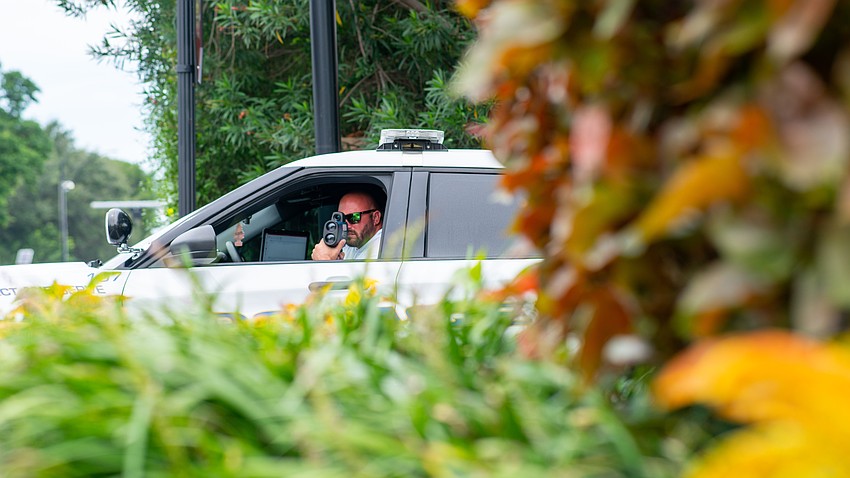
Longboat Key Police Department officer Michael Mathis monitors the speed of drivers on Gulf of Mexico Drive using a radar gun. Mathis and other officers work overtime. During HVE, police monitor speeds, vehicle conditions and driver behavior with the goal of protecting pedestrians and cyclists on Longboat Key’s main road. According to LKPD Sgt. Sean Butler, the department pulls over 50-75 cars per month during an average month without high visibility enforcement.
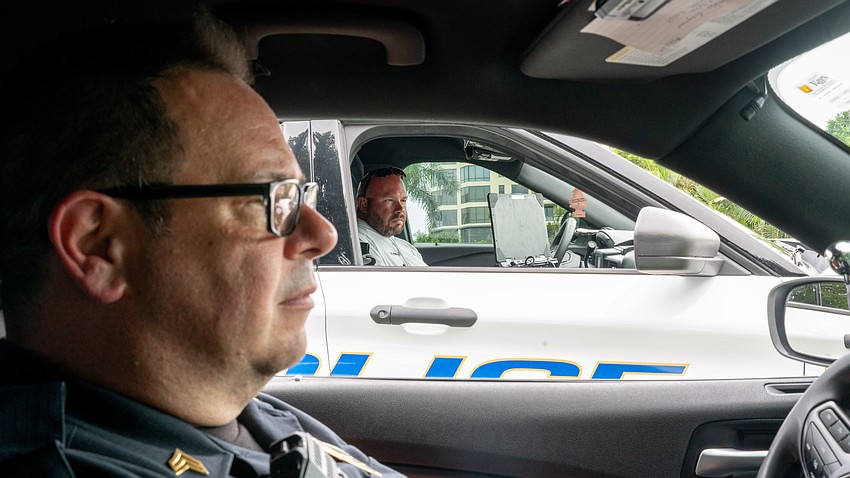
Longboat Key Police Department Sgt. Sean Butler (left) pulls alongside officer Michael Mathis Friday, Sept. 12 on Gulf of Mexico Drive. Butler said the department makes an effort to hire officers with experience and diverse backgrounds. For example, Mathis was previously a narcotics investigator in Coweta County, Georgia; Butler worked on homicides at NYPD; Sgt. Adam Montfort was a detective in Ulster County, New York; Jimmy Barrett was in the marine unit in Miami; Gregg Pescuma was previously a chief warrant officer with the Coast Guard; Dallas Troyer is a U.S. Army veteran and former road deputy in Pueblo County, Colorado; and Justin Ramsaier worked in active shooter response with NYPD.