- March 13, 2026

-
-
Loading
Loading
In Tallahassee, state leaders and Gov. Ron DeSantis have expressed their desire to drastically reform property taxes in the state, with a full-on abolition of property taxes even on the table.
DeSantis called property tax reform “the big kahuna” of his policies for the upcoming year at a speech in Plant City on Sept. 8.
“For me, I think the basis is if you’re a Florida resident and you have a primary residence here, a homesteaded residence, you’ve got to be able to own that free and clear of the government,” he said. “The notion that you should be just paying rent to them indefinitely, people have been pinched by these property taxes.”
The Florida Constitution specifies that major reforms or the elimination of property taxes be decided by ballot measure, which DeSantis said he hopes to include on the Nov. 2026 ballot.
Local government leaders are wary of the idea, to put it lightly.
“We would go out of business. If you look at the budget we went through this afternoon, 80%, at least, of our general fund budget comes from property taxes. That’s true for all governmental bodies. All counties, all municipalities are that way to some degree. All of our fire, all of our police,” Longboat Key mayor Ken Schneier said. “It’s just crazy talk.”
According to a Florida House of Representatives committee report, property taxes brought in $55.2 billion to school boards, counties, municipalities and independent special districts in 2024, which is a 108% increase from the amount collected in 2014.
“The question is, do you need that type of increase or would it be better to give property tax relief?,” DeSantis said. “That is ultimately what people want, and I think it’s the best way for us as elected officials to help facilitate meaningful relief for people.”
With the Save Our Homes law, assessed property values are capped at 3% per year for homesteaded properties, and much of the growth in property tax collection is fueled by rising valuations of non-homesteaded properties, new development and population growth.
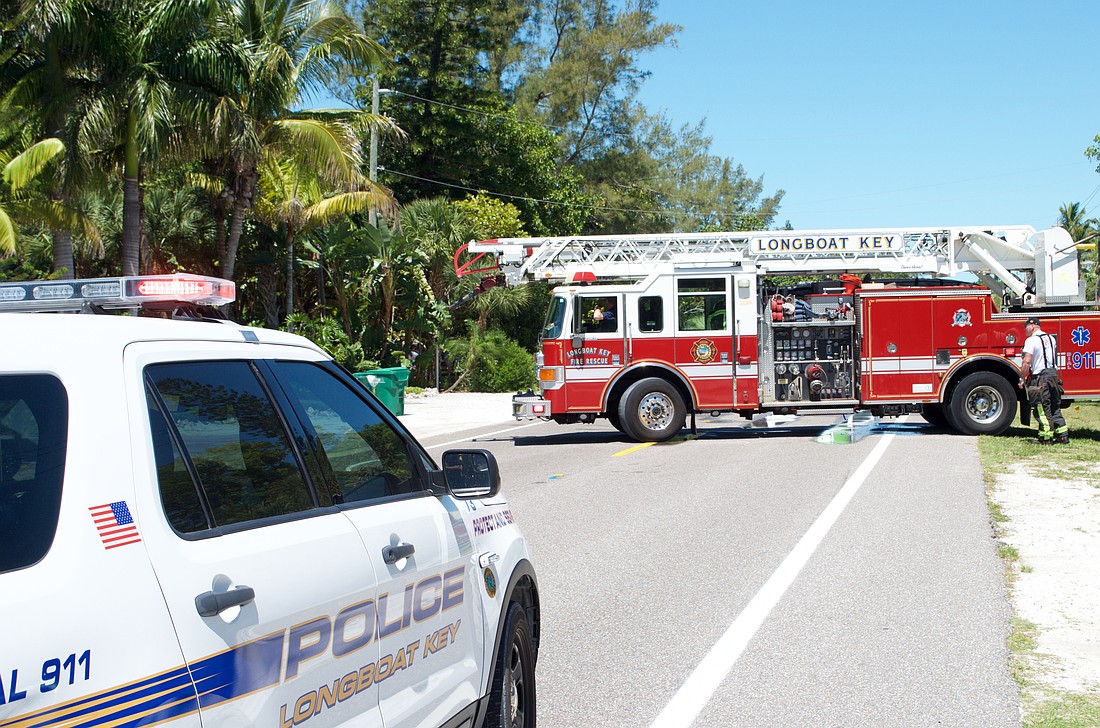
Property taxes are the No. 1 revenue stream for local governments. They pay the bill for fire and police departments, the largest expense of local governments. Looking at the town of Longboat Key’s 2026 fiscal year budget, property taxes make up 75% of general fund revenue. Without the $18.3 million in property tax revenue, the source of the town’s $14.1 million in public safety expenses is just not there.
“Police and fire are all paid with property taxes,” said Longboat Key Finance Director Susan Smith.
According to 2026 fiscal year budget documents, the town of Longboat Key Fire Department has $9.4 million in expenses with $4.2 million going toward wages and $3.1 million going toward retirement and pension. The police department has a $4.5 million budget with $2.5 million for wages and $957,607 for retirement and pension.
“Let’s just make sure that everybody understands that eliminating a revenue source doesn’t eliminate the cost,” said Longboat Key town manager Howard Tipton. “Unless you’re going to do something with that cost, which is a lot of public safety, you’ve got to find another way to pay for it. So let’s just have a really thoughtful conversation about where we want to go with this.”
Town leaders say replacing the property tax revenue stream is necessary. How that would happen is unclear, though DeSantis has vaguely implied there could be a way to boost local government budgets with another source.
“If someone were to say ‘well, we’re going to do it a different way. It’s not going to be property taxes, it’s going to be something else.’ Well, no one has even written out an idea what that other might be because it would be so astronomical,” Schneier said. “Florida is never going to have an income tax, and if you were to do a sales tax increase, it would be monumental. You’d go to like 17 or 20% or something to try to make up the loss.”
In the Florida House of Representatives, a “select committee on property taxes” has been formed to determine the feasibility of major property tax reform. The committee had two meetings in March and will meet again Sept. 22 and Sept. 23.