- March 19, 2026

-
-
Loading
Loading
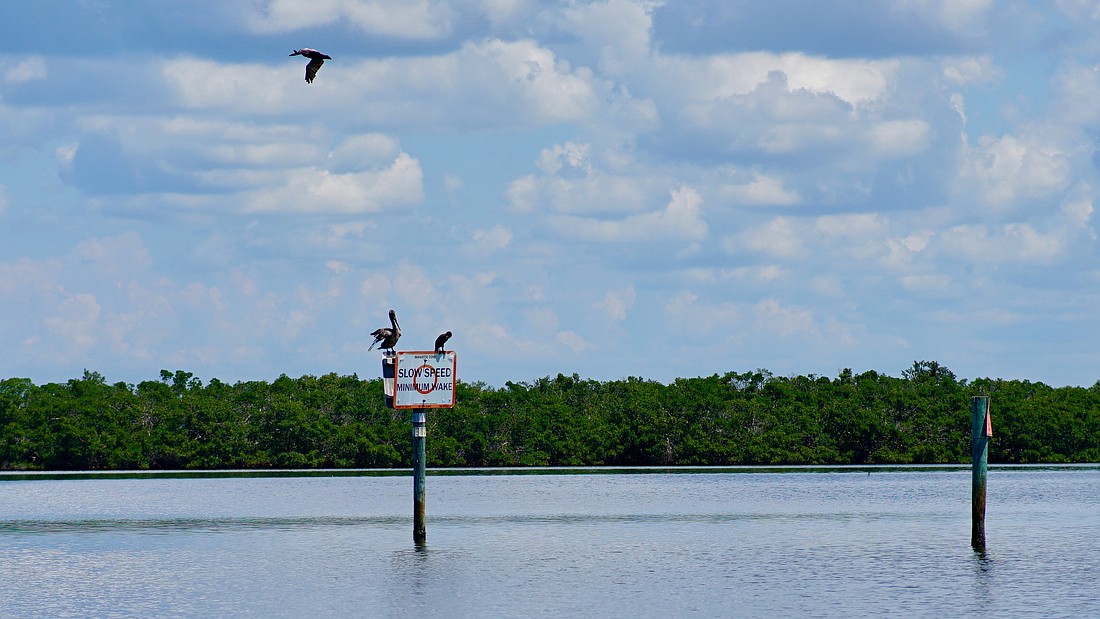
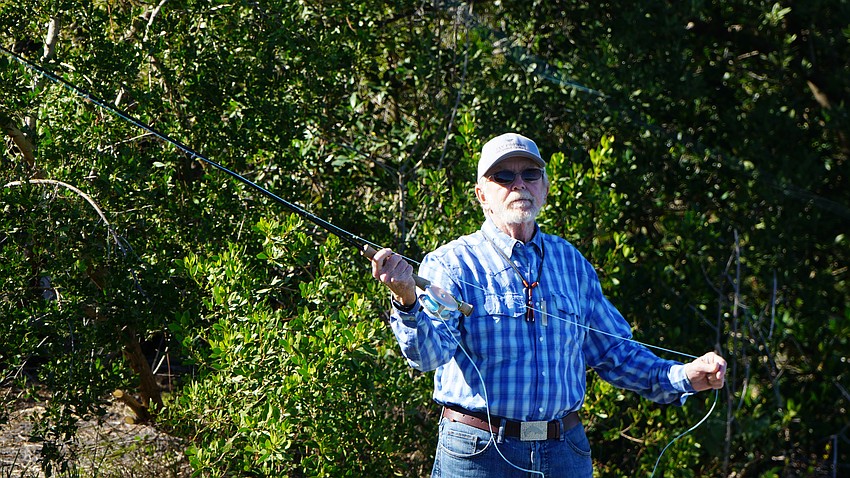
The water has always been an important part of Rusty Chinnis’ life. He grew up fishing off the North Carolina coast with his father in the 50s and 60s and has recreationally fished since. Now, Chinnis is using his free time to advocate for the health of the water surrounding his home on Longboat Key.
“I like to fish. I love spending time on the water. None of that works very well if the water isn’t right,” Chinnis said. “We’ve seen more stormwater runoff, algal blooms, water degradation and fish kills. It makes you realize that if we’re not careful and don’t pay attention, we will lose something very valuable.”
Chinnis, who moved to Longboat Key in 1981, got involved with Suncoast Waterkeeper because he said he wanted to give back to the water that has given so much joy to him.
He has consistently been involved, volunteering with the Florida Conservation Association before he worked with Suncoast Waterkeeper.
Chinnis said as board chair for the organization, he does a lot of behind-the-scenes work, educating people about the issues facing Sarasota Bay and lobbying local governments to pass policies that protect it.
Sarasota Bay Estuary Program executive director Dave Tomasko said local governments have stepped up to protect local waterways, investing heavily to enhance water treatment systems to ensure what is discharged doesn’t greatly harm water quality. That includes the city of Sarasota, Manatee and Sarasota counties, and the Southwest Florida Water Management District.
“We are seeing $300 million worth of investments in the past five to 10 years. Concurrent with that investment, our water quality got better,” Tomasko said. “And that’s not a coincidence.”
Tomasko said Sarasota Bay is in a select group of bodies of water monitored by the state that have shown decreased levels of chlorophyl-A levels. Just 15% of those water bodies have shown decreased levels, which are a key indicator of the health of the water.
“Sarasota Bay is one of the only places in Florida where the water quality is better than it was five years ago,” Tomasko said while in the midst of driving to Key West to talk to a group about that achievement.
Suncoast Waterkeeper has a mission of “defending our local waters and achieving swimmable, drinkable, fishable water for all.” This is done via regular water testing, education, environmental advocacy and litigation when necessary, according to the Suncoast Waterkeeper website. And recently the organization has delved into not only the health of the water, but the health of ecosystems that contribute to the health of that water — mangroves, for instance.
They’re vitally important for the Suncoast, so that’s why we started being proactive in monitoring them,” Suncoast Waterkeeper executive director Abbey Tyrna said. “Mangrove rangers take a proactive approach.”
Mangroves play an important role in the health of coastal bodies of water, especially in Sarasota Bay. The saltwater-tolerant trees play a multi-faceted role. The tangled root systems of the trees dampen the strength of waves, and when densely packed can also reduce the effects of storm surge.
“A hurricane can come through and devastate a protected area (of mangroves). But it’s really nice to know the wind and the waves that were quelled by those mangroves,” Tyrna said. “They were the first line of defense against those hurricanes.”
They provide habitats for small fish, and mangrove forest islands are a favorite hangout spot for seabirds like pelicans, spoonbills and gulls. Tomasko said another mangrove benefit is that tannins released into the water from the tree’s leaves release hydrogen peroxide which combats harmful algal blooms.
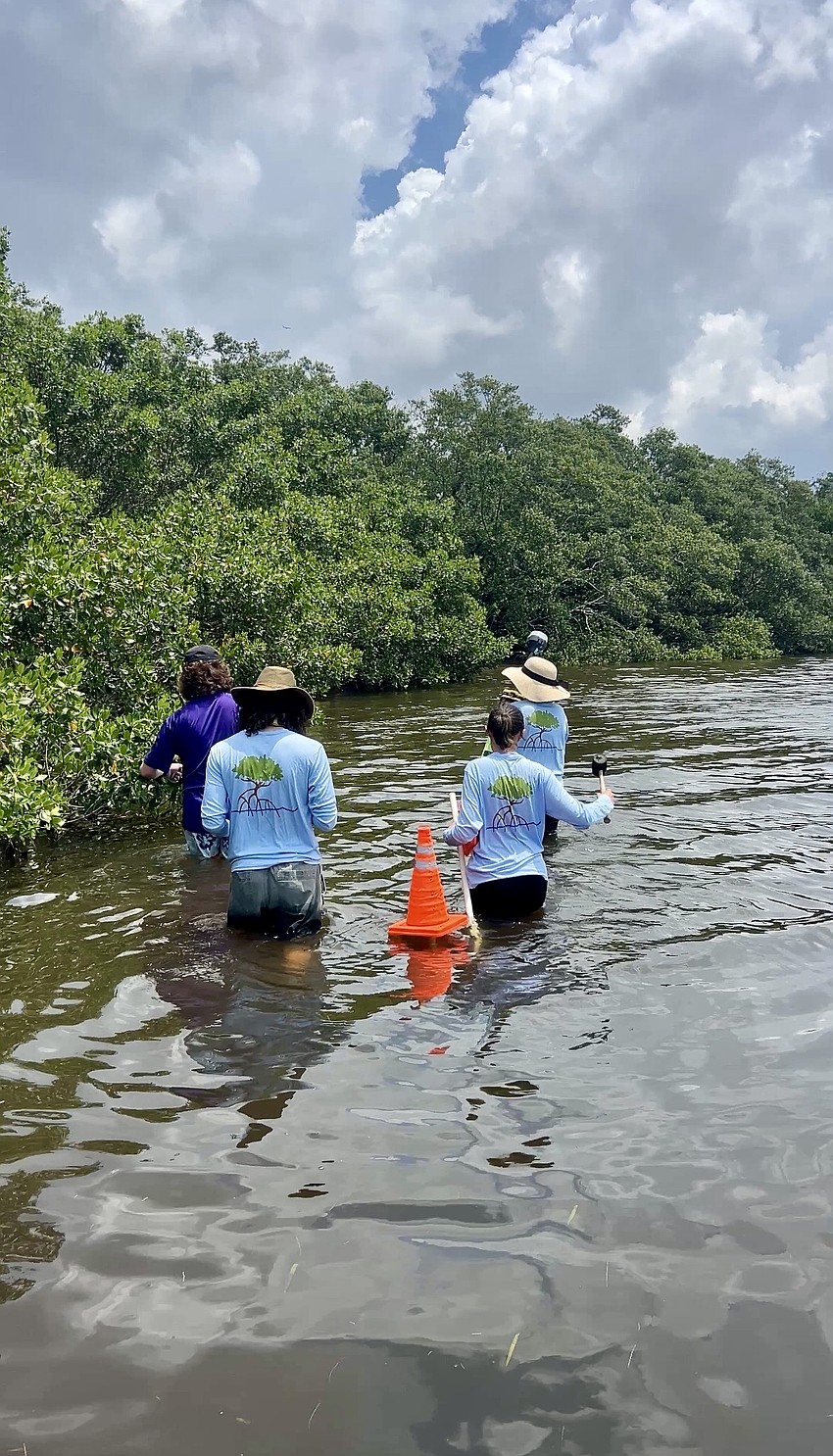
With all these benefits in mind, Suncoast Waterkeeper is in year two of its “Mangrove Rangers” program. The mission of this effort is to determine the health of mangroves in Sarasota Bay and Palma Sola Bay. Volunteers go out on the bay in teams of four to check on the health of mangroves. A drone pilot takes pictures from above while a boat owner drives and a spotter keeps their eyes peeled for hazards to the drones, which Tyrna says are mostly birds. Once the overhead images are taken, a data manager uses software to evaluate the tree canopy of eight mangrove forests — four in Sarasota Bay and four in Palma Sola Bay.
Middle school teacher Keith Paynter is utilizing his drone pilot’s license to aid in the Mangrove Rangers’ mission. He got his license in 2023 because he wanted to start a drone program for his students at Sugg Middle School in Bradenton. He started teaching sixth and seventh grade science at Braden River Middle School this year.
“I wanted (the students) to learn about drones and what they could do with them,” Paynter said, “They can get (a license) at 16, so in high school, they could have a job making money with drones already.”
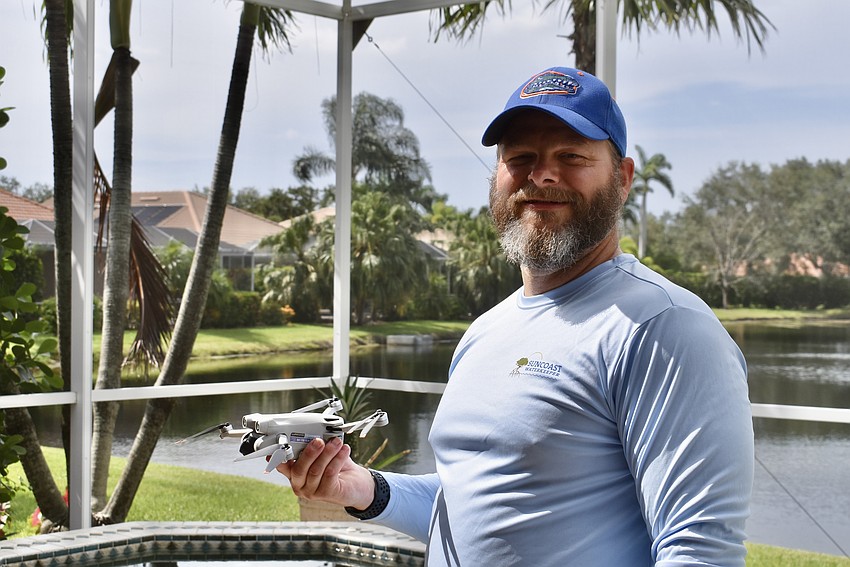
Drone pilots are in demand for Suncoast Waterkeeper.
Tyrna said they assembled five teams this year, but each year, the program has been limited by the number of drone pilots. Suncoast Waterkeeper provides the drones, but the pilots need to have a license through the Federal Aviation Administration.
Paynter said most of the training to get a license is just learning the flight rules. It took him about a month to get through the course and about two hours to get through the exam.
The pictures Paynter takes from the air with his drone are then loaded into a software program that stitches them together to form a 3D image. Waterkeeper staff members can highlight a site on the image, and the software can calculate the forest’s canopy depth and average Normalized Vegetation Difference Index, which assesses how well the mangroves are photosynthesizing.
From there, the site gets an assigned health score.
With data from two years now logged, there are positives and negatives to note in Sarasota Bay. One site showed a significant 46% decrease in the canopy caused by the double-whammy of hurricanes that hit in 2024. Others saw improvements, with one site scoring an 88 on the Waterkeeper “mangrove health index score” which is on a scale to 100.
Another site in Sarasota Bay was among the least healthy mangroves to be documented in 2024 because a sewer pipe broke near the site in 2022. However, those mangroves showed an 8% increase in canopy volume over the past year, and the site received a health score of 63, which is higher than the preserved site this year.
Trimming of mangroves is a concern for advocates.
“Trimming is not great. Our takeaways were that our trimmed mangrove areas are the least healthy of all the mangrove systems that we survey,” Tyrna said.
Chinnis said education about what is allowed when trimming mangroves is an important function of Suncoast Waterkeeper. He used an example of a real estate listing where the realtor wrote that mangroves bordering the home would be removed, which would be against the law. He said he aims to spread the word about the important functions of mangroves and what is allowed to those who may not be familiar with the benefits of the tree which grows exclusively in coastal wetlands, tidal estuaries and low energy coastal areas in tropical climates.
“We should be all in this together,” Chinnis said. “Developers shouldn’t be pitted against residents. Mangroves benefit everyone. It’s hard to overemphasize their importance.”