- March 15, 2026

-
-
Loading
Loading
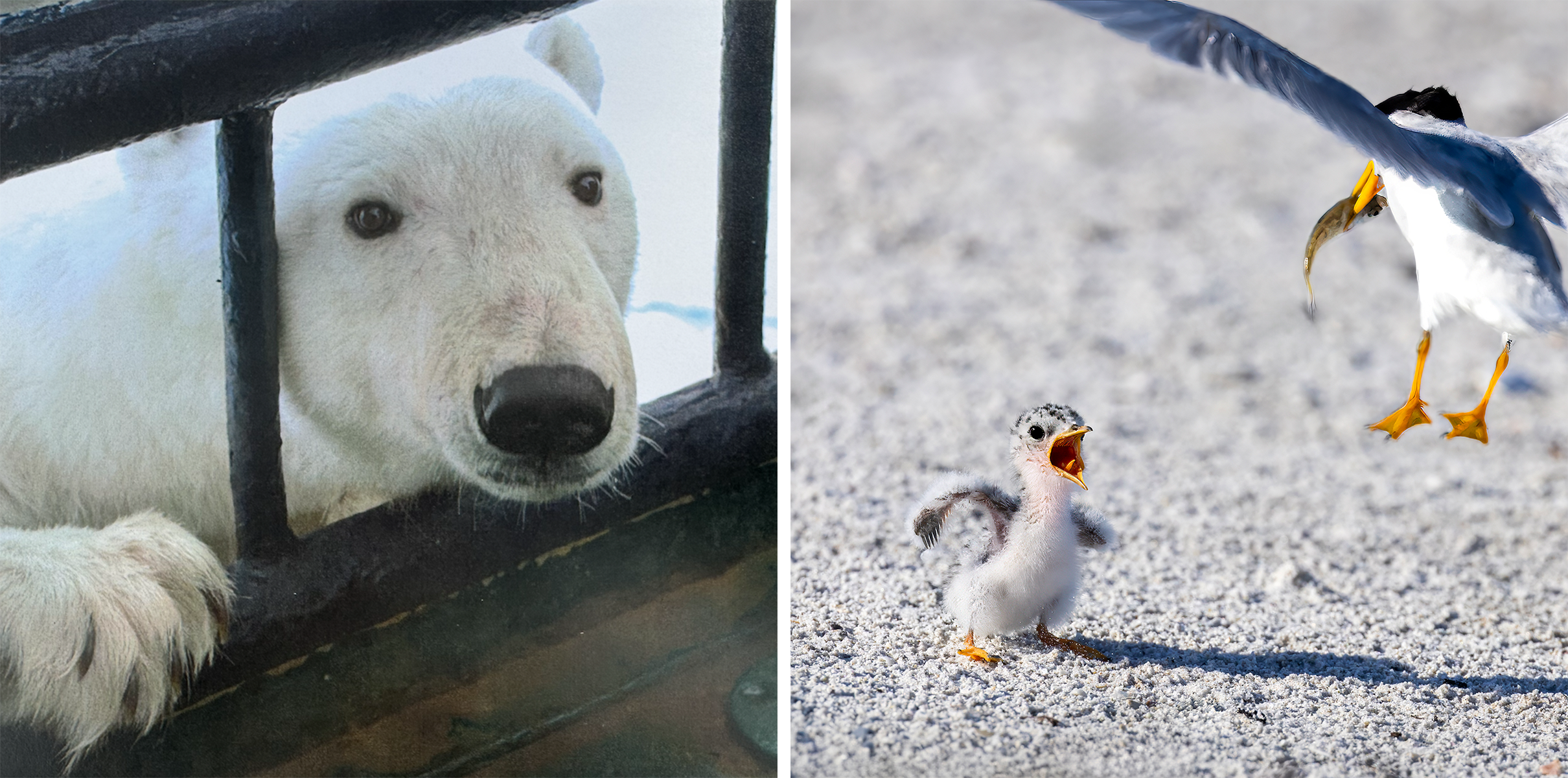
He’s been swiped at by a polar bear in the Arctic, charged by a bull elephant in Tanzania, brushed by a brown bear in Alaska, and had a cheetah jump on the hood of a safari vehicle just a few feet away from him. And each time he kept on snapping pictures. He spent an afternoon in Kenya following a leopard on the hunt and saw it finally make a kill, and he photographed it along the way. He trudged up and down mountains for hours in Uganda searching for gorillas, only to find them way up in the trees and all but impossible to capture with his camera.
Lou Newman had all these adventures — and many others far less perilous — after the age of 70. It bears repeating: after the age of 70.
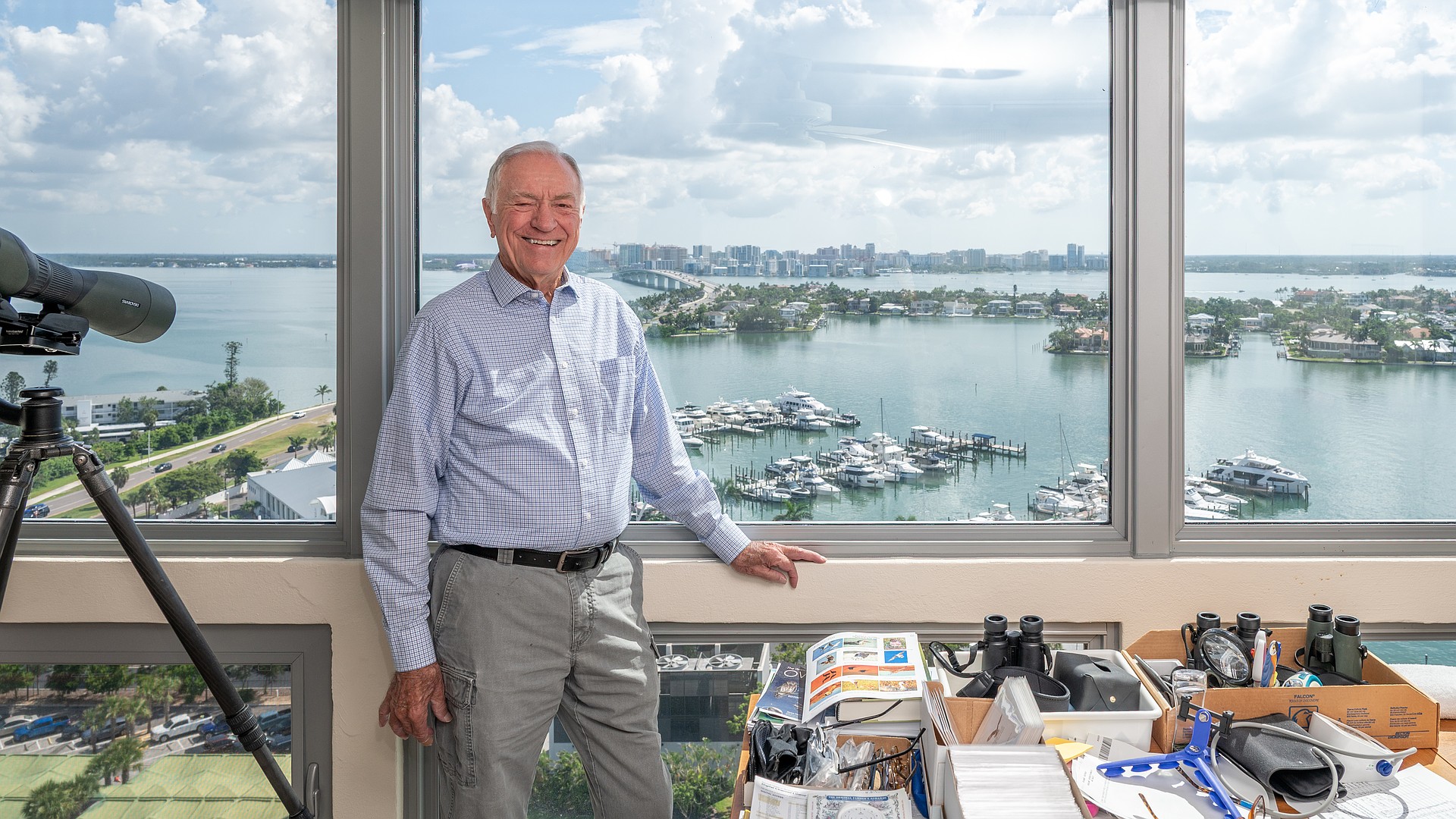
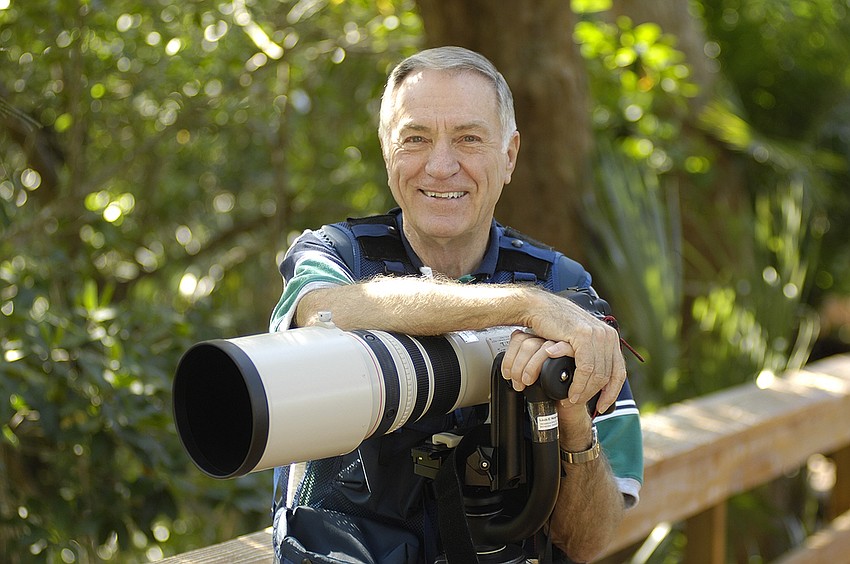
That’s when he could devote himself to wildlife photography in what he calls a “career in retirement.” Newman is 94 now, and lives comfortably in Plymouth Harbor, his residence for the last 20 years. He has slowed down, as you’d expect, but still heads out a few mornings a week to snap pics — focusing on birds in flight but also coming away with other avian images.
Newman occasionally takes photography excursions farther afield, but only to places he can reach by car. His days as a globe-trotting wildlife photographer have passed. And he’s OK with it. Newman says he’s been to every state, 72 countries and all seven continents.
“My favorite thing to do these days is to go out to Lido Beach before sunrise and shoot for about two to three hours,” Newman says. “I shoot during the golden hour, the first part of the morning when the sun is at an angle.” He also takes excursions to Celery Fields, Myakka River State Park, Venice Rookery and other spots. He brings binoculars, a light foldable chair and his trusty Canon outfitted with a 100–500-millimeter lens.
On a Thursday afternoon in late July, Newman tells expansive stories in the living room of his 19th-floor condo, a cozy one-bedroom he calls his “bachelor pad.” A side room is cluttered with camera gear, a couple of computer screens, printers, stacks of papers, a carved wooden walking stick and other stuff. Outside Newman’s door, in the communal space, hang several of his photos, blown up and framed. He figures that about 500 of his pictures hang on walls around town.
Newman sits in an easy chair overlooking Sarasota Bay, wearing shorts, sneakers and a maroon golf shirt. No two ways about it, he looks terrific — a nonagenarian who could pass for far younger, still ruggedly handsome. It’s fair to say, however, that he doesn’t feel as good as he looks. In 2023, Newman was the victim of a devastating car accident near St. Armands Circle, where he was broadsided by another driver. He suffered two fractured vertebrae that required a five-hour surgery during which the surgeon installed “a lot of hardware,” Newman says. After the procedure, one of his kids asked the doctor how their dad was faring. “Let’s see if he makes it through the night,” he replied, according to Newman. He spent three weeks in the hospital and endured six months of intensive rehab. He still has problems with strength and balance, so he works out with a trainer three days a week at the Plymouth Harbor gym.
Newman lived an extraordinary life before traveling the world and clicking pictures of alligators, anteaters, gazelles, elephants, lions, zebras, hyenas, hippos, pandas, iguanas, capybaras, wildebeests, sea lions, humpback whales and more bird species than one can count, including penguins in Antarctica.
To chronicle his life in any depth would be impossible to do in the space allotted, so a highly abridged summary will have to do.
The son of a General Electric executive, Newman spent his early life in Schenectady, N.Y., and Lynn, Massachusetts, and went to high school in Marblehead, Massachusetts. The oldest of three, Newman was an industrious lad, with a couple of paper routes and a series of jobs, including one in a greenhouse that paid 25 cents an hour. As a teen, he used a Kodak 35 to snap pics of mundane kid things like model airplanes and sailboats. He had a dark room in the basement.
Newman took to animals early. “I decided I wanted to be a farmer,” he says. “My first love became cows. I always wanted to work with cattle.”
Instead of life on the farm, he chose the veterinary track. Newman did his undergrad work at University of New Hampshire and earned his veterinary degree at Cornell. During college, he met and married his first wife, Leslie. Pursuing his bovine interests, Newman moved his family of three to Wyoming and joined a veterinary practice. Then, looking to go out on his own, he chose Glasgow, Montana, a remote town in ranching country in the northeast quadrant of the state.
Newman drove hundreds of miles a week to tend to ailing cattle and after a time set it up so the ranchers would truck the animals to his clinic. He delivered a lot of calves by Caesarian section, charging around $40 and also tended to dogs and cats and other pets. One year, he says, the Newmans endured 88 straight days of sub-zero weather. But life was good. The practice was thriving. Lou and Leslie had six children. He took photographs, mostly in the context of his profession. “But I knew I wanted to be a wildlife photographer when I retired,” he says.
Then, a turn for the worse. Way worse. Leslie became ill with colon cancer. The Newmans picked up stakes and moved to East Lansing, Michigan, home of Michigan State University. Newman juggled three roles: graduate student, instructor and running the college’s veterinary outreach program. The new environment provided Leslie better health care, but she died at age 37. On becoming a single father of six kids, the usually voluble Newman says, “Yeah, it was hard.”
He had three subsequent marriages that were “difficult,” but he remains on good terms with his ex-wives. He has nine kids in all, ranging in age from 69 to 37. They’re spread around the country, with his two youngest daughters residing in Tampa. Every other year, Newman rents condos on Longboat Key for his extended family of 40. “I look at it as an investment, so the kids will be a family long after I’m gone,” he says. The gathering in 2023 wasn’t so fun. That’s when he had his auto accident — on Father’s Day.
Newman earned his doctorate in veterinary pathology from Michigan State and took positions as director of veterinary diagnostic labs at the universities of Kentucky and Georgia. He spent about 10 years leading up to his retirement taking classes and learning the finer points of wildlife photography. He wanted to hit the trail running as soon as he left the working world.
Newman retired to Venice in 2000. His parents had lived in Plymouth Harbor so he and his family made regular visits to the area. He founded Lou Newman Photography — a one-man operation — to market his images. After a couple of years, he realized, “I don’t like this, trying to sell things. I went from being a professional wildlife photographer to a semi-professional wildlife photographer.” These days, he sells the occasional photo, presents some as gifts and donates images to charities like Save Our Seabirds and the Sarasota Audubon Nature Center.
In the earlier years of his retirement, Newman provided voluntary vet care for Mote Marine Laboratory and Pelican Man Bird Sanctuary, now Save Our Seabirds. He taught photography and digital imaging on cruise ships.
Most of his far-flung photography expeditions were with groups. He was fortunate enough to attract mentors and make friends with established wildlife shooters. One of his favorite sojourns was in the early 2010s when he was part of a coterie that ventured to the Midway Atoll, which was home to a naval facility that played a crucial role in the WWII Battle of Midway in 1942. His and his group stayed for a week, roughing it in former military barracks and photographing the rare Laysan albatross.
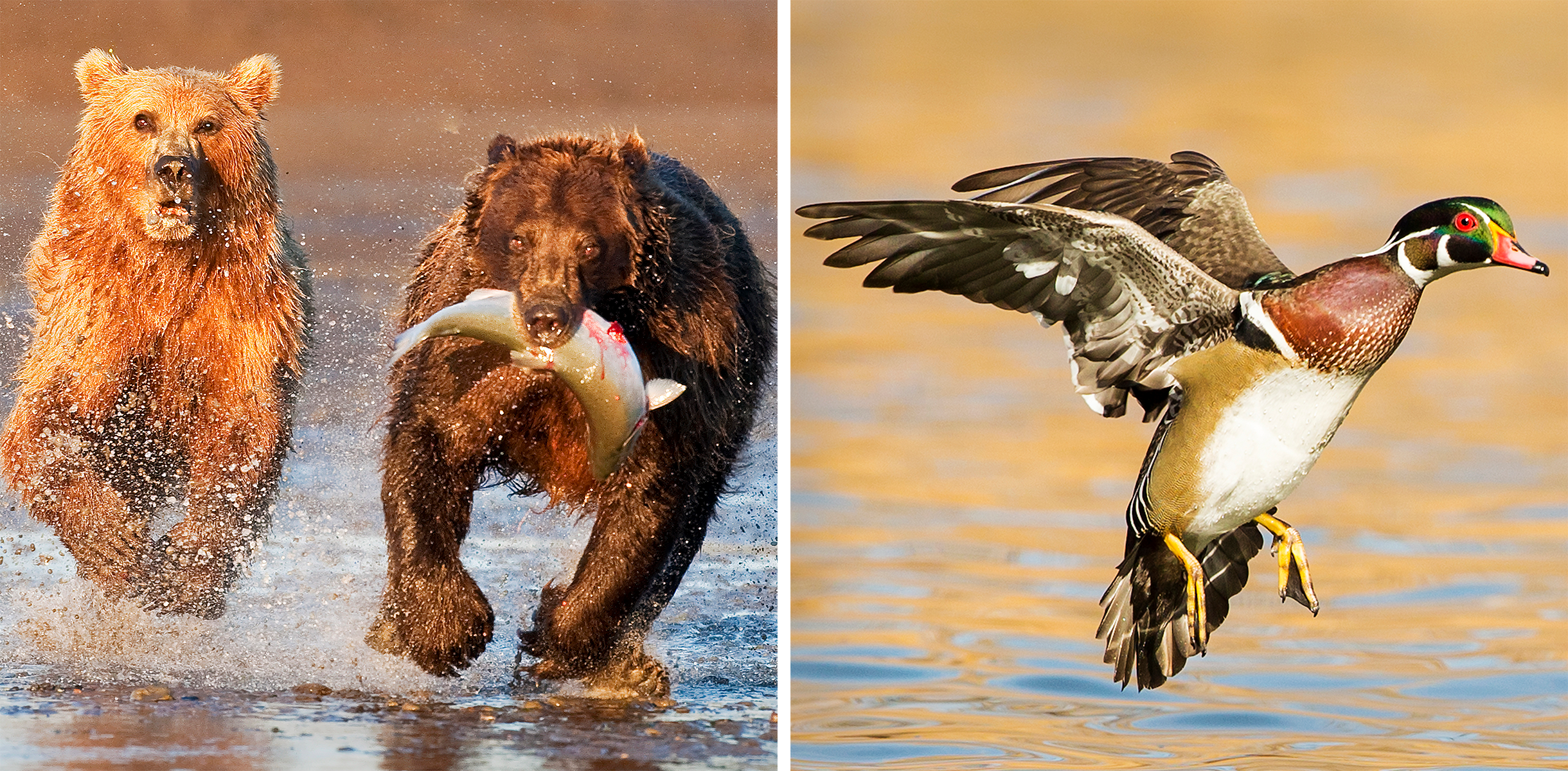
To be clear, Newman doesn’t consider his scrapes with wild mammals life-threatening — except, perhaps, for the elephant incident. He and a few others were atop a safari vehicle. “There was a car coming the other way, and the elephant felt trapped,” Newman recounts. “He charged our vehicle. The gal next to me is screaming, the [driver] is backing up as fast as he could.
“And I’m shooting,” he continues with a grin. “There was a trail off to the side, and when the elephant saw it he veered off.” It all happened so fast and Newman was so engaged in the photographic moment that he didn’t have time to be truly frightened.
Newman went on a few magazine assignments, but self-financed the rest of his trips, the most expensive of which was the roughly $20,000 he paid for a three-week tour to the Antarctic. He saw eight of his kids through college, and all eight went on to advanced education. Newman says he has never considered himself wealthy but invested smartly and “there’s no question that throughout my life I was a squirrel. I put away a significant portion of my income.”
These days, he’s content with his toned-down photography regimen. “My happy place is sitting on a beach with a camera,” he says.
To view more of Lou Newman’s images, visit LouNewmanPhoto.com.