- March 13, 2026

-
-
Loading
Loading
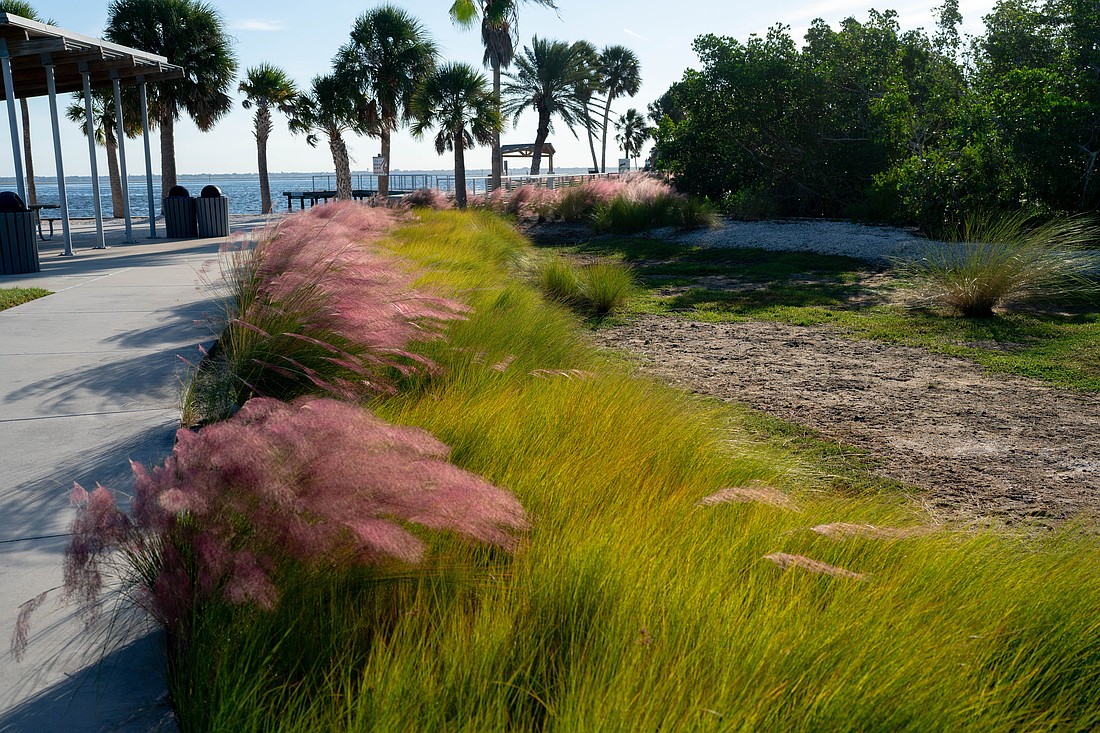
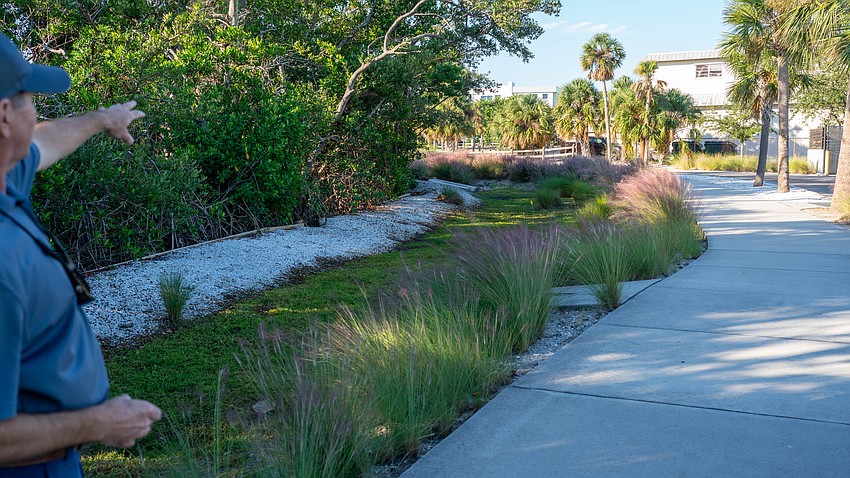
Egrets graze, marine snails crawl and the pink-purple flower strands of muhly grass sway in the wind at Bayfront Park in Longboat Key.
The pretty pocket of plantings next to the tennis and pickleball courts may not garner a second look by parkgoers, but it serves an important function, acting as a natural filter for water before it flows into Sarasota Bay, and reducing flooding during heavy rains.
When rain falls on Longboat Key, water washes onto the Key, over roads, lawns and roofs and either seeps into the groundwater lens below or into the Sarasota Bay or Gulf.
Measured in inches, the amount of water a rainstorm pours on Longboat Key can be better described in gallons. For each inch of rain, more than 71 million gallons of water fall on the 2,696-acre island.
With an average amount of rainfall of about 46 inches per year, according to RainDrop, that means more than 3.2 billion gallons of water falls on the Key annually, and it has to go somewhere.
The rerouting of that water and maintenance of the town’s stormwater system is one important aspect of the town’s duties.
Longboat Key Town Engineer Jennifer Fehrs said one of the goals of the town’s stormwater management system is to “meet the conditions for a 25-year, 24-hour storm event.”
A big part of Public Works Director Charlie Mopps’ job is the managing and routing of stormwater on the barrier island.
“During normal rainfall events, stormwater will infiltrate into the ground, some will evaporate, and plants assist in transpiration. However, if the soils and public/private retention systems are saturated, or the rainfall event is prolonged, or is a high intensity rainfall event, then we experience stormwater runoff,” Mopps said in an email.
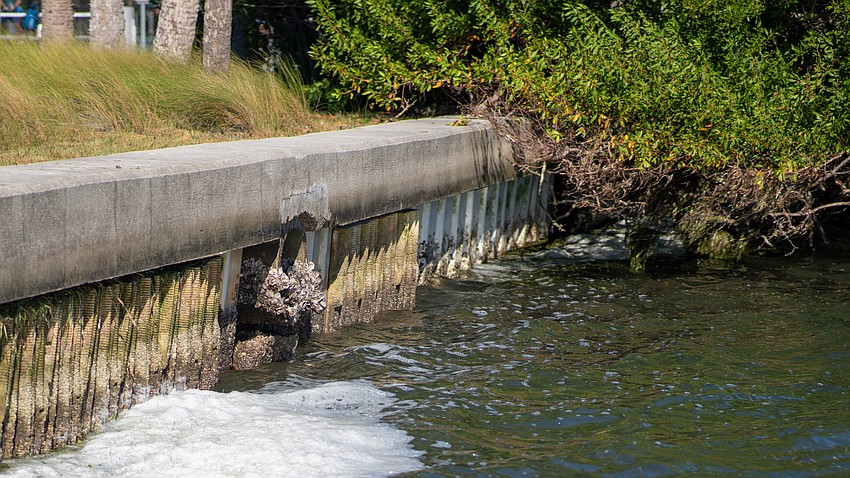
Ideally all rainfall would seep into the ground, but water won’t seep into concrete, or roofs, or other “impervious surfaces,” and the town and its residents don’t want water pooling in yards, into houses or on the street. So, there are hundreds of stormwater “infalls” or drainage grates that collect the rainwater, which then travels through the stormwater system. Often, water that makes its way into that system ends up in Sarasota Bay, explains Sarasota Bay Estuary Program Director Ryan Gandy.
“We’ve urbanized the environment and hardened the ground with roads and houses and everything else. The early (stormwater) designs were just to get the water off the land, so you piped it very quickly to get to the Bay or the Gulf,” Gandy said.
Many of those systems remain, and private stormwater systems are often of that simple “get the water out of here” design. But regulations by the Southwest Florida Water Management District have changed how new private stormwater systems are designed.
“The new mandate will increase stormwater treatment requirements for most projects, whether they are new development or redevelopment,” Fehrs said.
A lack of static water causes issues with the aquifer below, Gandy explained.
When rainwater doesn’t have time to percolate and absorb into the ground, the collection of water in the aquifer becomes lessened as its supply is used for irrigation and drinking water. Salty seawater seeps into the aquifer as the supply of fresh water decreases and the potential replacement of that water quickly flows into the Bay.
Bayfront Park’s stormwater system not just a system of pipes that connect gutters to a discharge pipe.
It’s living.
Nestled between the tennis courts and green space at Bayfront Park is a triangular gathering of Muhly grass, Cordgrass, Lemon Bacopa and other native marshy species.
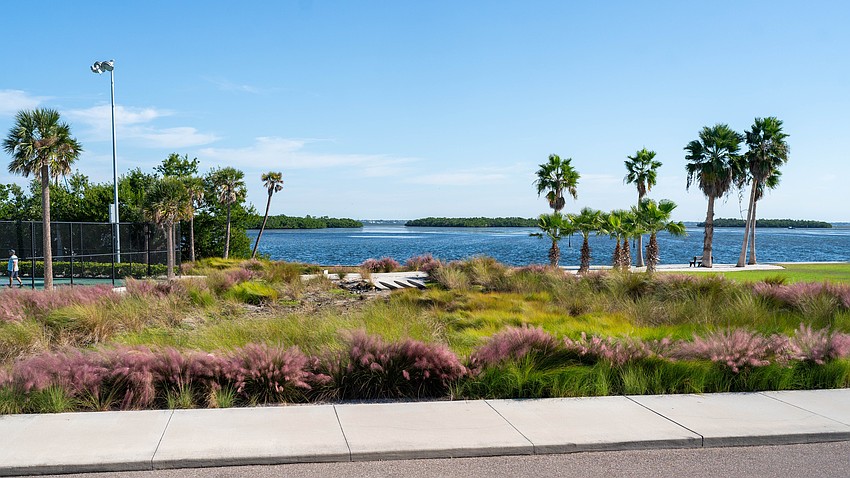
That ecosystem serves as a filter for the water that travels through the “bioswale” before it discharges into the Bay.
Assistant town manager Isaac Brownman said Bayfront Park’s bioswales aren’t only functional, but aesthetically pleasing. Much nicer to look at than a grass ditch or a dry retention basin.
“If those plantings weren’t there, it’d be a pretty bare depression or hole,” Assistant Town Manager Isaac Brownman said. “It’s beautifying things that would normally just have a basic purpose. There also is a water quality and ecological benefit.”
The Bayfront stormwater system connects drainage grates in the parking lot of Bayfront Park, collecting water sloped down from the east side of Gulf of Mexico Drive, and discharging it into Sarasota Bay. Depressed into the ground, the low elevation of the bioswales allow stormwater to pool and feed the native plant species that are planted in the bioswale.
The plants rooted in the swale allow the soil to collect more rainwater, also filtering the water naturally.
A much-needed process.
As rain washes over the Key, it picks up contaminants — oil from the roads and driveways, fertilizer and pesticides from lawns, bird and animal droppings from lawns and roofs. And as that happens, the water becomes polluted, also changing what it’s referred to as: stormwater.
Stormwater contains pollutants like nitrogen and phosphorus which can create bigger issues for the health of Sarasota Bay.
Nitrogen, phosphorus and other nutrients that are healthy to soil can have a negative impact on bodies of water, especially when a rain follows an extended dry period.
“The algae in the bay, what we call plankton, picks (nitrogen) up immediately and will create an algal bloom, and that’s normal and natural for the spring. But when we artificially increase the amount of nutrients by fertilizing too much, that can really create and exacerbate harmful algal blooms,” Gandy said.
Gandy encourages residents to be mindful when using fertilizers, using only the amount necessary.
“We all have a responsibility to know that what is on our lawn goes into the Bay at some point,” he said.
Homeowners can construct bioswales and “rain gardens” of their own to help the environment while beautifying their yards.
He points at anyone interested in doing so to reach out to the University of Florida Institute of Food and Agricultural Sciences’ Sarasota extension, which he said is happy to provide guidance and tips to do so.
“You can create a butterfly garden around your downspout, or if you have a low area on your property that pools water, you can plant that accordingly so that it helps to cycle that water and helps to keep pushing it down into the ground,” Gandy said.
The town also shares tips of its own to manage stormwater quality with residents.
Lawn clippings, leaves and litter can clog drains, causing backups during heavy rainfall events and breaking down in the system to hurt water quality.
Through marketing and outreach, the town urges residents to collect and bag yard waste and dispose of trash properly to avoid issues associated with clogged drains.
Regardless of the town’s efforts, debris makes its way into the stormwater system.
Baffle boxes serve as a type of debris filter, trapping those troublesome items before they cause an issue. One such baffle box is right before the Bayfront Park stormwater outfall.
Bayfront Park has gone through extensive changes over the years.
The town cleared the baseball diamond to add pickleball courts, and dog parks constructed all in the past decade.
There was a major expansion in 2016 where the town spent $3.5 million. This expansion included the removal of the baseball fields and the addition of the bioswales.
Brownman said the design of the Bayfront Park stormwater system is an example of how municipalities have changed their approach to stormwater management over the past half century.
A welcome change for those advocating for environmental stewardship.
“I think they’ve done a good job. I think it’s a good demonstration,” Gandy said. “This time of year, you’ve got beautiful blooming grass out there. But really what’s below that is actually a functional stormwater system. You’re not looking at ditches anymore. You’re actually looking at something that’s doing a job and has a really nice aesthetic to it.”