-
-
Loading
Loading

In Lakewood Ranch's 31 years of development, it's unlikely you've ever seen Schroeder-Manatee Ranch President and CEO Rex Jensen handing out food on a soup line.
But it's a good bet that the vision he has had in building the community was responsible for that soup line being there.
"Not all areas have the foundation for nonprofits and philanthropy," said Jeffrey Toale, the president of the board for the Lakewood Ranch Community Foundation. "It all starts with a good core community and people who are giving their time and money. Rex put together a master plan for Lakewood Ranch to flourish, and he helped shape the community to make it what it is today."
That would be a community of giving.
"Some people donate their treasure and talent ... Rex's crew donated an entire community," said Brittany Lamont, the president and CEO of the Lakewood Ranch Business Alliance. "You can go back to the inception of the Alliance and the Community Foundation (both which SMR started). Rex's biggest act of humanitarianism is creating a community where humanitarians can live. They live here because of what Rex built."
Jensen's contributions to the community will be celebrated Nov. 13 during the Lakewood Ranch Community Foundation's Soiree at the Ranch. He has been named the 2025 winner of the C. John A. Clarke Humanitarian Award.
The award was named for and presented to Clarke in 2005, the year Clarke retired as SMR's CEO. In 2006, the award was presented to Don O'Leary, who died in January. O'Leary, who served as fire commissioner of the East Manatee Fire Rescue district, often was called "the unofficial mayor of Lakewood Ranch" for his philanthropic ways.
"John Clarke ... the Lakewood Ranch Community Fund was his idea, not mine," Jensen said. "John Clarke, and Don O'Leary ... how do you better exemplify community involvement? Those are people who walk the walk, and they delivered. That's more prototypical (of the Humanitarian Award)."
Not so fast, says Lakewood Ranch Senior Vice President Laura Cole.

"What he does is a lot," Cole said of Jensen's humanitarian efforts. "When you think about where to develop, he could have made changes and made higher dollars. He always has looked at the spectrum to see what is needed. He doesn't blink. He went after workforce housing and continuing care facilities. When it was needed, he went after industry. Family housing? Entry level housing? He went after it."
In order to build Lakewood Ranch into the nation's No. 1-selling, multigenerational, master-planned community, he also made the decision to build nothing at times. Of the roughly 50 square miles of Lakewood Ranch, 46% will lie in open space. Those categories include more than 3,000 acres of conservation areas that aren't open to the public, as well as wetlands, ponds and lakes, trails, greenways, recreational areas, and 13 community parks.
"You don't make money on parks," said Jensen, who is 71.
He is proud of SMR's commitment to churches and schools.
"We have a constant conversation here about infrastructure and capacity," Jensen said. "Do the residents have a place to put their kids in school? When you talk about schools in Florida, you can't build a school until you are two schools behind. We aren't two schools behind, and we haven't been for years.
"I make it easy for (school board members and district executives) to do their jobs. Roads and utilities are available before they build a school. It's a plug-the-thing-in-and-hit-play environment."
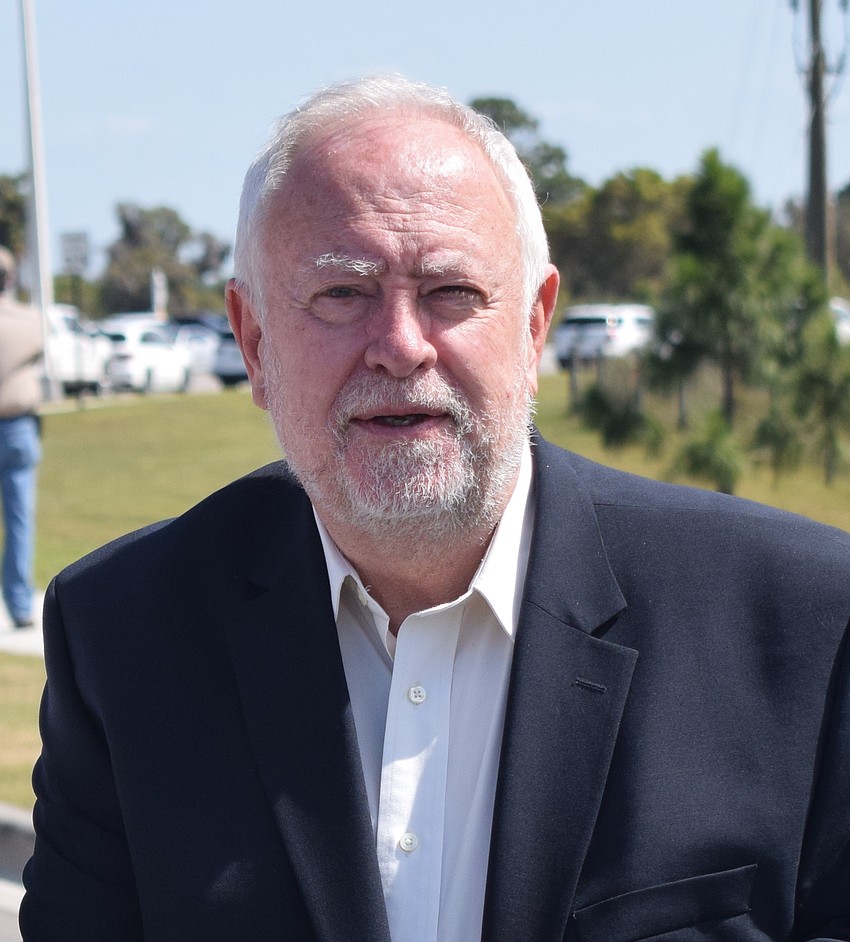
Creating a great environment for people to live meant conservation efforts by SMR.
"We have 400 acres of swamps," Jensen said. "But you don't preserve something by leaving it alone. You have to actively manage it. Our wetlands had been drained by farming practices. We restored them. This company's ethics in handling the environment have been well in excess of recommendations. We have done it for years, we just haven't talked about it. That's the DNA of our company."
Raised on a farm in the Sidney Township of Michigan as the oldest of five children, Jensen didn't spend a lot of time talking about humanitarianism with his family.
"If you didn't work, you didn't eat," Jensen said.
He grew up in an atmosphere where if you took care of business at home, you were taking care of your community as well. After earning his undergraduate degree at Michigan State and his law degree at Michigan, he worked as a corporate lawyer, real estate consultant, and owner of his own consulting company, before bringing that philosophy to Lakewood Ranch when he joined SMR in 1990 and eventually became CEO in 2005.
When SMR decided to use its land to build a community three decades ago, Jensen said there was an "institutional plan" where philanthropy would be part of the "community's DNA."
"You have to believe in it, and implement it," he said. "Otherwise the community won't know how to walk the walk. How do you put together the infrastructure driven by those values and goals? It's not painful, it's just part of the process.
"We created a rising tide that lifts all boats. We've lifted a lot of boats."
In doing so, Jensen said SMR has created a great place to live, that includes hundreds of businesses and a reason for being, to thrive.
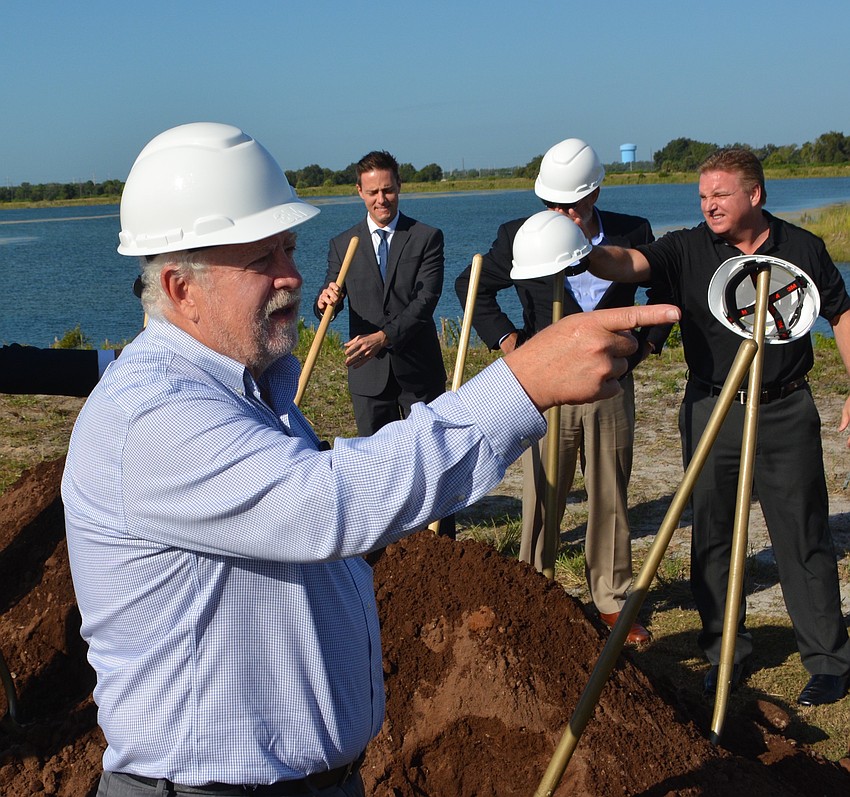
He said the value in creating all that capital is that some of it finds its way to charity.
"We created a rain of funds," he said. "We have 70,000 people now and a lot of those people care charitably active. They ask, 'Where do I go to get involved? Who do I call?"
Whether or not people consider him a humanitarian, Jensen hopes people see his contribution as building a community where people can thrive.
"I am trying to build a community," he said. "Residential is too one dimensional. A community requires uses that are not so profitable."