- March 19, 2026

-
-
Loading
Loading
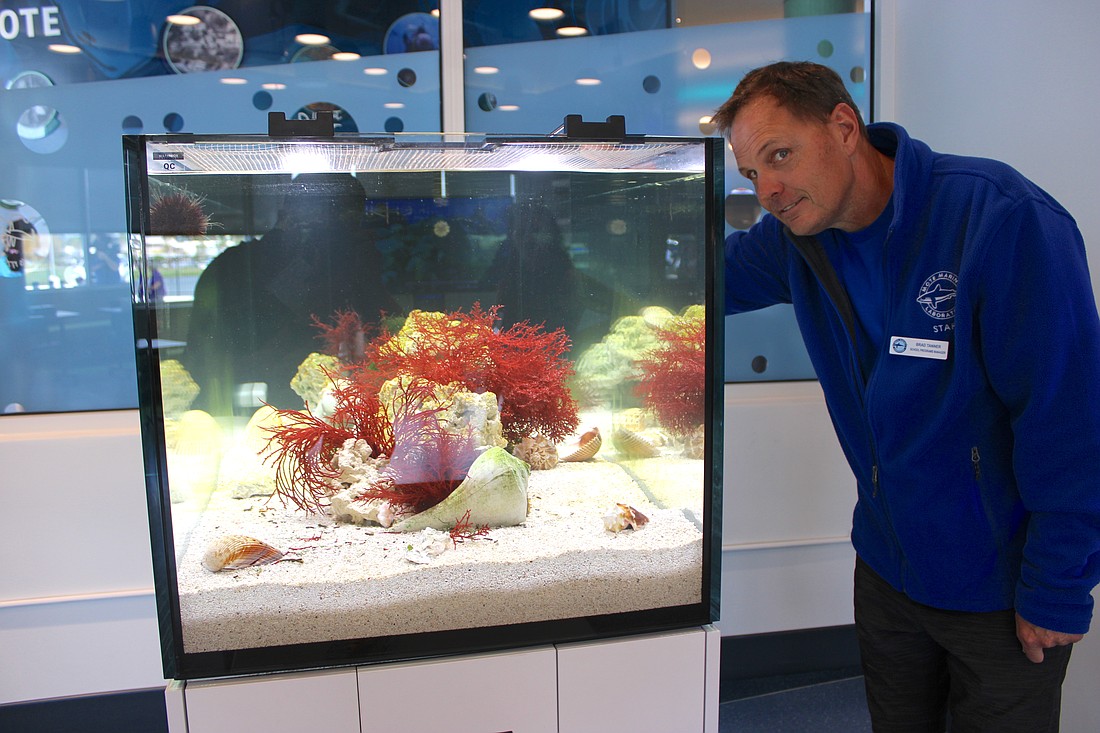
Having been a science teacher at Braden River High School for 17 years, Sharon Itts is hoping her students feel her enthusiasm for the marine world, especially as the Mote Science Education Aquarium opened Oct. 8.
Originally from Ohio, Itts didn't get to experience the ocean and gulf waters until moving to Florida, but certainly she has loved being near that environment. Now she hopes she can inspire her students to share her love of marine life.
The new aquarium will provide hands-on experiences, if they decide to embrace it.
“So many of our students are so connected to their electronics that they don't often get to have that 'wow factor,'" she said. “The opportunities that Mote is going to bring to our local students, as well as everybody who has the opportunity to visit, is that wow factor. They're going to see this impressive facility with these innovative ideas and the opportunity to see it, touch it, and in some cases, potentially even taste it.”
Itts said the appearance of the building alone has sparked student conversation and interest.
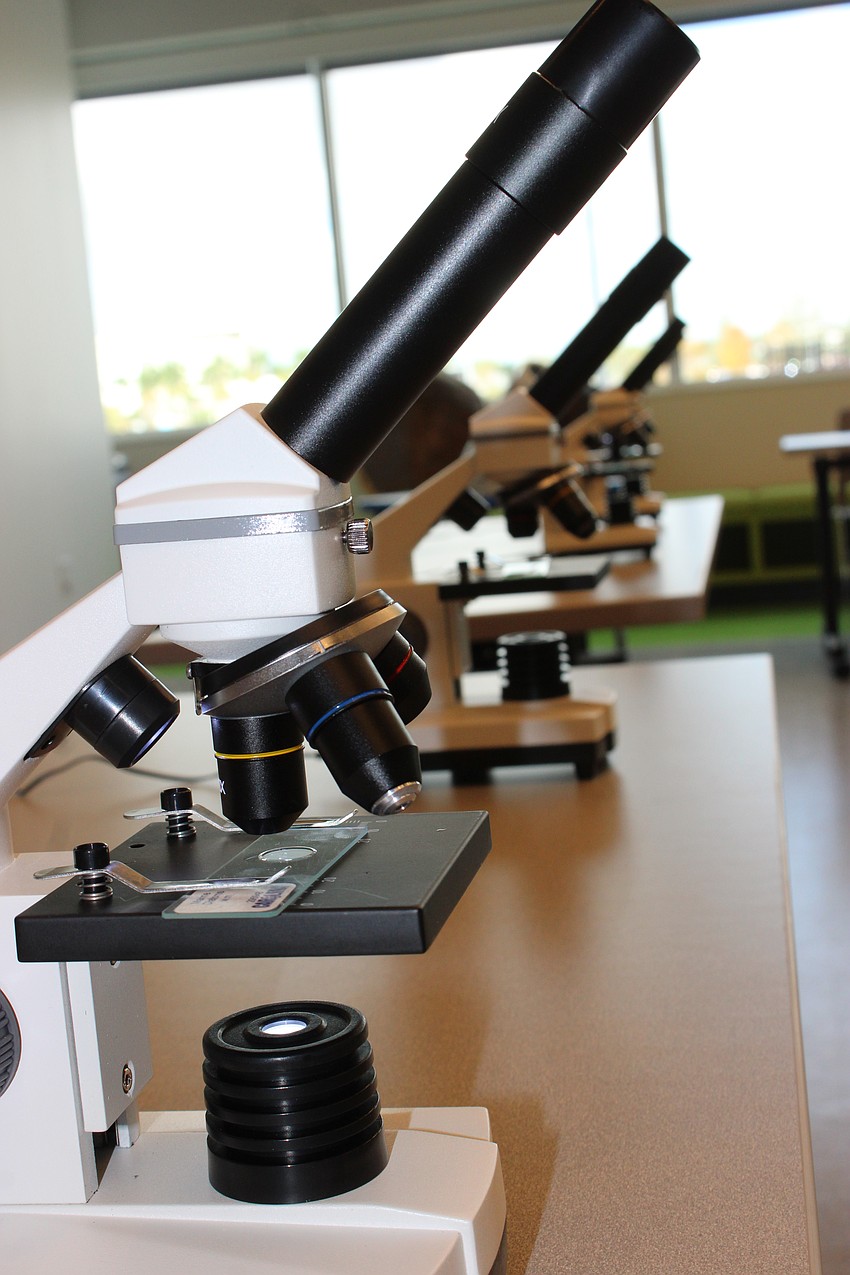
Tiffany Spradling, the secondary curriculum director at the School District of Manatee County, said subjects such as science can be difficult to fully learn and comprehend through just books and videos.
“When information sticks, we're either going to get students who perform better in science or become lifelong learners in science,” Spradling said.
Amber Platowski, the secondary science coordinator for the district, agreed.
“Many of our schools just don't have the room or time to be able to work with students hands-on in marine science. Since it's such an important part of our local community, a partnership with Mote is an incredible resource that our teachers can collaborate with to provide enrichment for the students.”
Spradling said her district is lucky to be on the coast.
“Florida is surrounded by water, and we want to keep Florida kids in Florida and to help them find careers that are new or not even developed yet,” Platowski said. “We want to build foundations at the elementary level, reinforce them in middle school and then expand them into colleges and careers in high school.”
Aly Busse, the vice president for education at Mote Marine Laboratory, has been with Mote for 15 years. She said Mote SEA's staff did a needs assessment where it reached out to all of the Manatee county principals. Feedback came back from about half of them.
“We started building the curriculum around what the teachers and the schools wanted and needed,” Busse said. “We are incredibly excited that we're going to be offering free educational programming in our three STEM teaching labs.”
The teaching labs offer education around marine ecology, biomedical and immunology, and ocean technology. They are available for students from kindergarten through high school, with pre-K to be added in the near future.
Mote is open for school field trips starting Oct. 20 and registration is open. Beginning in January, Title I students will receive a family pass for the year so they can explore the aquarium at their convenience any time they want.
If schools are unavailable to visit the aquarium, there are still educational opportunities. Mote will have an outreach team that will visit schools. The team will bring “bio-facts” — parts of nature that are no longer alive such as skulls — when the students can’t see the live animals in the aquarium.
Tracy Bohlmann, a chemistry teacher at Lakewood Ranch High School, said she would love to work with Mote to have a guest speaker discuss ocean acidification.
“I have a saltwater aquarium in my room, so I often refer to it when discussing things like pH, nitrates, chlorine and more,” Bohlmann said. “I always try to tie what we are learning in chemistry to real life and the ocean has lots of chemistry.”
“For the younger grades, we've got a curriculum that we've developed that aligns to the standards and that follows the school curriculum calendar,” Busse said. “We like to work with the teachers directly to have them tell us what they need and make sure that it works for them.”
There are also virtual field trips available with supplies and lesson plans that can be checked out.
“Maybe they (the students) will be the next Guy Harvey who takes conservation to art,” Itts said. “Maybe they'll be the next Eugenie Clark who takes that passion and does research. Maybe they'll be the person who wants to be a volunteer and meet new people and share what they're learning. There's so many levels of opportunity out there, I just hope they embrace it.”