- March 19, 2026

-
-
Loading
Loading
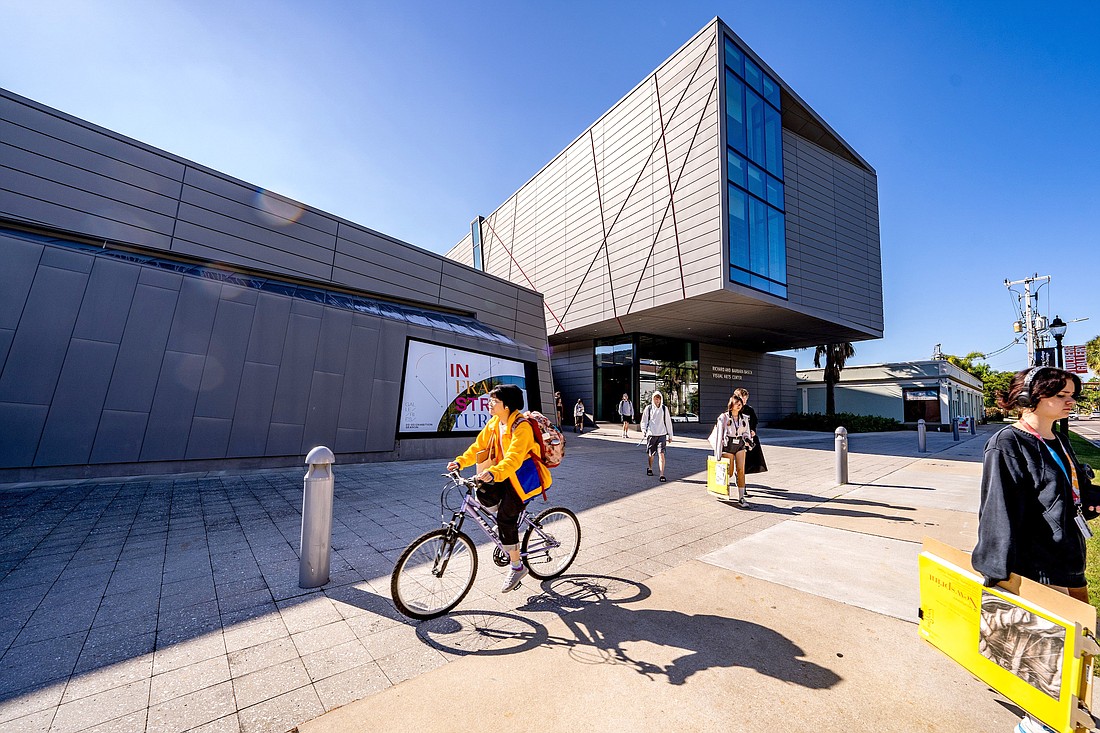
Ringling College of Art and Design is a sprawling campus covering several city blocks. The school’s central to Sarasota’s cultural life, but not centrally located. Busy readers zipping by on U.S. 41 might wonder what’s going on in there — or not give it a second glance.
But slow down. An opportunity for an inside look is just ahead. The upcoming all-campus (and all-free) art walk kicks off on Oct. 10. All seven of the college’s galleries will open their doors and show their stuff to curious visitors. It happens four times a year.
One of the seven galleries, Madeby Gallery, is known to many locals, with its colorful assortment of art for sale by Ringling students and alumni. The other six galleries highlighted in this article and by Ringling's art walk are off the beaten path.
The peripatetic encounters are the brainchild of Tim Jaeger, the college’s chief curator of galleries and exhibitions. Jaeger's also an accomplished artist in his own right. He’s a prolific painter known for loose, energetic brushwork and multilayered impasto. Jaeger also directs the 502 Gallery — a joint venture with his wife, Cassia Kite, in the Burns Court neighborhood.
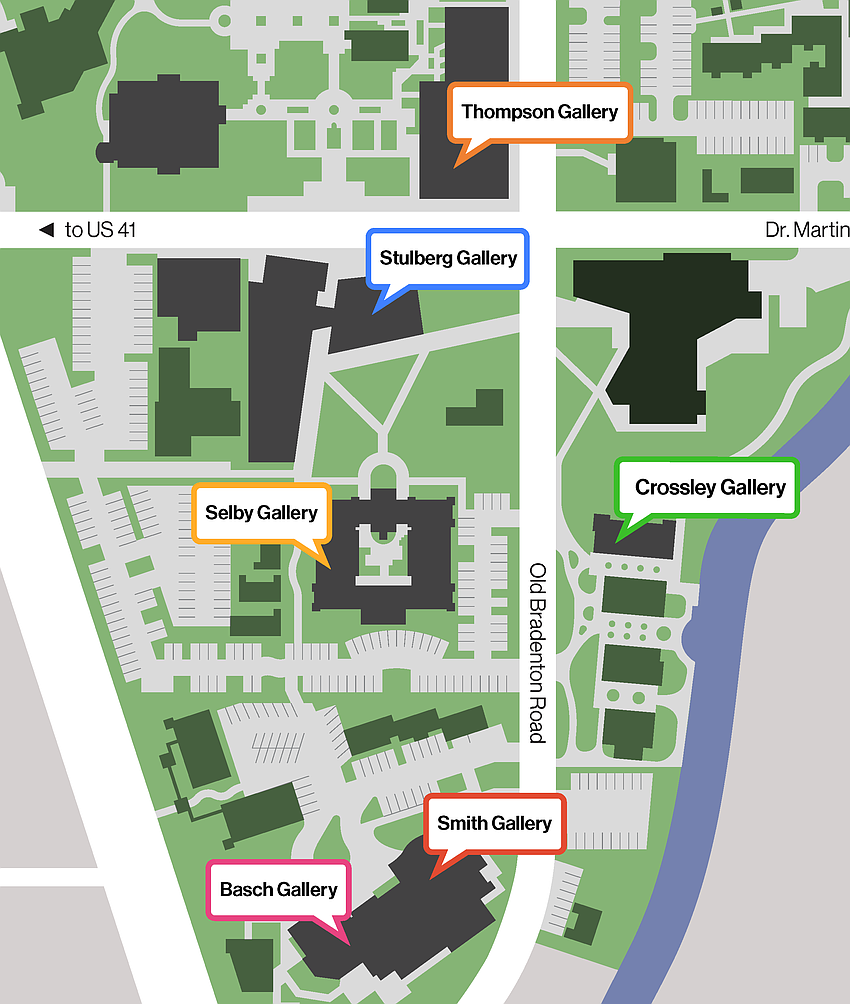
A team of collaborators helps make the Ringling College Art Walk happen. The point? “We want to be seen by the community,” he says.
According to Jaeger, Ringling College’s classrooms, libraries and studios cover 49 acres. Inside that space, working artists teach future creative professionals how to make a living with their art.
“The campus is where the magic happens at Ringling," Jaeger says. “The art walk makes the magic visible.”
What will visitors see?
Here’s a sample.
Through Nov. 21. Curated by Heather McPherson and Tim Jaeger.
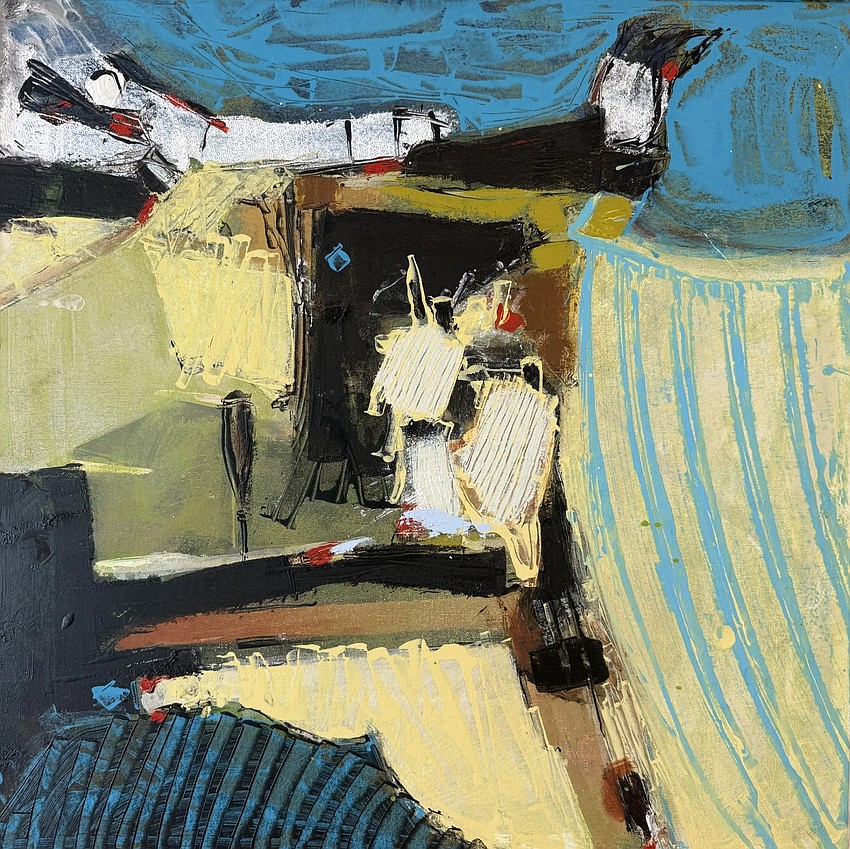
This posthumous survey celebrates the art of Spencer Pettit — a Ringling College alumnus (Class of ’78) whose career encompassed illustration, graphic design and fine art. Pettit described himself as a “process artist” — the Zen of art-making fascinated him more than the end result. With Pettit, that result was never a static image. His textured paintings dance between representation and abstraction. Each is a record of an ongoing conversation between the artist and his mercurial work.
Pettit’s oil-on-canvas “Under a Paris Bridge” (undated) crackles with kinetic energy. Bold gestures collide with restless color fields. Sweeps of ochre, teal and black evoke both structure and unraveling, as if a landscape is simultaneously being built and dismantled. Scribbled lines suggest motion — machinery, birds or perhaps memory itself — hovering between figuration and abstraction. Pettit thrives in this tension, transforming raw gesture into a visual improvisation that feels immediate, layered and alive.
Through Oct. 11. Open submission by faculty artists.
Ringling College’s yearly faculty show reveals a cross-section of art created by the college’s professors and instructors. The media spectrum includes painting, sculpture, photography, graphic design and digital technologies. The diversity of practices and voices shines a light on the school’s creative culture and the dialogue between the faculty artists’ studio practices and classroom lessons.
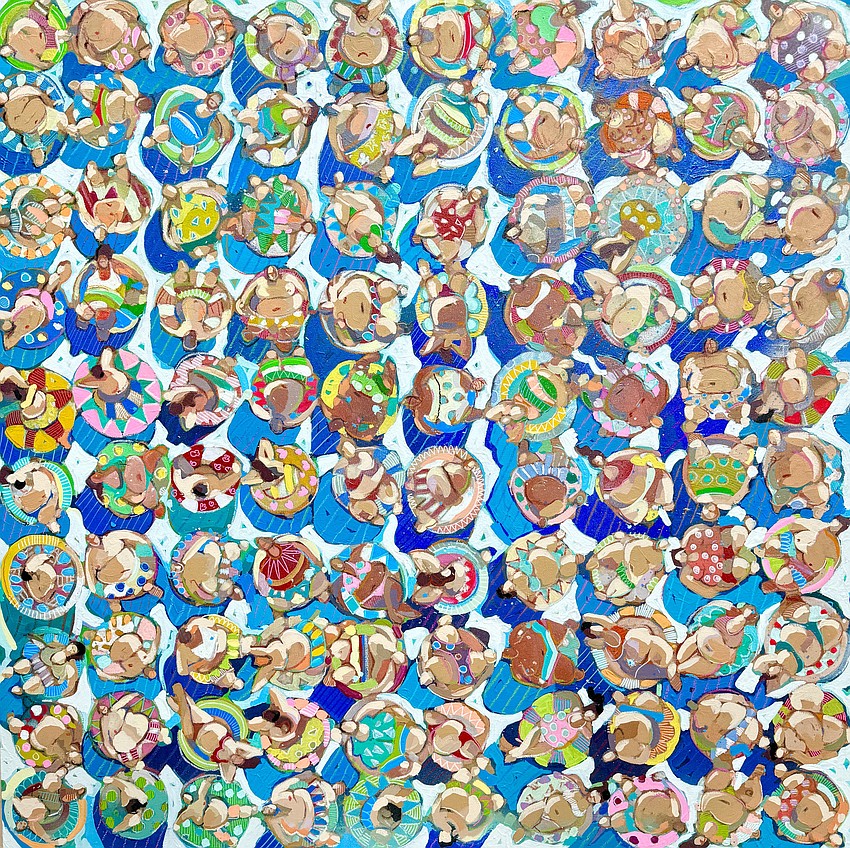
Tim Jaeger’s acrylic-on-canvas “Melon Moods” (2025) is a bird’s eye view of 100 individuals in pool floats. They’re lined up like human melons in a 10-by-10 grid in an Olympic-sized pool. Utterly relaxed, despite being packed tightly together. It’s a witty image of all-American downtime.
Joe Thiel’s digital print “Untitled” (2025) is a study in contrasts. A stylized, left profile of an African-American man faces the light. His skin tone is deep indigo. Illuminated areas of hair and skin are geometric facets; grainy stippling creates the mid-tones; the shadows are jet black with zero detail. The profile’s borders are angular, like a paper cut-out. A strong personality shines through — along with a sense of mystery. The man is visible, but not transparent. This is a painting, not an X-ray.
Steven Strenk’s charcoal-on-wood “Ships” (2025) from his “Collection of Ghosts” series celebrates pirate ships, spectral schooners and the Flying Dutchman. The inspiration? A goofy movie for kids — “The Goonies.” One-Eyed Willy’s phantom pirate ship sailed in that movie. It gripped Strenk’s childhood imagination — and stuck with him. Ghostly galleons still sail in his adult imagination and his art.
Through Oct. 18. Curated by Tim Jaeger.
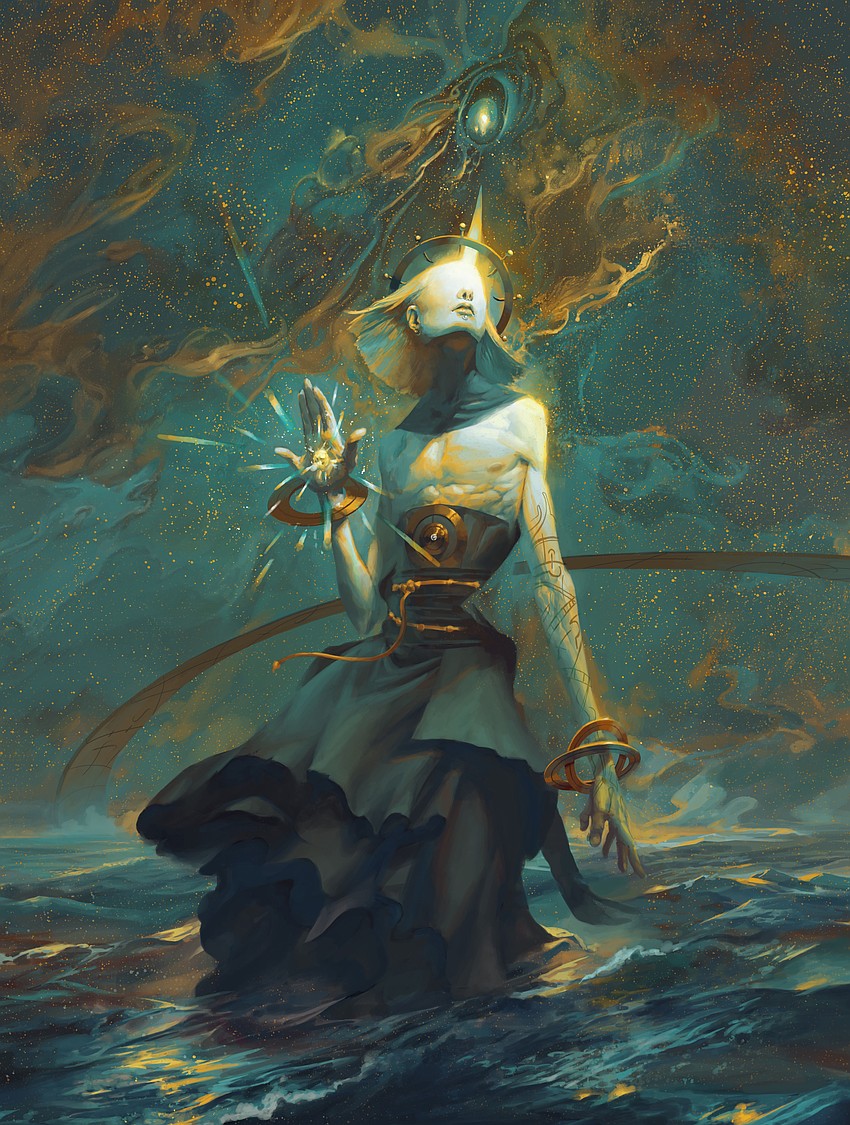
The Bible’s descriptions of angels don’t resemble the fluffy effigies found on top of Christmas trees. Swirling vortices of wings and eyes — that’s more like it. They’re weird, otherworldly, unsafe, not fluffy at all. Peter Mohrbacher’s angels fit that description. His entities are ethereal, enigmatic and terrifyingly beautiful. Mohrbacher’s “Armaros” (2025) is a towering, bruised, multi-armed figure wrapped in black cords. It looms against a shattered obelisk carved with arcane runes. The entity’s head tilts back in a grimace of rapture/torment. A violet background of misty mountains. A crimson foreground — glowing like a brushfire in the uncanny valley. A beautiful being. But dangerous.
Through Nov 2. Co-Directed by: Romina Bonomi and Anasofia Diaz.
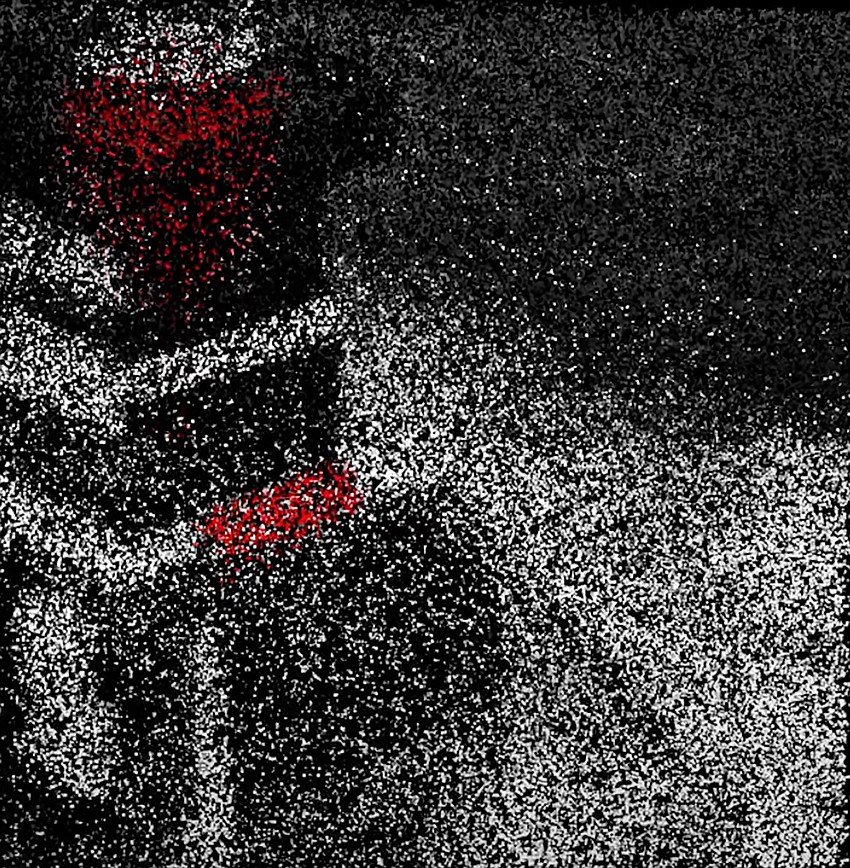
In live theater, a black box sets the stage for experiments and risky business. This show’s black cube has the same goal. Not the antiseptic white walls of a traditional gallery. A black background for performance, projections, video, audio, photos and installations. It’s a trippy experience.
Through Oct. 18. Curated by Tim Jaeger.
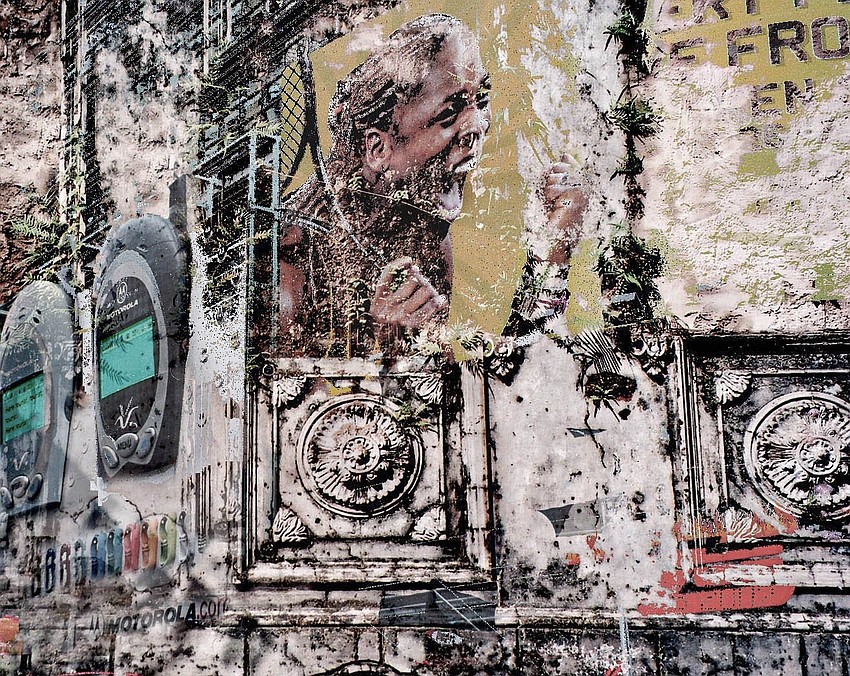
Thomas Carabasi is a multidisciplinary artist and a retired Ringling professor. This retrospective photography exhibition looks back in wonder at several decades of his work. The large-scale prints include portraits, granular landscapes and multiple exposures. His “Times Square: Salvador, Brazil” (2005) captures a weathered city wall. It’s covered with graffiti, posters, advertisements, remnants of colonial stonework and vegetation sprouting from the cracks. A poster of a tough, shouting woman with clenched fists instantly grabs your eye. She initially seems like a revolutionary— until you notice the tennis racket in her right hand. She stands beside a shredded poster of a Motorola flip phone — once high-tech, now a relic. Carabasi’s unloved wall is a sociological palimpsest. It’s layered with human energy, identity codes and lost time.
Through Oct. 18. Curated by Tim Jaeger.
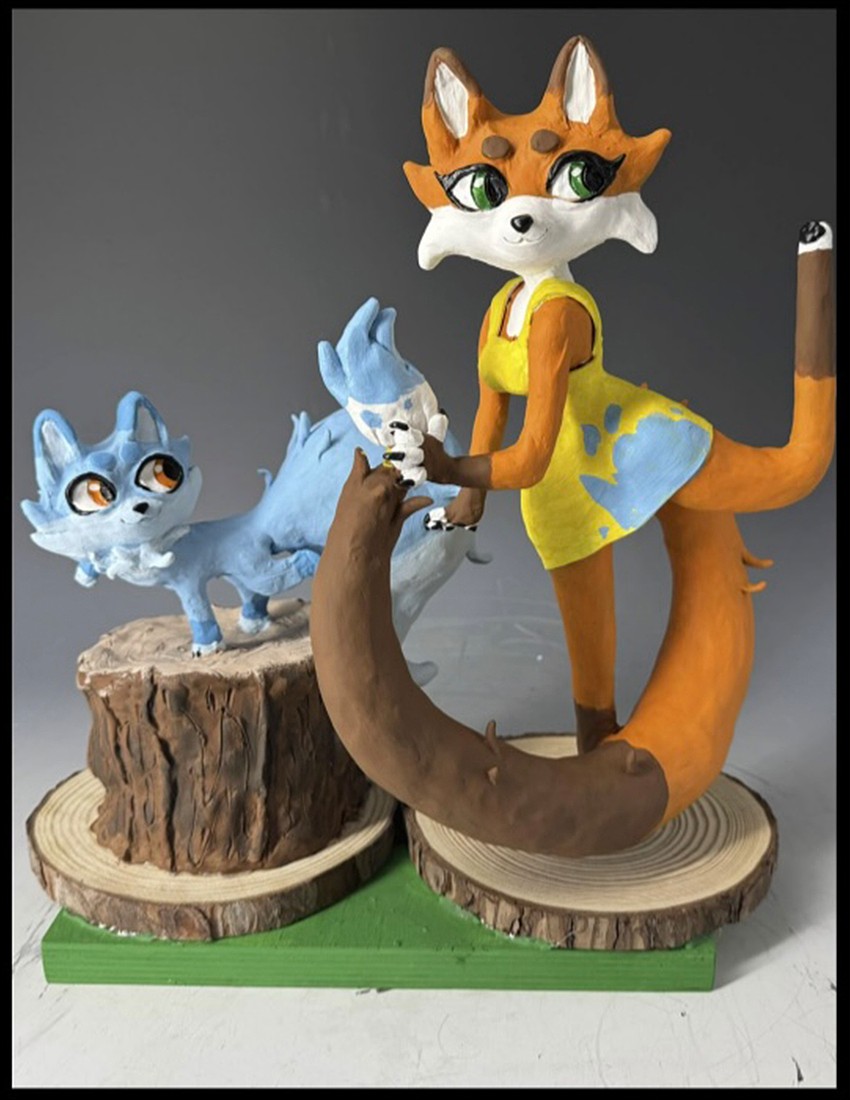
This juried exhibition opens a portal to imaginative worlds and their inhabitants — elves, fairies, wizards, demons, man-eating plants, chimera, dragons, you name it. 3-D design students brought them to life. Developing heroes, sidekicks and villains was the assignment. Not just creating fantasy sculptures. Building the worlds and backstories behind these characters. The storytelling students delivered. My favorite is the winsome elf girl whose sidekick is a bee. They’re a wild pair. But they’re not alone.
The work you’ll see in these seven galleries is wild indeed.
It’s also a great walk.