- March 13, 2026

-
-
Loading
Loading
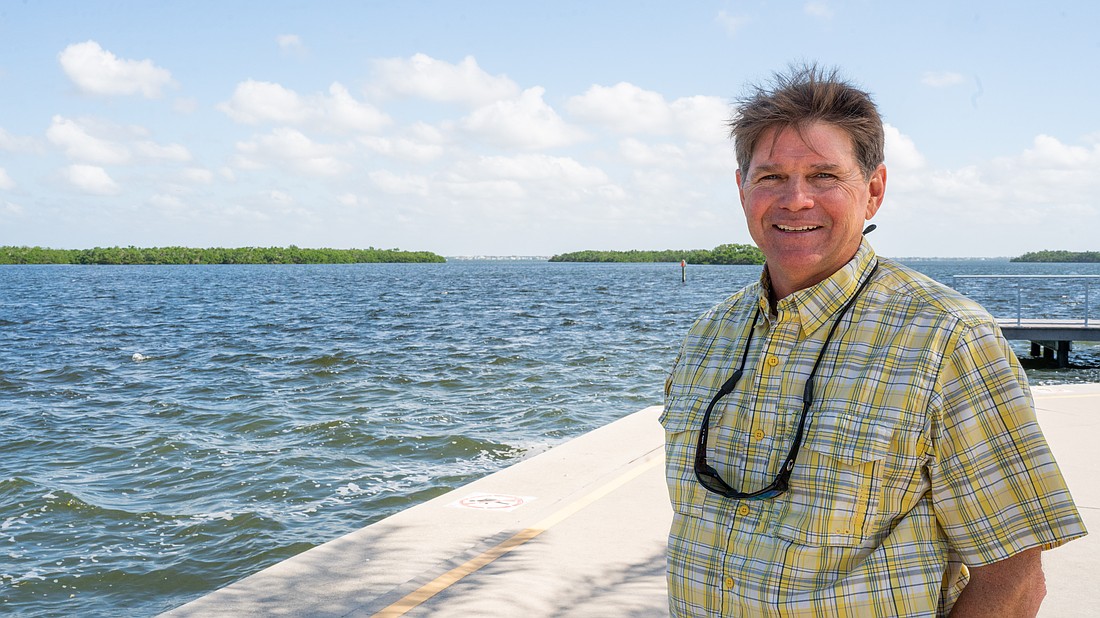
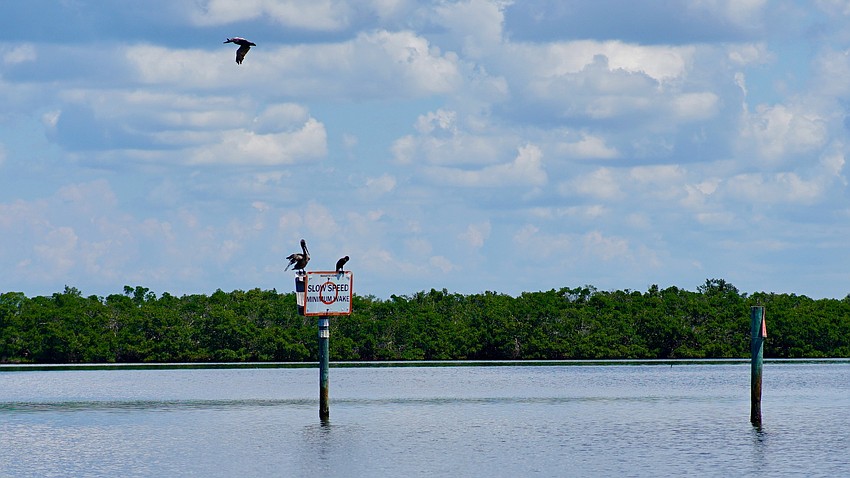
As Ryan Gandy sits at a picnic table on Bayfront Park overlooking Sarasota Bay, he fondly lists a few things he loves about the body of water — the mullet jumping and splashing on the crystal blue water, the sound of terns calling overhead, the mangrove islands in the distance.
The group whose goal is to protect Sarasota Bay has picked a new leader, and he’s right at home.
“I’ve lived here in Sarasota for 21 years, but I never worked here,” said newly picked executive director Gandy. “I was always in other communities. I got really close with different communities across Florida, and I really wanted to do something in my own backyard.”
That desire led him to take the job as Sarasota Bay Estuary Program’s science and restoration manager in Sept. 2024, and now he will replace Dave Tomasko in the executive director role on Nov. 17. Gandy, who holds a doctorate degree from Texas A&M University in wildlife and fisheries science, has a science-rich background, with 15 years of experience working as a research scientist and administrator for the Florida Fish and Wildlife Research Institute overseeing shellfish research and monitoring.
He describes Sarasota Bay as a unique habitat that’s a “well-respected jewel” more accurately described as a coastal lagoon, not a bay. He looks at his new role as that of an educator, steward and scientist for Sarasota Bay, which is fed by slow-moving creeks, dotted with mangrove islands and bordered by St. Armands, Longboat Key, downtown Sarasota and south Bradenton. The small footprint of the Sarasota Bay Estuary Program (Palma Sola Bay to Blackburn Bay) allows for a more thorough study of the health of the watershed, which includes monitoring seagrass and mangrove canopy coverage, nitrogen level measurements and monitoring of phytoplankton and seaweed quantities.
The program advocates for the health of the Bay by sharing information and best practices with local municipalities and helping secure grant funding for environmentally-friendly initiatives. For example, SBEP provided grant funding for the town of Longboat Key to install a “living wall” on the shore of Bayfront Park to provide a more suitable habitat for oysters, crabs, barnacles and other marine life.
Protecting the bay is not just important for environmentalists, Gandy says. Declining health of the bay would have economic and cultural impacts for visitors and residents alike.
“You have this environment that we’re in, and what it’s done is created a lifestyle for people that’s really tied to maintaining this environment,” he said. “When you look at what our tourism business is: $5 billion, $6 billion that supports our economy. And they’re coming here not just because the temperature is right, but to interact with this system. That’s why we need to maintain it, monitor it and make sure that it’s going in the right direction.”
A fifth-generation Floridian, Gandy described the changing nature of Florida due to “changing baselines” that are an effect of rising sea levels and increased temperatures. He said the Sarasota he remembers vacationing to in the 70s, 80s and 90s is no more, but that adapting to those changes is key to maintaining a beautiful environment.
“You’re not going to get it back to old conditions and how things were, that’s just not how it goes. But what we can do is we can use science and the information we have to adapt to these conditions that we’re starting to experience,” he said. “To me, it’s looking to see how we can maintain a really productive and good water quality, clean habitats, diversity of wildlife that we have out here, so my son and his kids can inherit it. We’re stewards of this.”
Gandy won’t use the word “threats” when describing what could harm Sarasota Bay. He prefers the word “challenges.” Those challenges have shifted over the years as significant Manatee and Sarasota County investments have increased the quality of wastewater that is discharged into the bay. Gandy said Sarasota County has also begun to “close the loop” on how wastewater is used by repurposing treated water as irrigation for new developments.
According to the SBEP ecosystem health report card, the status of the bay has been recovering and improving since the “degraded period” of 2013 through 2019.
Gandy said one of his priorities will be educating the public on ways they can positively impact Sarasota Bay to continue that increased health. Some ways include picking up pet waste, retrieving used fishing line and reducing the amount of fertilizer used on lawns.