- March 13, 2026

-
-
Loading
Loading
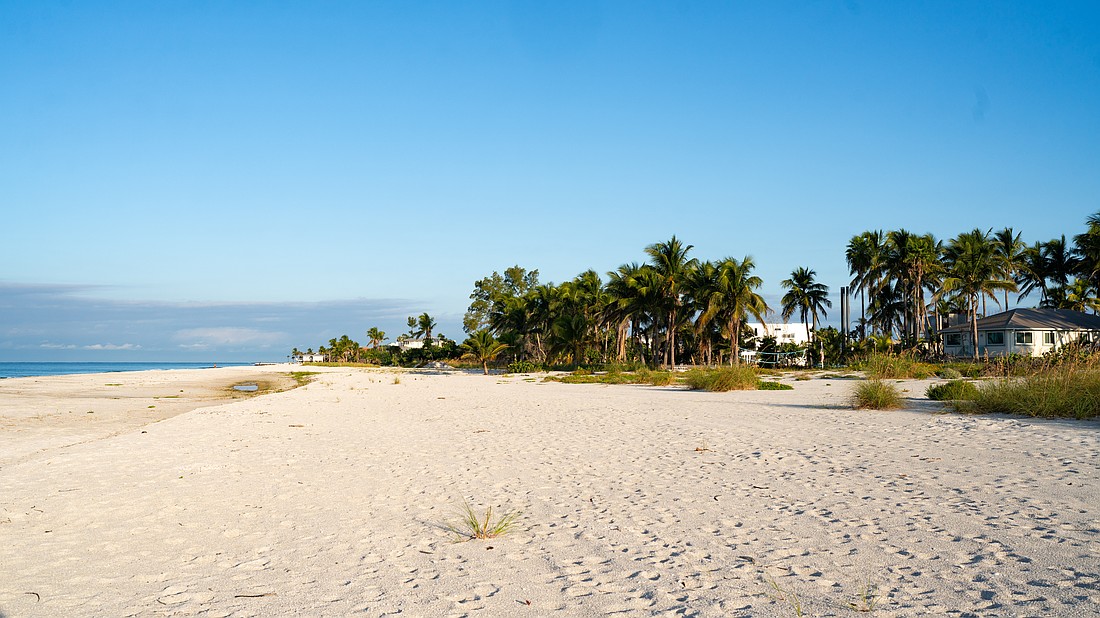
Longboat Key leaders are unfurling their maps and extending their telescopes, hoping to announce, “sand ho!”
The search for sand comes after 200,000 dump trucks' worth of sand was taken from Longboat Key beaches during the 2024 hurricanes.
A big loss.
“Sand is pretty much gold in Florida,” Longboat Key Public Works Director Charlie Mopps told the Town Commission at a recent workshop.
Now, the hunt is on to find sand for the next round of Longboat Key’s beach renourishment. The town puts plenty of effort into maintaining its beach, which naturally experiences 150,000 to 175,000 cubic yards' worth of erosion annually.
The 2024 hurricane season took more than 400,000 cubic yards of sand from the beaches of Longboat Key.
Mopps said the town is planning an 800,000 cubic yard beach renourishment project in 2028. Sourcing the precious sand is an important first step. And not any sand will do.
“It’s hard to find good quality sand that you can put on a beach and make people happy,” Mopps said.
Sand also must meet certain characteristics to abide by environmental regulations to not adversely impact sea turtles and wading birds.
Sourced from the Gulf floor, there are others vying for that buried treasure.
“Everybody is fighting for the same sand sources,” Mopps said. “And we can’t go mine the stuff down in the Caribbean and drag it up here because it’d cost you like four times than what it would cost if you can find a viable sand source within this geographic location.”
Dredging Longboat Pass and New Pass would be a natural solution, but “there are a lot of hands in that basket” for both locations, said Al Browder, principal and vice president of coastal engineering consultants Foth Olsen. The city of Sarasota takes turns with Longboat to dredge New Pass, and Manatee County alternates with Longboat Key dredging Longboat Pass for its beach renourishment projects.
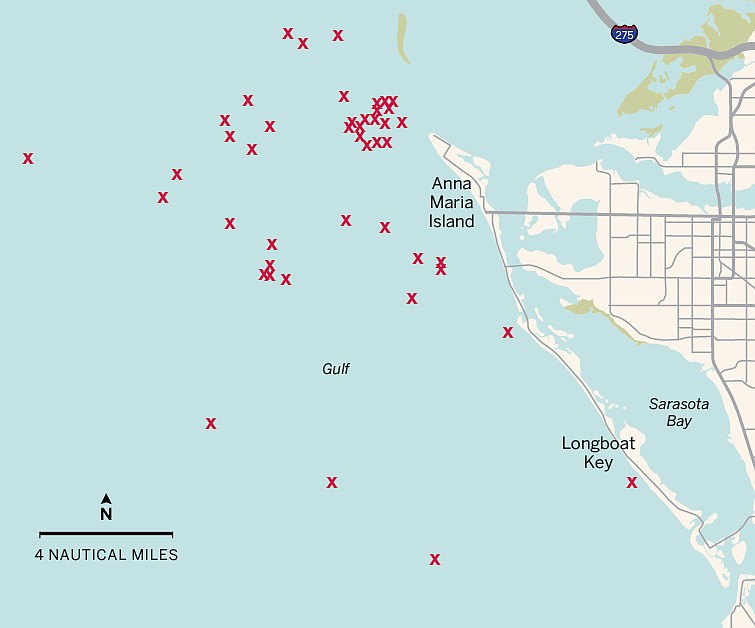
The town is hoping to find a cache of its own.
“We would like to be able to identify a broader area so we can go research and develop a bigger area that we could use in the future for one, two, even three projects,” Browder said.
The town and its coastal engineering consultants are performing “desktop research” for where to source sand. When a shortlist of potential locations is determined, a core boring boat will take samples of sand from the ocean floor.Into the ocean is where a majority of sand washed away from the hurricanes ended up, while the rest powder blasted streets, yards and sidewalks on Longboat Key with a coating of sugar sand.
The cleanup effort involved county workers sweeping up sand from all areas of the island. A majority of the collected sand went to a Coquina Beach parking lot, where Manatee County took custody of sand cleaned up from Anna Maria, Bradenton and Coquina Beach and other local beach towns that were covered in sand.
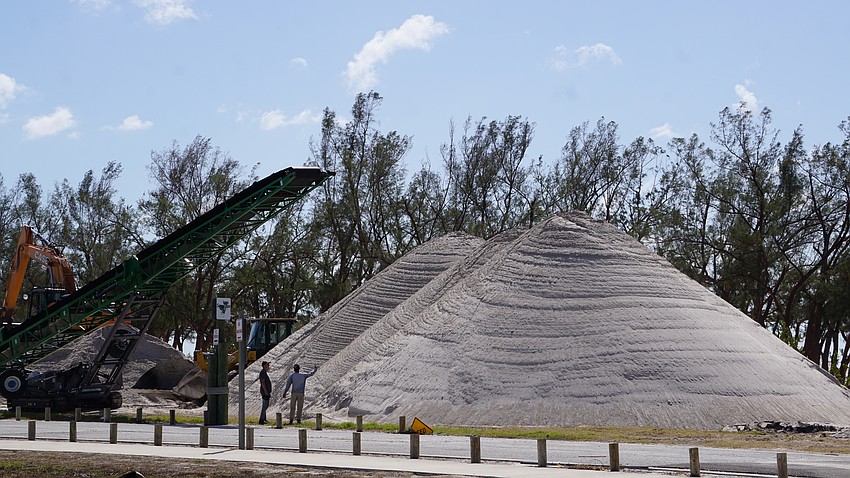
According to Manatee County Director of Natural Resources Charlie Hunsicker, 151,474 cubic yards of sand was recovered by the county through cleanup efforts.
From Longboat Key, Mopps estimates Manatee County removed about 50,000 cubic yards of sand and placed in the sorting pile. That sand will not return to the shores of Longboat Key.
“Sand brought to Coquina Beach for processing from Longboat Key will not be returned,” said Manatee County spokesman Bill Logan. “As the sand was collected and delivered from Longboat key, we were unable to determine the source of the sand collected, and we were concerned that much of it may have contained storm related debris, rendering it unsuitable for placement on any recreational beach, even after sifting.”
The town’s efforts to combat erosion include more than just putting sand back where it was.
The hurricanes flattened the beach. The hurricanes swept away dunes and vegetation lining the shore of Longboat Key, leaving Longboat Key vulnerable to a future storm.
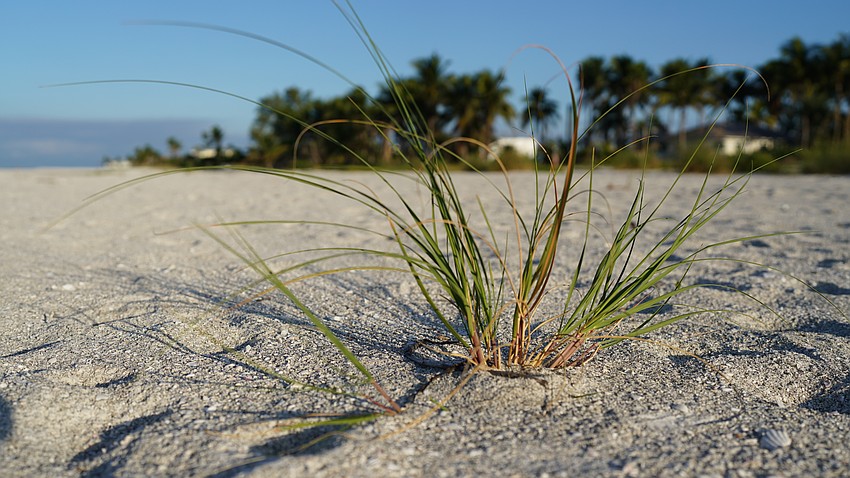
Building back those dunes and planting vegetation will be an important part of the next beach renourishment, Mopps says. That’s years in the future, and beachfront property owners are being encouraged to rebuild their dunes in the meantime.
“The town has been encouraging since the day after the hurricane to rebuild your own dune. A vast majority of the dunes are privately owned,” Mopps said. “Build what you can, protect yourself, protect your property. And when we build this project, we’re going to tie into it and make it even better.”
In rebuilding the beach, Mopps said the rebuilt shape of it is especially important. The beach needs a berm.
“In Florida, where you have hurricanes, that berm elevation is one of your key mitigators for storm surge impacts,” Mopps said. “The dune is the failsafe. That’s like if all your soldiers were up front and you had that reserve in the back. The reserve is the dune. That berm elevation is your primary means for defense.”