- March 13, 2026

-
-
Loading
Loading
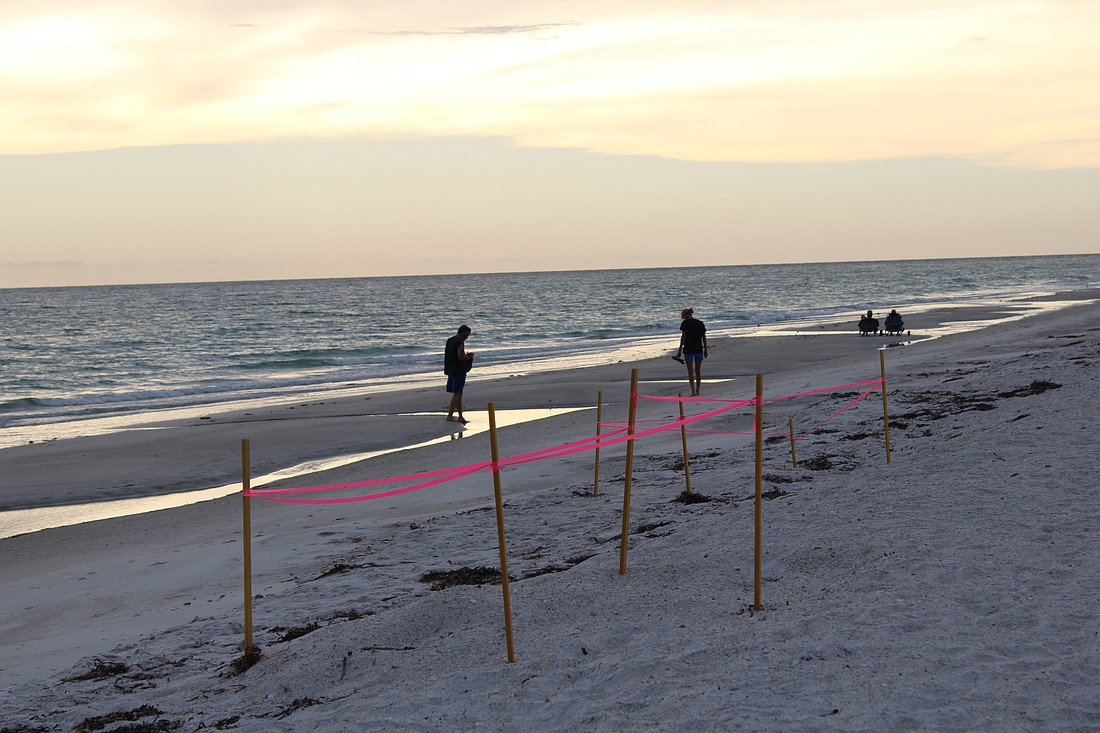
In 2025, more sea turtle nests were recorded on beaches from Longboat Key to Venice than Mote Marine Laboratory had ever noted in its decades of study, but the news was not all good for the region’s shoreline visitors.
A record number of turtle disorientations was also on record, raising concerns about humans’ effect on the nesting animals.
“It’s more important than ever for our community to turn off or shield beachfront lights, remove beach furniture at night, and keep nesting areas clear to give every hatchling the best possible chance at survival,’’ said Dr. Jake Lasala, Manager of Mote’s Sea Turtle Conservation and Research Program.
Disorientations take place when such distractions as artificial light on beachfronts misleads hatchlings or females attempting to return to the sea into heading the wrong direction. Such cases can lead to death, Mote said in a news release.
Mote documented 716 such events in 2025, the most in the organization’s 43 years of data gathering.
But, 5,735 turtle nests are documented over the same time span, breaking the 2024 mark of 4,369.
Loggerheads made up the bulk of the nesting turtles, but 351 green sea turtles also nested in the area monitored by Mote. Rare leatherback and Kemp’s ridley turtles sometimes come ashore in the area, but not in 2025, Mote said.
Data from Mote’s study — one of the longest running such endeavors in the United States — is used to help form coastal policy by local, state and federal authorities.
“This year’s record numbers show that Mote’s conservation measures are working,’’ Lasala said. “However, we’re seeing new challenges emerge, such as the rise in disorientations.’’
More than 300 volunteers, interns and staff, working under Mote’s permits and authority, walk beaches daily from April 15 through October, charting turtle data. Mote said some nests were uncommonly still incubating into November.
Reaching the beach | |||
| Beach | 2024 nests | 2025 nests | Change/Pct. |
| Longboat Key | 1,259 | 1,473 | 214 16.9% |
| Lido Key | 198 | 186 | -12 (6%) |
| Siesta Key | 502 | 662 | 160 31.9% |
| Casey Key | 1,830 | 2,727 | 897 49% |
| Venice | 587 | 684 | 97 16.5% |
| Totals | 4,376 | 5,732 | 1,356 30.9% |
| Source: Mote Marine Institute | |||