- March 15, 2026

-
-
Loading
Loading
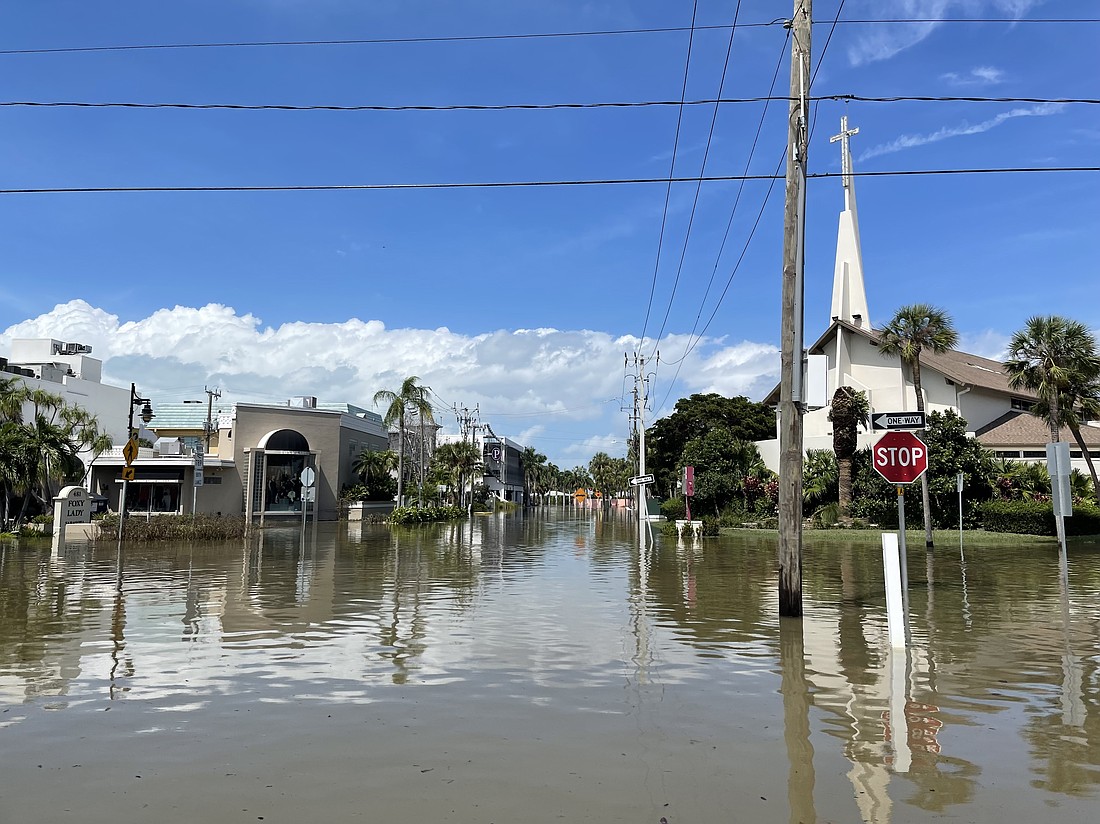
Recognizing the importance of St. Armands Key as an economic engine and vital evacuation route for the barrier islands, the city of Sarasota is seeking $24.5 million in federal funds to improve its resiliency to flooding.
Backed by the support of the town of Longboat Key, the city has identified five initiatives in hopes of keeping persistent flooding on St. Armands to a minimum, the worst of which occurred during the 2024 hurricane season.
The city is seeking a share of Resilient SRQ funds, a pot of $210 million granted to Sarasota County by the federal government for storm recovery and mitigation efforts from 2024 named storms Debby, Helene and Milton.
At its Dec. 16 meeting, the County Commission will decide how it will distribute $57 million in infrastructure improvement money. For St. Armands, the city would match $480,000 toward the nearly $25 million in projects.
In total, the city plans to:
The county is still accepting applications from other municipalities for the infrastructure improvement funds, so there is an undetermined amount of requests. Sarasota Public Works Director Nikesh Patel, though, told city commissioners at their Nov. 3 meeting there will be competition for those dollars.
“Resilience SRQ is a competitive federal grant program administered by Sarasota County through the Community Development Block Grant Disaster Recovery Program,” Patel said. “The city is serving as a co-applicant and technical lead in collaboration with the Sarasota County Stormwater Department."
Back-to-back flood events from 2024’s hurricanes Helene and Milton virtually shut down St. Armands Circle for months and forced many residents out of their homes. About 80 of the circle’s businesses have reopened, several others either relocating or closing for good.
Interim City Manager Dave Bullock told commissioners he believes St. Armands to be a regional priority and the work proposed for the Resilient SRQ funds is intended to dovetail with future general improvement plans there.
“As you know, we're just in the beginning stages of an exercise to look into the future of St. Armands, and stormwater would be a central component of that,” Bullock said. “We have to get the stormwater here in better shape in order to come up with those more resilient plans that we have and allow them to work.”
County Commissioner Mark Smith, whose District 1 includes St. Armands, said he will be making a “strong recommendation” for the proposal to his colleagues.
“As with everything with government, the ask is always greater than the money available,” Smith said, “so we are going to have to decide and prioritize how much money we’ll be able to give to each ask.”
Smith pointed out that, while imperceptible, St. Armands Key is in the shape of a bowl, with lower elevations in the the center where more water can collect at a higher volume than its drainage systems can purge. In 1917, John Ringling purchased the Key to build his vision for a shopping and residential area.
“(John) Ringling was great at circus, but not so much land planning,” said Smith, an architect by trade. “Making a mound instead of a bowl at St. Armands would have made a little more sense.”
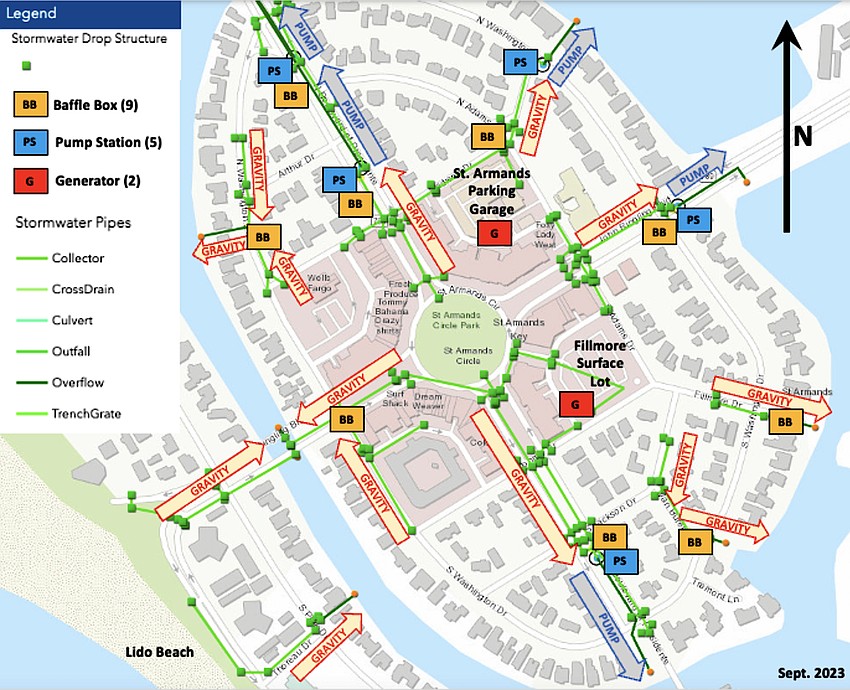
If the city approves funding for all of St. Armands' requests, Patel said design, engineering and construction could take four to five years to complete, the duration in part because of the entities involved. They include the Army Corps of Engineers, the Florida Department of Transportation, the city and the county.
More than an economic engine that draws thousands of tourists annually, St. Armands is one of two evacuation routes for Longboat Key. In recent years, major rain events have severed the southern access to and from Longboat for days at a time, causing flooding.
The 10-mile stretch of Gulf of Mexico Drive through Longboat Key is the lone connector between Cortez Road to the north in Manatee County and St. Armands to the south. When St. Armands’ roads are impassable, residents on the south end of the Key within Sarasota County must travel as far as 13 miles north to exit, or return to, the Island.
“There was no ability to pass through St. Armands on the south after Helene, and Bradenton Beach was a disaster zone,” said Assistant Town Manager Isaac Brownman, “but we got through on the Bradenton Beach side through the craters and the asphalt and the houses in the middle of the roadway more easily than we could get through St. Armands. Any efforts to improve St. Armands we encourage.”
Proposed St. Armands resilience projects | |
Pump station retrofits and generators
| 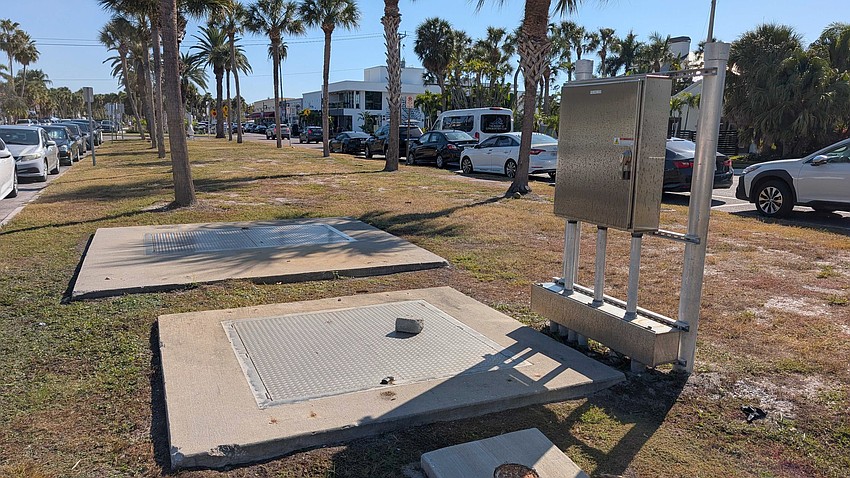 A stormwater pump station on St. Armands. |
Tide check valves
| 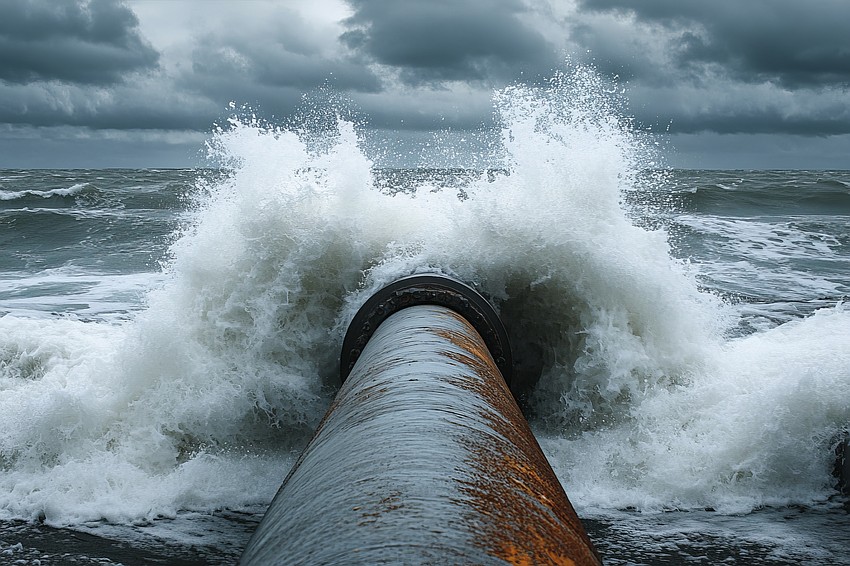 An example of storm water outflow overwhelmed by an ocean wave. |
Underground water vaults
|  Cross section of underground water storage system. |
Permeable pavement
|  An example of pervious pavement. |
Deployable barriers
| 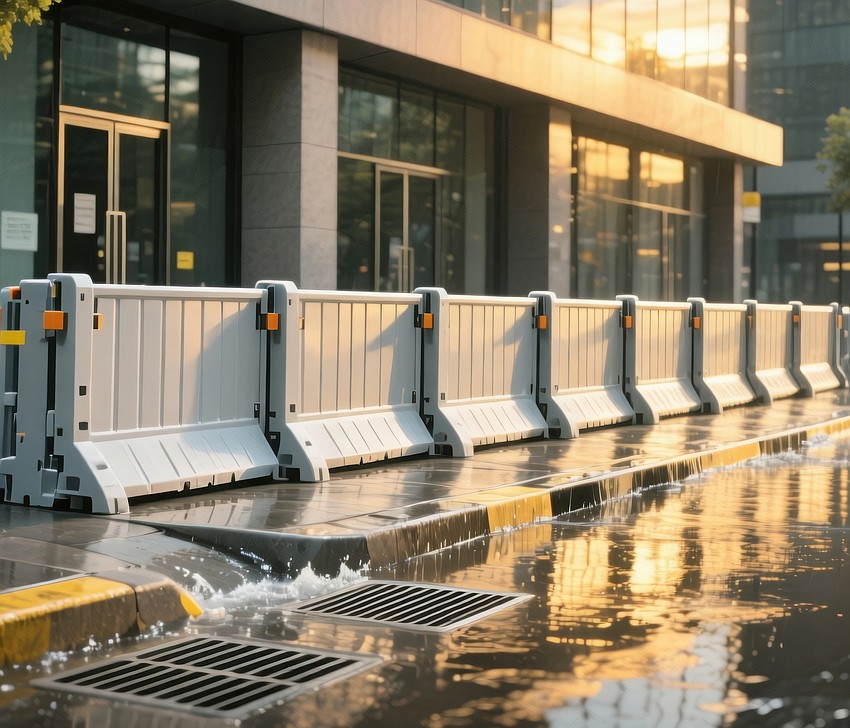 Example of a portable flood barrier. |