- March 13, 2026

-
-
Loading
Loading
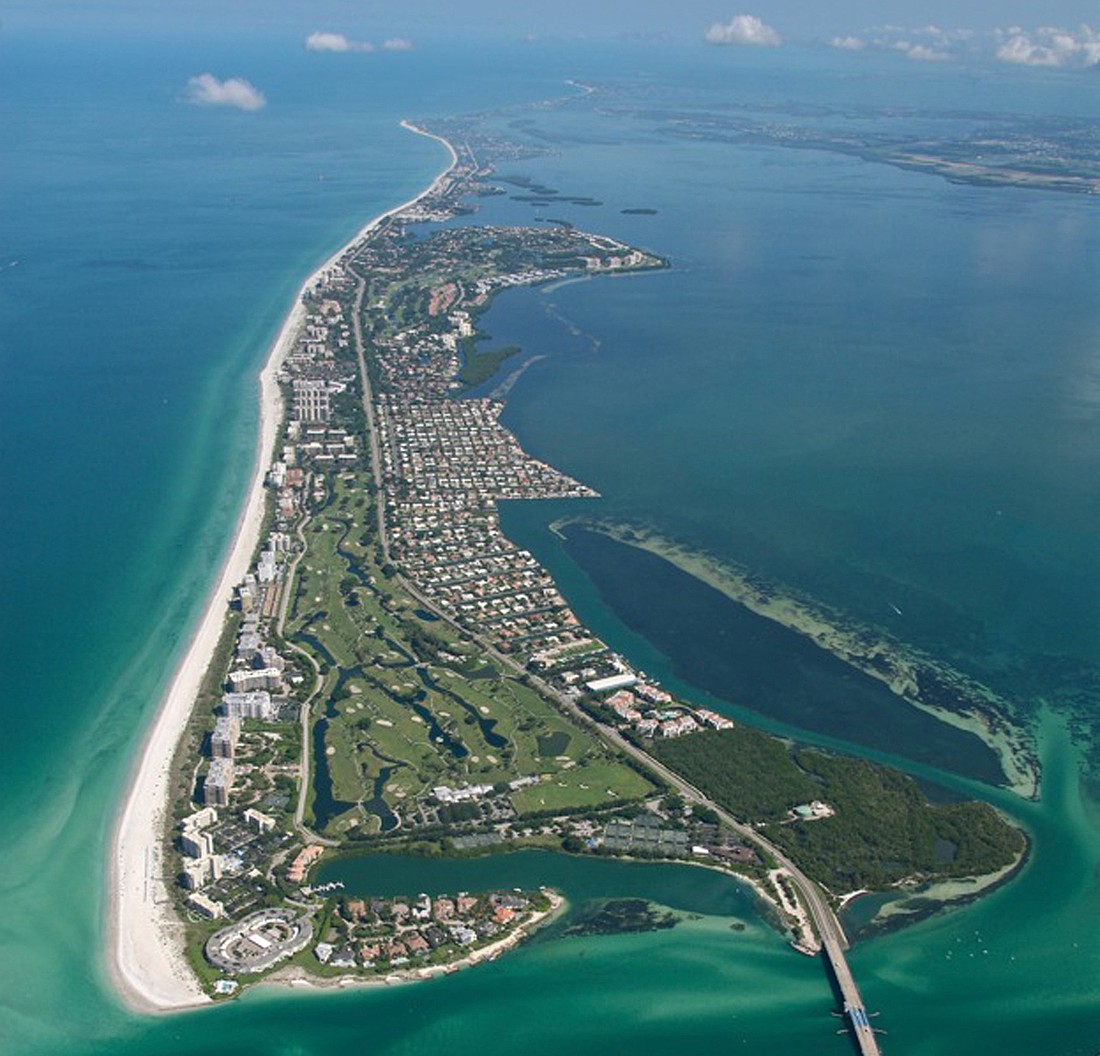
Longboat Key became a town in 1955 when registered voters chose to incorporate the barrier island by a 186-13 margin.
A lot has happened since.
Population growth, a few more condos, conservation wins.
And a lot has stayed the same.
In 1957, the town of Longboat Key’s Magistrate Court convened for the first time. The issue at stake?
A sign placed by the Buccaneer Inn.
Decades later in 1983, Code Enforcement Board debate centered around Buccaneer Inn again: Is a pirate statue a sign?
Minutes show that the Board brought up Longboat precedent — like when the order came to remove a pelican statue from Pelican Harbour. Then there was the issue of a seahorse statue from the Seahorse Motel.
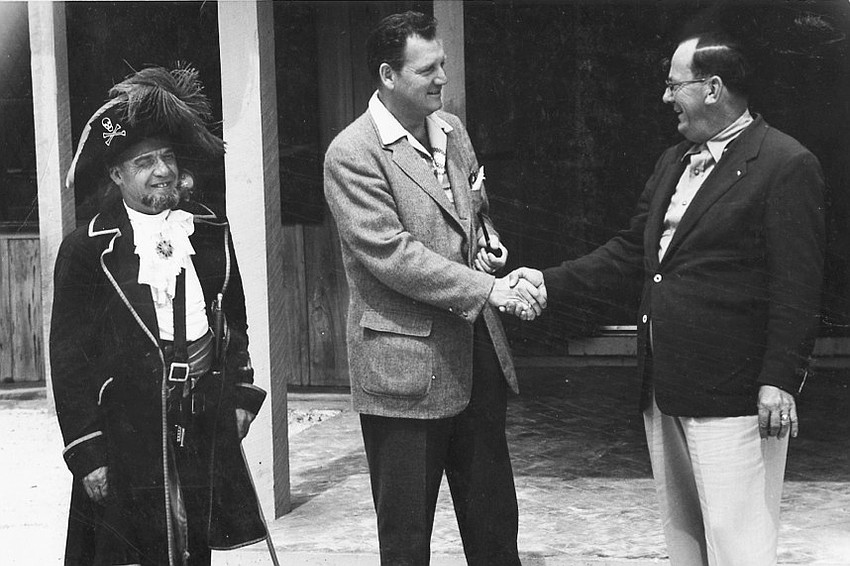
The Buccaneer Inn received an eventual fine. The pirate removed.
What about a leprechaun? Lynches Landing Bar and Grill in the 90s had to remove the ice cream cone their wooden leprechaun was holding since it advertised something they were selling at the restaurant (the leprechaun itself could remain under an amended sign code).
Then, the business’ shamrock sign being too large and in the right-of-way, found itself in Code Enforcement crosshairs. The owners settled it by cutting The clover sign marking Lynches in two pieces. The town’s response was that the sign, even post-mutilation, was likely still in the right-a-way.
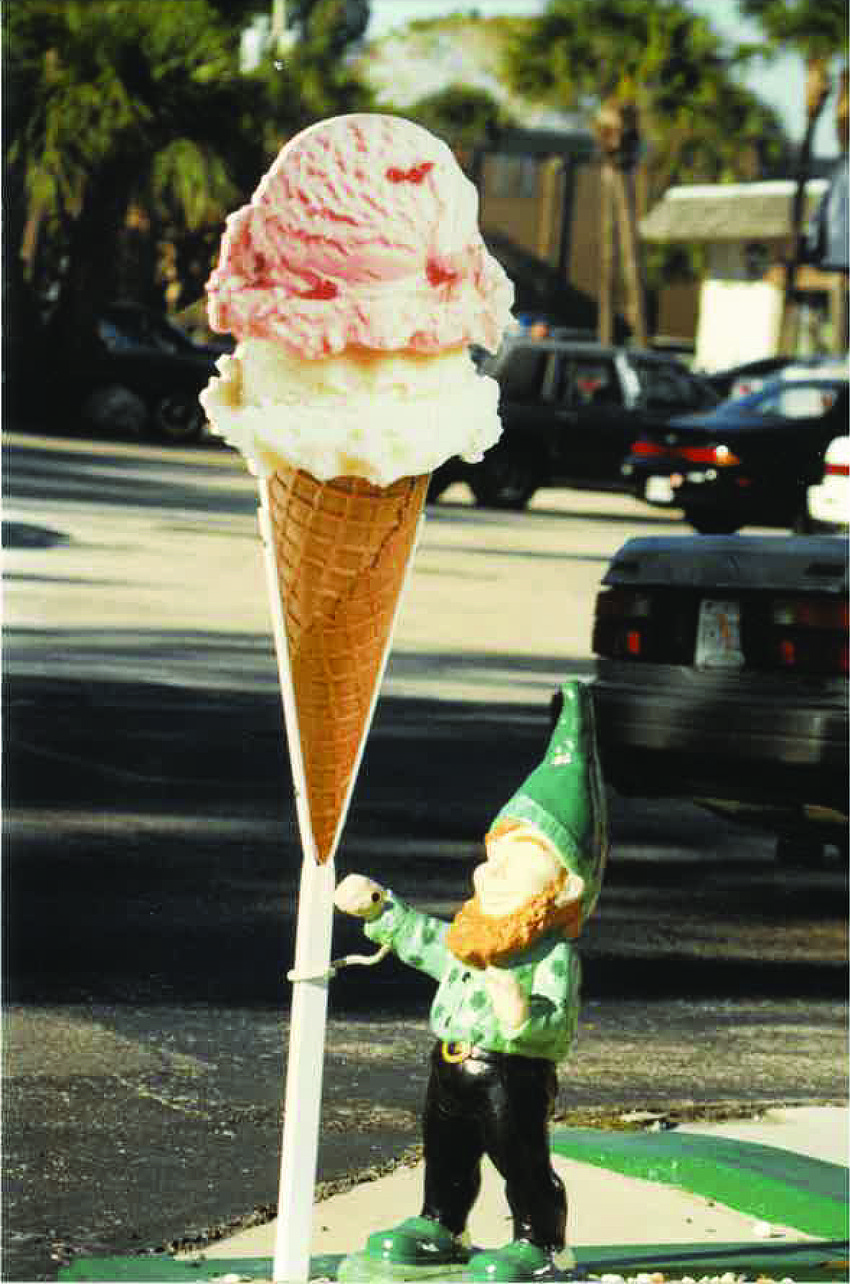
Lynches eventually moved from Longboat Key to St. Armands where their sawed-in-two clover proudly displays on the wall inside.
Today, St. Regis Longboat Key Resort is the latest subject of Longboat’s sign code. The resort’s main sign on Gulf of Mexico Drive is subtle, small, well within the bounds of the sign code. On Friday afternoon, a resort worker was bending down to polish the gold-bronze metal letters that mark the main entrance of the resort.
But on a groin extending into the Gulf is an arched sign installed by the resort that town leaders say violates the sign code in multiple ways. The issue may end up in magistrate court. Built on a groin Dr. Murray “Murf” Klauber fought with the town to install, the current debate pays an ironic homage to The Colony Beach & Tennis Resort which stood where St. Regis now is.
The Colony wasn’t just a condo complex with a scenic view.
It was a world-famous destination for tennis players. The illustrious Nick Bollettieri taught there. Bjorn Borg and Chris Evert played at the Colony. The list goes on.
Herb Field, a founding father of Longboat Key, opened the Colony with no tennis courts and a nine-hole golf course in 1954. Six tennis courts were built in the '60s.
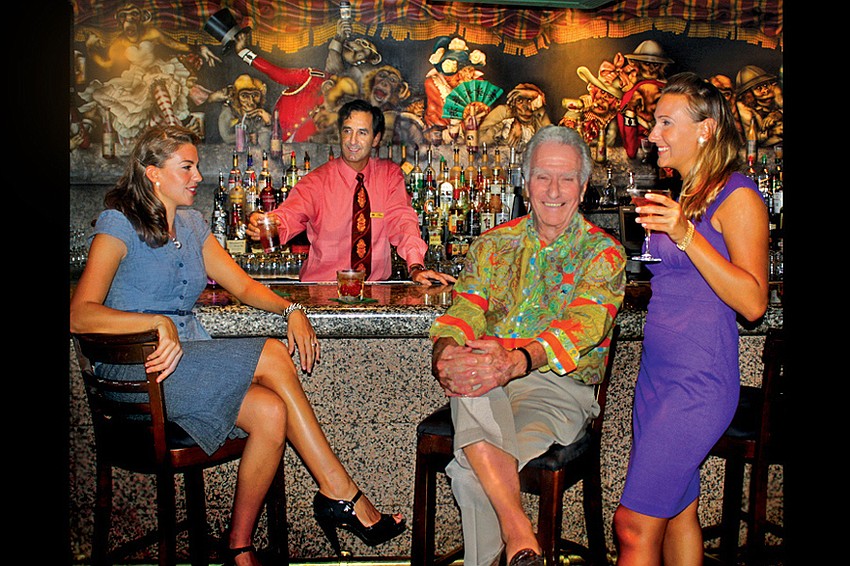
Murray “Murf” Klauber bought it in 1972 and began shaping the resort into his vision: America’s first tennis-centric resort. That dream was realized, and celebrated. Tennis Magazine named it the No. 1 tennis resort in the United States eight years in a row. In its heyday before its messy, lawsuit-laden demise, there was always someone on the courts.
Kay Thayer taught tennis there from 1994 to 1999.
“We had like 10 pros going all day, every day in the heart of the season doing clinics and lessons and exhibitions,” she said.
The resort offered more than tennis. It's dining room served award-winning cuisine with a Gulf view, and tables decorated with bouquets from the resort’s on-site florist.
But it wasn’t a stuffy five-star resort where a giggling kid may garner a sneer from suit-wearing, low-talking diners. Families vacationed there.
“George (W.) Bush stayed there the night before 9/11. You’ve got that level of clientele, but you’ve also got just people who lived on Longboat who would go there after work and meet for a beer,” said Susan Phillips, who was assistant town manager of the town for 27 years before her retirement earlier this year.
Tennis commentator, historian and Colony condo owner Bud Collins and Klauber collaborated to host an event that fit the “all level players are welcome” ethos of the Colony’s courts. The Bud Collins Hackers Open welcomed unpolished players to the Colony in an annual tradition for nearly 20 years.
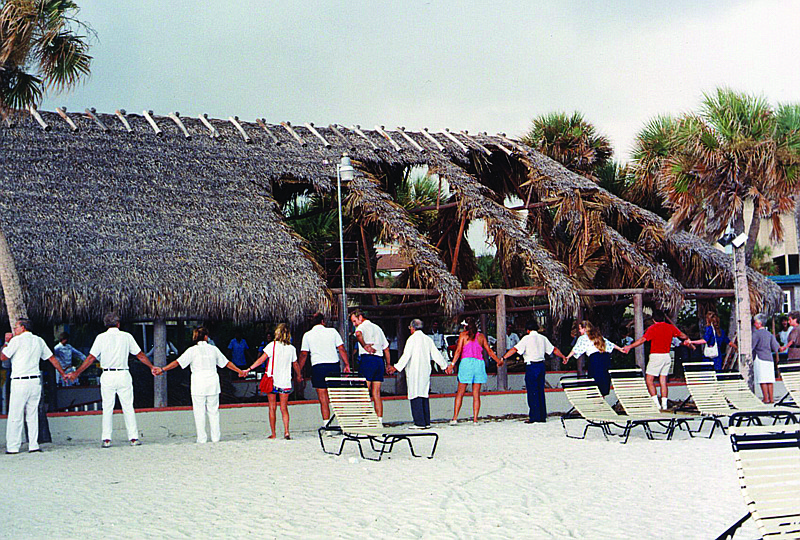
The Colony had its run-ins with the town as many businesses on the island have. One of the more memorable conflicts involved an outdoor, palm-frond-covered Tiki hut. After the town demanded the demolition of the structure, Colony employees held hands and formed a symbolic circle around the building.
Murf was well-liked by both employees and guests, and his presence added to the “casual elegance” of the Colony, as he described it.
“He was always on property, he lived on property. He was always out and about,” Phillips said. “He was friendly, gregarious, just a great guy.”
Vacationers to the Colony became repeat visitors and then residents of Longboat.
“A lot of people would come to Longboat to play tennis, come to the Colony, see how beautiful and great it was, and they would eventually move here,” Thayer said.
Phillips said the same thing.
The resort undoubtedly had a large part of shaping the Key into what it is today.
Ray and D’Arcy Arpke, founders of Euphemia Haye, worked at the Colony where Ray was chef. Klauber mentored lazy Lobster co-owner Michael Garey. Murf Klauber’s son, Tommy, was owner and chef of the popular Pattigeorge’s from 1997 to 2016.
Bud Paschal was the man who organized the town meeting that changed the history of Longboat Key.
The Civic Club president had advocated for years to make the barrier island a town. Talks of zoning changes by the governing counties made Longboat residents antsy, and the population felt powerless in determining the barrier island’s destiny. Across from a newly opened trailer park, there was a rumor of a public beach. Paschal and company pushed back.
“There are 196 voting freeholders on Longboat Key. Is it any wonder our government feels free to push us around?” Paschal wrote.
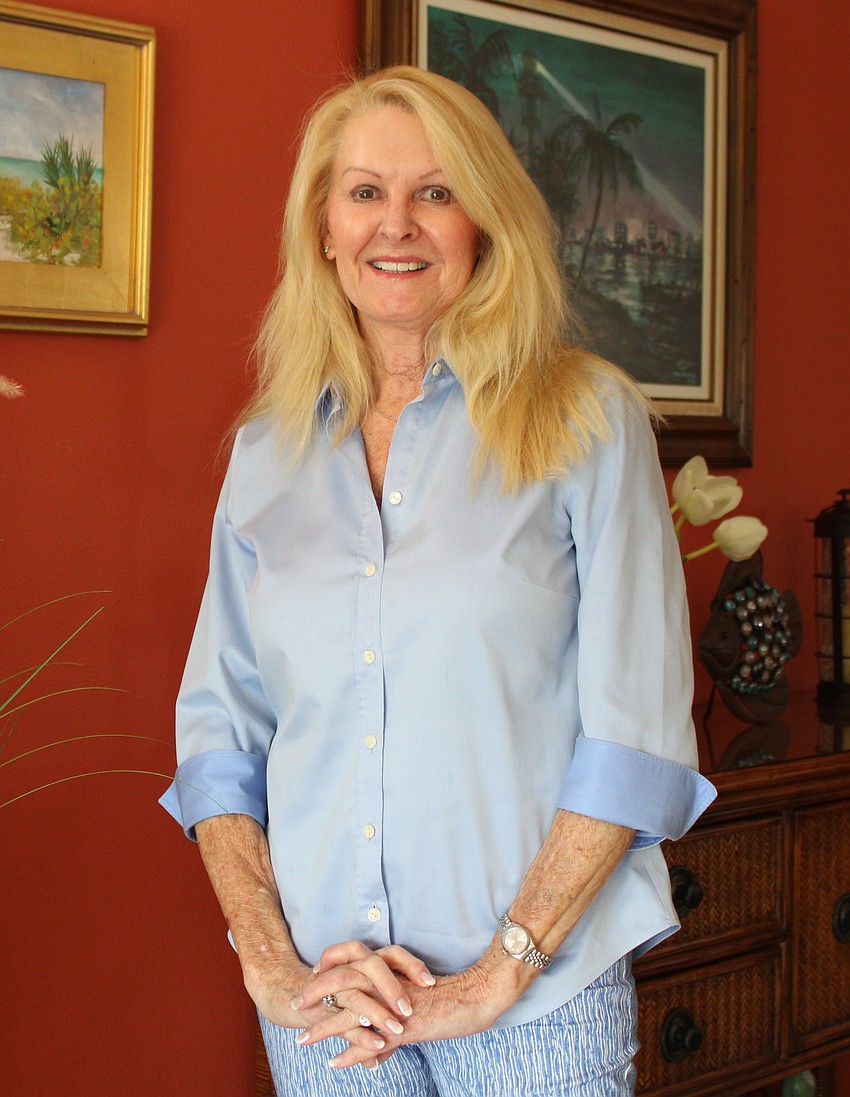
Phillips said the reason for incorporating by 1955 Longboaters was because of zoning changes the counties were making.
“We only had under 200 voters on Longboat Key. How are they, when Sarasota or Manatee County want to impose a zoning ordinance on us, going to fight it? We had less than 200 people to counter what Sarasota and Manatee County wanted to do out here to further their agenda,” Phillips said. “That is when the people said we’ve really got to be our own town and control what goes on out here.”
The north end of the town was where the town gained its footing. Broadway Street was then Main Street. Most of the residents lived on the north end in The Village. Mar Vista was the bar where incorporation was argued for and against — echoes of the Boston, Philadelphia and New York taverns where colonists plotted their independence from the Crown.
“That was where if you wanted to talk to your neighbors, Mar Vista was that place back in the day. The pub, it was called,” Phillips said. “It’s where the Town of Longboat Key Fire Department was founded.”
In 1936, the north end became handicapped when the wooden bridge connecting Longboat Key to Bradenton Beach and the mainland collapsed.
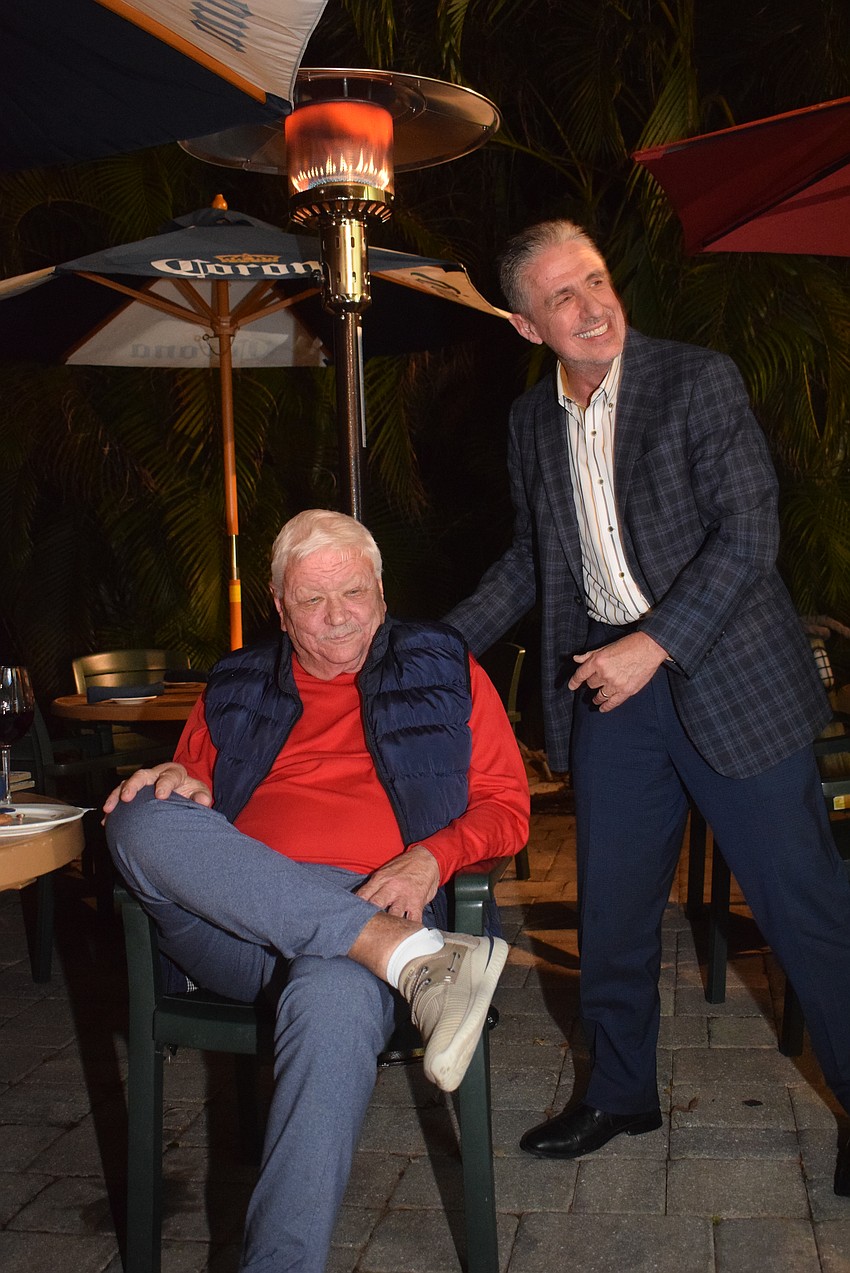
David Miller, now a 70-year Longboat resident, said the north end of Longboat Key was “the end of the world” before that bridge was built. He was just a kid when it finished.
“That was huge for me. Basically, I couldn’t get to school. The bus would only take you to the county line,” Miller said. “Nobody would take me to school, so I rarely made it to school for two years. Lo and behold, they built the bridge, and a bus came across and started taking me to Anna Maria Island Elementary.”
Miller, who took over his father’s marina and boat rental business in 1978, had his own run-ins with the town. First was the Marina’s request to sell gas. The last was a mural he had painted on his building.
Between those two disagreements, Miller recalls a time when the town only allowed the flying of the flags of Florida, America or another nation’s flag. When he approached the town requesting to make some changes to the marina, they refused to allow it, and Miller used his flagpole to make a statement.
“I flew a flag that said don’t tread on me. They were going to fine me if I didn’t have it down in ten days. I took it down on the 10th day,” he said. “Then I flew a Santa flag. I made the paper again.”
A company called Arvida shaped the south end of the key. The “Ar” is for Arthur. The “Vi” Vining. The “Da” Davis. Arvida.
A 91-year-old Arthur Vining Davis bought 2,000 acres of land on barrier islands off Sarasota, including large swaths on the south end of Longboat, catapulting the southern part of the Key into an era of growth. What they built wasn’t a surprise to residents paying attention.
“(Arvida) put out a prospectus of what they were going to do and they followed it to a tee,” said Miller.
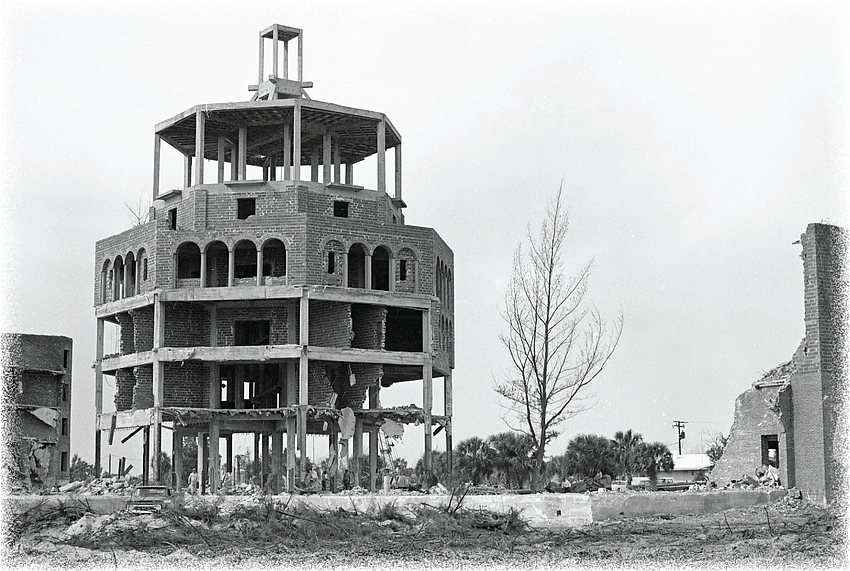
Arvida’s work on Longboat included the demolition of John Ringling’s unfinished Ritz-Carlton Hotel, the development of Seaplace, Bay Isles Harbour and a sprawling golf course. Arvida was purchased by a management group in 1985 and then was briefly owned by Disney.
Now, the Longboat Key Club is an exclusive community on the south end built on the foundations of Arvida’s early development.
In 1965, appraised property values in the town totaled $18.6 million.
In 1969, property values had more than doubled to $45.2 million. Planning consultant Milo Smith said that existing zoning could lead to a population of 65,000, according to Ralph Hunter’s “From Callusas to Condominiums.”
A building moratorium began for a year from 1973 to 1974, but the growth still continued after the moratorium ended. Condos were popping up all along the Gulf Coast.
Appraised property values had grown to $838.8 million in 1980.
Phillips said one of the most consequential decisions the town government made was when it enacted zoning reform in 1984, which was part of the town’s comprehensive plan. The new 1984 zoning changed meant any increase in density would need to be approved by residents in a referendum, and many existing structures became non-conforming meaning new construction to replace aging buildings would need to meet the new, less dense zoning requirements.
“Not that they’re not great places, but we didn’t want to look like Coral Gables or Naples. We didn’t want wall-to-wall density,” Phillips said.
“That decision in 1984 was probably one of the wisest things our town leaders have ever done.”
Direct democracy is more common in Longboat Key than many other places in America. The town also holds referendums to approve spending greater than $800,000. Phillips said that comes from the insistence of a man named Rainer Josenhanss.
“The Commission was going to build something and they were going to issue a bond to pay for the project. Rainer said ‘it’s the taxpayer that are going to have to pay this.’ He made a big deal out of it,” Phillips said. “He’s why we have to vote to issue bonds.”
What’s up with the generations-long war on signs? Phillips, who worked for the town for 27 years, says it’s not about the signs necessarily.
“It’s the clutter,” she said. “It’s the visual blight. They want and are really more refined and they don’t need that loudness of billboards. Instead of your eye being drawn to some big, garish sign, your eye is drawn to the natural beauty and immaculate landscaping.”
At-large town commissioner B.J. Bishop said at a recent commission meeting that Longboat doesn’t want to be the Coney Island of Florida.
“Keep Longboat Longboat.” That quote needs no attribution. Everyone on the island says it.
Correction: This article has been updated to reflect that Rainer Josenhanss was not a town commissioner.