- March 2, 2026

-
-
Loading
Loading
We’re in a drought.
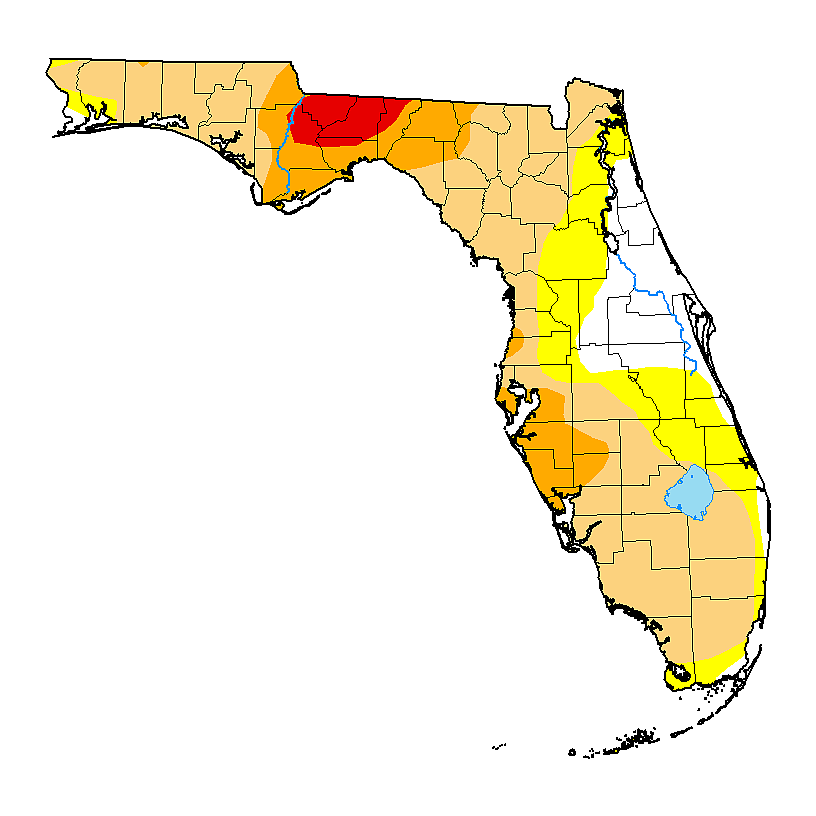
According to the Southwest Florida Water Management District, the region has seen 13 inches less rainfall than in a typical year, and the U.S. Drought Monitor labels Sarasota and Manatee counties as being in a severe drought.
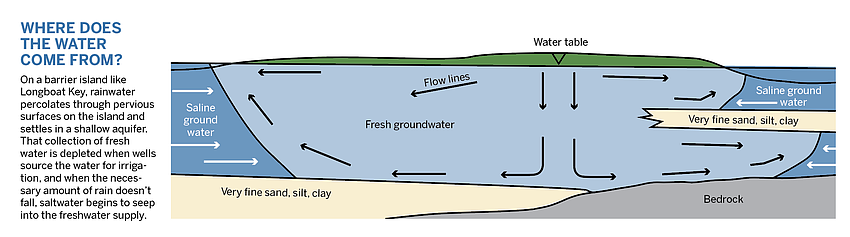
On a barrier island like Longboat Key, less rain brings the potential for an infiltrated aquifer. Under Longboat Key is what Sarasota Bay Estuary Program Director Ryan Gandy explains as a “lens” of fresh water.
“As it rains on that land, you have water percolating in through the top through the sand and anywhere that doesn’t have concrete,” Gandy said. “Because fresh water is less dense, it’s lighter than salt water, the fresh water will sit on top of that salt water.”
That freshwater lens is depleted by wells, which are used to irrigate commercial properties like golf courses, hotel and condo building landscapes, and front lawns. The only way that freshwater source is replenished is through rainfall.
“Waterbodies usually refill during the rainy season and decline during the eight-month dry season of October through May. However, since rainfall has been below average, our rivers, groundwater, lakes, and aquifers were not replenished as usual due to the lack of rainfall and are anticipated to decline further as the dry season progresses,” SWFMD spokesperson Susanna Martinez Tarokh said in an email.
SWFMD Hydrologic Data Manager Tamera McBride writes that the four-month rainy season from June to September brings 60% of the annual rainfall to the region each year. That rainy season was not so rainy this year.
National Weather Service data for the Sarasota-Bradenton area shows a little more than 34 inches falling in that four-month window and 44 inches all year. SWFMD data shows the average amount of rainfall for Sarasota and Manatee Counties is about 53 inches.
In years like 2025 when the rain just doesn’t fall, saltwater begins to take over the freshwater supply.
“As you extract that fresh water, as you pump it out, you’re reducing the amount of fresh water in that lens. What happens is saltwater comes in from the sides,” Gandy said. “Your aquifer gets saltier and saltier. There’s only a limited supply of fresh water in that shallow aquifer on any of our barrier islands.”
With more saline groundwater, plants that are watered by well-fed irrigation systems may show signs of deteriorating health, like browned or wilting leaves. These are the same warning signs of underwatered plants.
“The catch-22 is that people will see the salt stress, mistake it for drought stress and try to fix it by irrigating more,” said University of Florida’s Institute of Food and Agricultural Sciences Water Resources Agent Michael D’Imperio. “But if they’re irrigating with that same salty water supply, they can actually be building up more and more salts in the soil that remain there until they’re flushed out with fresh water. And if we’re not getting rain, that can be a challenge.”
D’Imperio said UF IFAS extension offices provide water testing for $5 to determine salinity, a good step to take if you suspect saltwater intrusion in your irrigation water supply.
Longboat Key receives its drinking water from Manatee County, which sources it from the Manatee River and mainland aquifers. For homeowners who have an irrigation system not connected to a well, they are using that treated water from Manatee County. During a drought, stresses on the drinking water system are exacerbated as the county’s water sources begin to dry up.
“Fresh water is a highly limited resource in supply compared to how much we use fresh water,” Gandy said. “All of the different cities and counties and everything all have straws in the same sources of water.”
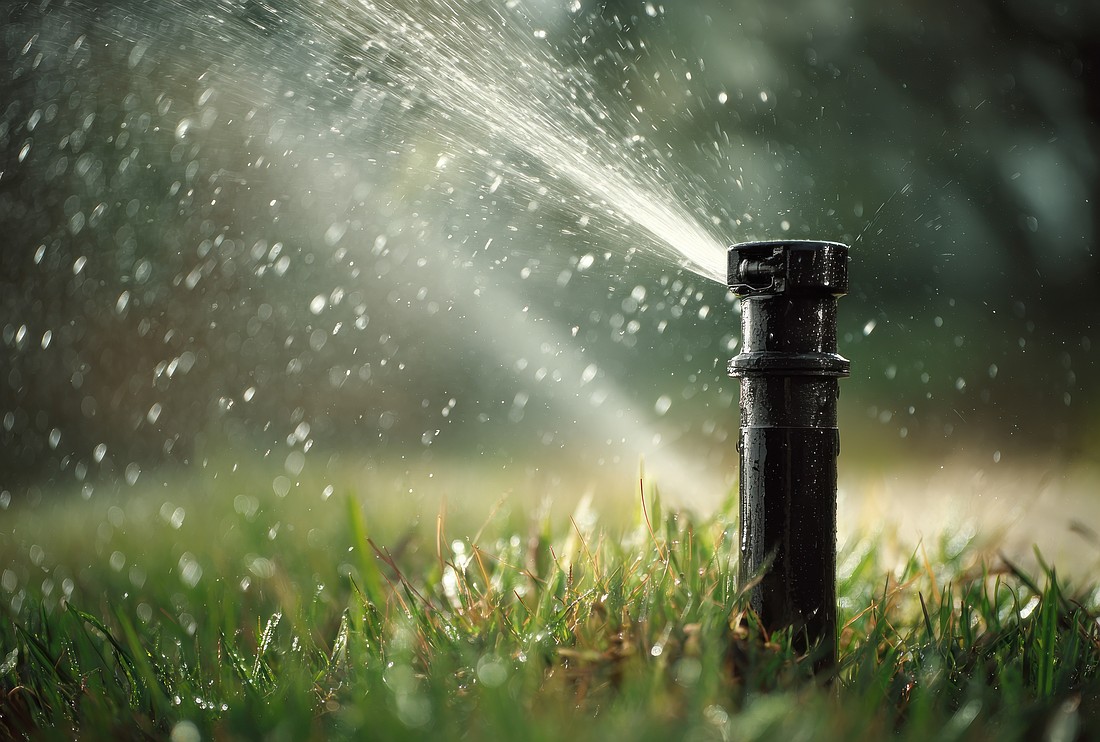
It’s not an emergency, but town and county leaders are informing residents of ways to conserve water, especially in their irrigation systems. According to SWFMD, outdoor water use accounts for about half of the water consumed in a household.
Last month, SWFMD declared a Phase I water shortage from Dec. 1 until July 1. The first of a four-tiered alert system, phase I is described by SWFMD as “an alert to local governments and other entities to prepare for possible worsening conditions.”
Under a Phase I water shortage, “wasteful and unnecessary” water usage is prohibited, like allowing a hose to run unattended, but watering schedules for irrigated lands can continue on a twice-per-week schedule unless once-a-week schedule is required by local ordinance, like in Sarasota County.
“While we cannot control when we receive rainfall, we are asking residents to reduce their outdoor water consumption by checking their irrigation system to ensure it’s working properly,” Tarokh said. “This means testing and repairing broken pipes and leaks and fixing damaged or tilted sprinkler heads. Residents should also check their irrigation timer to ensure the settings are correct and the rain sensor is working properly in accordance with state law.”
As dry season continues, the impacts of the drought are expected to intensify, and residents can take optional steps to reduce their water usage. Ensuring irrigation systems are leak-free and have working rain sensors and planting drought-resistant plants are all helpful steps residents can take. During the dry winter season, it can also be useful to switch to an every-10-day irrigation schedule. D’Imperio said plants, including grass, are conditioned to withstand the dry season, going dormant during the winter and requiring less water.
“Once it’s getting cold out and there’s that shorter period of daylight, the lawn enters a dormancy period where it doesn’t need as much water. That can be counterintuitive because it is also during that driest part of the year where people may be watering the most,” D’Imperio said. “But during the winter months, your grass actually needs less water. So you can water every 10 days or so instead of once every seven days.”
Droughts don’t only impact the water quality of Longboat Key’s aquifer, but can lead to issues in Sarasota Bay as well, Gandy said. When there is an extended dry spell, contaminants accumulate. Think of it like the film of dust you see on an unwashed car (wash me). After that months-long buildup of fertilizers, oil, grass clippings and other man-made contaminants, the water from the first heavy rain picks all that up.
“That first really good flushing of the landscape gets pushed right out into the bay as a big, heavy load,” Gandy said. “It’s a fast pulse all in a very short period of time, and the systems in the bay that process that, biological systems like bacteria and algae, a lot of the time their populations aren’t big enough to handle some of the nutrients that are in that. But then when they get ramped up and a lot of nutrients get released, it can lead to an (algae) bloom.”