- March 18, 2026

-
-
Loading
Loading
When it comes to noise, it always comes down to a central question: How much is too much?
Which is closely followed by a second question: And how does one measure too much noise?
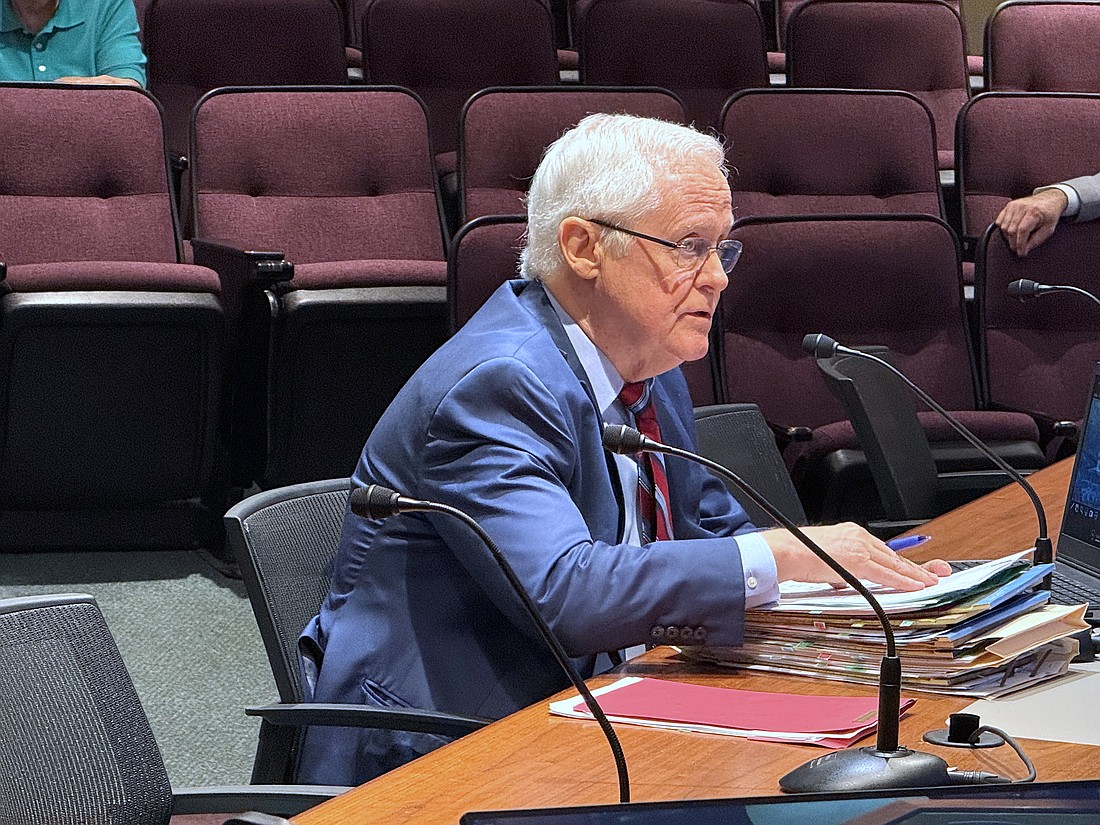
After waiting nearly a year for now-retired City Attorney Robert Fournier to present a new noise ordinance plus an almost three-hour discussion amid an 11-hour meeting, the Sarasota City Commission on Dec. 1 unanimously approved new standards while directing further study on the issue.
In separate motions, the commission voted to adopt an ordinance that mirrors that of the city of Miami Beach, one that has successfully navigated legal scrutiny in Florida courts. In simple terms, that law prohibits sources of sound plainly audible from a distance of 100 feet between 11 p.m. and 7 a.m.
The approved motion made by Mayor Debbie Trice, though, extends those hours on weekends and select holidays from 11 p.m. to midnight.
A second approved motion directed staff to hire a consultant to conduct a sound study for a recommendation of decibel levels and perhaps noise zones in which those limits may vary. The ordinance may be revisited once that study is complete.
For now, though, the plainly audible standard is just that. If sound can be heard from 100 feet away, it is a violation enforceable by a city code enforcement officer. And although the ordinance will apply citywide once approved in a second reading, downtown is clearly ground zero. For years, the city has fielded complaints from residents about loud music emanating from restaurants, bars and what some claim as an oversaturation of special events as the downtown district becomes increasingly surrounded by residential towers.
The meat of the city's current noise ordinance is based on decibel readings between the source and the location from where the complaint originates, the fairly standard 75 decibels if high frequency (dbA) and 80 decibels of low frequency (dbC), as in bass during the day, and 65 dbA and 70 dbC at night. That's difficult to enforce as frequencies that measure lower may still be audible, and disturbing especially for residents of nearby condominium buildings.
The new code is intended to strike the delicate balance between residents’ rights of ease and enjoyment of their property, the city’s desire for a vibrant downtown that relies on nightlife and freedom of speech protected by the Constitution.
Fournier said the Miami Beach ordinance cleared the latter hurdle by being upheld by the 11th Circuit Judicial Court of Florida in Miami.
“I think you can apply a plainly audible standard based on the precedent that was set with the city of Miami Beach,” Fournier said. “That’s what the court relied on to say that it met the legal standard of being narrowly tailored to just focus on achieving the significant governmental interest, which is to protect its citizens from unreasonable sounds.”
Sarasota’s change to the “plainly audible” standard may serve as an interim measure and could change if the consultant recommends something different, Fournier told commissioners.
The ordinance will require a second reading for final adoption. Although most second readings appear in a non-discussion consent agenda, the sound legislation appears destined for further dialogue. Depending on the timing, that could include the consultant’s recommendations on decibel levels and varying sound zones, depending on timing.
“I've talked to two (consultants) and I could probably get them here do site visits, which would occur over a weekday night and probably a couple weekend nights, and try to be here when there's a special event,” said City Attorney Joe Polzak. “We have New Year's Eve coming up, so one of them I know could probably do December. Otherwise, more realistically, maybe January.”
The second reading of the noise ordinance has not been scheduled.