- March 13, 2026

-
-
Loading
Loading
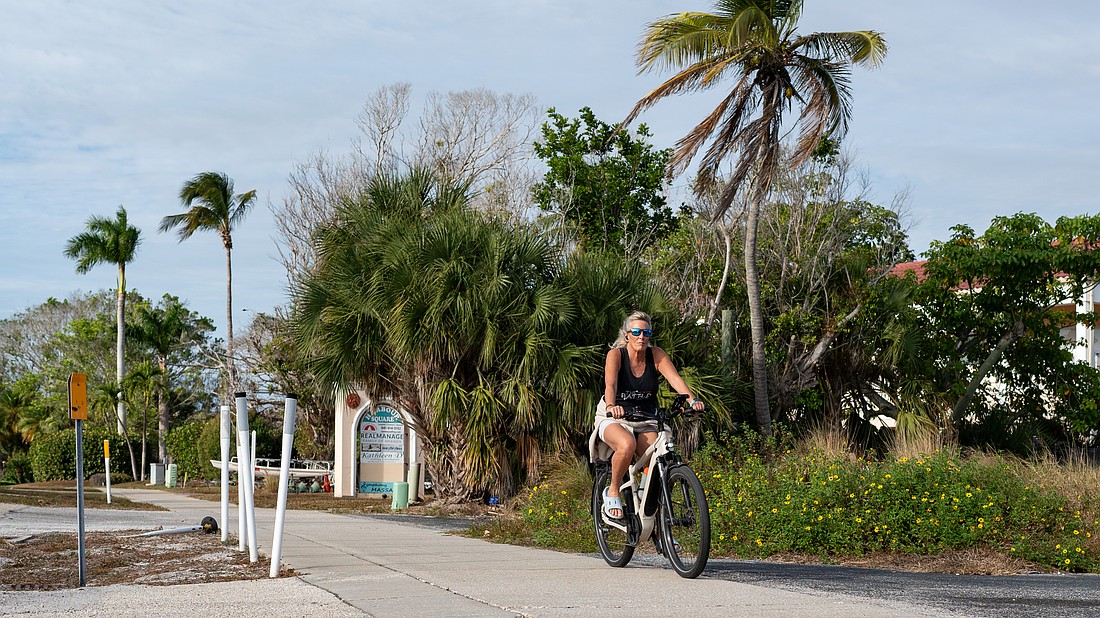
In the 1980s and early 1990s, mopeds were all the rage, with teenagers zooming around on low-powered Yamahas, Motobecanes and Honda two-wheelers.
That’s the era when Longboat Key wrote its current biking ordinance, and with the recent hype and increased popularity of electric-assisted bikes and the dawn of app-based rental scooters, it’s time to bring the town code into the 21st century.
Longboat Key’s code of ordinances has no mention of e-bikes. There is, however, a definition for bicycles, and mopeds with up to 1.5 horsepower fall under that definition.
“We need to update the ordinance that we’re working under. It’s quite old,” said Town Manager Howard Tipton. “I don’t think it actually considered e-bikes. I think it might have been more for mini-bikes.”
Electric-powered bicycles have been around for a long time. A patent for them was first filed in 1895, but the modern e-bike wasn’t born until 104 years later with the invention of the pedal assist system. That milestone, along with developments in battery and electric power transmission systems, has led to a rise in the popularity of e-bikes in the past 20 years.
Recent growth has been meteoric, with sales of e-bikes nearly quadrupling in four years — there were 287,000 sold in 2019, and 1.1 million sold in 2022, according to the U.S. Department of Energy.
State law breaks down electric bikes into three categories based on top speed and when and how the electric motor is engaged.
Sarasota resident Mike Graham has an Electra Townie e-bike. It’s considered a Class III e-bike. It can get up to about 30 miles per hour if he pedals hard, and it tops out at 20 if he only uses the throttle, which engages the 500-watt electric motor.
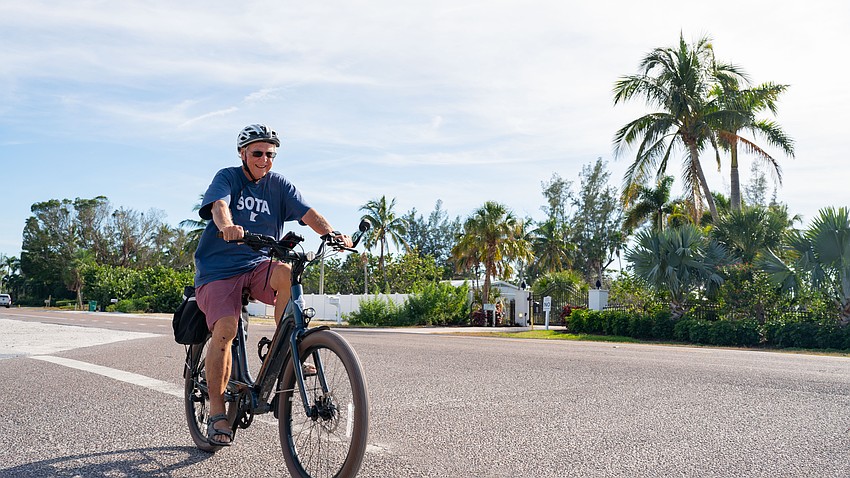
Graham was pedaling north on Longboat Key a trip he wouldn’t take if not for his Townie. Living in downtown Sarasota, the e-bike unlocks a new part of town for Graham.
“I live in the Renaissance (in downtown Sarasota), and I live there because I don’t like to drive so I can walk,” Graham said. “There are 30 or 40 restaurants within about a 15 or 25-minute walk. Today, I was going to either go to Shore or Mar Vista. So now with a 20- to 30-minute bike ride I’ve got another 50 restaurants I can go to.”
Graham was riding his e-bike on the sidewalk. That was for safety’s sake, he said. Riding in a bike lane on a road with a high-speed limit can be dangerous to cyclists. Drivers-by don’t always give the legally required 3 feet of space while passing bikers.
“I don’t want to be riding out on the road, if I can help it, with cars that are going 40 or 50 miles per hour and are just a foot or two away from me,” he said. “That’s why I’m riding on the sidewalk.”
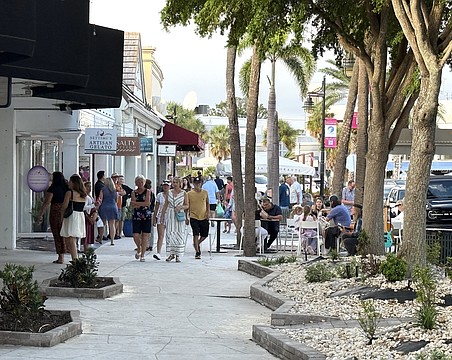
But e-bikes on the sidewalk can cause potential issues, and Longboat Key Police Chief Russ Mager said he has had complaints from residents about e-bikes traveling too quickly on the sidewalks.
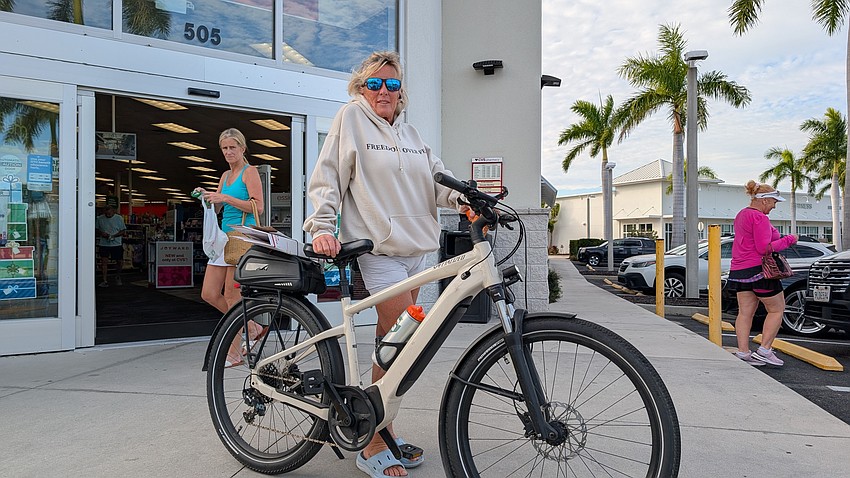
“You have to take into account the speed on the sidewalk,” Mager said. “Our considerations would be that it’s operated safely and you have some kind of mechanism in place to maybe have some speed governing on the sidewalk to make it safe for the pedestrians and the other cyclists.”
Gary and Colleen Hueber own e-bikes but don’t bring them down from Illinois when they visit Longboat Key during the winter. They have regular bicycles to get around the Key, but have noticed a lot of e-bikes during the busy season and are concerned there may be an accident.
“If you’re clipping along at 20 miles per hour, it’s hard to stop pretty quickly,” Gary said. “I’m concerned about someone running into a car pulling out of a driveway or a car pulling out running into someone.”
Mager said there have not been any reported injuries or collisions involving e-bikes, but that passing an ordinance to regulate the use of the vehicles is the prudent thing to do.
Right now, state law dictates the rules regarding where and how fast e-bikes can go on Longboat Key.
“Florida state statutes allow e-bikes the same rights and duties as a traditional bicycle. So the electric bikes that are human-powered with the pedals on them, by statute they are afforded the same rights,” Mager said. “They can operate on sidewalks, in the bike lanes or on the side of the roadway.”
The town is considering ways to regulate e-bicycle use on the Key after the Florida legislature recently passed a law specifying that municipalities can do so.
“A county or municipality may enact an ordinance to permit, control, or regulate the operation of vehicles, golf carts, mopeds, motorized scooters, electric bicycles, and electric personal assistive mobility devices on sidewalks or sidewalk areas when such use is permissible under federal law,” the statute reads. “The ordinance must restrict such vehicles or devices to a maximum speed of 15 miles per hour in such areas.”
How fast e-bikes may travel on sidewalks is something town staff is considering as a potential aspect of an ordinance.
“We don’t want people really going more than 10 miles an hour on the sidewalks. If you want to go fast, you can go out on the main road,” Tipton said. “As people come back on the island, we’re just seeing a lot of people flying around.”
Mager said he wants to be very clear that he is not anti e-bike. But a local law to make sure they are utilized safely within town limits is overdue.
“We’ve got to figure out what as a town what we consider safe and reasonable for an e-bike to travel through on a sidewalk. It’s legally allowed to be there by law, and we can enact our own town ordinances to regulate it,” Mager said. “But we just have to figure out what’s fair and reasonable, taking into account public safety.”
Any ordinance regulating e-bikes would need to go before the town commission, where the public would be able to provide input before voting on the ordinance. Ordinances must pass at two separate meetings before becoming law.
Tipton, public works director Charlie Mopps and Chief Mager all stress that when drafting any ordinance, preserving mobility options is an important factor to consider.
“What we don’t want to do is take away from any of our aging population,” Mopps said. “They’re actually using e-bikes as a mode to get back out there and use that pedal assist to keep their legs moving. If it keeps people going, we don’t want to dissuade that, but we want to set parameters and keep safe parameters because we don’t have a real true multi-modal trail, we have a six- to eight-foot-wide sidewalk.”
Though there is no requirement to do so, Graham said he leaves space when riding his e-bike on the sidewalk and doesn’t hit top speed. He is a pedestrian first, after all.
“If a bicyclist is going to be on the sidewalk, they better not be doing 10 miles an hour,” Graham said. “They can move a little bit faster than a pedestrian, but not in a way that’s gonna make everybody unsafe.”