- March 19, 2026

-
-
Loading
Loading
With a tilt of their lengthy brown wing feathers and an eye scanning between the glint of sunlight reflecting off the crests of passing waves in Sarasota Bay, the mighty brown pelican soars lower, hunting mullet or whatever other small silver fish may pass.
Then, it makes a dramatic dive, dipping beneath the water's surface with a grand splash. It successfully scoops up a fishy meal in its notoriously gaping maw, but with it, a difficult-to-spot hazard.
Monofilament fishing line poses a potentially life-threatening risk to shorebirds, turtles, fish, coral reefs and other aquatic inhabitants.
Longboat Key leaders are taking measures to help keep hazardous materials out of the ecosystem with an initiative that can help animals with proper disposal of fishing line that makes it easy for fishermen.
If that pelican is lucky, a trained volunteer or staff member working with Save Our Seabirds, Longboat Key's wild bird rescue and rehabilitation facility, will scoop it up.
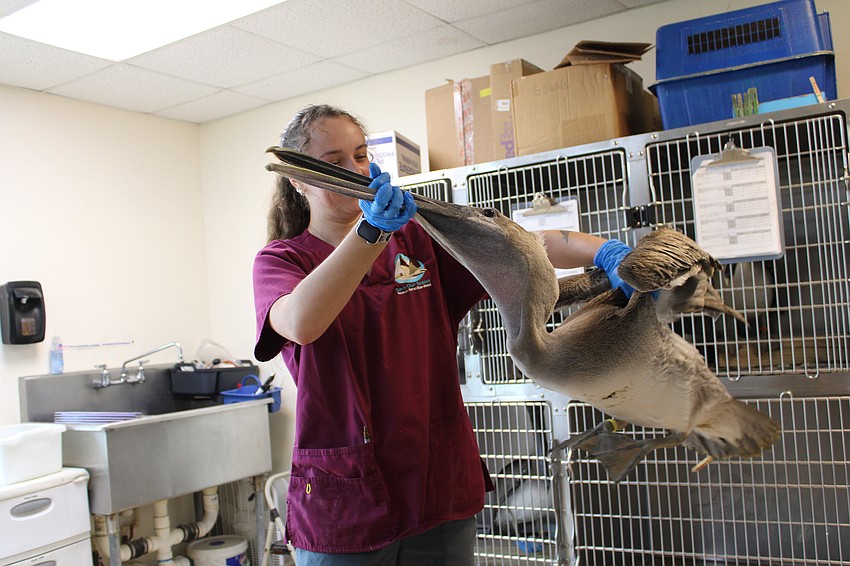
Brian Walton, the facility's executive director, said fishing line is a main cause of injury to local birds coming to the animal hospital. In fact, rescuers can fill a large gallon-sized jar in a few months full of fishing line they pull off of birds.
The injured bird may find itself in the hospital, where trained staff will carefully untangle any line wrapped around its legs or wings, delicately but firmly extracting an attached hook from the wild bird, and checking the wild animal over for any other injuries.
Fishing line poses a particular entanglement risk to birds, which is particularly dangerous for water-faring species. But beyond the drowning or choking risks, birds face problems with deformed limbs when they remain tangled up for an extended period.
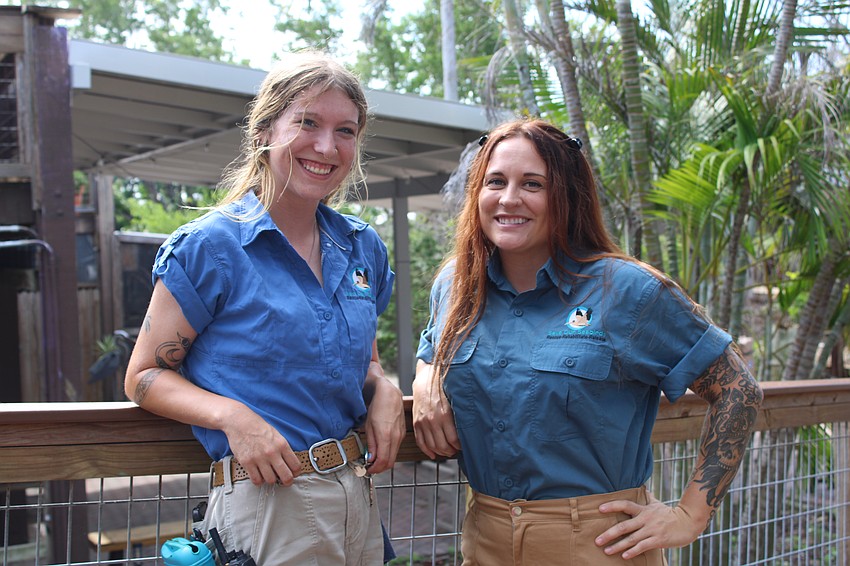
Stormy Wilson, lead avian keeper at Save Our Seabirds, noted that monofilament line is very thin, clear, and easy for birds to miss.
"When they're fishing for the same fish as us, there's always a risk," she said. "We have a few birds at our hospital right now that have swallowed lines that we may really struggle to get out. It's pretty common."
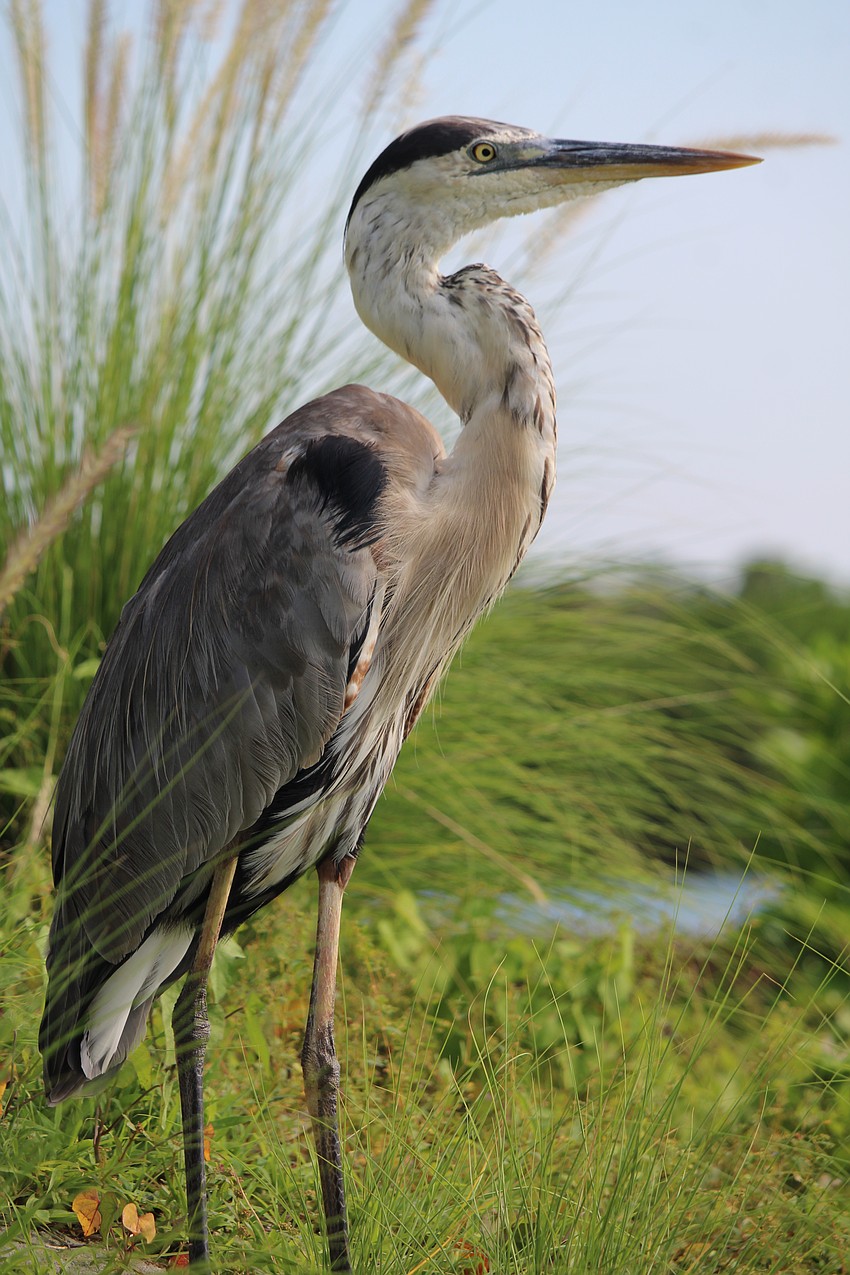
Mangrove roots can easily trap fishing line, and when birds are wading in the shallow waters while hunting prey, they can get caught up in the plastic web.
Director of outreach and education Lisa Wood said receptacles at fishing docks should prove especially useful considering how many birds regularly hang out by anglers, hoping for a treat.
"They recognize fishing activity, so they definitely seek it out," Wood said. "Especially cormorants like to hang around kayakers. Pelicans like to stay by the piers. They can get themselves into a lot of trouble."
While the rescue facility does its part to aid animals already caught in fishing line, the Rotary Club of Longboat Key started a hopeful new drive this summer to keep waste monofilament from getting in the water.
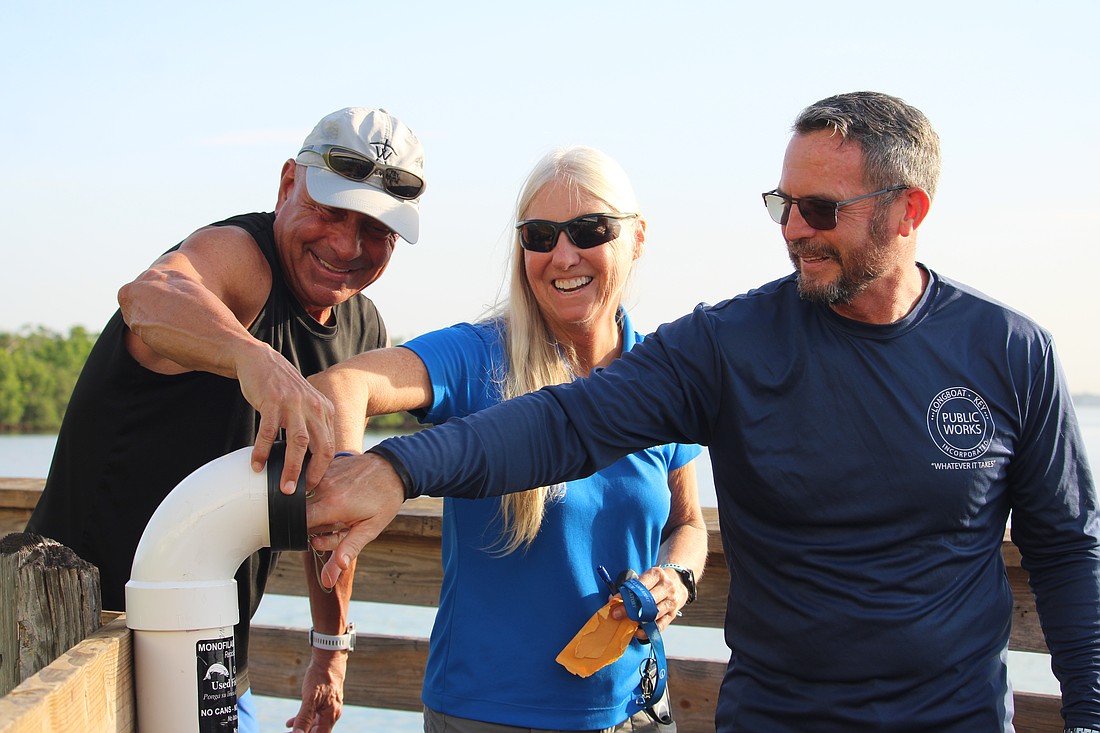
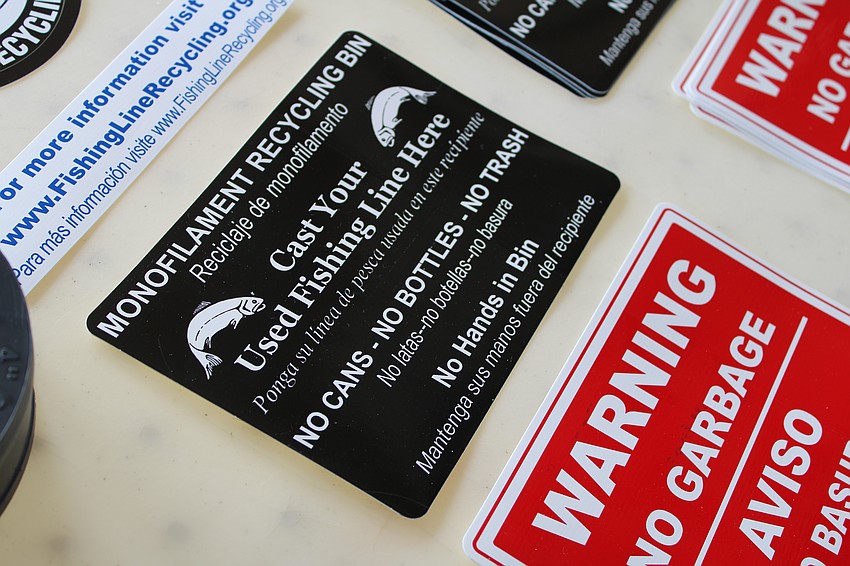
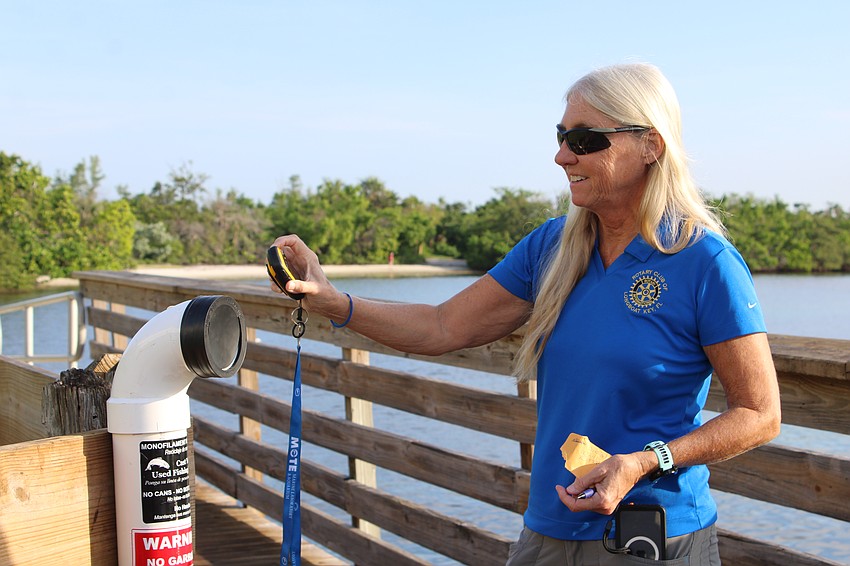
Members installed two new PVC receptacles on the dock at Overlook Park — located by Quick Point Nature Preserve — allowing visitors to dispose of extra line for recycling.
Terri Driver, the new president of the Rotary Club of Longboat Key and a member of the Longboat Key Turtle Watch, launched the initiative in partnership with Public Works.
Director Charlie Mopps assisted Driver and her husband, Jeff, with installing the containers on July 15. They attached one at either end of the dock, which is often frequented by both anglers and herons seeking an easy snack.
Terri stressed that Rotary doesn't aim to villainize anglers, many of whom are avid wildlife protection advocates. But offering a simple way for them and other park goers to recycle discarded line is the first line of defense in protecting Sarasota Bay.
She is also a member of Longboat's citizen Green Team, and she hopes to unite her work with the group and the environmental goals of the Rotary Club of Longboat Key.
"We've had a laundry list of ideas, and we worked with Charlie and found this would be a great starting point," Terri said.
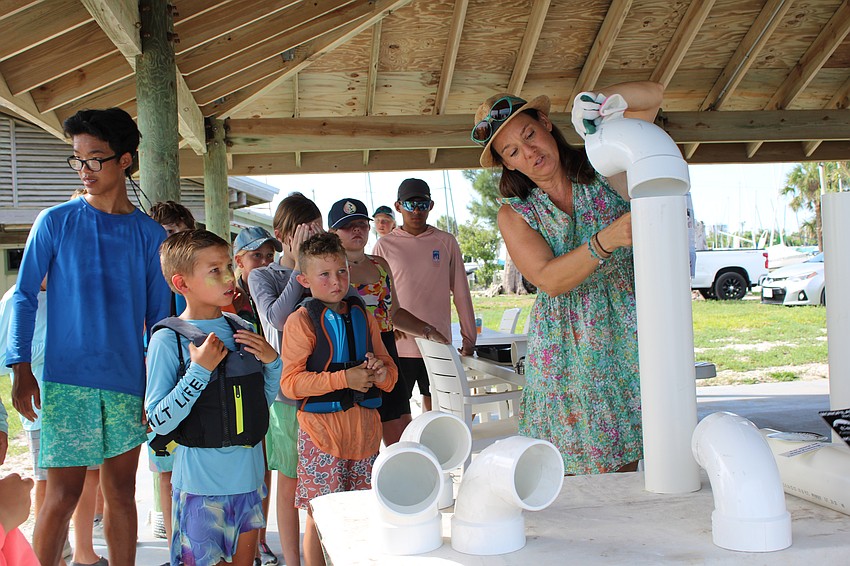
The week before the installation, Rotary members enlisted the help of some local youngsters to help build the receptacles.
Youth members of Sarasota Youth Sailing joined the Rotary on City Island at the Sarasota Sailing Squadron headquarters to glue together PVC pipes to make the recycling bins. Anyone who collects the line can place it in the pipe, the opening of which is covered with a simple rubber flap. Then, disposal teams can simply open the bottom and take away the line for recycling.
Dustin Domer, SYS executive director, said they believe it is important for kids to get hands-on experience caring for the waters they traverse.
"Most of these kids will get experience fishing somehow, whether by themselves or with their families," he said. "Or, they may be out having fun paddling, and now they'll have a bit more background knowing what to do when they come across fishing line."
Sea turtles are also particularly at risk, given their need to surface to breathe and their chances of accidentally swallowing fishing line.
A 2022 bulletin published by Science Direct detailed a survey of 30 sea turtles. Eight had ingested fishing line, and of those, all had suffered some sort of injury, and three had severe lesions.
Mote Marine Laboratory and Aquarium had several local celebrity turtles it rehabilitated from fishing line injuries, including a green sea turtle nicknamed Waves.
The Sea Turtle Rehabilitation Hospital treated the turtle after it was found tangled near the Seafood Shark Marina in Cortez. Fishing line surrounded a flipper and its mouth, apparently for a long time. The unfortunate turtle had also swallowed a spinner hook.
Staff released the healed turtle in August 2022, and they took the opportunity to encourage those on the water to dispose of fishing gear.
Gretchen Lovewell, Mote's stranding investigations program manager, said in a statement, "What we do every day has a huge impact on these animals. You can be a good environmental steward by making sure you stow fishing gear before you go."
Besides seabirds and turtles, derelict lines also cause more coral mortality, a 2023 Science Direct publication notes.
FWCC sends recyclable line to the Berkley Pure Fishing company in Iowa, which turns it into raw plastic pellets. Those a repurposed into tackle boxes, line spools and other equipment.
An important part of making cleanup initiatives successful is making recycling points easily accessible.
The Florida Fish and Wildlife Conservation Commission maintains a GPS map of recycling locations as part of its statewide Monofilament Recovery and Recycling Program.
Ghost fishing gear, which includes fishing line, nets and other equipment, makes up at least 10% of all marine litter, according to the World Wildlife Foundation. That amounts to between 500,000 to 1 million tons of gear every year.
Fishing gear also accounts for almost half of the infamous Great Pacific Garbage Patch.
When gear is lost to the waves, wild animals can get trapped and drown or starve if they're unable to escape.
Anglers in the area voiced their willingness to help curb the effect on the ecosystem.
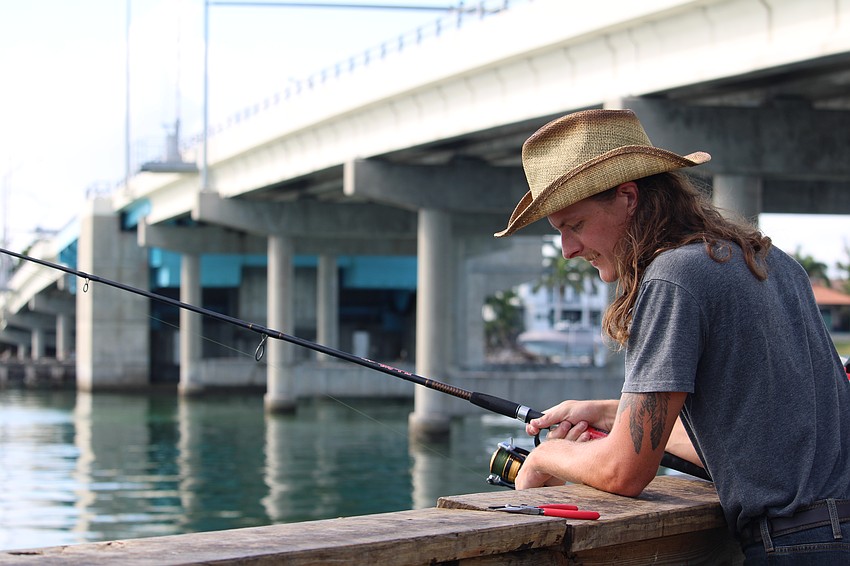
Fishermen Brad Merkamp and Max Walker, who were visiting from Indiana and Ohio, just happened to be casting lines from the Overlook Park dock the afternoon that the Drivers and Mopps installed the new receptacles.
"Some people are always going to be leaving trash around, but some people will use them, and I think it will keep trash down quite a bit," Merkamp said.
He added, "It's important to remember that this affects wildlife, and not just aquatic animals, but all of them."
The state officially added the new Longboat Key containers to its GPS map this month, labelled "Quick Point Preserve West" and "Quick Point Preserve East."
The map also shows nearby locations near Causeway Park, South Lido County Park and Marina Jack at Bayfront Park in Sarasota.
On the day they installed the Overlook Park bins, the Drivers found several clumps of tangled line and christened both receptacles. Terri said she hopes they will contribute to fewer brown pelicans making a trip to the hospital, or worse.
The club hopes to expand the effort as it goes, adding receptacles to rebuilt docks damaged by the hurricanes and any other locations where they will be useful.