- August 14, 2026

-
-
Loading
Loading
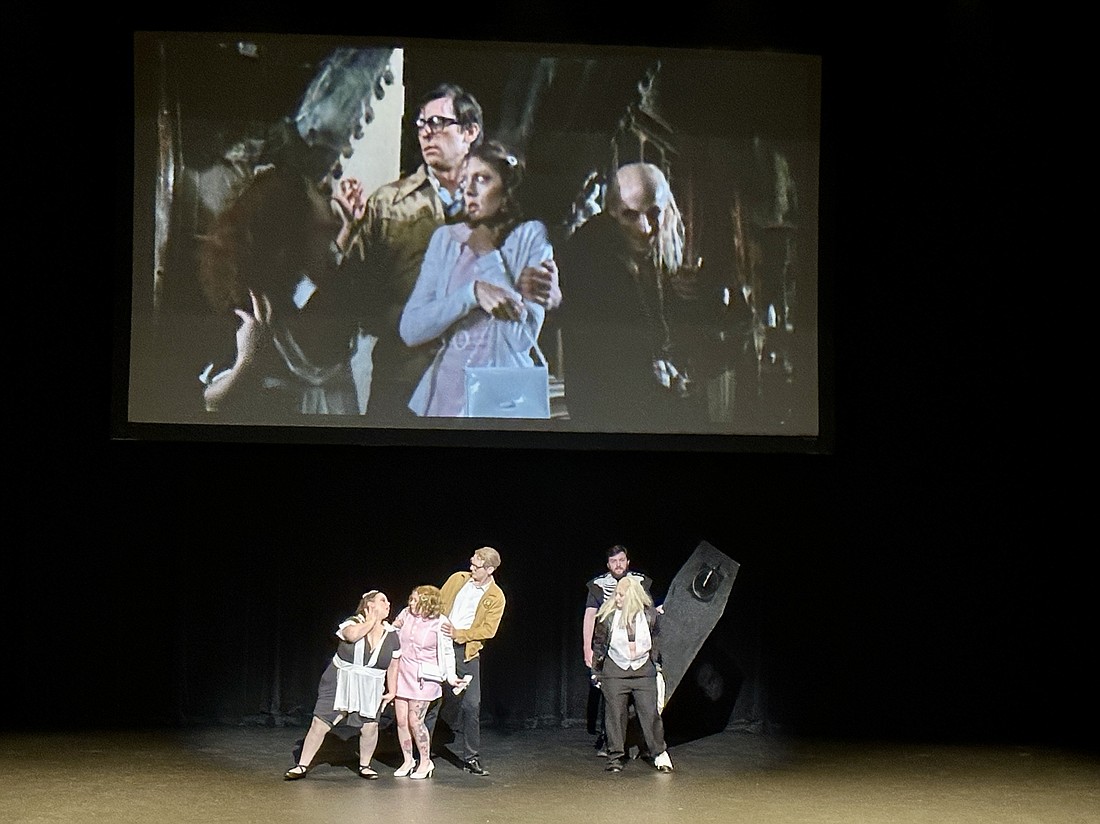
Welcome back my friends to the show that never ends. Richard O’Brien’s “The Rocky Horror Show” just won’t die. Born as a fringe musical in 1973, it was brought back to life on the silver screen as “The Rocky Horror Picture Show” in 1975.
The tale of two repressed sweethearts (Brad and Janet) who stumble into the crazy castle of a mad, cross-dressing scientist has been staged and screened ever since. A younger generation learned about the film from a 2016 two-hour FOX TV special called "The Rocky Horror Show: Let’s Do the Time Warp Again." Who knew its hit song would prove so prescient?
In our area, Venice Theatre has produced "Rocky Horror" multiple times. Van Wezel Performing Arts Hall recently brought it to life with a touring production starring Barry Bostwick, the original Brad in the movie. The Manatee Players will revive it again this month — just in time for Halloween.
Decade after decade, this musical cheats death. So what keeps “Rocky Horror” alive and kicking? What’s the big secret?
We posed that question to Griffyn Holcomb (director of the Manatee Players production) and Rick Kerby (the company’s producing artistic director). We also asked a “Rocky Horror” superfan. She calls herself “Magenta," the name of the maid in the show. We'll take her word for it.
Here are the secrets they shared.
That buzzword was coined in the late 1980s. “Rocky Horror” fit the bill back in 1973, when it premiered in London's West End. According to Holcomb, audience participation wasn’t part of O’Brien’s original plan. But the first few runs of his musical fell flat.
One night, a few members of the audience started shouting out snarky remarks to lines of dialogue like the robots in “Mystery Science Theatre.” In the nights that followed, more and more theatergoers did the same.
A lesser playwright would have shut them down. O’Brien turned them loose. His musical became a cult sensation after that.
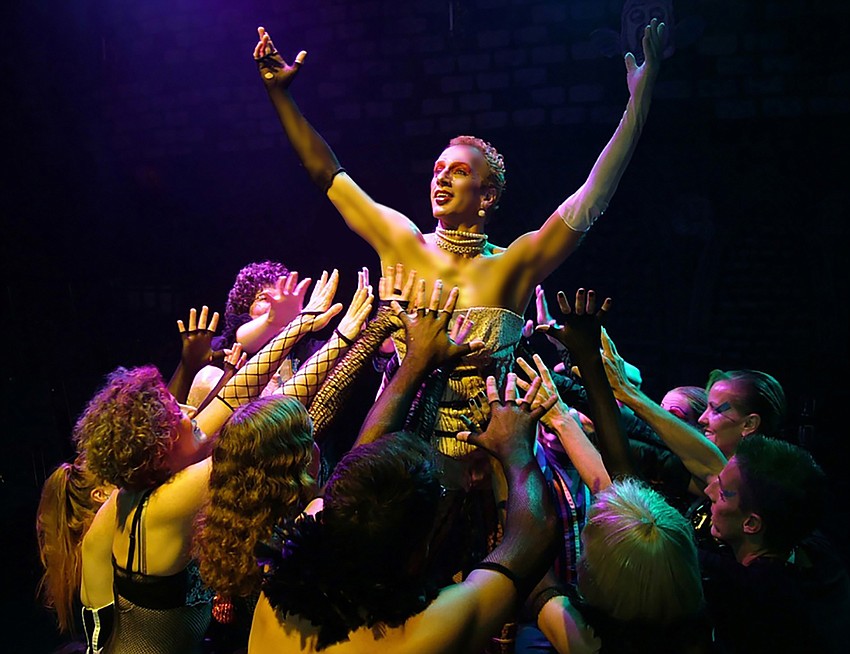
“I think it was a brave, brilliant decision, “ says Holcomb. “The interaction, fourth-wall breaking, props and cosplay makes you part of the show. You’re also part of a community — the ‘Rocky Horror’ tribe. You feel camaraderie when you’re sitting in the audience. The tribe is even multi-generational — I’ve seen parents and their kids in full costume sitting together in the ‘Rocky Horror’ audience. I think that sense of connection is a major secret of this musical’s long-lasting success.”
“‘Rocky Horror’ gives you permission to be your real self, whatever that may be,” Kerby notes. “Or be somebody else’s self, if you feel like it. It’s fun to dress up like a heathen, an alien, a boy, a girl, or anything you could imagine. In the ‘Rocky Horror' audience, misbehavior is the right behavior. Throw things! Yell at the stage! But please turn off your cellphone.”
Magenta feels the same way. “'Rocky Horror' pushes back at your conventional values,” she says. “It makes you question why you're hanging on to them if they don't serve you. Why stay trapped in conformity like Brad and Janet? You can choose a different life — a life that makes you happy. That’s a liberating idea to so many ‘Rocky Horror’ fans.”
“Rocky Horror” unfolds at the intersection of the LGBTQ and nerd communities. The show’s packed with nods to the B-movie sci-fi shockers of the 1950s. It’s also got plenty of cross-dressing. Fishnets and Frankenstein? It’s an odd combination, but both subcultures enjoyed it. That brought them together.
Magenta wasn’t surprised. “Society tells two marginalized groups: ‘You’re weird, you don’t fit in.’ Both communities get the same message — and the same rejection. The people in both groups had a lot in common. They just didn’t know it — until they saw ‘Rocky Horror.’”
“Rocky Horror” is campy, shocking, satiric, funny, disturbing and gender-bending. Above all, it’s a great rock-and-roll musical. The show’s packed with hard-charging tunes like “Time Warp.” According to all three Rocky Horror-ologists, that electrifying music is a big part of this musical’s staying power.
“The tunes in ‘Rocky Horror’ are unbelievably catchy,” says Kerby. “They make you want to get up and dance — and a lot of audiences do.”
He’s not exaggerating. I’ve witnessed that phenomenon.
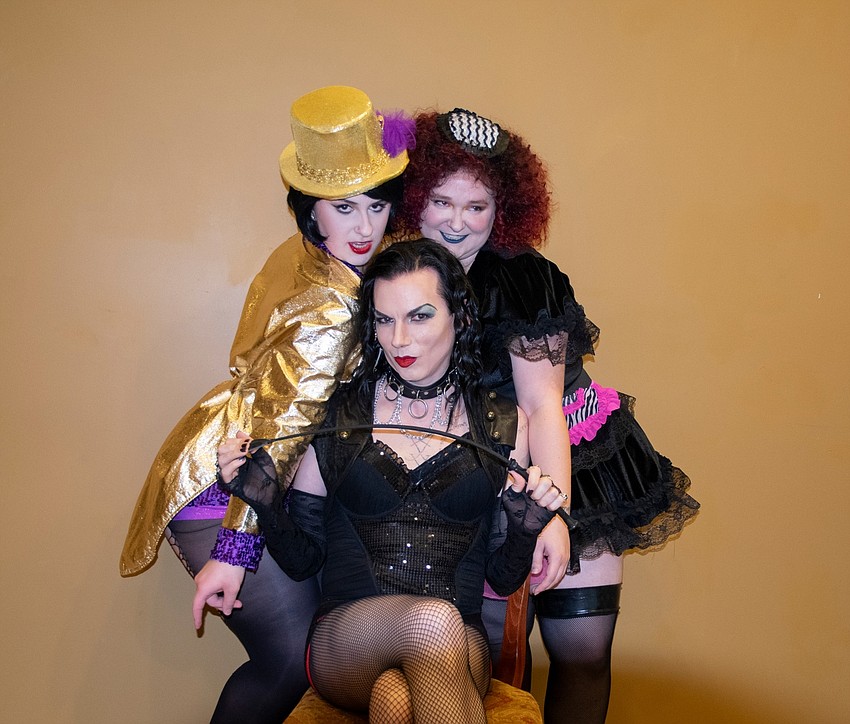
“As a director, I try to zero in on the core truth of a play or musical,” says Holcomb. “With ‘Rocky Horror,' I can’t do that. The truth of this musical is in the eye of the beholder. You have to create your own journey to that truth. We can provide you the structure, the songs, the opportunities to laugh, to feel, to love, to hate, and the skeleton of the story. How do you interpret that story? That’s down to you.”
Magenta tells a similar story. “Ambiguity is the musical’s biggest secret of success,” she says. “What ‘Rocky Horror’ says doesn’t mean that much. What it doesn’t say means everything. You never know where it’s going — and the ending is so abrupt.”
Indeed, it is. As I recall, Dr. Frank-N-Furter gets a laser beam between the eyes. The incestuous aliens fly back to their home planet. Brad and Janet wind up writhing on the ground with their old college professor. So what does it all mean?
Magenta rolls her eyes. “Don’t ask me,” she says. “I think the playwright is saying, “I’m not going to give you the answers. Figure it out for yourselves. Think about it!”
Magenta’s silent for a second or two, then reluctantly speaks.
“I saw ‘Rocky Horror’ for the first time in 1977,” she adds. “I’ve been thinking about it ever since. That’s the main reason I’ve seen it so many times. I’m still trying to figure it out! I think most hard-core ‘Rocky Horror’ fans are just like me. They want to figure it out, too. That’s why they keep coming back.”