- March 26, 2026

-
-
Loading
Loading
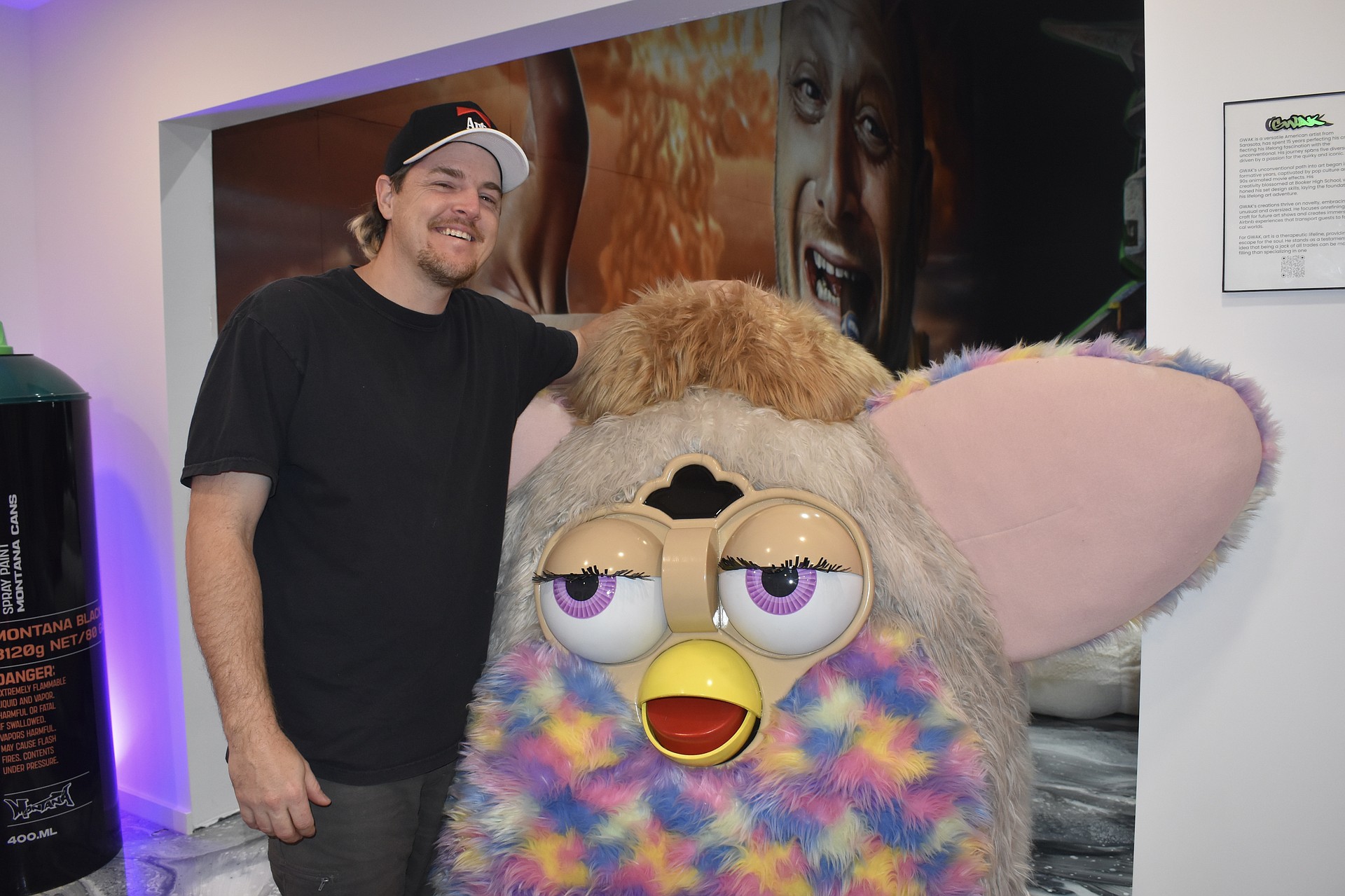
How do you find a machine big enough to vacuum seal a Tech Deck skateboard toy many times the original size?
It's a question you likely won't have to face unless you happen to be "GWAK," the brandname of Joel Benham, who specializes in the art of re-creating things in larger-than-life fashion.
For Benham, the solution was building his own machine.
He visited vacuum-forming companies, learning how to replicate the mechanics, which include heating a sheet of plastic, fitting it over a mold and sucking the air out so it dries in the required shape.
When the machine was lost during 2024’s hurricane season, he rebuilt it.
“I had a lot of trial and error,” he said. “So, I think it was maybe $2,500 to build the machine, but I’ve got it dialed in now, so now I'm able to mass produce, so to speak.”
Three years ago, the 40-year-old made a leap into focusing on his art full-time, following a 15-year career in construction.
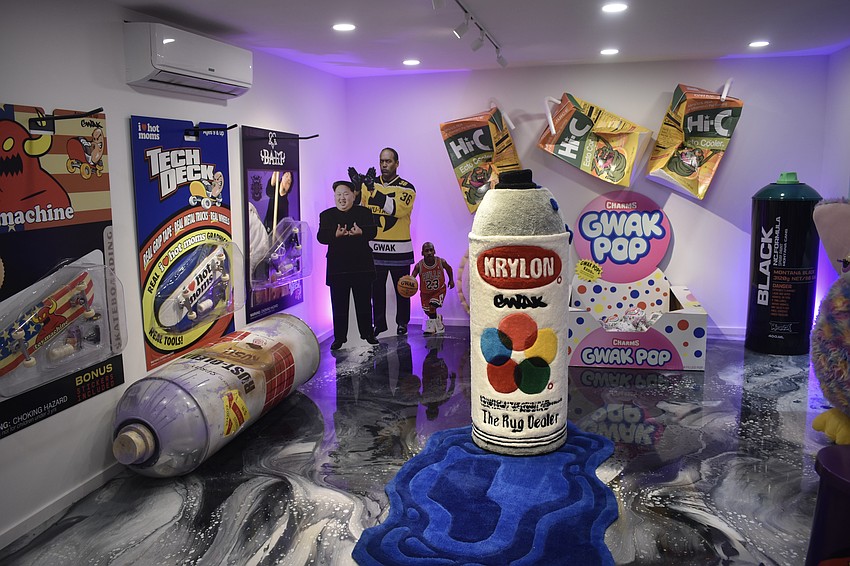
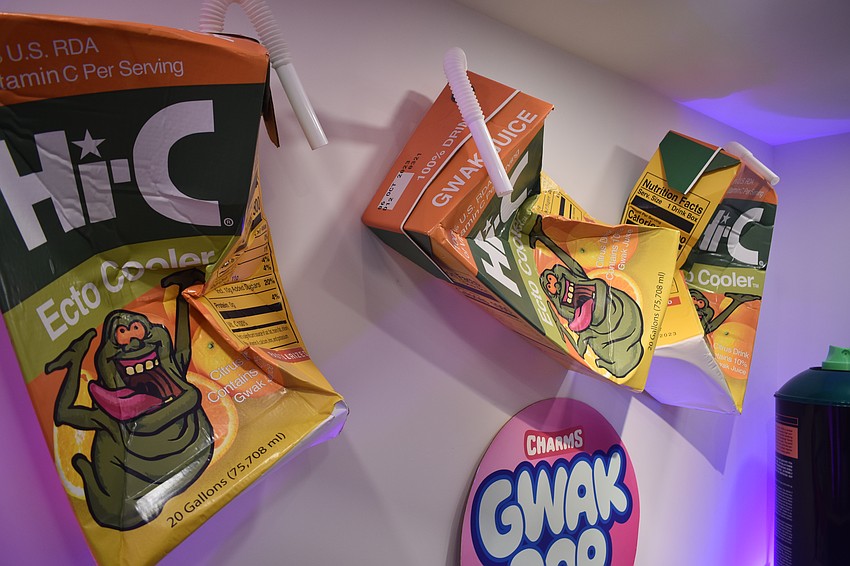
While he works on many projects he's passionate about, that doesn't mean the process is easy, he says. Replicating an item precisely, in an oversized form, is the art itself, he says, as in the case of the giant Hi-C punch containers that line a wall of his studio.
"People try to like, ‘Oh, I can make it. It's like, 'Go for it. You have no idea what's involved in making that,'" he said.
Benham traces his artwork back to his childhood.
The inspiration is partly the Teenage Mutant Ninja Turtles, which he notes are about 10 times the size of real turtles, as well as his circumstances. His family was what he describes as “American poor.”
“You didn't have toys handed to you, so you had to create toys,” he said, stating his toys were the plywood he took from Dumpsters at construction sites to build treehouses and other creations.
There was also the fact that he was always on the move. He says it felt like he was at a different school each month, living in places that included Atlanta, Las Vegas and Arkansas, during his first three years of schooling.
“From being moved around so much, I wouldn't have friends, I was new at school,” he said. “But for some reason, going down old abandoned buildings or train tracks, just exploring the urban life, it really fascinated me, so I spent a lot of time just looking at graffiti, and just bad areas. I don't know, I just really enjoyed it.”
Benham says with ADD and ADHD, and what he describes as "the tisms, all the spectrum of fun-stuff diagnoses," he felt destined not to be good at school.
But there was one class where, in contrast to his other failing grades, he consistently made A's: Booker High School's Visual and Performing Arts program, where he found a talent for building props for theater productions.
He ultimately dropped out of high school to work in the construction field.
“I'm not good with books and numbers and all that, and I'm dyslexic, so if I try to run a cash register, I'll end up giving someone $100 back instead of $10..." he said. "But construction, that came to me so naturally. So out of necessity, I went down the construction path, but it served me really well. It proved to me that I'm not a dumb-dumb, that I can do stuff, and kind of gave me that confidence again."
While rebuilding machines for a local company, he was encouraged by a friend, Miami muralist Hiero Vega, who used to live locally, to get into art.
“I'm like, let me make a spray can in honor of him, and to shut him up,” he said. “But he was right; it got me.”
Benham made another spray can, and for two years participated in a large art show each year, having recently been featured in the "Nostalgia" Group Exhibition at the ABV Gallery in Atlanta.
His studio might seem like a playground for imagination, including a fake cityscape complete with a storefront and Wendy's sign, as well as the cars he works on as a hobbyist.
But Benham says his new career has been a double-edged sword. In construction, the workday would finish at a set time, leaving him with plenty of free time. But he describes art as a never-ending endeavor.
“I'm working till 11 o'clock at night, seven days a week, and I can't go on vacation without thinking I need to quickly get back to finish projects or commissions, but it's very rewarding,” he said.
Part of the solution is planning each day, even the fun things.
"I'll literally write, 'Friday night at eight o'clock, go play with your Crazy Carts," he said. "So I'll see it on my list. I'm like, 'Oh, let me invite some friends to come hang out so I can play.'"
A significant portion of his work is commission pieces, for companies will hire him to make large versions of their products, while another major source of revenue is his "Vibe Villa."
The home, a separate unit on the property where he lives with his wife, Sarah Benham, serves as a space to house his artwork (and his sense of humor, through creations like a fur-covered refrigerator, or a "furridgerator"), but it also functions as an AirBnB rental.
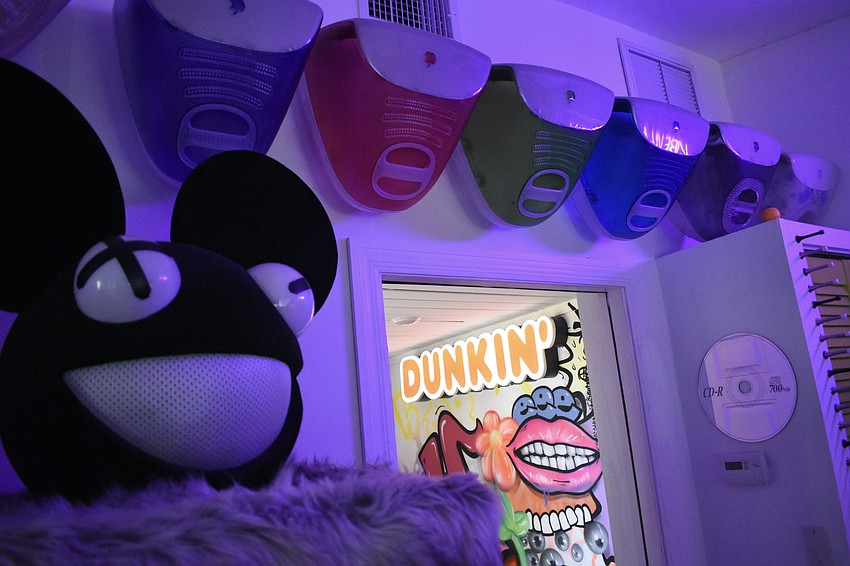
He says that when he and Sarah dated while attending Booker Middle School, they had talked about buying a property in the neighborhood, and have made it their "forever home."
Benham says while he started off with a focus on nostalgic work, he has been shifting his focus, not wanting to be pigeonholed into that category.
“I'm doing more adult things, like a guitar foot pedal, Nirvana, a tattoo machine, cigarettes, vape,” he said.
Although it may be surprising, he says not all of those pieces reflect his actual interests.
“Being in that broken childhood, it's like drugs and alcohol, those vices, they hold people down," he said. "And people always talk about, 'I need to quit. I need to quit.' So it's like, well, if everyone hates that they have these vices, why start them? So, just don't do it. And I can have fun outside of it, like Crazy Carts and doing dumb stuff. Adrenaline junkie."
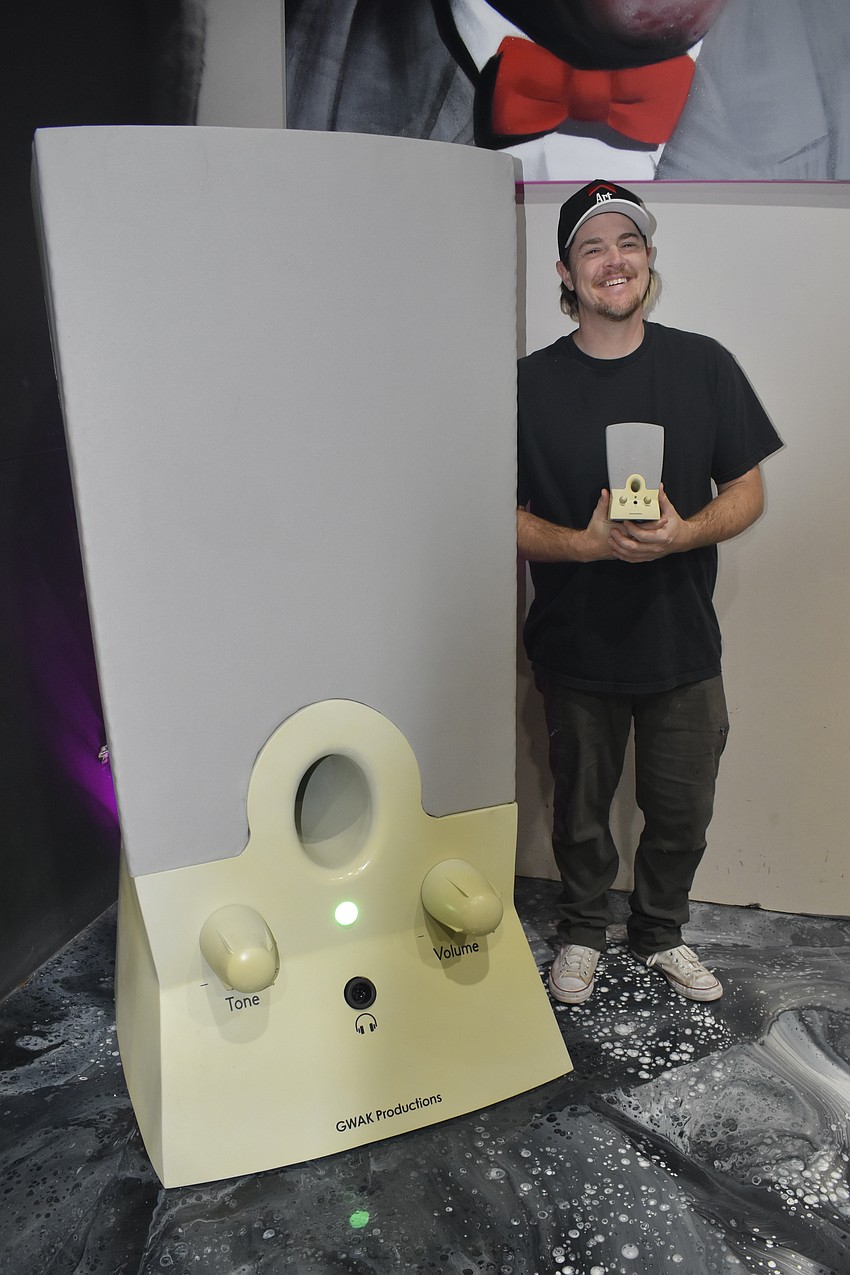
Currently, he's looking to find his place on YouTube and social media, and wants to move into creating objects that aren't precise replicas, in the spirit of how his inspiration are not just large turtles; they're Ninja Turtles.
Replicating something at a giant scale is a process of problem-solving.
There's also the fact that, as Benham says, it's difficult to make anything for less than $1,000, while the process sometimes involves making the machines that produce the art.
Some people might think creating a giant Hi-C Punch container is as easy as obtaining cardboard, but even that is a difficult step, he says.
"When you order cardboard, it's like, how thick is the top and the bottom? How many ribs in the middle? And so, I had to figure out which type of cardboard," he said.
The juice boxes had to be soaked inside to just the right level, for too much water ruins the exterior paper. They also had to be crushed by hand and rigged to remain in that shape, and kept in motion while drying to ensure the water didn't pool in one area.
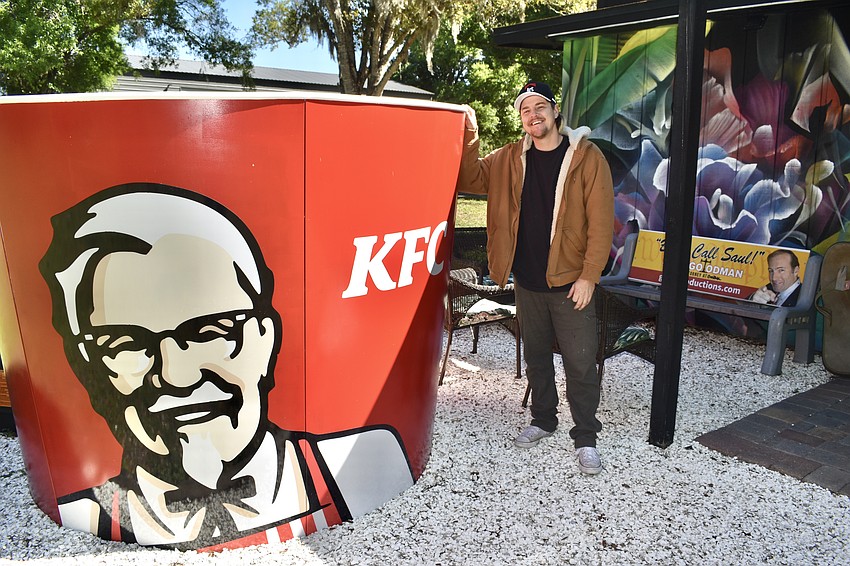
Benham says for everyone who makes one negative comment online about his work, there are "200 positive." When he notices something that appears to be negative, he'll avoid reading it.
However, there's one criticism he expresses understanding for: when some people "see a giant version of a thing, and say, 'That's not really art."
“I respect that thought, and I could see where they're coming from, like they're talking about from a creative space, I'm not making anything new,” he said. “I’m making a thing that's already a thing. So how is that art? But the process to get from the little thing, to the big thing, to me, that journey is the art.”