- March 15, 2026

-
-
Loading
Loading
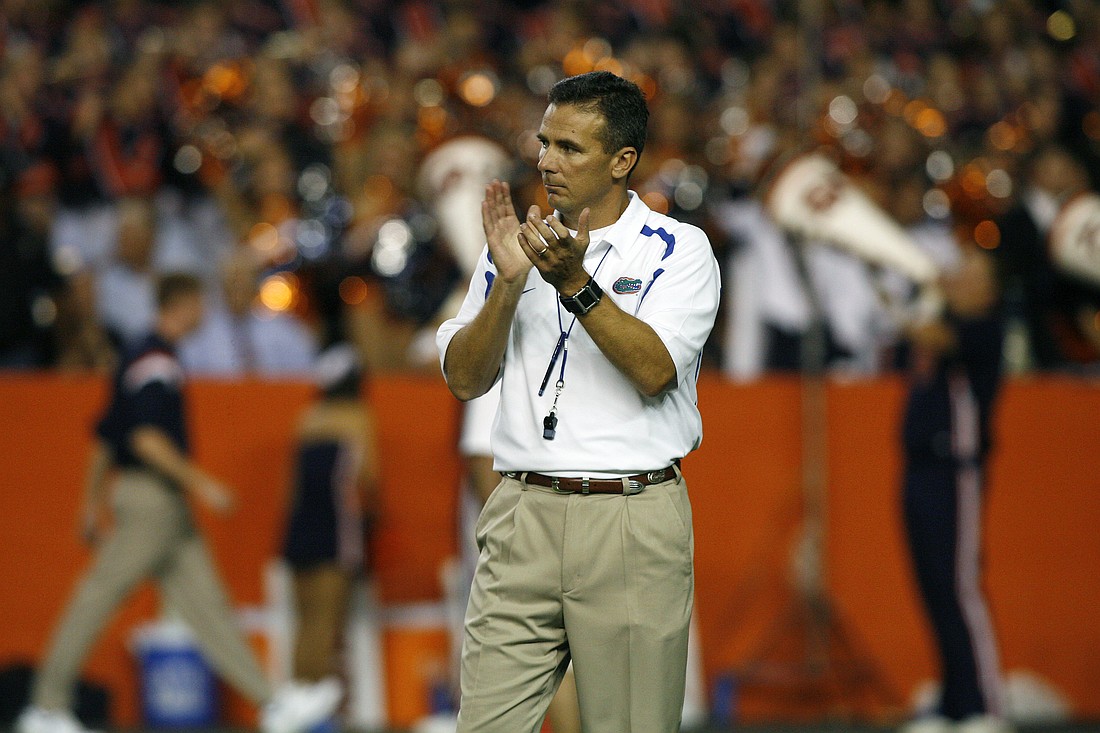
The mislabeling of student-athletes always bothered Urban Meyer. To this day, nearly eight years away from the college football sidelines, it still does.
He visited countless homes and high schools on recruiting trips. He saw the broken families and impoverished environments some of his players were brought up in.
Years later, he watched those same players graduate from college, still bearing the "bad kid" label placed upon them by outsiders. But they never saw the hearts he saw.
“He’s not a bad kid. He’s from a really tough situation,” Meyer said. “So how do we all help that tough situation?”
The 61-year-old former coach voiced those frustrations to a crowd of old friends Jan. 21 by the pool of his Sarasota home. He shared similar sentiments about the fact that many players came to his programs lacking the skills necessary to tackle real life.
Meyer couldn’t understand why some kids were never taught principles like communication and leadership, just as equally as he couldn’t understand why they were mislabeled.
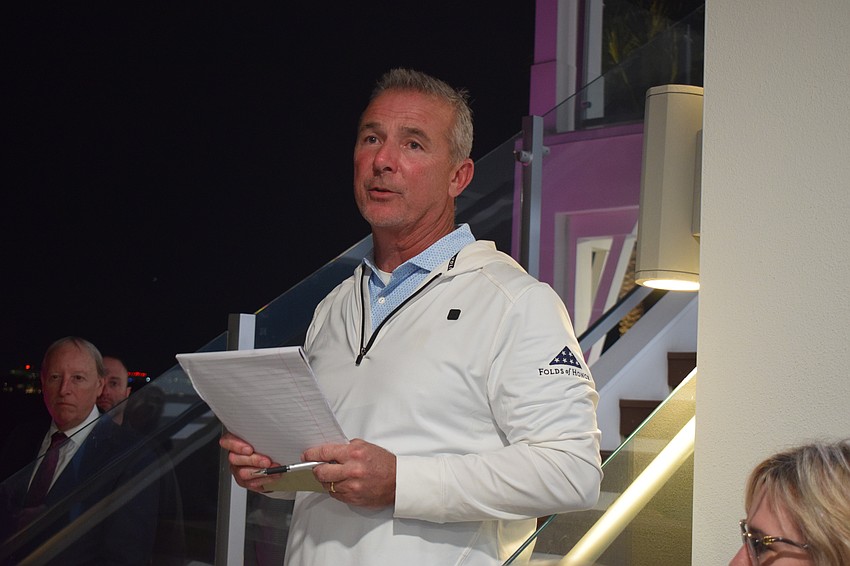
In March 2025, he partnered with the Sarasota Police Department’s community relations unit to found ‘The Urban Edge,’ a five-day mentorship course providing sophomore and junior student-athletes with the tools to take ownership of their lives.
This year marks an expansion. Hosted by the New College of Florida, it will be a five-night lecture series spread out from Feb. 17 to March 24, serving a total of 100 sophomore and junior football players from Booker, Cardinal Mooney, IMG Academy, Riverview and Sarasota.
“I always looked at coaching as your job is to fill the toolbox,” said Meyer, who was enshrined into the College Football Hall of Fame on Dec. 9, 2025. “Our job here is to fill the toolbox.”
Roughly 20 student-athletes from each participating school were hand-picked based on who coaches believed would make the most of the experience. All of them will be taught five pillars — leadership, communication, fiscal responsibility, interpersonal skills and career planning.
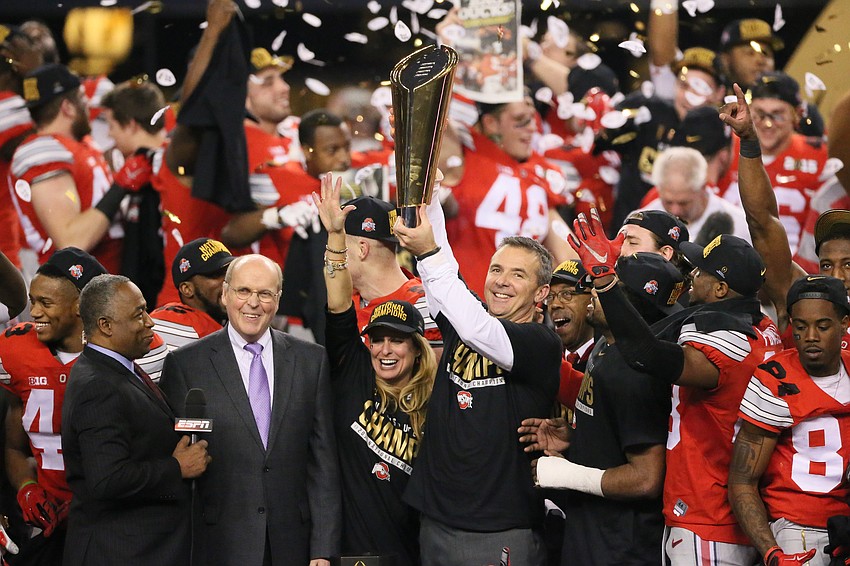
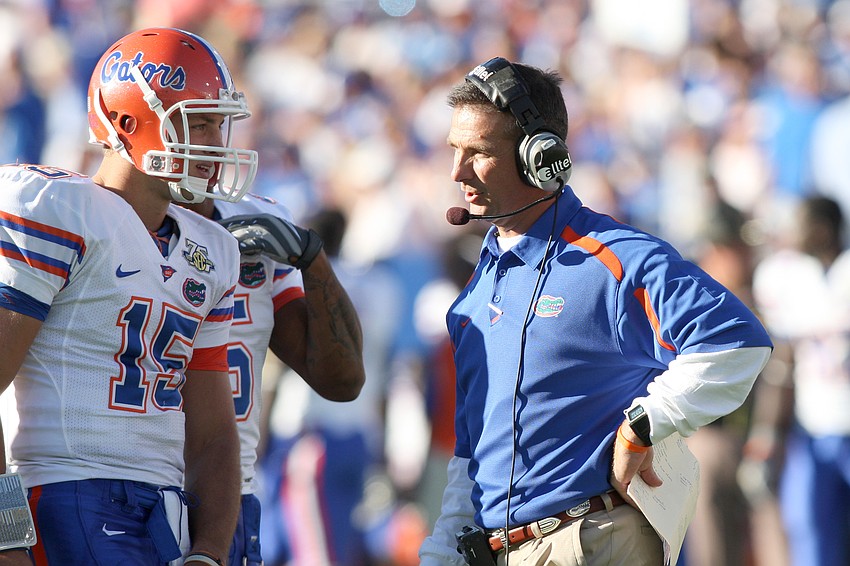
The seed for the idea was planted long ago. During his coaching days at Florida from 2005-10 and Ohio State from 2012-18, Meyer started Real Life Wednesdays, a career-development program.
Mentorship, though, wasn’t the reason why he jumped into a car with Rex Troche, chief of police for the Sarasota Police Department, earlier last year.
The two drove around Sarasota together as good friends. In their conversation, Meyer brought up Real Life Wednesdays, wondering how it could be translated locally. Troche ran with it.
They settled on Booker for the pilot. Coach Carlos Woods, who then served as defensive coordinator under Scottie Littles, soon recognized an impact beyond the subject matter itself.
“It was a struggle just getting those kids there every day on that time frame,” Woods said. “And he was dead serious. If those kids were a minute late, Urban didn’t play that. So it really taught them accountability.”
Meyer had three mentees — then-junior safety Karaijus Hayes, then-junior cornerback Chauncey Kennon and then-sophomore defensive lineman Maleek Lee. As early signees, Kennon and Hayes now play for Florida State and FIU, respectively.
A special bond blossomed between Hayes and Meyer. The former coach was so pleased with how the safety approached the program that he gave Hayes his personal line, and made him a forever promise.
“If you call me, anytime, the answer will always be yes,” Meyer said, according to Woods.
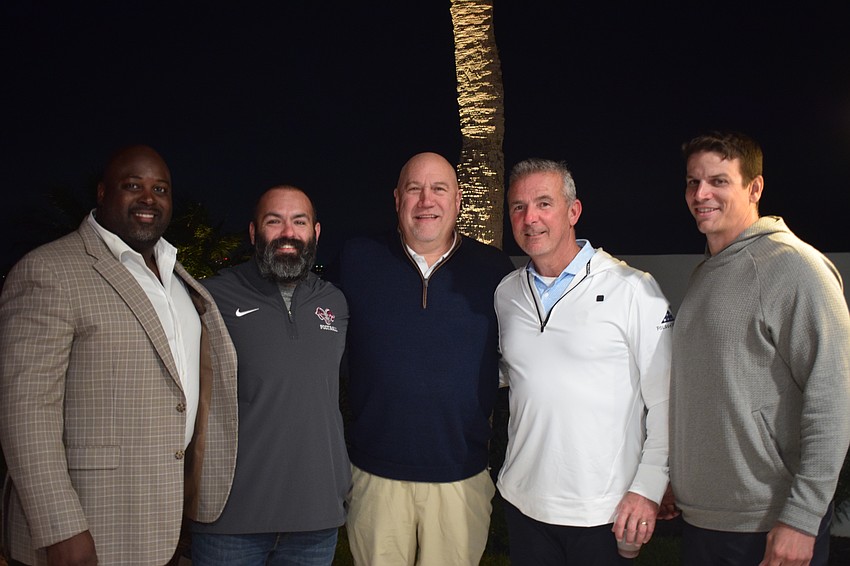
He hasn’t just stamped his name on a program that puts local job leaders in front of student-athletes. He’s gone out into the community himself and offered wisdom.
This year, Meyer will be the first to give a lecture, speaking on Feb. 17 about leadership. That’s a lifelong tool he crafted over 17 seasons, a 187-32 record and three national championships in college football.
But it’s also one of several he possessed upon graduation in 1988 from Ohio State with a master’s degree in sports administration. He felt it was up to him whether or not he took life by the horns.
“If I didn’t do it, that was my fault,” Meyer said. “I came from a very good family, and was very well-educated … So I had a jump start on everybody.”
Not all high schoolers in 10th and 11th grade possess a packed toolkit. Some have their futures mapped out, but many are still figuring out what they want to accomplish.
The Urban Edge isn’t about putting student-athletes on professional paths, but it does intend to give them a grasp of what skills they’ll need to conquer their eventual careers.
That can range from how to be an engaged conversationalist to how to manage finances, and everything in between.
“We all were that age once. I can remember thinking, ‘I don’t know what I’m going to do.’ I had no idea,” said Cardinal Mooney coach Jared Clark. “High school kids sometimes don’t even know how to stand tall, look me in the eye and speak up.”
At the Jan. 21 fundraising event, Meyer took a break from laughs and banter to reflect on the program and where it’s going. Cigar smoke dissipated and cocktails stopped flowing as the crowd before him listened.
He called forth each high school coach and supporting members of the program to each say some words. All of them came to one consensus.
Its impact is real.
No longer in a position to offer college scholarships or prepare players for the NFL, this is Meyer’s modern way of guiding kids toward a better future.
“I’m hoping this will become a national program,” Meyer said. “And people will say it started in Sarasota, Florida.”
He’s past the days of pushing players to become winners on the gridiron. No longer does he concern himself with dropped passes or missed blocks.
Meyer wants kids to eventually be labeled as winners in life beyond the game.