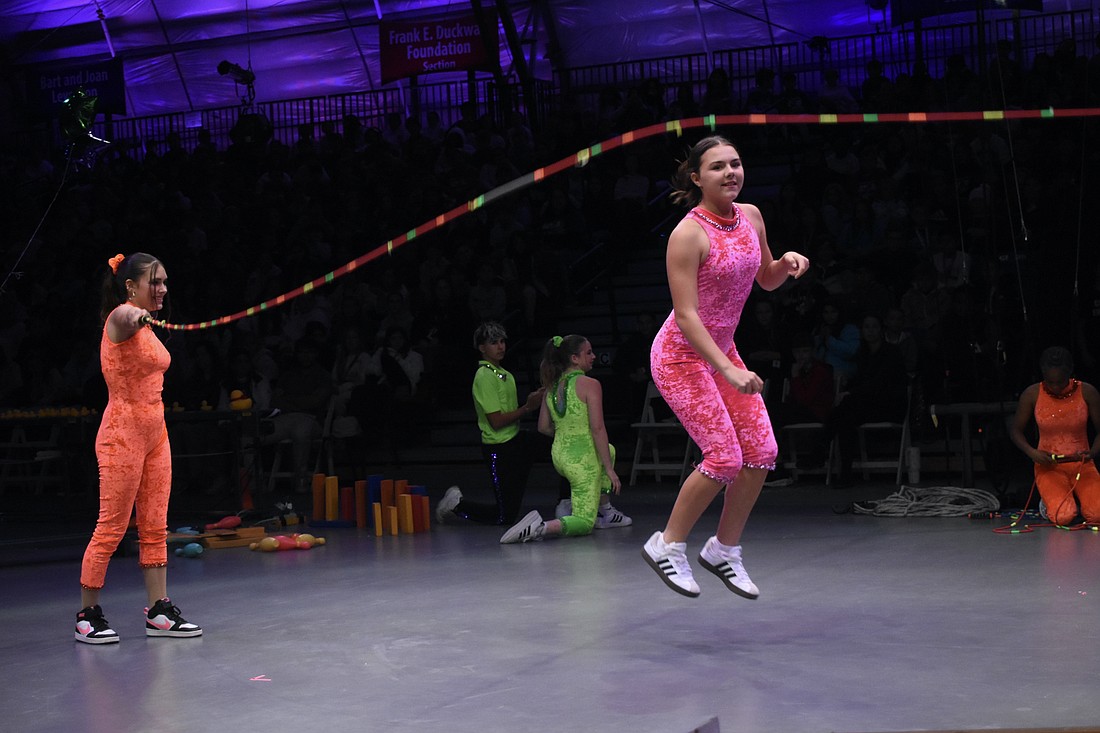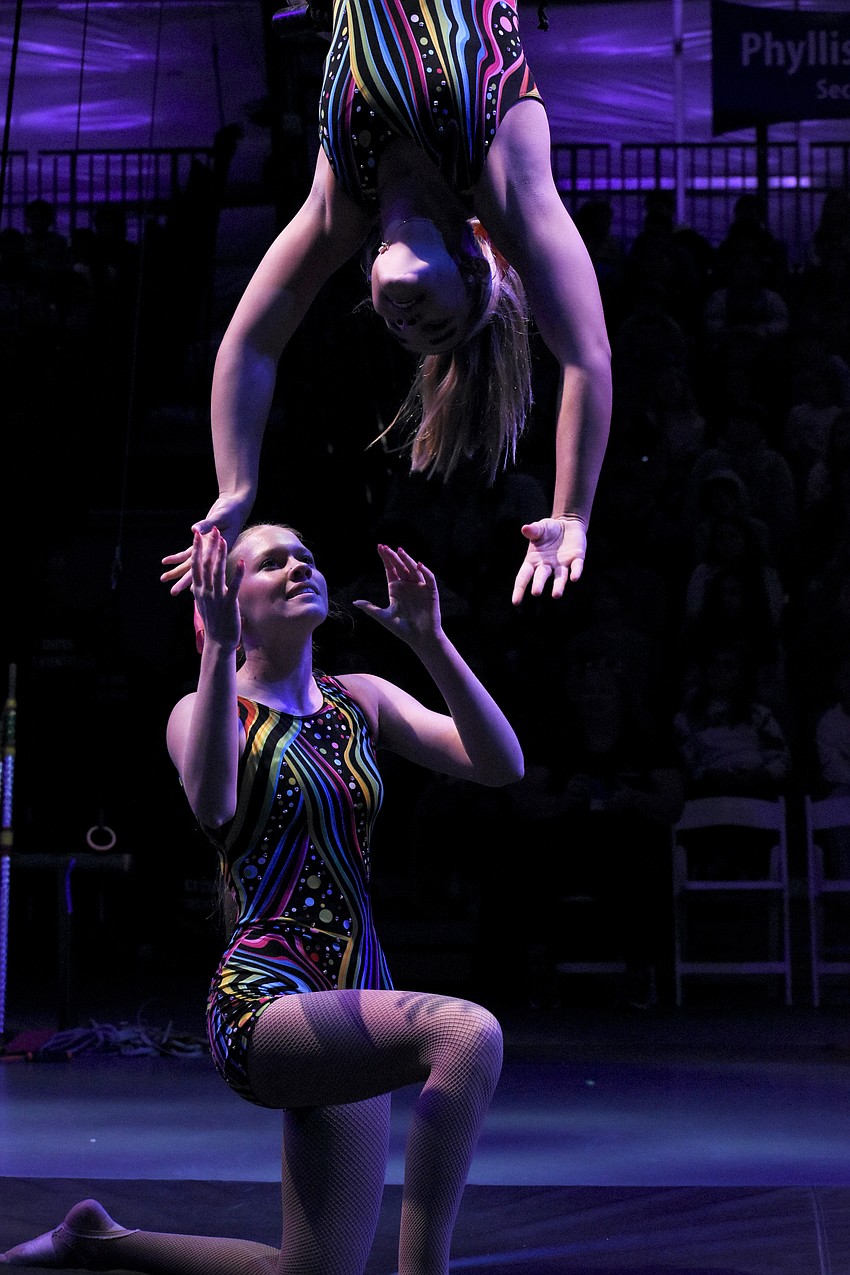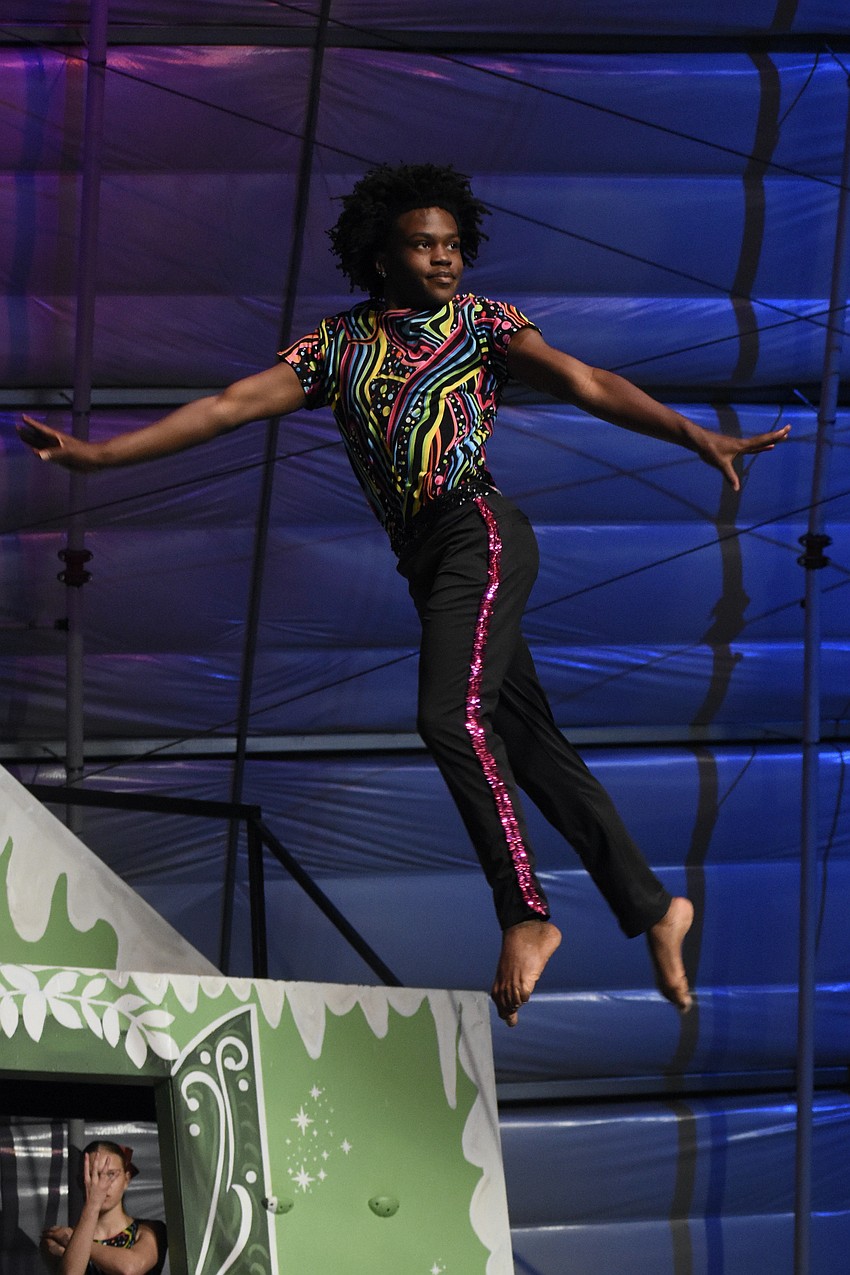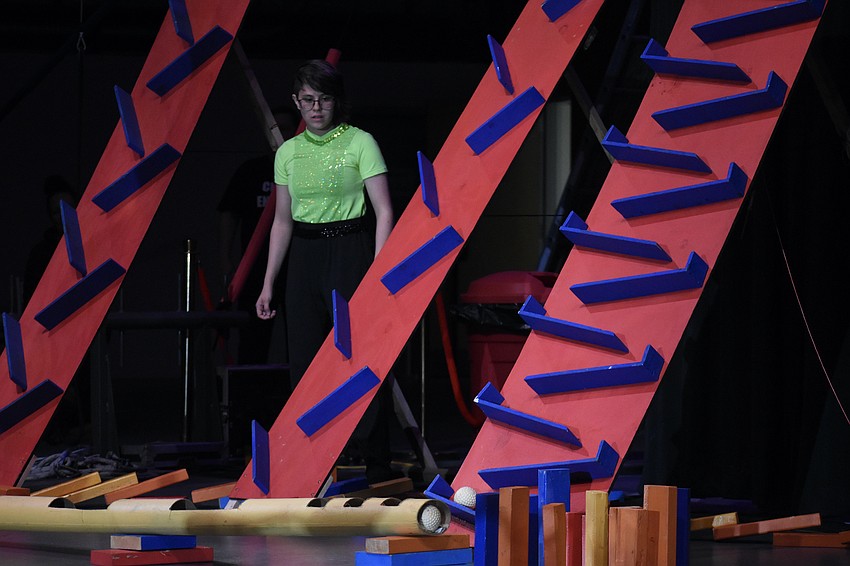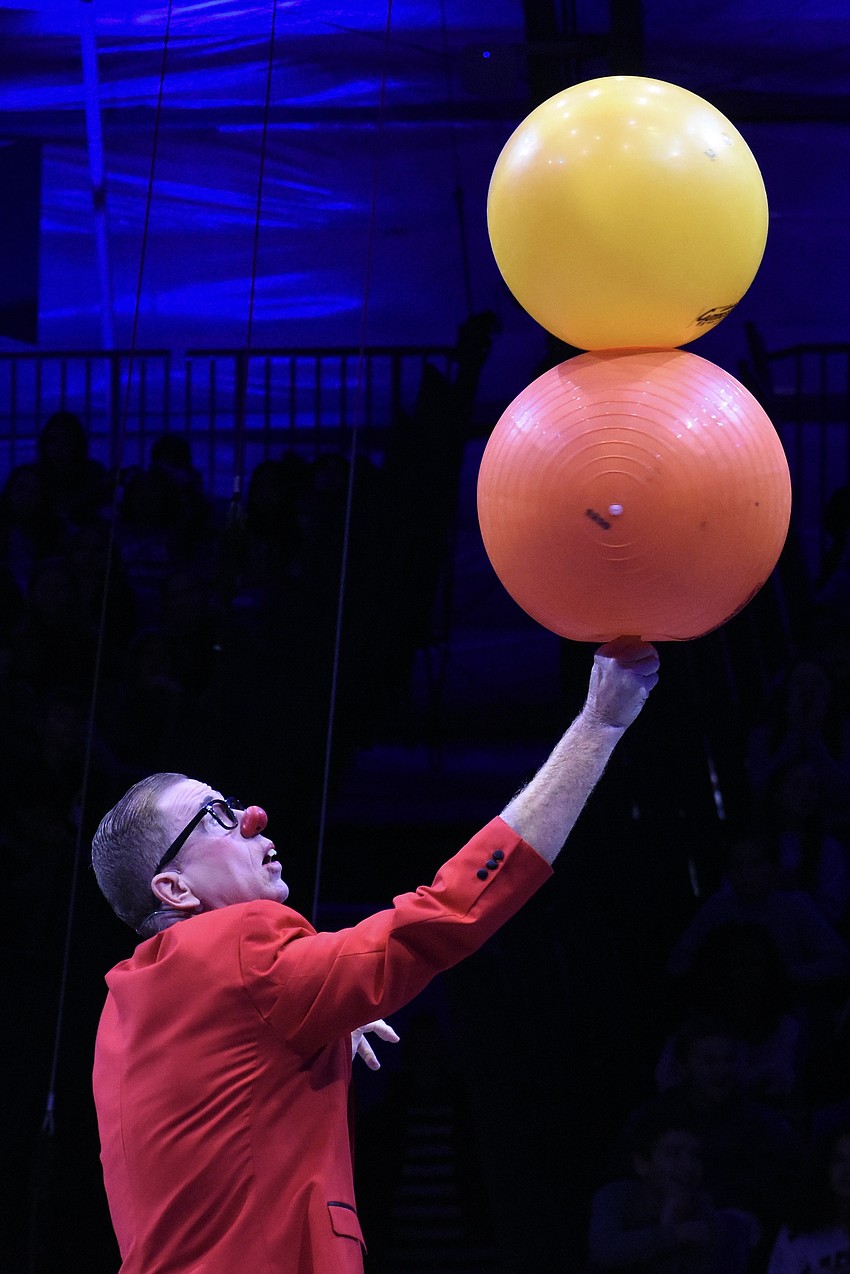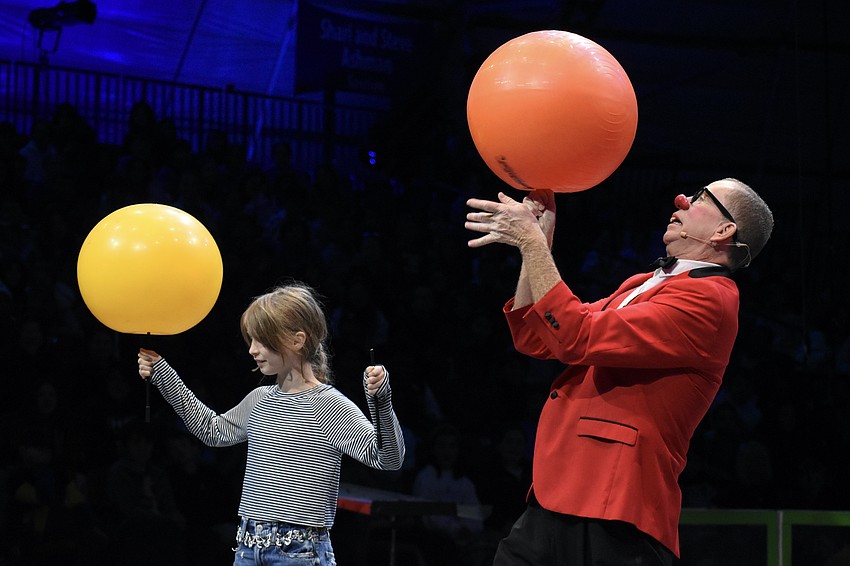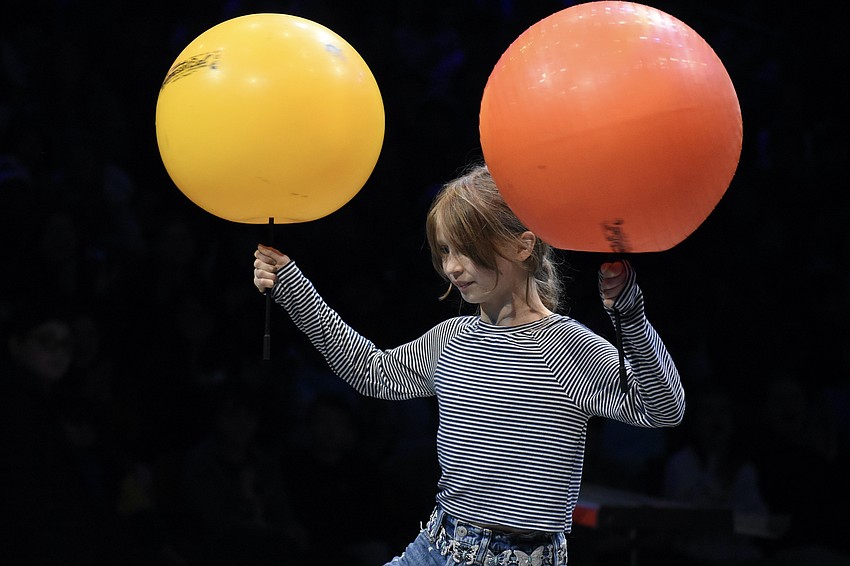

Alaina Loyal and Gia Sammelman demonstrate concepts including push, pull, kinetic energy, friction.
Photo by Ian Swaby
Sarasota
Neighbors
Share
The circus arts often involve setbacks, said Bryan Burnstein.
That's no less true when the performance requires the creation of numerous Rube Goldberg machines with various cause-and-effect mechanisms.
Burnstein, who is vice president of program development and youth performance management with Circus Arts Conservatory, said the team spent "days upon days" testing and calibrating each machine to make sure it was ready for Marvelous, Miraculous Circus Machine.
The performance, held at Sailor Circus Arena from Jan. 14-16, centered on bringing STEAM concepts to life for students.
Inviting classrooms from schools in Sarasota and Manatee counties, it hosted over 2,000 students across its three days this year.
“Circus is able to teach so much beyond just the technical skills, and obviously, science is part of everything that goes on around us, and to be able to take our art form and bring it into the schools, inspire kids, engage them in a way that they wouldn't normally have had access to... we know that we're providing a memorable experience, a service to the community," he said.
Heather Gomez, a fifth grade teacher at Alta Vista Elementary, said the experience was "perfect" because it shows the concepts kids are learning in the classroom including force, motion and friction.
She says anytime educators can bring real-life examples to students inside or outside the classroom, it helps them to retain the information.
"Now they're going to say, 'Oh, I remember when we did that,' and then I can ask, 'Hey, well, what did that show? Did that show force? Did that show motion? Was that kinetic energy?' So then it's getting us now talking about those science vocab words because they can visually see in their head from this experience.”
Burnstein said as the performance took place, many machines worked exactly as designed, while others needed small adjustments along the way and worked in the end.
"We all have setbacks. That's part of circus. That's also why we link these programs together," he said. "We teach them about performing with purpose. We teach them about being able to overcome obstacles, challenges, failures, to rebound quickly and to be able to still have opportunities for success."
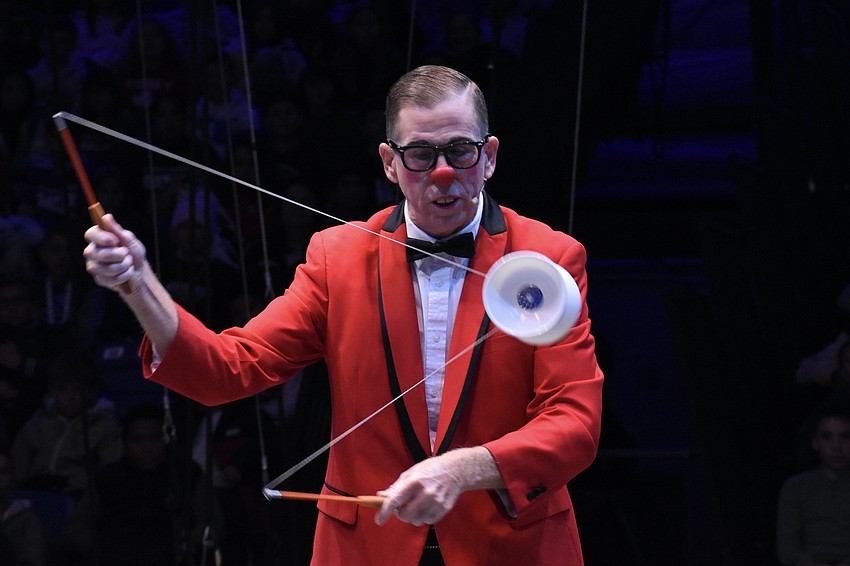
Chris “Bucky” Allison demonstrates the diabolo, as potential energy becomes kinetic.
Photo by Ian Swaby
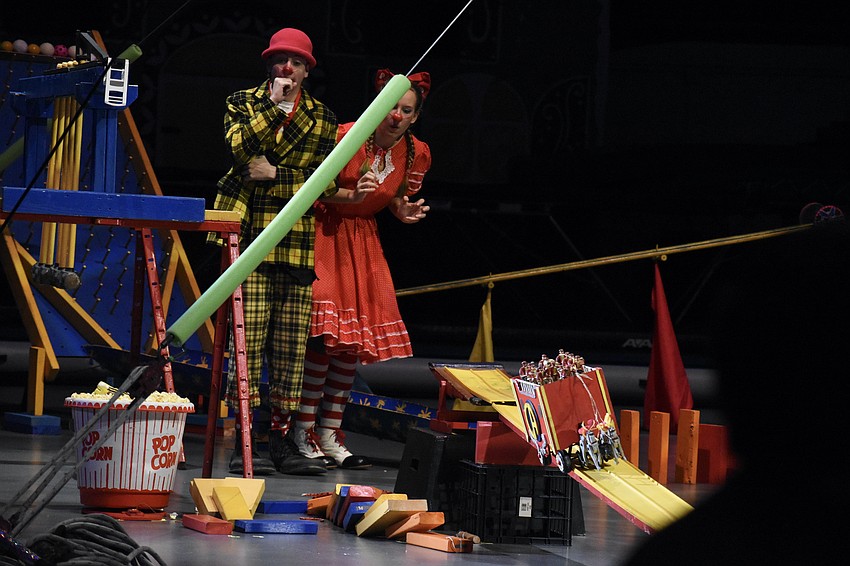
Kepler Henry and Sara Catalano activate a contraption and demonstrate cause and effect.
Photo by Ian Swaby
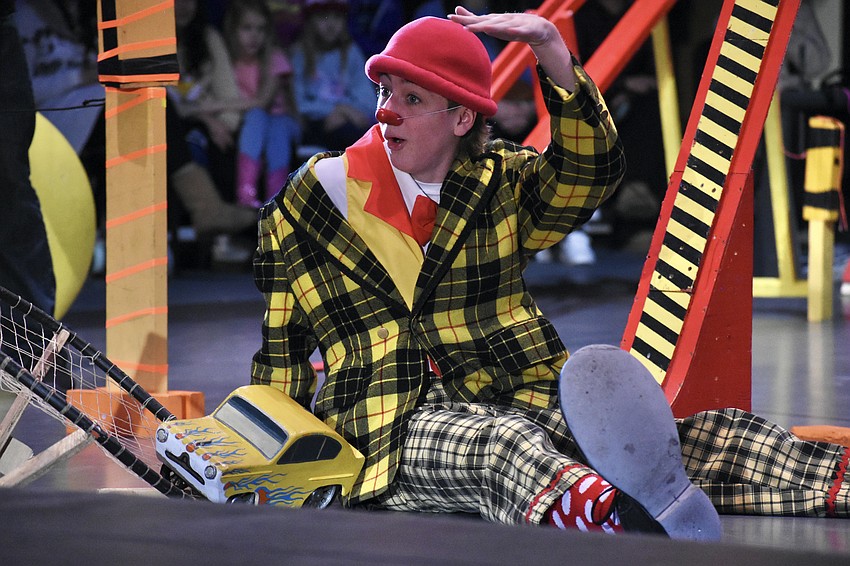
After being set free on a track and ramp, a miniature car soared over Kepler Henry and landed in a net, demonstrating kinetic and potential energy.
Photo by Ian Swaby
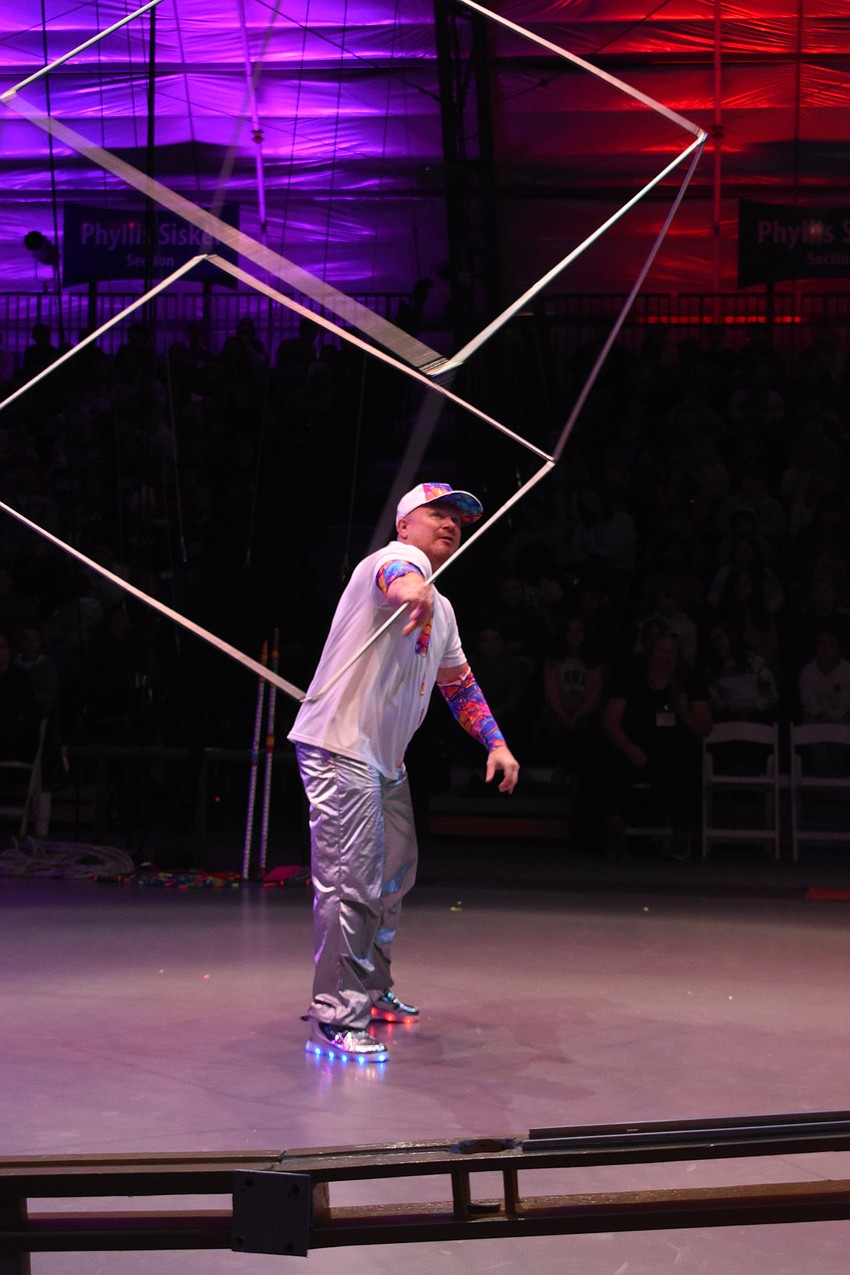
Aleks Deevs incorporates geometry into a performance.
Photo by Ian Swaby
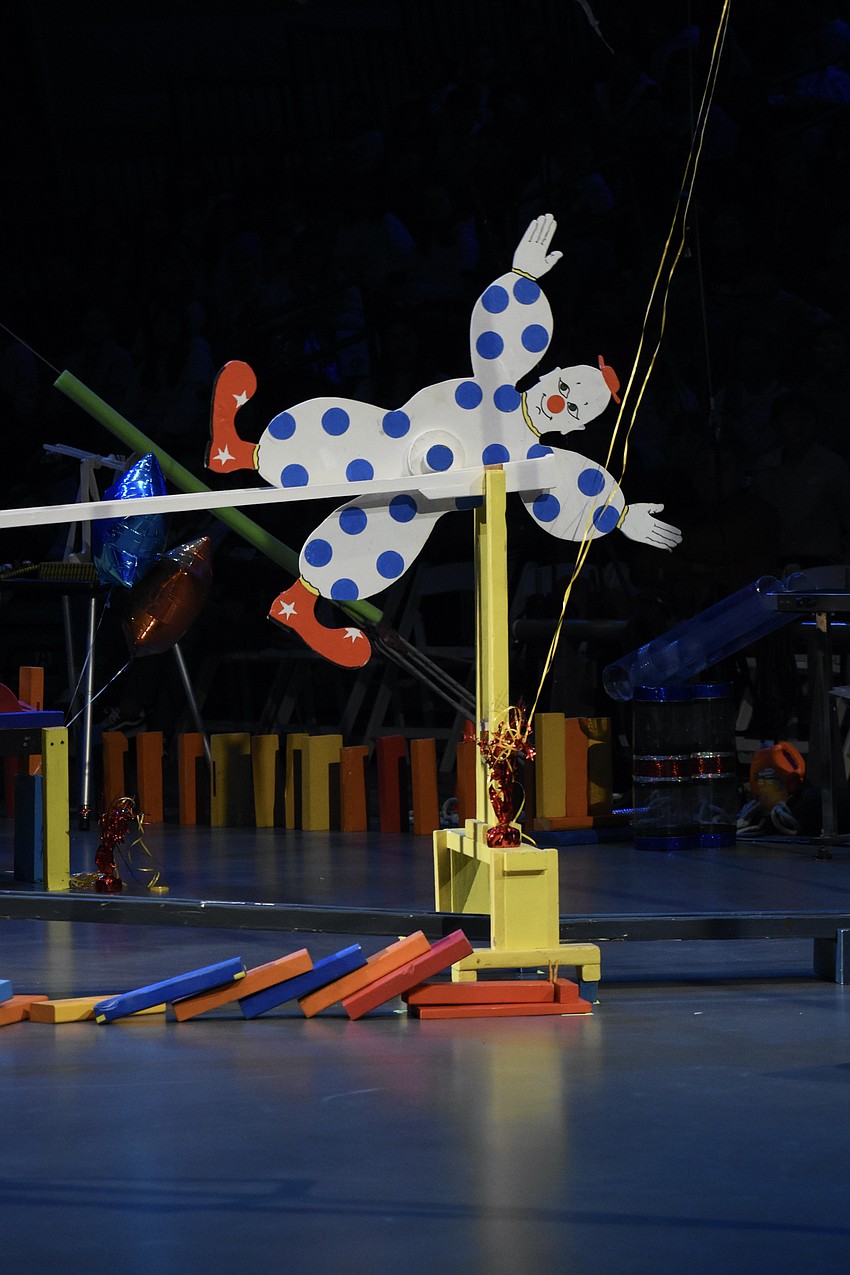
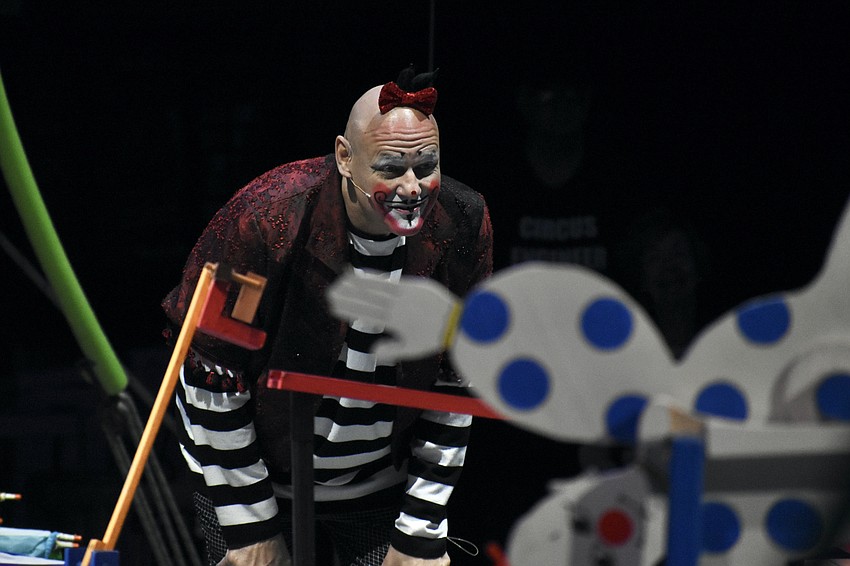
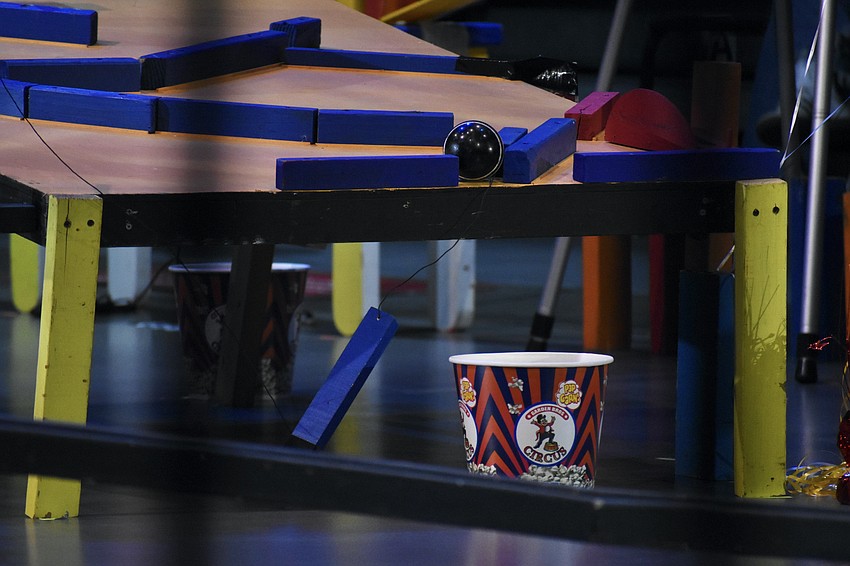
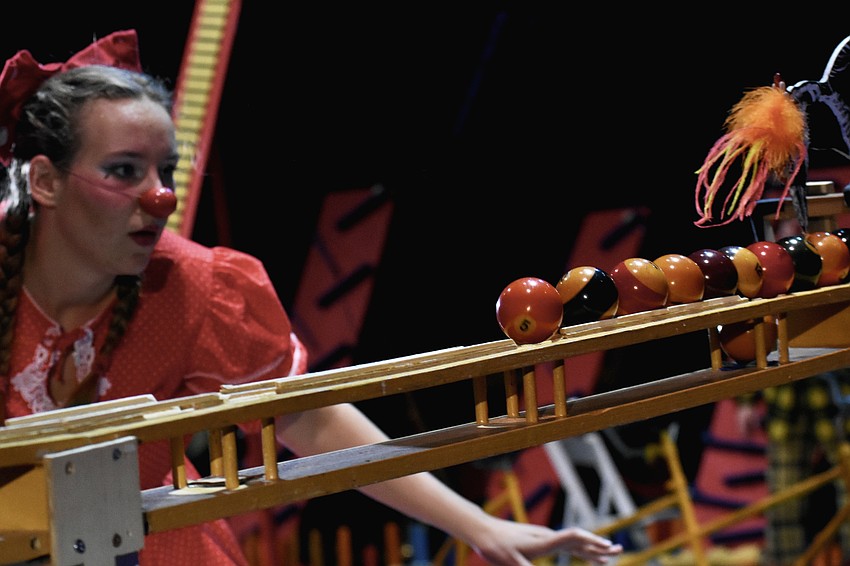
The show involved a variety of Rube Goldberg-style contraptions created by Circus Arts Conservatory.
Photo by Ian Swaby
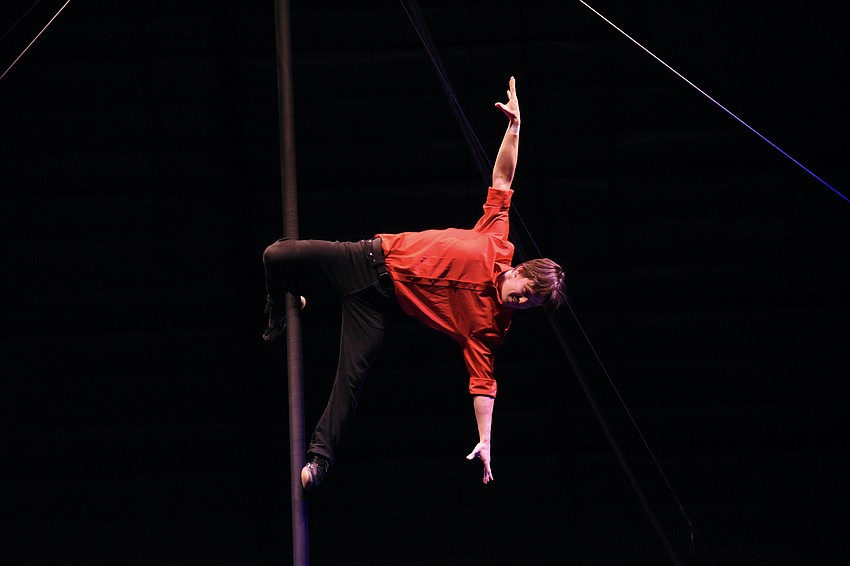
Dakota Carrera and Cate O’Bryant demonstrate scientific principals as they perform aerial acts.
Photo by Ian Swaby
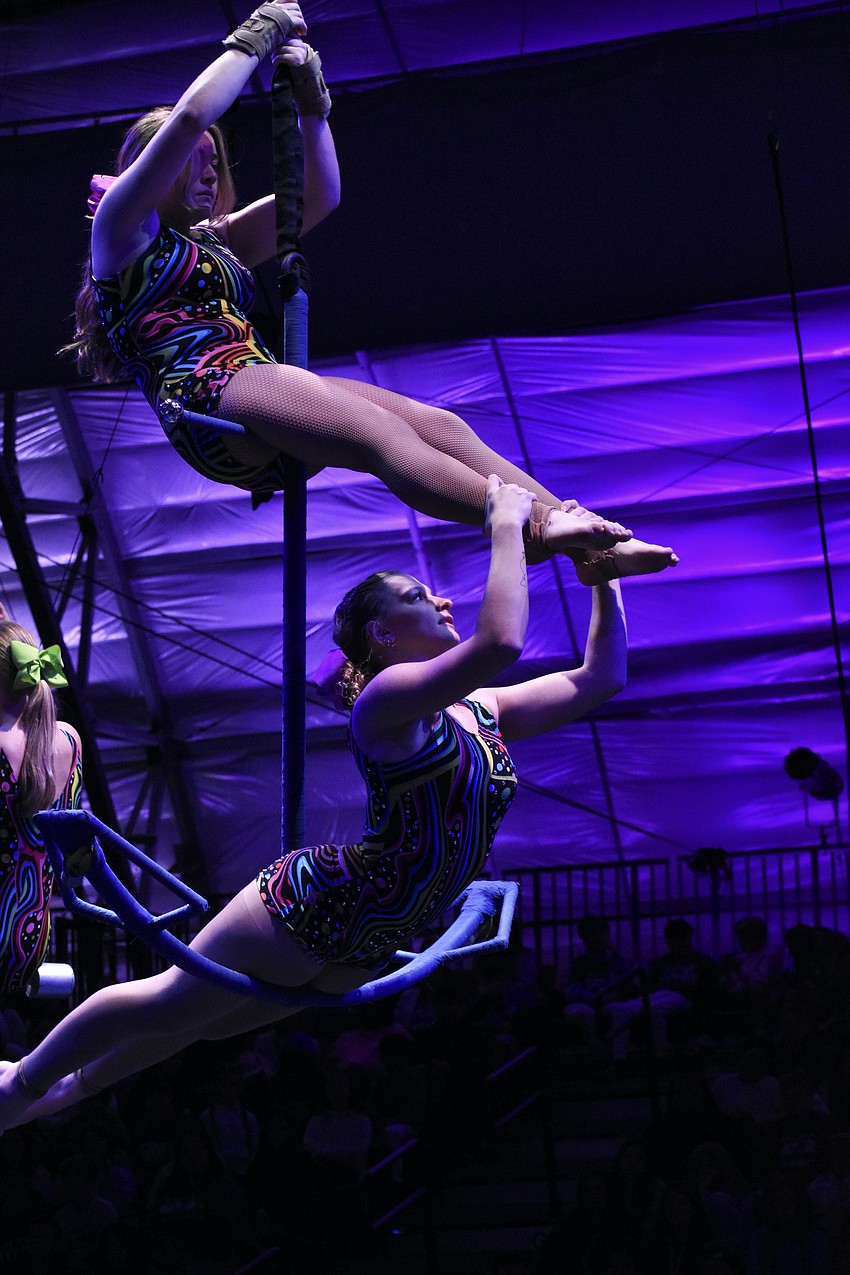
Julia Hardy (top) and Mallory Sturm (bottom) demonstrate scientific principals as they perform aerial acts.
Photo by Ian Swaby
Education Associate Ron Hoffman
Photo by Ian Swaby
The show involved a variety of Rube Goldberg-style contraptions created by Circus Arts Conservatory.
Photo by Ian Swaby
Sara Catalano demonstrates acceleration.
Photo by Ian Swaby
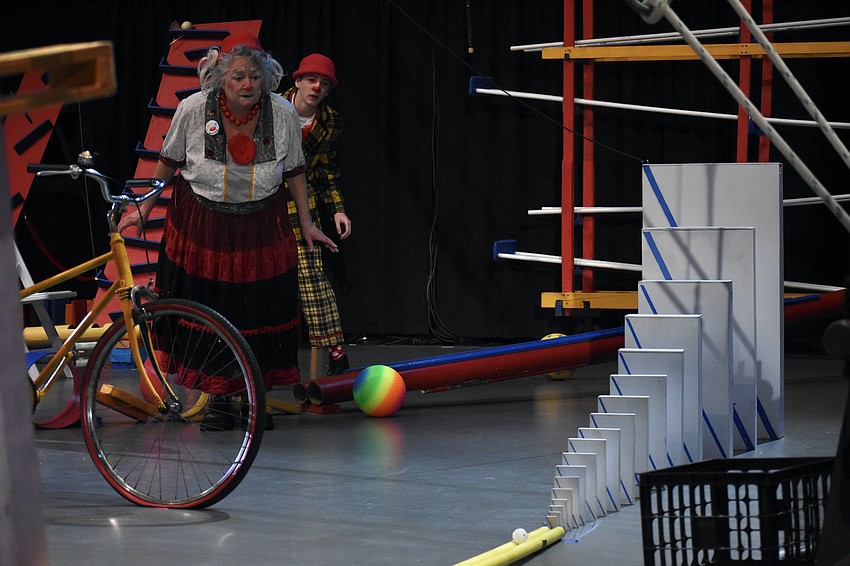
Educational Outreach Manager Karen Bell and Kepler Henry watch as a small ball accelerates towards its target.
Photo by Ian Swaby
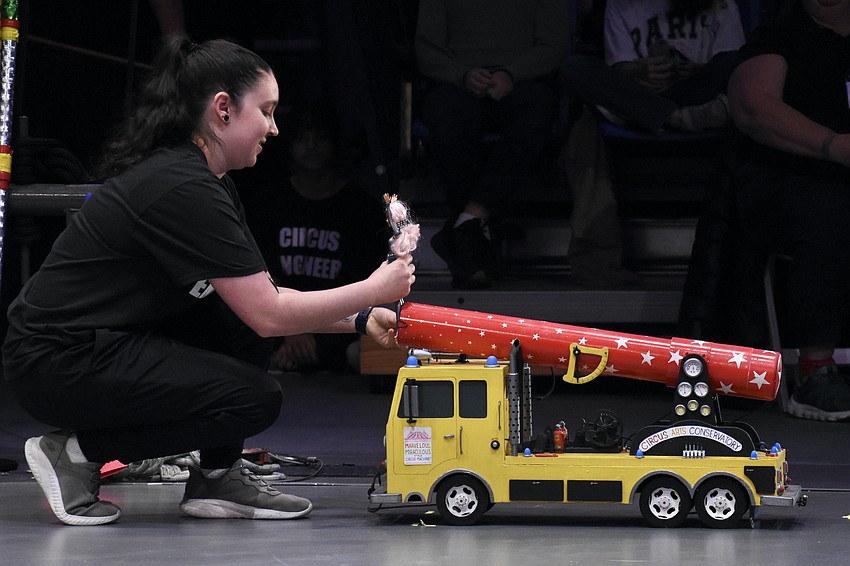
Siena Hartzell introduces Barbie as the special guest for the human cannonball, for which the force must be carefully calculated to make sure she lands in the net.
Photo by Ian Swaby
Kaishad Caldwell demonstrates how as students bounce higher on the trampoline, they accelerate.
Photo by Ian Swaby
Helena Kushner watches as a contraption does its work.
Photo by Ian Swaby
Channing Gross demonstrates unbalanced forces.
Photo by Ian Swaby
Chris “Bucky” Allison demonstrates concepts including torque, friction, angular momentum and centripetal force.
Photo by Ian Swaby
Elle Capel-Davies, a fifth grader at Bay Haven School of Basics Plus, is invited into the arena with Chris “Bucky” Allison to demonstrate concepts including torque, friction, angular momentum and centripetal force.
Photo by Ian Swaby
Elle Capel-Davies, a fifth grader at Bay Haven School of Basics Plus, is invited into the arena with Chris “Bucky” Allison to demonstrate concepts including torque, friction, angular momentum and centripetal force.
Photo by Ian Swaby
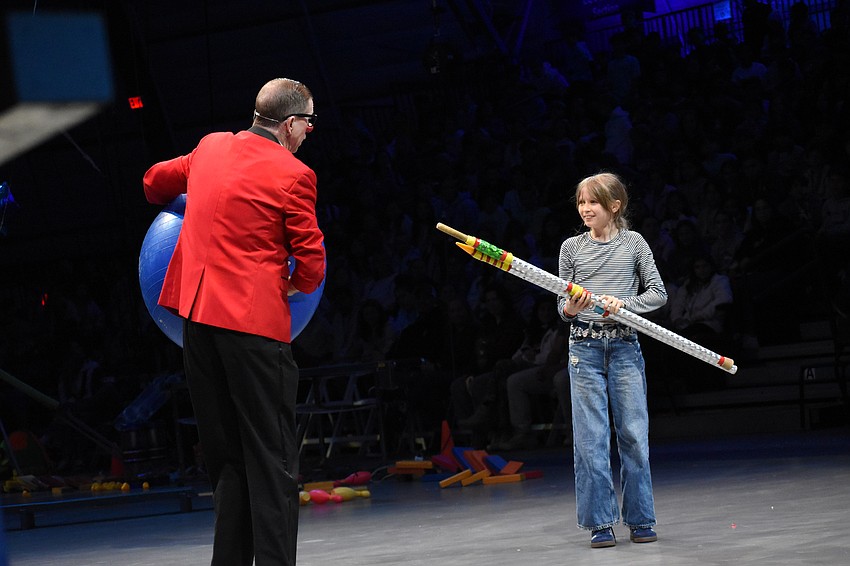
Elle Capel-Davies, a fifth grader at Bay Haven School of Basics Plus, pepares to hand Chris “Bucky” Allison a pole so he can demonstrate concepts including torque, friction, angular momentum and centripetal force with a ball.
Ian Swaby is the Sarasota neighbors writer for the Observer. Ian is a Florida State University graduate of Editing, Writing, and Media and previously worked in the publishing industry in the Cayman Islands.