- March 3, 2026

-
-
Loading
Loading
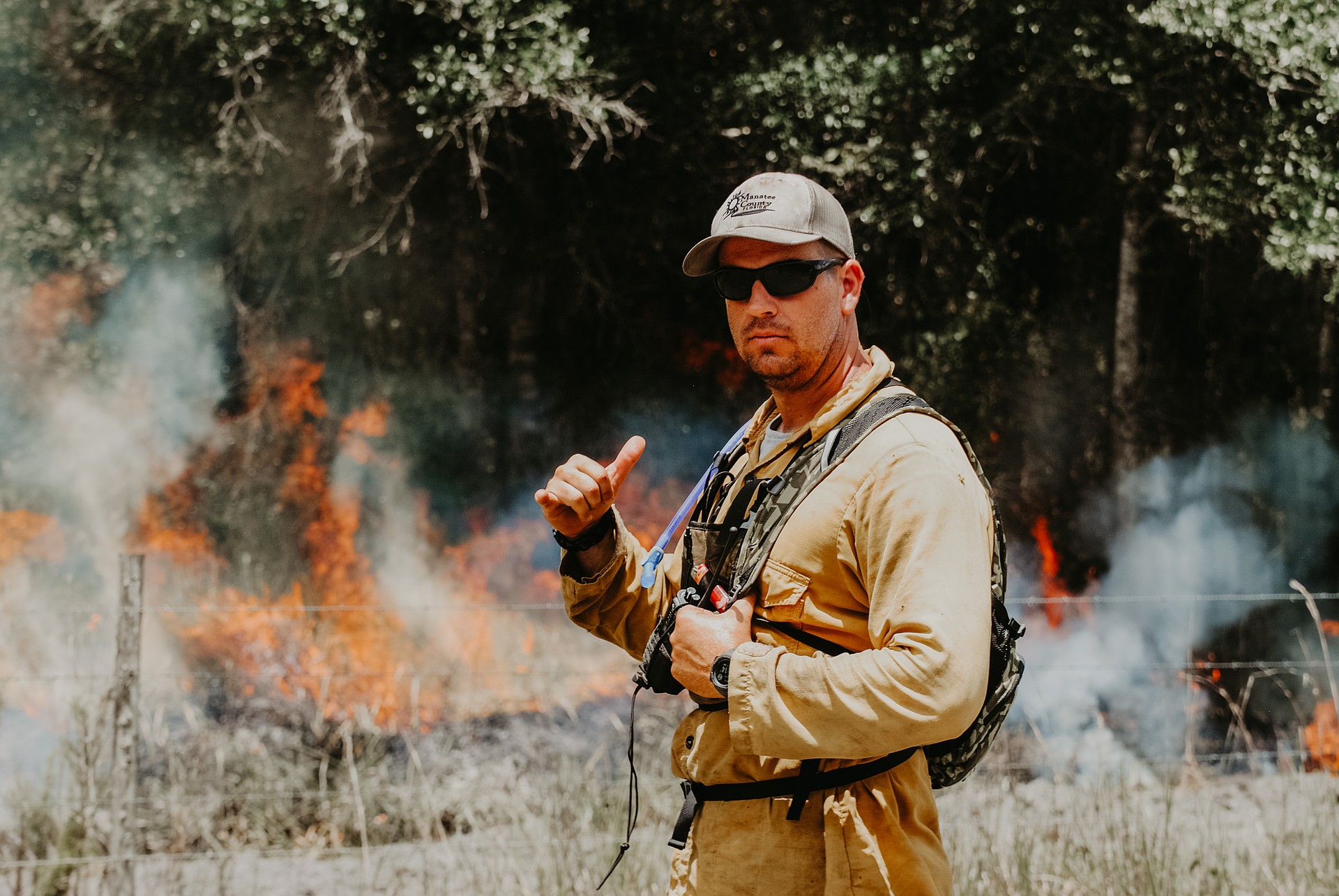
Instead of calling them firefighters, Jerry Miller, a senior ranger at Duette Preserve, said park rangers are better described as fire lighters.
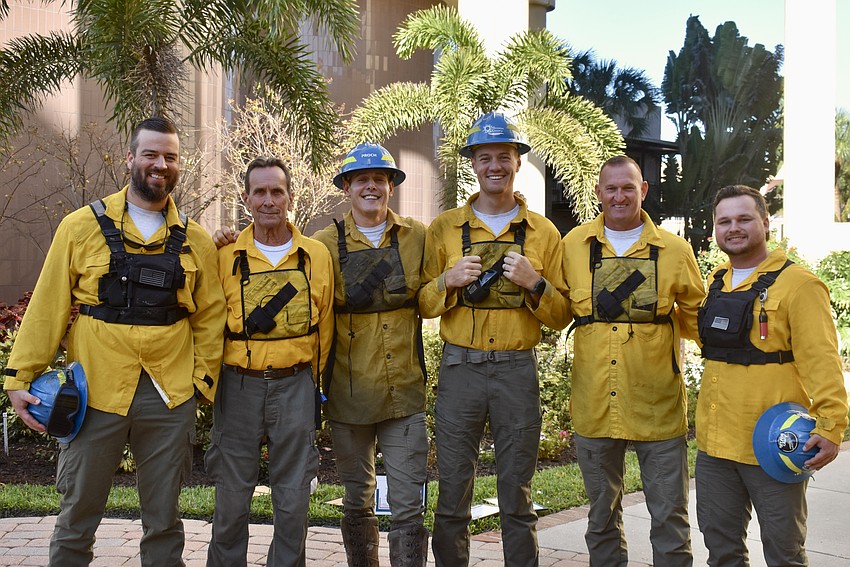
In 2025, the Manatee County Natural Resources' Prescribed Burn Team lit 36 fires and burned 13,950 acres of land across seven Manatee County preserves.
Manatee County commissioners honored the team with a recognition award at the Jan. 6 commission meeting.
“This is the lightning capital of the world, especially in the Tampa Bay area, and lightning starts fires,” said Charlie Hunsicker, the county's director of Natural Resources. “Fire can move very quickly. These professionals understand the behavior of fire and work to manage it.”
Prescribed burns are meant to mimic Mother Nature but also combat her unpredictability with science.
There are three layers to a forest — the understory (grasses), the midstory (shrubs and saplings) and the overstory (tall trees). The leaves and pine needles that drop combined with the overgrowth of the midstory make up the forest’s “fuel load.”
“You want to keep that midstory down,” Miller said. “When it grows too much, and if a fire comes through, it gets super heated and will kill your trees.”
The 18 members of the burn team are trained and certified. Hunsicker also noted that the members advance with experience, like journeymen, until they reach the level of “burn boss.” Similar to a doctor who prescribes medicine, a burn boss can write prescriptions for fires.
As the team enters each new year, it already knows which areas are being targeted. The burns are conducted on a two-year cycle with the goal to burn about half of the approximately 30,000 acres of the county’s forests each year.
“Prescribed burns are serious business,” said Myakka City’s Johnny McLeod, the superintendent at Duette Preserve. “It’s not striking matches and laughing and having fun. Somebody could get hurt real quick.”
When Mcleod started on the burn team 26 years ago, they could only burn about 3,000 acres in a year. Now, the team can burn up to 15,000 acres in a year.
At the start of the program, the fuel load was much higher. The team might burn only 100 acres in a day. Now, with a lower fuel load due to regular maintenance, they can burn 3,000 acres in a day.
McLeod credited Manatee County’s commissioners and directors for the team’s success.
“They trust us enough that we make the calls,” he said. “Other counties have to call this person and that person to get their blessing and nothing gets done.”
However, Mcleod noted that Mother Nature has the final say.
Weather conditions have to be just right to burn. The moisture level needs to be wet, but not saturated. The wind can’t be too strong. So while the team might have a plan in place, that plan is completely dependent on the weather that morning.
The process mimics lightning strikes, which occur more frequently during the summer, so the fires are typically prescribed starting June 1 and continue throughout the rainy, summer months.
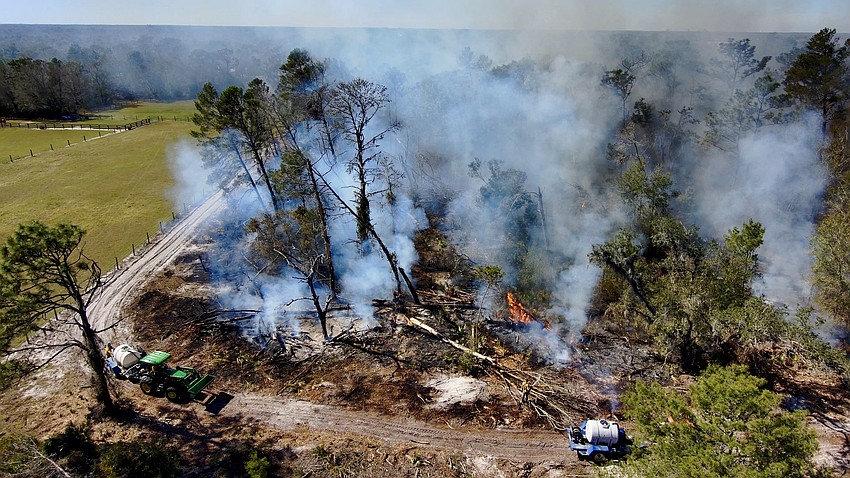
A prescribed burn usually lasts about seven hours. Between the high summer temperatures, the fire and the heavy clothing that’s worn, McLeod said the heat is what makes the work so strenuous.
If the weather is cooperative, “fire lines” keep the fire where the team wants it. A river is an example of a natural fire line, but fire lines can also be drawn with a tractor and an attached disc. The disc will pull up the grass and leave bare sand that the fire can’t cross.
That doesn’t mean fire never crosses the line, but the sand greatly lessens the hazard. When a fire starts beyond the fire lines, it’s called a “spot over.” The team works with a brush truck and water wagon. During any given fire, they’ve got about 1,500 gallons of water on hand to keep the fire in its place.
“One of the single most important things you can do on a landscape is to prescribe fire,” McLeod said. “The animals, plants and everything else responds to it.”
Birds, such as quail and scrub jays, rely on fire. Scrub jays are endemic to Florida and require a specific habitat. Fire keeps the scrub cleared out for them.
Miller noted that quails are called “fire birds.” They thrive after a fresh burn when wiregrass starts to sprout up again.
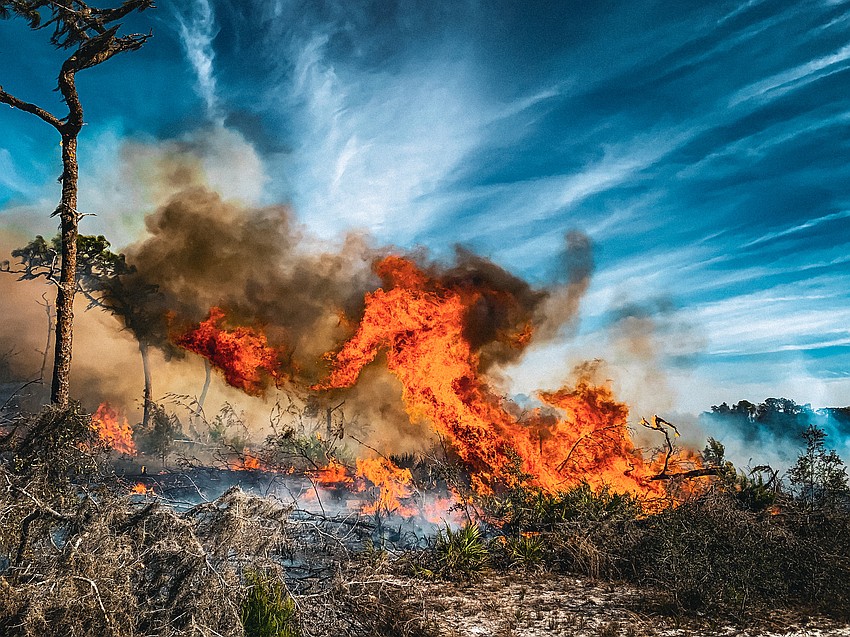
Beyond renewal, prescribed burns lessen the risks of raging wildfires that burn everything in their path, including mature trees, and spread into neighborhoods.
Commission Chair Tal Siddique noted that Florida is a leader in prescription fire science.
“California is learning a lot from Florida,” he said. “They’re trying to learn more about us as they continue to deal with the fallout of more and more wildfires.”
A study by the Independent Institute, dated Jan. 7, 2026, of the Los Angeles wildfires in January 2025 reports that researchers at the University of California estimate the property and capital losses from the fires at up to $131 billion.
The total area burned was more than twice the size of Manhattan. Nearly 180,000 people were instructed to evacuate and 31 people died.
The report reads, “The most effective form of wildfire suppression is prevention.”