- February 26, 2026

-
-
Loading
Loading
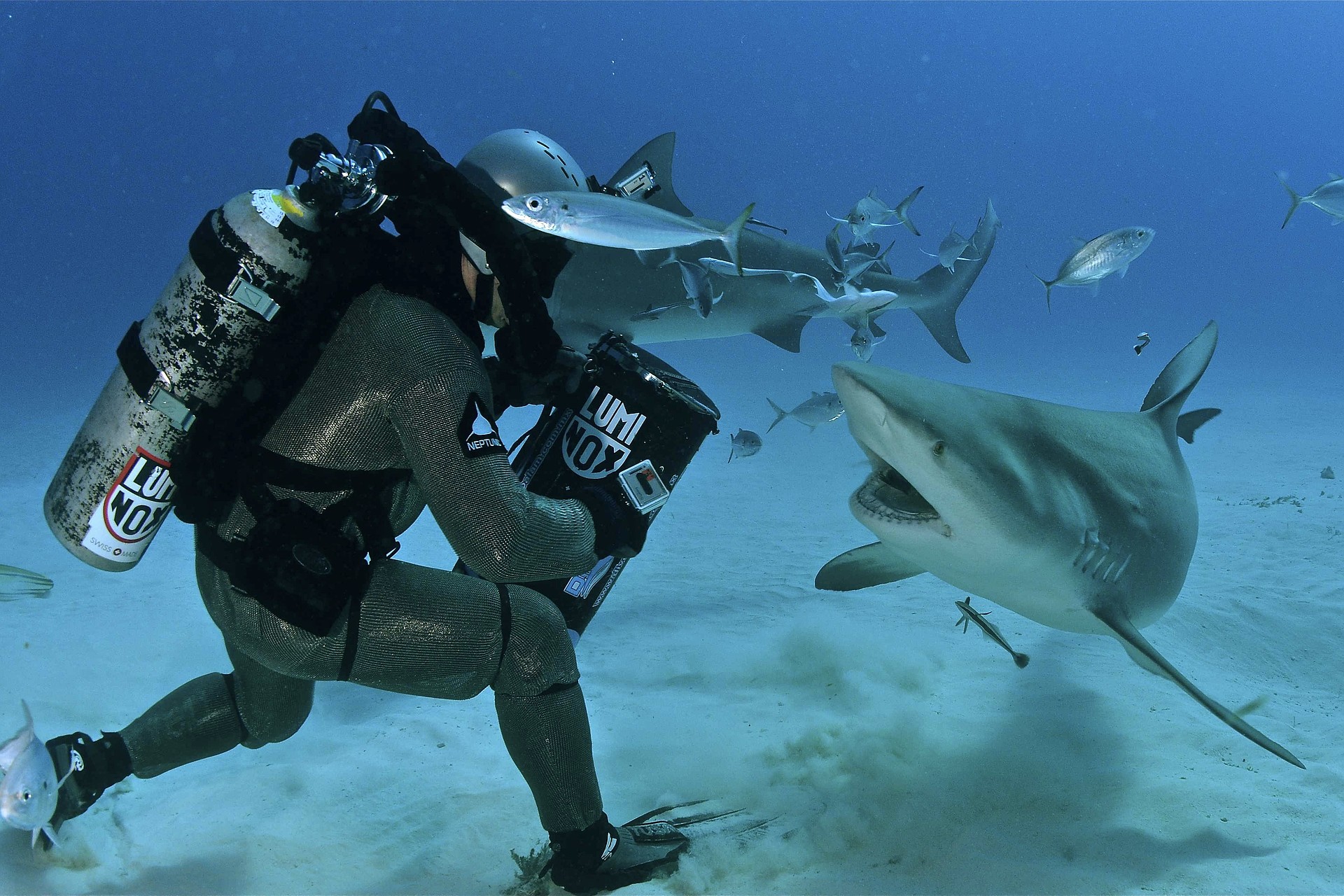
After a life spent in the ocean, Scott Cassell knows a lot about marine animals. For instance, he knows it's not a good idea to use an underwater camera that can fit inside a shark's mouth.
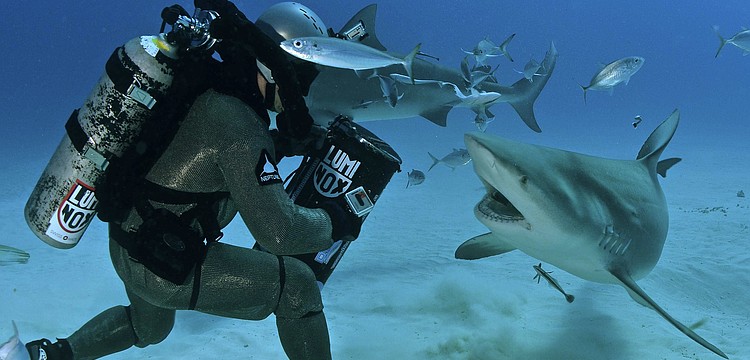
While filming for Discovery Channel's "Shark Week," in 2011, he was leaning out of the shark cage, close enough to see the tiny tooth-like denticles on the skin of the female great white sharks.
But male great whites are much more aggressive than females, notes Cassell. As he looked down, he saw something white accelerating vertically towards him.
"I couldn't get back in the cage fast enough because I'd gone so far out, my scuba tank on my back kind of got stuck on top of the bar," he said.
As he braced for impact, his muscles tensed, causing him to sink and resulting in the shark nudging him back into the cage as it came for the camera.
Although the camera was broken, he'd gotten the shot: a visual of the shark engulfing the picture in its mouth. It's just one example of the lengths Cassell is willing to go to when it comes to his passion of the sea, a passion that includes protecting it and the life that calls it home.
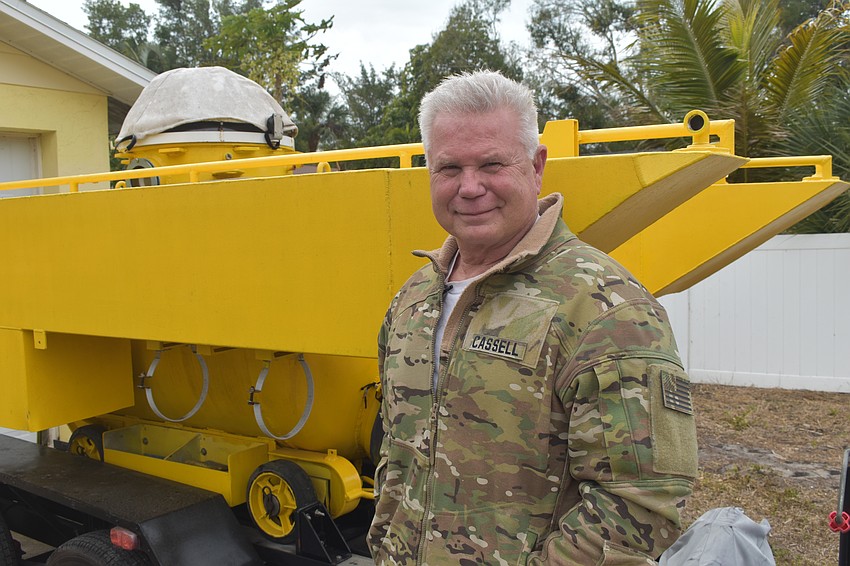
The explorer and conservationist says he feels most at home on the California coast, which he says has a greater concentration of species yet to be discovered than Florida's.
His encounters throughout his career have included thousands of Humboldt squid and sharks of all varieties, and even what he says was a giant squid that was the first to ever be filmed alive.
He is also known for the record of the longest distance ever traveled by a diver, at 52 miles, which he achieved in the attempt to test a new dive sled he had created.
"I have three world records, and none of them matter," Cassell says.
In 2023, he came to Osprey in search of a change after losing his wife of 16 years. He set out to modify his submersible so it could spear the invasive lionfish in the area. He also ended up finding love again, and last year, he married Cynthia Clark.
Yet the explorer and conservationist's latest challenge has been one that involves leaving the ocean behind, for he was diagnosed with a brain tumor three years ago.
Cassell says he's not afraid of the possibility of death, but still wants to do something with his life, calling the ocean his "why."
"Things that I've been blessed to see in the sea are now just memories because I can't go and see it again right now, and that's heartbreaking," he said.
Since beginning his dive career in 1977, Cassell has more than 15,000 hours of dive time, and he is also a United States Coast Guard-certified submersible pilot with around 4,200 submersible dives.
When he first dove in the ocean at age 15, off Monterey, California, he recalls that he was in tears of happiness, humming the theme song to the TV show of his idol Jacques Cousteau — he felt like he was home.
Growing up with abusive, alcoholic parents, he says the ocean became his mother.
"It taught me a lot: resilience and physical durability and confidence and humility, and that's why I saw my first sharks and kelp forest, and I realized I was more at home in my mother's arm of the sea than I was at home, and so everything I love was in the sea, and it still is," he said.
As a teenager, he worked as an underwater welder. He later spent 33 years total in the military, including with the U.S. Navy, California Army National Guard, and California State Guard, before he found himself drawn more to his diving roles on the side.
He has since filmed for and appeared in numerous documentaries on networks including Discovery Channel, Animal Planet, BBC, History Channel and National Geographic.
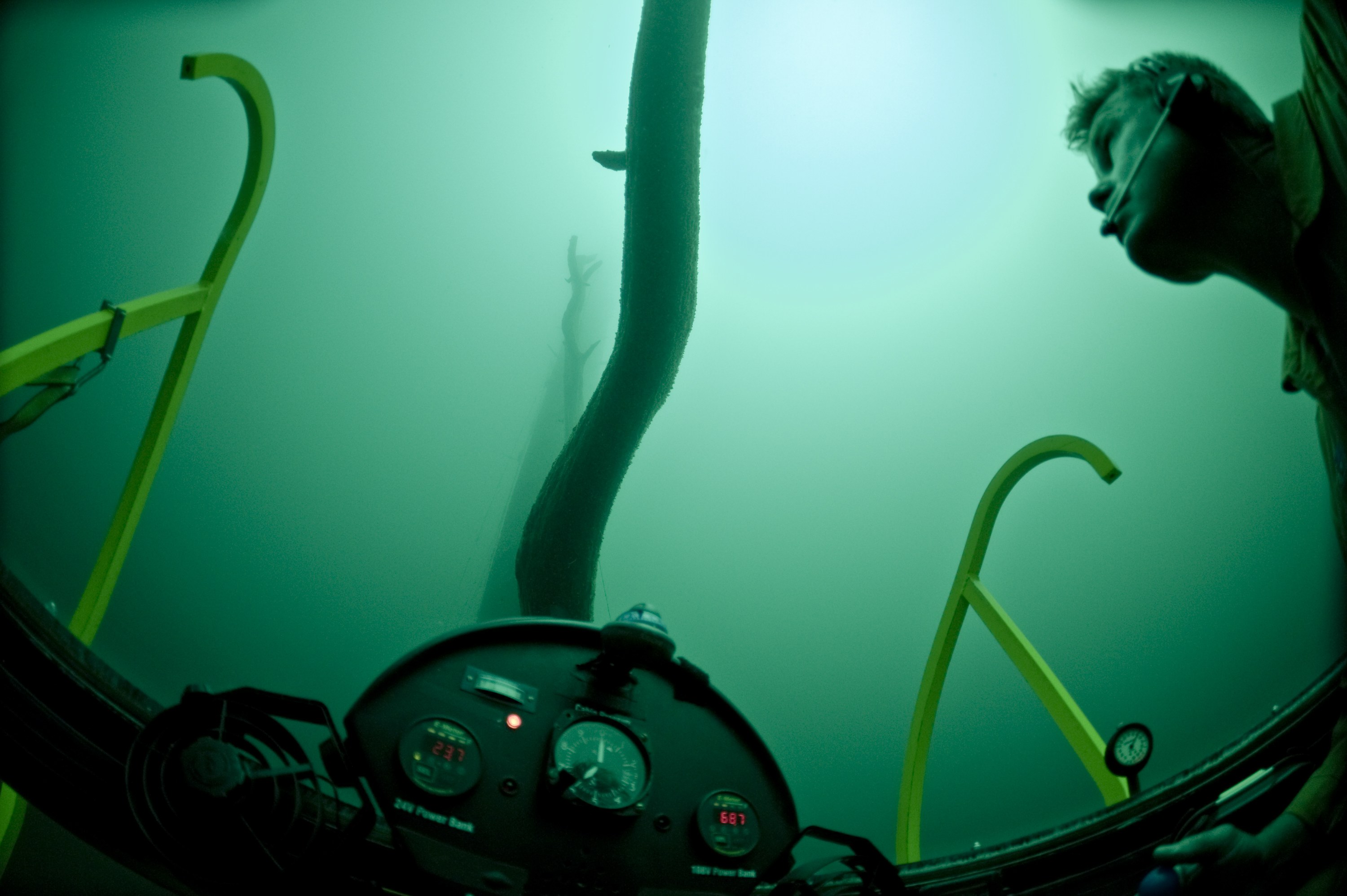
A brush with a shark's jaws doesn't change his adoration for animals that many people, mistakenly he says, see as killers.
Cassell says he's bonded with sharks and even found himself in an accidental game of fetch with a shark named Emma near the Bahamas, whom he refers to as "a sweet girl."
He first met her over 30 years ago when he was introduced by Jim Abernethy, a pioneer of shark encounters without a cage.
When Cassell picked up a license plate with a thick fishing line attached, Emma bolted towards him in response. As he tossed the plate away, she caught it before it hit the sand and then returned to him. He says the cycle continued on repeat.
"Divers had put that together for her as a fetch toy, and she was so excited that somebody was playing fetch with her, and I totally did it by accident," he said.
Cassell says sharks have time to be curious due to their place at the top of the food chain.
“They're 400 million years old, and they haven't changed much," he said. "I mean, that's evolutionary perfection, so you're looking at an animal that is just god-like in its perfection as it lives in its environment."
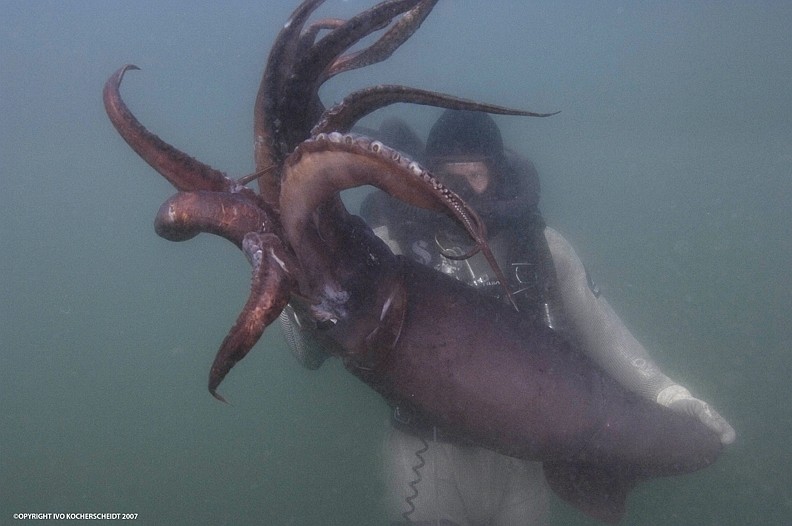
Cassell thinks the one animal deserving of a fearsome reputation is the Humboldt squid.
As large as a person or larger, these squid have barbed tentacle suckers used for grabbing prey, and a beak capable of tearing flesh.
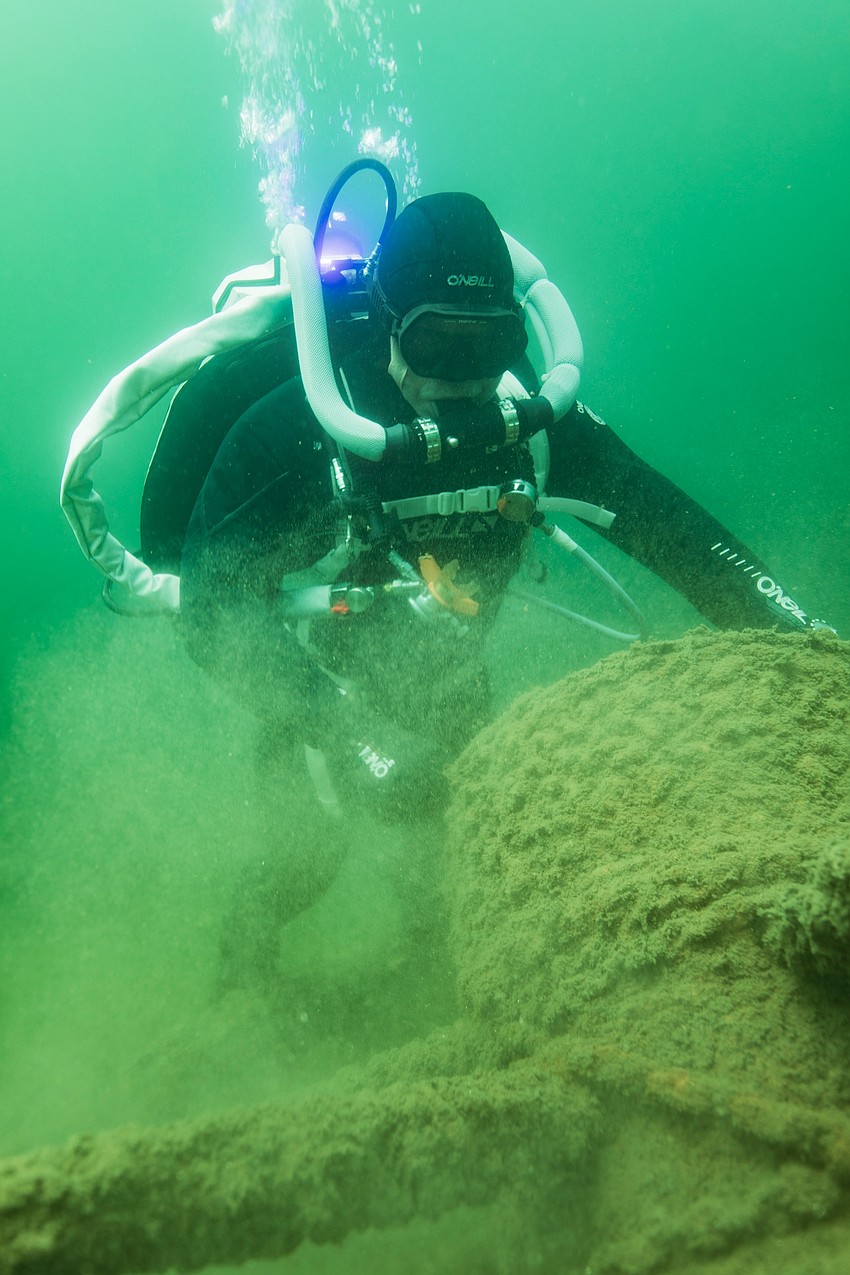
In 1999, Cassell thought that after his experience with sharks, he would have no problem with the squid. Unable to afford chain mail gear at the time, he descended into the waters off the coast of Loreto, in the Sea of Cortez in Mexico, protected by just a thick wetsuit.
He was eyeing a Humboldt squid that was about 6 feet long, admiring the animal's color patterns, when suddenly, he became the one at the center of attention, from other squid he hadn't noticed were present.
“It was literally like throwing a piece of bread in a fish bowl,” he said. “Everything was picking at that piece of bread, and I was the bread. All the squid were pulling on me, and I was like, ‘OK, I can take this. And a few seconds later, I was like, 'No, I can’t.”
Cassell says he was dragged down, with a squid dislocating then inadvertently relocating his shoulder, and his eardrums rupturing from the depth before he finally kicked free and returned to the surface.
Cassell recalled a man who met him at the boat: "He looks and goes, ‘I told you.' Yeah, yeah, you did. So I felt like a complete moron.”
Nonetheless, his work filming the squid came to encompass nearly 2,000 dives over 10 years, and he says his footage provided the most extensive documentation of their behavior available.
But filming and experiencing the sea wasn't enough for Cassell. He also wanted to stand up for it.
“I was hunting poachers for a while, because the ocean is my mother, and when somebody slaps your mother, you want to try to fight back. You want to protect her," he said.
From 1999 to 2019, he sought out poachers, filming them in action and turning the evidence over to authorities. In this endeavor, his experience as a combat diver in the Army, which involved using diving for the purpose of stealth as he arrived and departed combat missions, proved crucial.
He says during his second poacher search, which was in the Sea of Cortez, he was abandoned by a fisherman and left adrift for three days before reaching shore. With that incident, he realized just how far he was willing to go with the initiative.
"All three nights, I remember feeling big predators checking me out, and they would swim right underneath me, and the water would raise up and tromp me back down, or I'd feel something hit me, and I'd reach down and it's gone," he said.
He says his efforts have resulted in 65 imprisonments.
"I'm very proud of that drop of water in the bucket. It's nothing compared to what's happening out there," he said.
Through the budgets of TV shows he has participated in, as well as private donations and royalties from a Luminox watch line named after him, he has also been able to fund various conservation efforts.
One of his proudest moments, he says, was his visit to Brunei in Southeast Asia in 2013, where he offered presentations and dives for officials, highlighting the importance of sharks. He notes that afterwards, the country became the first to enact a ban on shark fishing and the importing of shark fins.
Today, with his brain tumor, he's not afraid of whatever the future holds.
"As a combat medic and as a soldier, I've seen a lot of it. I've seen a lot of people die, and we're all headed there," he said. "So am I afraid of death? No, absolutely not... I'm like 'Meh, I'm either going to go or I'm going to come back, so I'm hoping I get to come back and play, I really do, but I'm not afraid."
His plans include reviving two nonprofits he founded in 2006: the Undersea Voyager Project, which explores and maps ocean terrain, and Sea Wolves Unlimited, which tracks poachers and turns the evidence over to authorities.
Part of the Undersea Voyager Project is a real-life submersible school that will be hosted in the Florida Keys and in San Pedro, California.
It will begin with handing off his Seamagine SeaMobile submersible to another individual, Thomas Kalodner, who will use it to complete voyages Cassell has outlined, and also to educate young people on being a marine researcher and the importance of blue collar workers in science.
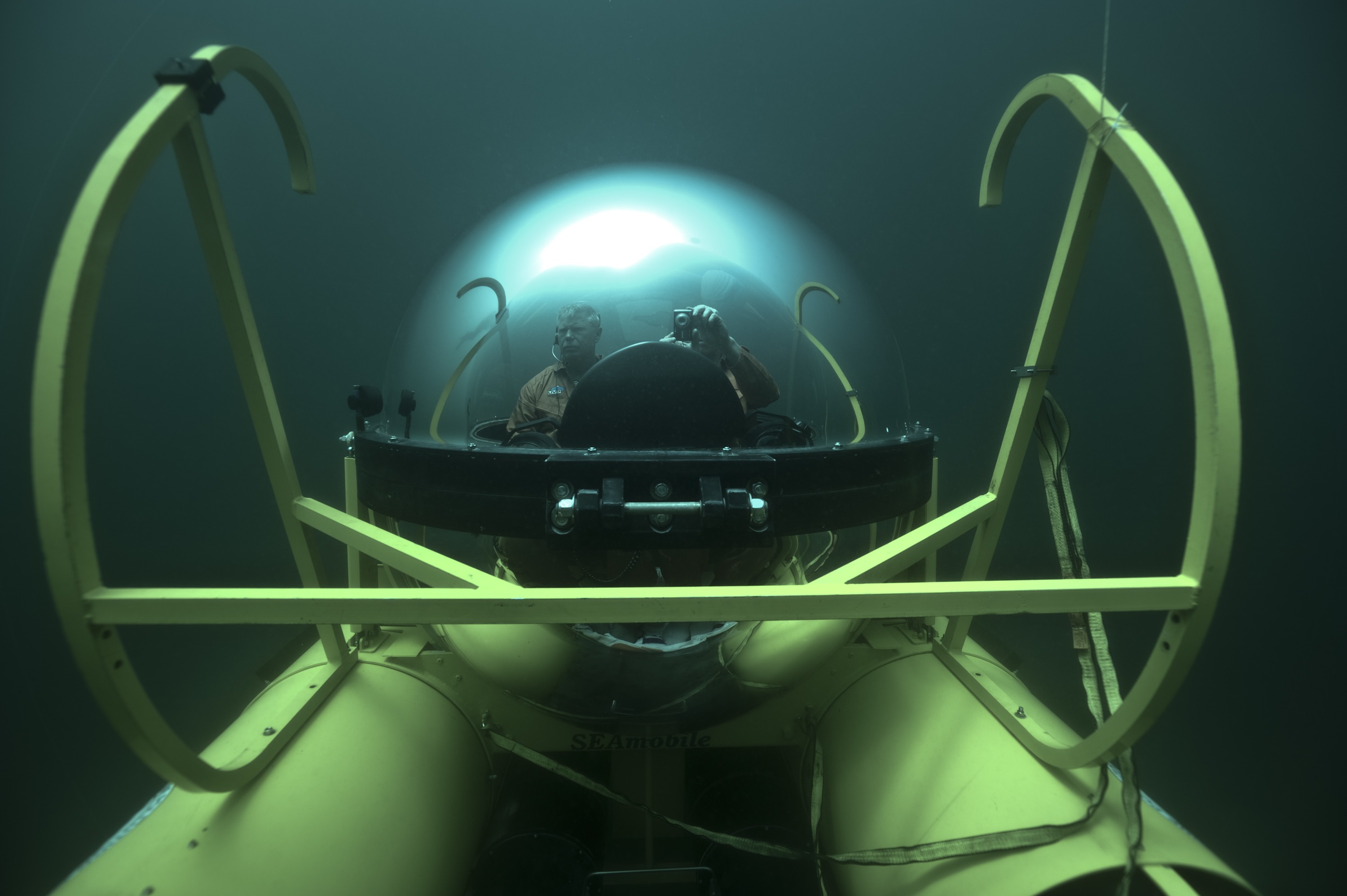
"I'm a product of something bigger than me that I wanted to emulate," Cassell says. "I wanted to be like (Couesteau), and I learned that on mass media. Nowhere on mass media do you find heroes anymore. If we could show kids the value of being a real badass explorer, oh my God, the Earth would be so fantastic right now."
Meanwhile, his ambitions to explore haven't ended. He says people can't conserve what they haven't discovered.
Some of the trips he's hoping to make include Lake Tahoe, a location off La Jolla in San Diego, a lake in Canada he says has a historic feature, and a lake in Alaska he's wanted to see for 30 years.
“If you're in the right place at the right time, and you take advantage of it, and you're passionate about it, you'll excel," he said. "That's why I always encourage people, put the phone down, get outside, do something, talk to people. You don't know what you're going to see.”