
- April 9, 2026

-
-
Loading
Loading
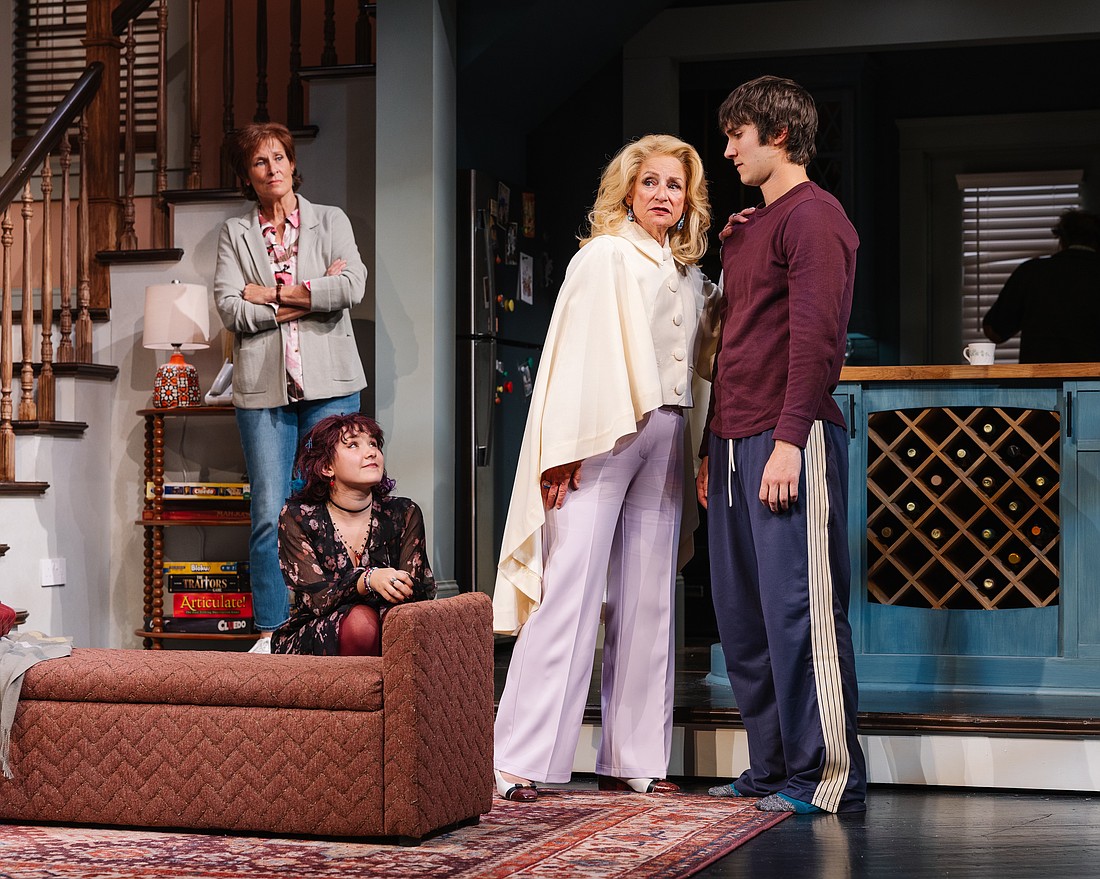
Steven Moffat’s “The Unfriend” is making a friendly visit to The Asolo Rep stage. If the playwright’s name rings a bell, you’re probably a BBC nerd. Moffat’s the madcap mind behind the 2005 reboot of “Doctor Who” and the co-creator of the “Sherlock” series that brought the sleuth into the 21st century. “The Unfriend” is free of Daleks, Cyberman and the Hound of the Baskervilles. The play’s scary monsters are merely human — and its razor-sharp wit is 100% Moffat. In the following talk, Asolo Producing Artistic Director Peter Rothstein shares keen insights into this mordant comedy of manners. As an added bonus, he reveals how Moffat’s U.K. comedy survives its trip across the Atlantic.
I’d call it a contemporary comedy of manners. There’s situational humor, but it’s mostly based on human behavior. That’s the essence of any comedy of manners — from Noël Coward, to Oscar Wilde and going all the way back to the Restoration. Those dynamics are all here, but they’re refracted through Facebook, email and texting.
I asked him that very same question. He said he based the play on a real story that a friend had told him. He saw it as comic gold. And he was right.
I tend toward Oscar Wilde. The love of language, the wit and the emotional authenticity carried through verbal dexterity all feel very Wildean. In “The Importance of Being Earnest,” you see characters dancing around a lie, each operating with a different knowledge set. That feels very aligned with what Moffat is doing in “The Unfriend.”
An Asolo Rep board member, Bob Bartner, told me about the play while I was meeting with producers in London. They were curious how American audiences might respond. I was the only American in the room — and they asked me to read the play. So I did.
I laughed out loud. I’ve read countless plays. None of them made me laugh out loud — but this one did. It’s a rare thing — and it’s the reason the Asolo Rep is staging it.
No. Not at the Asolo Rep. Steven has done rewrites for our production, adjusting language and references. This modified version will actually premiere here.
There are two ideas that really land. One is that in trying to project an ideal—especially within a family—we can prevent growth. The other is what we’re willing to overlook morally when we get something in return. Politically or personally, that question feels very current.
Authenticity is the secret. The comedy only works if the characters are emotionally real. The second it smells like shtick, it collapses. The humor comes from recognition — thinking, “Oh, I’ve done that.” If it stops feeling real, it becomes a sitcom world.
I pulled everything as far downstage as possible and stripped the set of places to rest. When characters rest, the comedy stops. There are three physical vocabularies: the parents don’t inhabit their home comfortably; the American guest completely does; and the kids never sit conventionally. Those spatial relationships mirror the characters’ emotional dynamics.
Yes. My biggest goal was not to slow it down. I timed the table read carefully, and our staging is within seconds of that. It took a lot of ruthless cuts to achieve that. As painful as it was, I trimmed anything that added time or theatrical self-consciousness. Moffat’s a master of verbal comedy — and timing is everything.
That was another big discovery. Broad physical comedy just doesn’t work in this play. If a bit smells like slapstick or shtick, it had to go. So, we were rehearsing a scene on a cruise ship. One of the actors said, “Wouldn’t it be so funny if pigeon poop fell from the sky onto the chair?” It’d get a laugh — in that moment. But you’d lose the authenticity of real people in a real situation.
The final scene. Without giving too much away, it poses a moral quandary about whether we believe what we read or what we experience firsthand. Moffat leaves us at an ethical crossroads. It’s unsettling and powerful — and a perfect ending to his play.
First and foremost, I want people to laugh and have a good time. But I also hope they’ll talk about where good manners end and passive aggression begins — and what we give up in order to remain “nice.” But the comedy comes first. The deeper questions follow.