- March 31, 2026

-
-
Loading
Loading
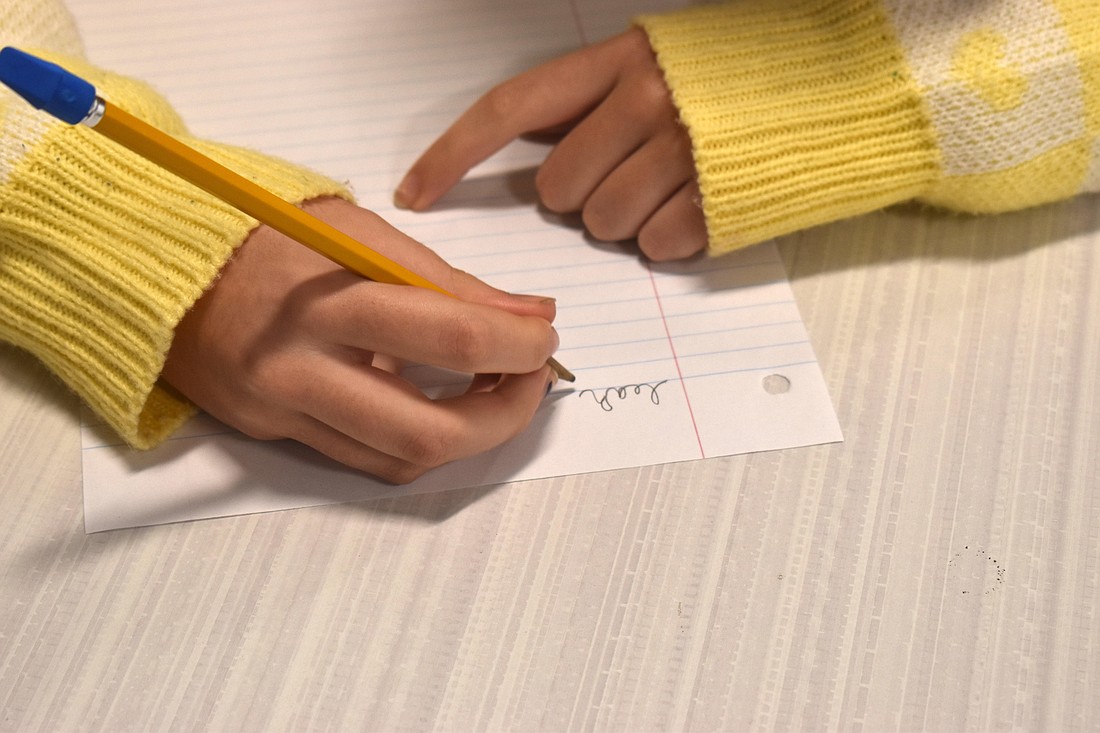
Lakewood Ranch's Mark Eubanks, a sixth grader at Dan R. Nolan Middle, has memorized how to write his signature in cursive. He uses it a good amount now that he is in middle school.
But his signature is the only thing he is confident in writing in cursive. As for reading, he said it is difficult, but he can usually get through it.
“When we were learning cursive (at Willis Elementary School), we learned the alphabet and sentences, but it always felt like it was a little bit rushed and put off to the side,” Eubanks said. “It was mainly a focus in third and fourth grade."
At the moment, students begin writing in print in kindergarten and they begin learning cursive in third grade. A bill that would require more intensive cursive instruction currently is being considered.
House Bill 127 passed the house Feb. 4 on a 111-0 vote. It now goes to the Senate.
The bill would require cursive education to begin in second grade, instead of third.
The bill would require a written test to prove proficiency in reading and writing in cursive by fifth grade.
There is currently no state test in place to measure cursive proficiency, according to Alison Nichols, the director of elementary curriculum and instruction for the School District of Manatee County. The district’s lesson plans are based on Florida’s Benchmarks for Excellent Student Thinking (B.E.S.T.) Standards.
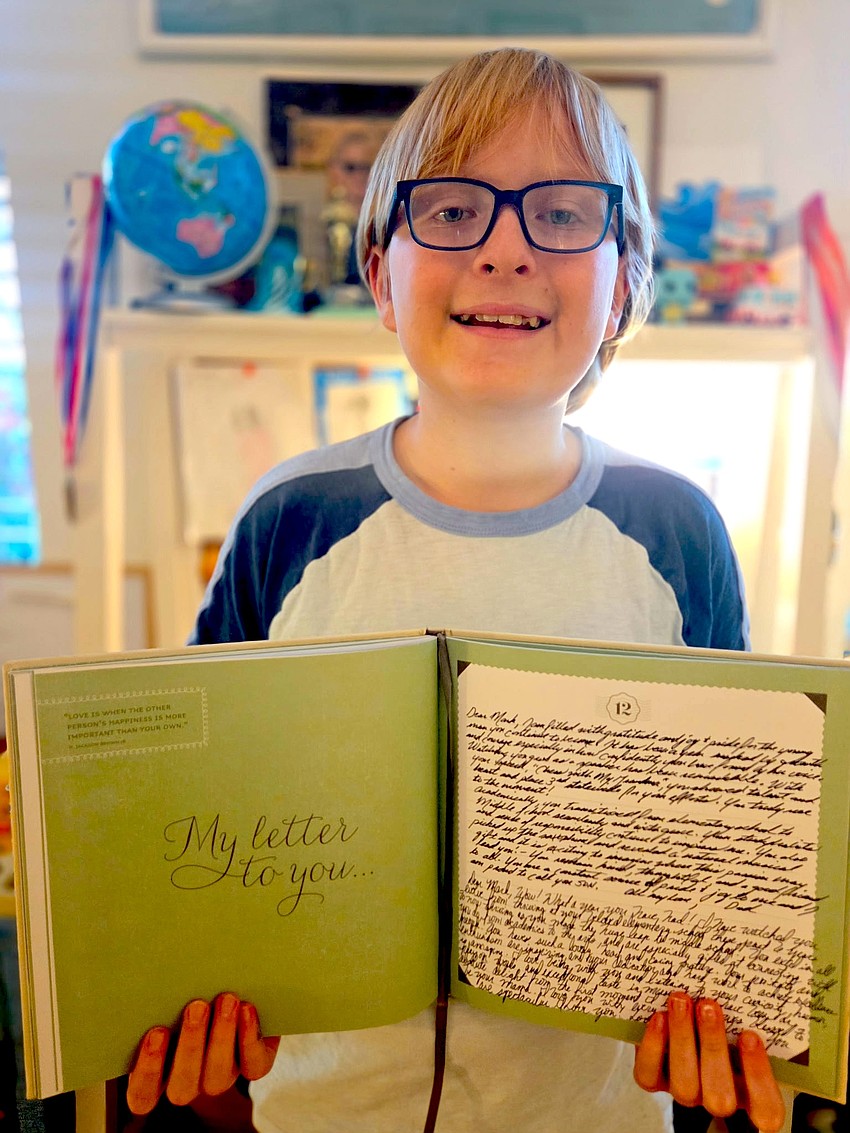
Eubanks' mother, Jennifer Eubanks, said she and her husband, also Mark Eubanks, frequently write about their children's accomplishments in a book. The parents write in cursive to give the notes their own personal touch.
“When it comes to the book, I'll struggle a little bit with reading,” the younger Mark Eubanks said. “For me, my handwriting is pretty good. It's not the best. I excel in reading. With cursive, it's challenging for me, but I can get through it.”
Jennifer Eubanks said there is an elegance to cursive writing that she appreciates.
“I find it awkward in my own hand to hold the pen and write in cursive,” Jennifer Eubanks said. “It's hard to fill out a greeting card. It's a skill that we have to keep working at, like a muscle memory. I don't think it's practiced as much as it should be. I found my own handwriting slipping so I can only imagine what it's like for a kid right now.”
A third grade teacher at Gilbert W. McNeal Elementary, Stacy Freeman earned the Educator of the Year award for Manatee County in 2025. She said cursive is more of an add-on lesson than a requirement at this point in time. She guessed approximately 15 minutes a day goes toward learning cursive.
Freeman said she is torn on what the level should be in terms of learning cursive. She notes that students have their hands full with all the other subjects and testing in place.
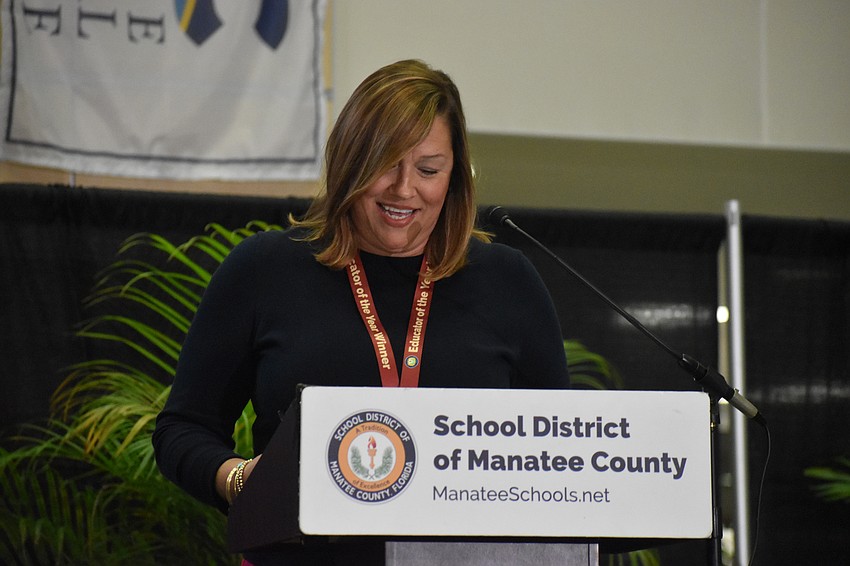
"It's not something that we want lost," Freeman said. "We want kids to grow into adults who are able to read cursive and to write in cursive if they so choose. If we're trying to include it in our curriculum in a more prominent way, it's going to have to start by second grade and definitely be more blended in (to the curriculum) as opposed to right now. It's kind of like an extra."
Now taking a break from teaching, Rachel Diaz has taught language arts to students in fifth, sixth, seventh, eighth and ninth grade. She said adding another test for students is "ridiculous."
"They need to have some exposure to it, but it can't be something that is tested," she said.
Diaz said students need to concentrate on reading and critical thinking.
"We don't need testing in cursive," she said. "That's just going be too burdensome for teachers. It's not as important."
Nichols said she would be surprised if the language in the bills isn’t changed to starting the students in third grade instead of second.
“The state would have to define the expectation,” Nichols said. “(If kids start learning) in second, how does that change in third? Is it the same expectation? Are we giving the kids two years to learn letter formation and cursive for the letters to then be legible and then fluent in fourth and fifth? The state would have to define that in the standards for us.”
Chloe Erickson, a Myakka City Elementary second grader, hasn’t yet begun to learn cursive. She knows it simply as “pretty handwriting.” She wants to learn cursive so she can read old family recipe cards.
Naomi Erickson, Chloe’s mom, said she noticed her daughter grow exponentially in reading between first and second grade.
“With the strong foundation that was laid, I think second grade is a great time to add on to the basic writing foundation and begin cursive,” Erickson said. “Even if it’s just heavily focused on individual letters and words. Sentences come in third, with an assessment in fourth so coaching can be done if needed before testing out in fifth.”
Georgia Eubanks, Jennifer’s daughter and Mark’s sister, is currently in first grade at Willis Elementary School. Jennifer Eubanks would love to see students begin learning cursive in second grade due to Georgia’s habit of drawing, creating and writing in her free time.
“She could be great at it,” Jennifer Eubanks said. “Her handwriting is already wonderful and she has a dry erase board that she writes little messages to us every night. I would love to see her be able to do that (write in cursive) and I think it would appeal to her artistic nature.”
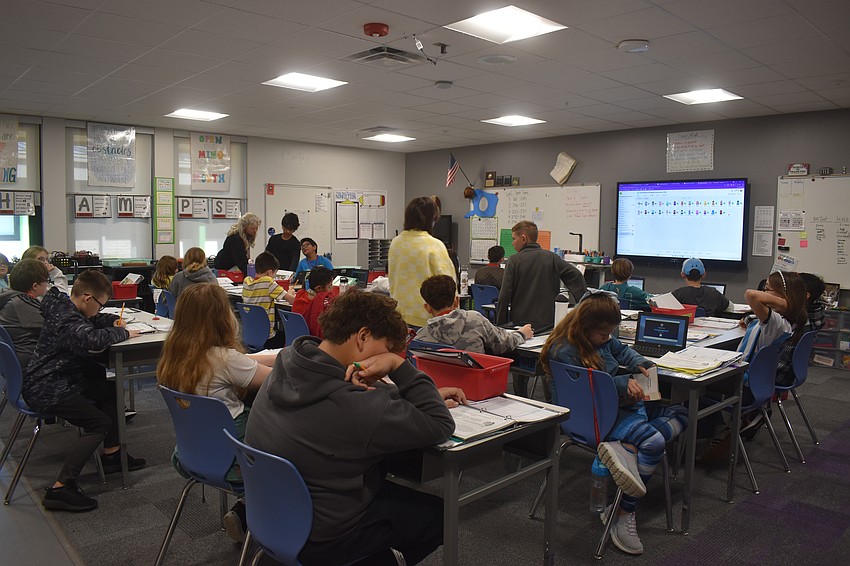
The School District of Manatee County provides electronic devices for each student to use in the classroom. Assignments, tests, papers, research and more are frequently performed on these devices.
“We still talk about the etiquette of sending a handwritten thank you note or a handwritten card on somebody's birthday and those types of things,” Jennifer Eubanks said. “As much as we embrace AI and technology, we don't want that human aspect to fall off.”
The elder Mark Eubanks said he is not anti-technology but he thinks cursive is important.
"Young people are missing out on a layer that will help them in a different, individual type way," he said. "It's important to embrace some of the classic forms that have been around for hundreds of years."
Nichols calls cursive “the window into the student’s brain.”
“When they're putting something on a piece of paper and they're writing that down, and me, as a teacher, I'm able to see, okay, how are they thinking through this?” Nichols said. “How are they answering this question tied to this text? For science, same thing. If they're having to write down what they're observing or what their hypothesis is, or whatever the case may be, it's giving me a window into what's going on in their brains. Writing is a huge tool for teachers as they're making those instructional decisions.”
Freeman said it's important for kids to know how to type efficiently — more than just pecking with their pointer fingers — because they do test that way.
"But then you realize there are kids who can't read a card from their grandmother or can't read a historical document or an excerpt in a social studies text because it's in cursive," she said. "It's not something that we want lost. It's just something that we're going to have to figure out."