- March 19, 2026

-
-
Loading
Loading
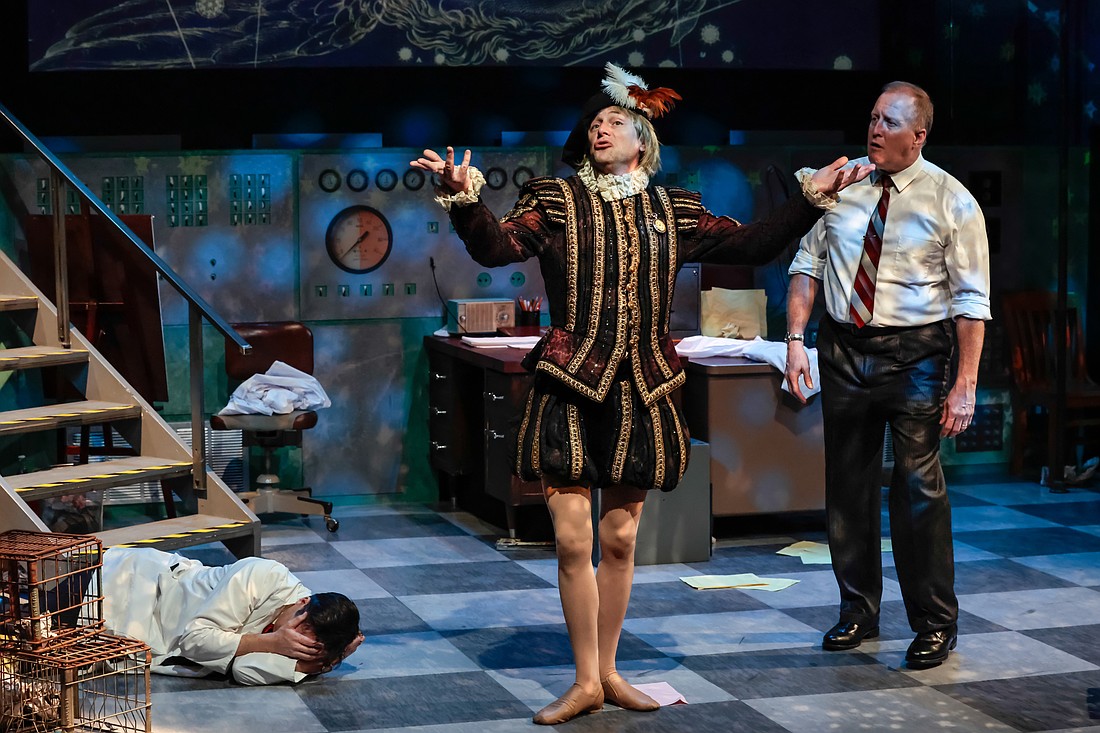
In 1962, President Kennedy said America would put a man on the moon by the end of the 1960s. Deborah Brevoort’s “The Blue-Sky Boys” explores how NASA kept his audacious promise. On the surface, it’s a play about the Space Race. It is. But it’s also about the power of imagination, risk-taking, brainstorming and collective problem-solving. NASA’s engineers fulfilled Kennedy’s beautiful dream — by dreaming. The play's director, Florida Studio Theatre CEO Richard Hopkins, is a dreamer in his own right. In the following talk, he shares his imaginative vision for this play. And how its “blue-sky thinking” serendipitously echoes the bold creative leaps of live theater.
Imagination. I had no idea how much imagination went into getting a man to the moon and back. I knew how complex the space race was — but I didn’t realize how creative NASA’s engineers had to be.
And that’s true to life! I was excited to discover that many NASA engineers leaned on fictional characters, mythic figures and real people from history as models. So, the play reflects that. Anything could happen — Galileo could walk in; Buck Rogers could fly in. That imaginative possibility made the play irresistible to me.
It was easy, because actors naturally work that way. They understand the engineer’s creative process immediately; it’s what actors do every day. The process can be silly or profound. Sometimes you laugh hysterically; sometimes you weep. It’s all over the map — very much like the play itself. So, I didn’t have to push that “blue-sky” mind-set at all. Actors already live there.
That’s exactly right. Rehearsal is improv. You start with the text, then play around with different ways to make it work. That exploratory process is fundamental to theater.
Not at all. I simply let them go. It was joyful — one of the most fun rehearsals I’ve had in years. The room was filled with laughter, but also seriousness, because the play has real weight beneath its playfulness.
The actors constantly surprised me. But the designers did, too. Music, set design, costumes, projections, sets — the work is all wildly original. I think it’s because the play invites our talents to go off the rails in the best way. And the ending surprised me! I knew it was powerful when I read it, but I didn’t expect it to resonate so deeply with so many people.
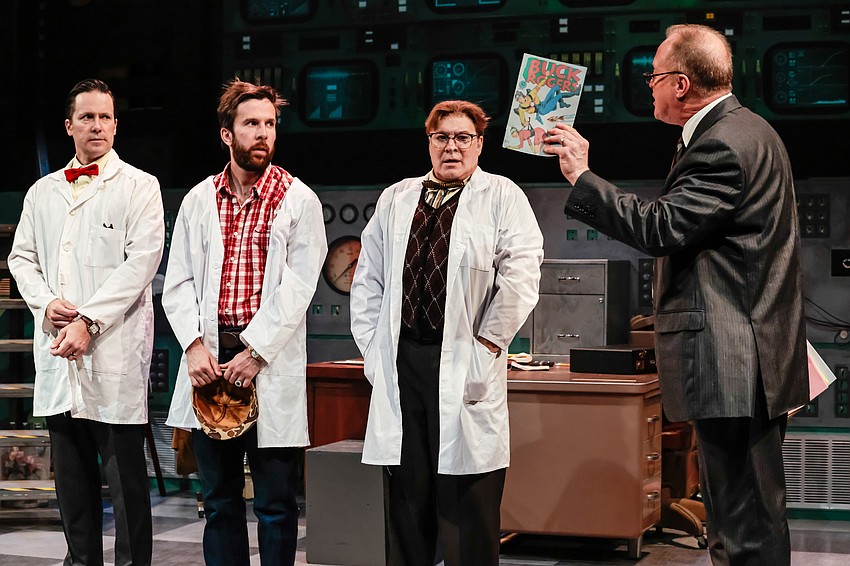
Again, that’s not alien to actors — they’ve all worked in old, rundown theaters. We’ve all built forts as kids — cardboard spaces where imagination does the heavy lifting.
That environment invites creativity. A creative space is what you make of it. It’s not about polish; it’s about what your mind turns it into.
Exactly. It’s not about the literal places and objects, but what the mind does with them.
The playwright did that for me. Deborah Brevoort did extraordinary research. Everything you see or hear in her play really happened. Yes, she rearranged the timeline to heighten drama, but the underlying facts are true. OK … the moon launch wasn’t the brainchild of three engineers — it was more like 13,000 engineers. But some did use fictional characters as inspiration. The playwright distilled a massive, collective effort into a theatrical form we can grasp.
Again, the credit goes to the playwright. She wrote real people. One engineer is a duck hunter; another is obsessive; another is more balanced but still eccentric. Those rich personal details give actors something to explore. My job was to help shape the characters they brought to the stage.
That’s my favorite aspect of the play. It reflects the balance we’re all searching for. You might expect a battle between rigid authority and free-wheeling creativity. But you come to see that rules matter. They’re necessary. That balance allows great work to happen.
The play deals with both sides — and the tension between them. Haggerty represents the federal government with a rigorous vision of science; the engineers take a more imaginative approach. That balance between creativity and discipline is something every artist understands. Creativity must be corralled so no one gets hurt. When the three astronauts were killed in the fire, it brought everyone back to Earth. It wasn’t all fun and games anymore. Safety mattered. As the play says, NASA had to, “Think it and double-think it.” That discipline exists in the creative process itself. Audiences don’t always realize that theaters must pay close attention to safety. Every few minutes in rehearsal, you’re checking that an action is safe — that no one will fall, collide or get hurt. Theater’s riskier than people imagine.
It’s all in the details — letting actors breathe, trusting their imagination, watching what emerges instead of imposing my ideas. If a moment doesn’t serve the ensemble, you adjust it so everyone wins. And this cast was a winning team — a dream team. Everyone had worked at FST before, some many times, so they were all relaxed and open in the room. That freedom made the process special.
Absolutely. What surprised me is that younger audiences are more willing to embrace the play’s imaginative elements. Older audiences — those who lived through the era — tend to want it to be more serious because the moon landing is precious to them. Everyone understands it, but at different levels. Younger audiences are loving it just as much, if not more, than those who remember the Space Race firsthand.