- February 2, 2026

-
-
Loading
Loading
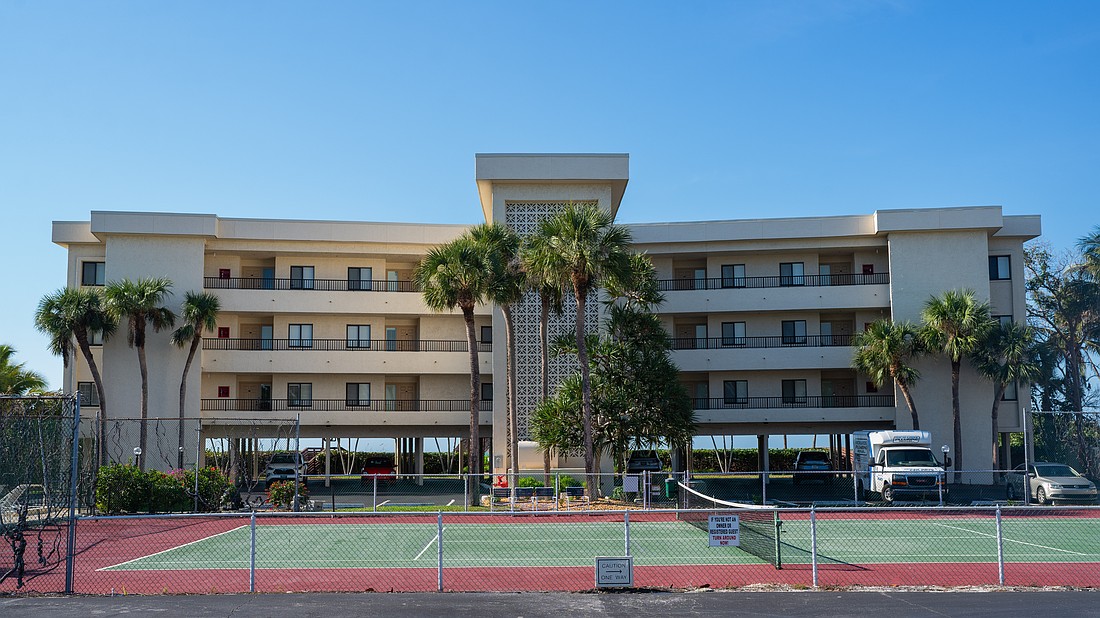
Property owners who saw big breaks in their property taxes, but suffered no storm damage, will likely see the values of their properties return to previous levels in the next fiscal year.
Property taxes are the main method of raising funds by local governments, Longboat Key included, and the devastation caused by Hurricanes Helene and Milton in 2024 meant the town brought in a lower amount of revenue in the 2025-2026 fiscal year. The change in revenue on the barrier island was a tale of two counties. The town saw a 14% increase in property tax revenue from Sarasota County properties, largely attributed to the opening of the St. Regis Longboat Key Resort.
On the Manatee County side, however, there was a 10% decrease in property tax revenue. During the budgeting process, that was attributed to the north side of Longboat Key having older properties not built to newer and stricter floodproofing requirements. That looks to be only part of the cause, though.
“The assumptions that (the Manatee County Property Appraiser’s Office) made that all ground floor or first floor units were damaged was an incorrect assumption,” Town Manager Howard Tipton said. “There are newer developments where your first floor is actually 15 to 20 feet up.”
Despite not being on the ground floor and susceptible to the effects of storm surge, property evaluations at some “first floor” condos with unit numbers starting with a 1 saw as much as 65% decreases in valuations.
Hackney’s office did not respond to an interview request with the Longboat Observer, but wrote back to the town that because “time and access to assess the conditions” of waterfront properties before Jan. 1 were limited, MCPA “made the decision to treat all Level 1condominium units” on Anna Maria Island and Longboat Key as having been affected by floodwaters.
“The intent was to apply an adjustment to ground-floor units. However, our current condominium data does not distinguish between ground-level Level 1 units and elevated Level 1 units,” Hackney’s office said in an email to Tipton. “As a result, some Level 1 units that were not damaged received a valuation adjustment for the 2025 tax year.”
The exact amount of revenue lost to the town as a result of the mistake is not certain, but could be in the hundreds of thousands.
“We didn’t spend a lot of time trying to analyze it because there’s nothing we can do about it,” Tipton said. “But it’s at least a half-million-dollar mistake to us, and that’s a lot of money to a small town.”
After the town and MCPA sat down to discuss the discrepancies in evaluations, Tipton wrote a letter to Town Commission where he said Hackney owned up to the mistake and apologized for the impacts caused to the town. The town was also told it was MCPA’s intent to “restore values to all properties that were deemed uninhabitable (as long as the repairs or rebuild has been completed by 12/31/2025).”
There was question whether this was something that could be legally done, seeing as homesteaded properties may only increase in appraised value by 3% each year.
“We asked him three times, and he said I have the authority to do this under statute,” Assistant Town Manager Isaac Brownman said at a recent Investment Advisory/Finance Committee meeting.
The talks between MCPA and Longboat Key look to be the start of a more communicative relationship between the two public bodies in the event of another storm. Tipton said the Property Appraiser’s Office will be granted read-only access to the town’s permitting system and will receive post-damage assessments from the town and vice versa.
“Emergency situations create opportunities for improvement,” Tipton said, “and we believe going forward that the relationship and communication between our two offices has been strengthened.”