- April 12, 2026

-
-
Loading
Loading
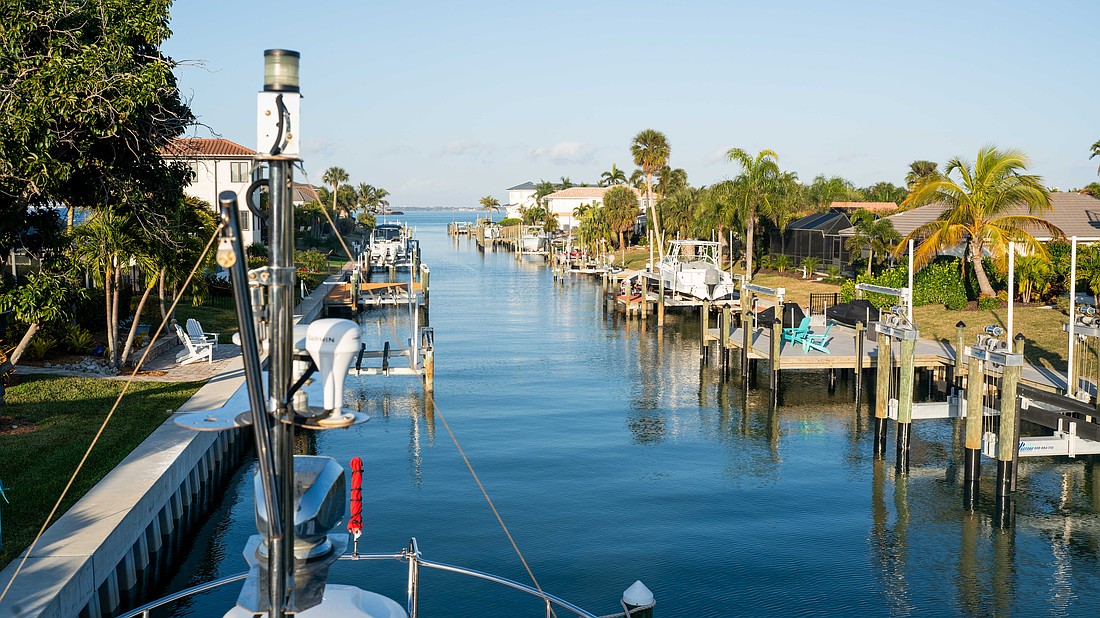
It’s been 23 years since Longboat Key’s canals were dredged.
Now, after years of discussions, tweaks and public meetings, the Town Commission is finally set to vote on a funding mechanism to begin a dredging program.
“It’s a program, not a project,” Public Works Director Charlie Mopps has repeated time after time, making the point that canals would continuously be maintained.
At its April 6 meeting, the Commission directed town staff to draft an ordinance that will appear for a vote in May and June. On May 4, the town will hold its first public hearing to enact a funding mechanism to pay for the program.
The first round of dredging is expected to cost $9 million. The proposed source of funding is a combination of flat annual fees placed on canal-facing properties and a 0.0623 property tax millage placed on all properties. Non-canal facing property assessments will pay for 20% of the initial round of dredging. Flat fees and canal-facing property taxes will pay for 80%.
Under this formula, a canal-facing house valued at $500,000 would pay a $620 flat fee and $31.15 in property taxes each year for five years. The flat fee would be reduced to $318.04 for years six to 10.
Non canal-facing homes valued at the same $500,000 would pay just the $31.15 annually for 10 years.
Arriving at the 80/20 formula has taken years of discussion.
“There’s been 30-plus Commission meetings since only 2013 (on canal dredging),” Mopps said.
The town’s financial analyst, Jamie Thomas, told the Commission she estimated that Mopps has spoken for 320 hours at meetings on the subject.
The main subject, and sticking point, was how to pay for the needed canal dredging.
Whether dredging is necessary was never in question.
The town hired engineering and consulting firm First Line Coastal to survey and grade 88 canals in the town. Of those, more than half were given a grade lower than C, 18 were given a D and four were given an F.
The report card may look worse if the survey was completed today. Sleepy Lagoon Homeowners Association President Blythe Jeffers told the Commission at its Goals and Objectives meeting that the canals have deteriorated in the neighborhood after the 2024 hurricanes.
“We have a buildup of shoaling along the Sleepy Lagoon area, and it is limiting our navigability and access to the Intracoastal,” Jeffers said. “So, we find that canal maintenance or waterway navigation maintenance program is important to us because we do have an immediate need to open those channels.”
The first hearing and vote on the assessment and fees will be May 4. The second hearing and final vote will be June 1. If approved by the Commission, assessment collection would begin in November.